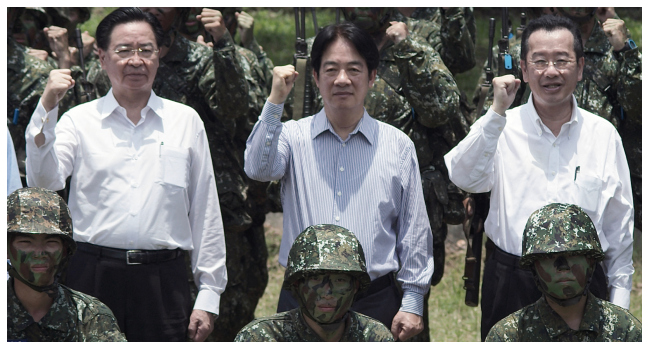
Taiwan’s President Lai Ching-te (C) poses for photographs with Secretary General of the National Security Council Joseph Wu (L) and Defence Minister Wellington Koo during an inspection of new conscripts at a military base in Taichung on June 28, 2024. (Photo by Sam Yeh / AFP)
Taiwan’s defence ministry said Friday it had detected 36 Chinese military aircraft around the island in the previous 24 hours.
A further 26 aircraft — including fighters, transport planes and drones — were detected after 6:55 am (2255 GMT) Friday, the ministry said.
China claims self-ruled democratic Taiwan as part of its territory and has said it would never renounce the use of force to bring it under Beijing’s control.
It has stepped up pressure on Taipei in recent years and held war games around the island following the May 20 inauguration of new Taiwanese leader Lai Ching-te, who Beijing regards as a “dangerous separatist”.
During those drills, Beijing sent 62 military aircraft around Taiwan — the highest single-day total this year — as well as 27 naval vessels, according to Taipei’s defence ministry.
On Friday, the ministry said it had detected 36 Chinese warplanes and six naval vessels operating around Taiwan during the 24-hour period leading up to 6:00 am (2200 GMT).
A second statement said a further 26 aircraft were detected after that time.
The ministry added it had “monitored the situation and responded accordingly”.
The latest incursions came after the Chinese coast guard seized a Taiwanese boat over suspected illegal fishing off the coast of China’s Quanzhou and close to Taiwan’s offshore Kinmen islands.
Taipei insisted that the boat was operating in a “traditional fishing ground” for both sides and demanded its immediate release.
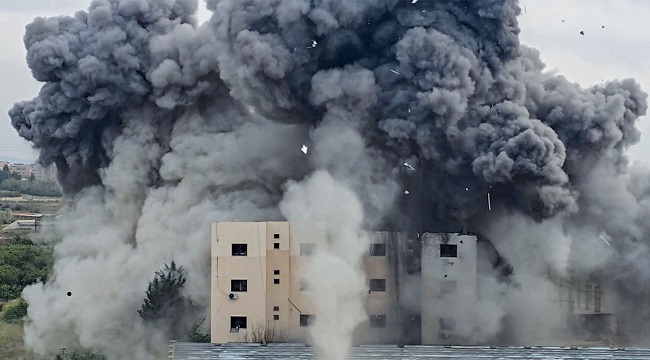
Defence Minister Israel Katz announced on Thursday that an Israeli airstrike had killed Alireza Tangsiri, commander of the Iranian Revolutionary Guards’ navy.
“Last night, in a precise and lethal operation, the IDF eliminated the commander of the Revolutionary Guards’ navy, Tangsiri, along with senior officers of the naval command,” Katz said in a video statement.
“The man who was directly responsible for the terrorist operation of mining and blocking the Strait of Hormuz to shipping was blown up and eliminated.”
Since the start of the joint US-Israeli attacks on Iran on February 28, Israel has announced the killing of several top Iranian officials, including supreme leader Ali Khamenei and the Islamic republic’s powerful security chief, Ali Larijani.
In recent days, Israeli forces have carried out several strikes targeting the naval assets of Iran.
Last week, Israeli airstrikes hit several Iranian naval ships in the Caspian Sea, including ones equipped with missile systems, support vessels and patrol craft.
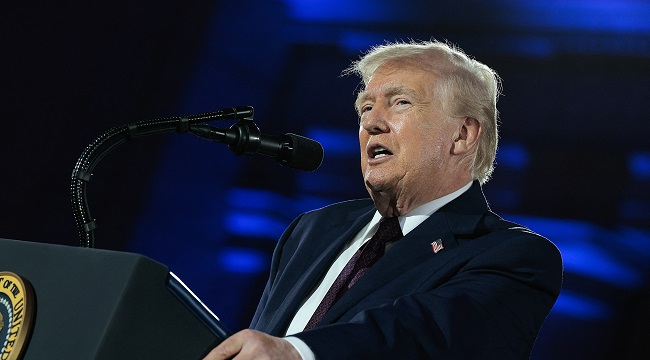
US President Donald Trump insisted Wednesday that Iran was taking part in peace talks, suggesting Tehran’s denials were because Iranian negotiators fear being killed by their own side.
“They are negotiating, by the way, and they want to make a deal so badly. But they’re afraid to say it, because they figure they’ll be killed by their own people,” Trump told a dinner for Republican members of Congress.
“They’re also afraid they’ll be killed by us.”
The US leader’s comments came after Iranian Foreign Minister Abbas Araghchi said that “we do not intend to negotiate”.
Trump repeated his assertion that Iran was being “decimated” in the conflict now in its fourth week, even though Tehran still maintains an effective stranglehold over the crucial Strait of Hormuz oil route.
Lashing out at his domestic opponents, Trump also claimed Democrats were trying to “deflect from all of the tremendous success that we’re having in this military operation.”
In a mocking reference to calls from Democrats for him to seek the approval of Congress for the conflict, Trump added: “They don’t like the word ‘war,’ because you’re supposed to get approval, so I’ll use the word military operation.”
The White House said earlier that Trump was ready to “unleash hell” if Iran did not admit defeat, while also insisting that Tehran is still taking part in talks.
Iranian state media had earlier cited an unidentified official as saying that the Islamic republic had responded “negatively” to a reported 15-point plan from Washington.
‘Talks continue’
“If Iran fails to accept the reality of the current moment, if they fail to understand that they have been defeated militarily and will continue to be, President Trump will ensure they are hit harder than they have ever been hit before,” Press Secretary Karoline Leavitt told reporters.
“President Trump does not bluff and he is prepared to unleash hell. Iran should not miscalculate again.”
Asked if negotiations with Iran had stalled, Leavitt replied: “Talks continue. They are productive.”
Leavitt declined to say whom the US was dealing with in Tehran following the assassination of supreme leader Ali Khamenei, whose son and successor Mojtaba Khamenei has not been seen in public.
Reports have suggested the Trump administration’s interlocutor is Mohammad Bagher Ghalibaf, Iran’s speaker of parliament and one of its most prominent non-clerical figures.
The spokeswoman also declined to confirm reports that top US officials including Vice President JD Vance were set to hold talks with the Iranians in Pakistan, which has emerged as a key mediator.
Trump is moving thousands of airborne troops and extra marines to the Gulf amid speculation that he might order a ground invasion to either seize Iranian oil assets in the Gulf or secure the Strait of Hormuz.
The White House meanwhile appeared to stick to the four to six-week timeline it has previously given for the war.
Trump announced Wednesday that his visit to China to meet Xi Jinping had now been rescheduled for mid-May, having postponed it by six weeks to deal with the conflict.
“We’ve always estimated approximately four to six weeks (for the length of military operations against Iran), so you could do the math on that,” Leavitt added.
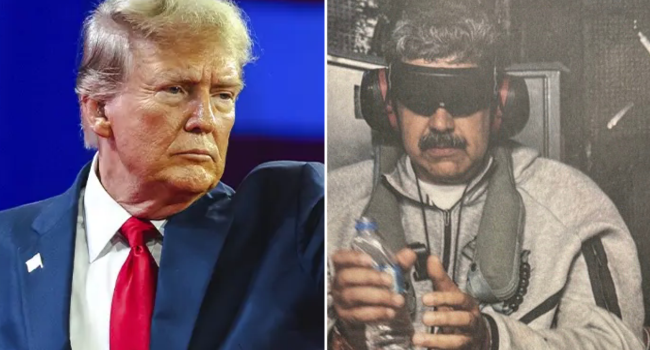
Ousted Venezuelan president Nicolas Maduro will appear in a New York court on Thursday for the second time since his capture by US forces in an extraordinary nighttime raid.
Maduro, 63, and his wife, Cilia Flores, have been held in a Brooklyn jail for almost three months after American commandos snatched the pair from their compound in Caracas in early January.
The stunning operation deposed the strongman who had led Venezuela since 2013 and has since forced the oil-rich country to largely bend to the will of US President Donald Trump.
Maduro has declared himself a “prisoner of war” and pleaded not guilty to the four counts of “narco-terrorism” conspiracy, cocaine importation conspiracy, possession of machine guns and destructive devices, and conspiracy to possess machine guns and destructive devices.
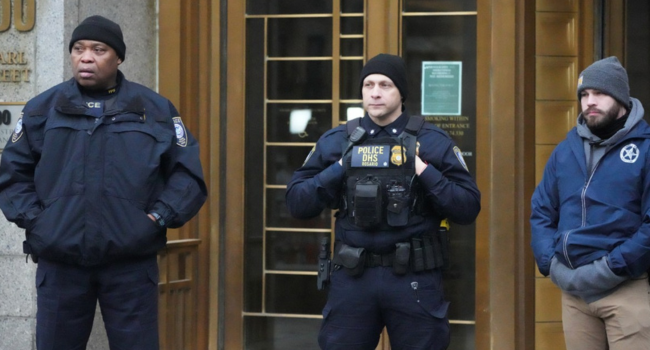
Security stands outside the Daniel Patrick Moynihan United States Courthouse as ousted Venezuelan president Nicolas Maduro awaits his arraignment hearing on January 5, 2026 in New York. Photo by BRYAN R. SMITH / AFP
Thursday’s hearing at 11 a.m. (1500 GMT) will likely see Maduro push for the dismissal of his case as lawyers tussle over who will pay the former leader’s legal fees.
Venezuela’s government is seeking to cover the costs, but because of Washington’s sanctions, his lawyer, Barry Pollack, must obtain a US license that has not been issued.
Pollack argued in a court submission that the license requirement violated Maduro’s constitutional right to legal representation and demanded the case be thrown out on procedural grounds.
Deadly Raid
Detained in Brooklyn’s Metropolitan Detention Centre, a federal prison known for unsanitary conditions, Maduro is reportedly alone in a cell with no access to the internet or newspapers.
A source close to the Venezuelan government said the incarcerated Maduro reads the Bible and is referred to as “president” by some of his fellow detainees
This screengrab taken from the X account of Rapid Response 47, the official White House rapid response account, shows Venezuelan President Nicolas Maduro (C) escorted by DEA agents inside the headquarters of the US Drug Enforcement Administration (DEA) in lower Manhattan, New York, on January 3, 2026.
He is only allowed to communicate by phone with his family and lawyers for a maximum of 15 minutes per call, the source added.
“The lawyers told us he is strong. He said we must not be sad,” said his son, Nicolas Maduro Guerra, adding his father told him: “We are fine, we are fighters.”
Maduro and his wife were forcibly taken by US commandos in the early hours of January 3 in airstrikes on the Venezuelan capital backed by warplanes and a heavy naval deployment.
At least 83 people died, and more than 112 people were injured in the assault, according to Venezuelan officials.
No US service members were killed.
US Pressure
At his first US court appearance in January, Maduro struck a defiant tone as he identified himself as the president of Venezuela despite being captured.
The South American country is now led by Delcy Rodriguez, who has been Maduro’s vice president since 2018.
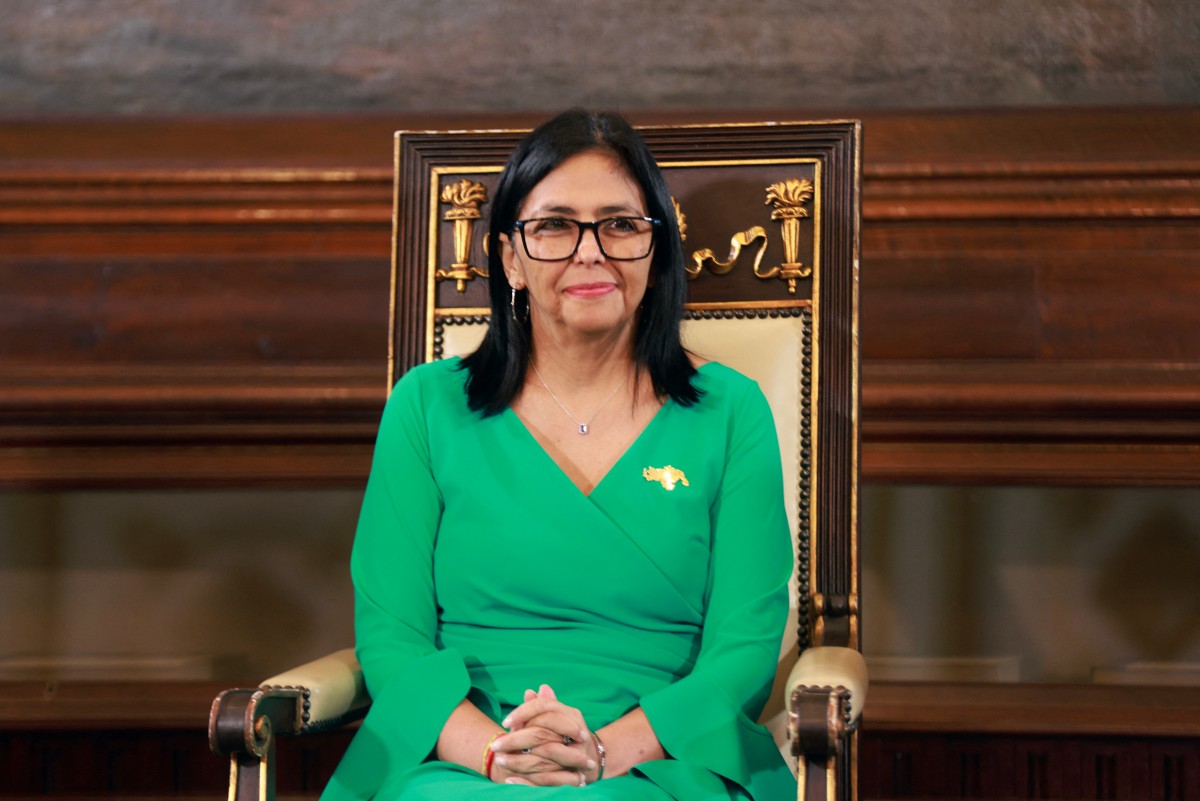
This handout picture released by the Miraflores Palace press office shows Venezuela’s interim President Delcy Rodriguez gesturing during an oath ceremony at the National Assembly in Caracas on January 5, 2026. (Photo by Marcelo Garcia / Miraflores press office / AFP)
Under US pressure, she is grappling with leading a country saddled with the world’s largest proven oil reserves but an economy in shambles.
Rodriguez has since enacted a historic amnesty law to free political prisoners jailed under Maduro and reformed oil and mining regulations in line with US demands for access to her country’s vast natural wealth.
This month, the State Department said it was restoring diplomatic ties with Venezuela in a sign of thawing relations.
Security is expected to be heightened around the New York courthouse for Thursday’s hearing.
Presiding over the case is Alvin Hellerstein, a 92-year-old judge credited with overseeing several high-profile trials during his decades on the bench.