
News
Jonathan’s Return in 2027 Would Be a Mistake — Shehu Sani Warns


Former federal lawmaker, Shehu Sani, has urged former President Goodluck Jonathan not to seek a return to the presidency in the 2027 general election.
Sani said the Peoples Democratic Party (PDP), the party Jonathan used to win the election in 2011, is no longer united.
The ex-federal lawmaker said, “Each time there is an election, the name of Jonathan comes up. It is his volition to contest, but I advise him not to do that. The reason is very simple: the PDP he used to know is not the PDP now.
“The PDP in the South-West is endorsing the President, (Bola Tinubu). Some members of the party are in the (ADC) coalition. It is not the party he used to know so he shouldn’t waste his time.”
Jonathan, who deputised former President Umaru Yar’adua for three years before his death, succeeded him on May 6, 2010, till May 29, 2011. He was elected on the PDP platform and was in power till May 29, 2015.
Jonathan also re-contested in 2015 but lost to Muhammadu Buhari of the All Progressives Congress (APC), who was in power till May 2023 when he handed over to his partyman, Tinubu.
Constitutionally, Jonathan still has one term of four years to be president, but he has not shown interest in re-contesting.
Ahead of the 2027 election, talks of Jonathan’s return have gained momentum within political circles, especially with the debate about a one-term presidency by southerners to gain northern bloc votes, and the arrival of a new opposition coalition floated by the African Democratic Congress (ADC).
Sani, the Senator for Kaduna Central in the 8th National Assembly, said ADC coalition members are not ideologically different from President Bola Tinubu.
The former lawmaker said, “We are in a democracy, and it is within the right and ambit of our democratic experiment or law to have an opposition that will give an alternative, but if their only cause for power is to remove Tinubu without providing any alternative to governance and his style, then, they have no agenda.
“The people that constitute the coalition today are not ideologically and philosophically different from the programmes which the Tinubu administration is prosecuting. So, it’s not like we have a Marxist and a Capitalist or a Neo-Liberal and a Conservative.
“During their campaigns and in their dear lives, you can see those liberal values of devaluation and removal of subsidy and some other party.”




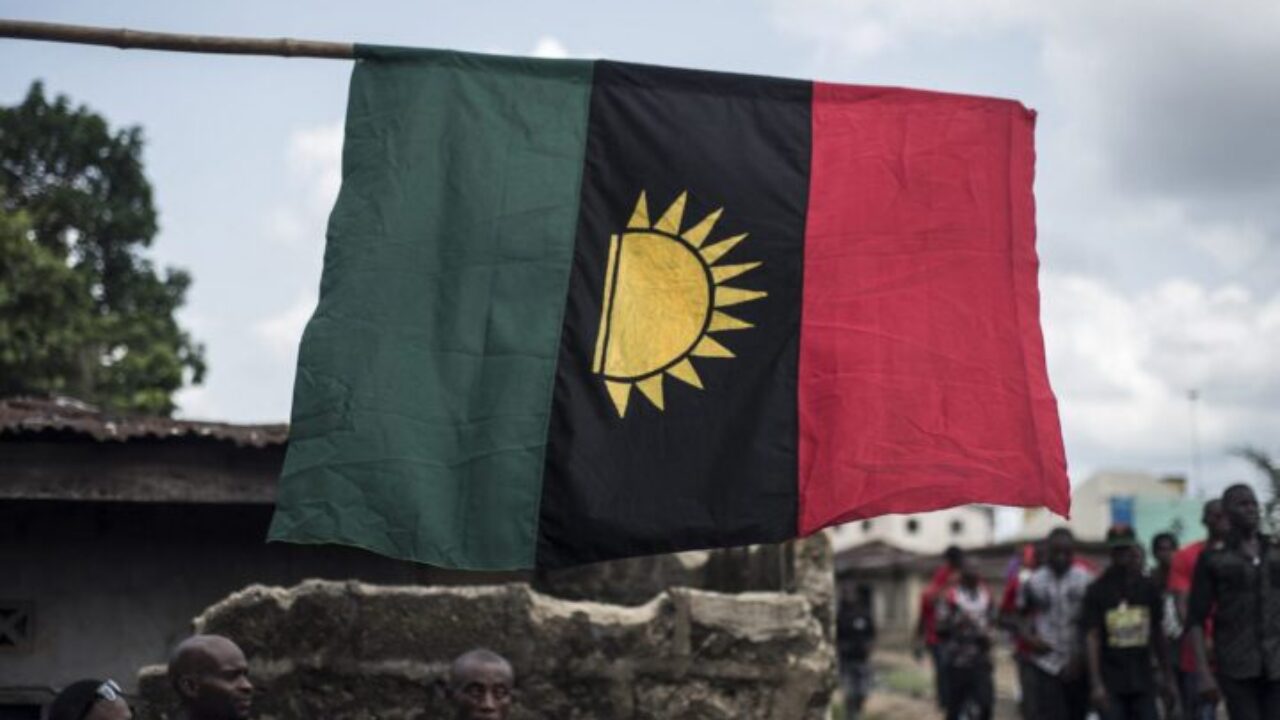
Ahead of the 2027 general election, the Indigenous People of Biafra (IPOB) has dismissed another round of balloting as incapable of resolving what it described as Nigeria’s fundamental political crisis, insisting that the country needs a referendum rather than another change of political leadership.
The separatist group said the question confronting Nigeria goes beyond who emerges president in 2027, arguing that Nigerians should first be given an opportunity to determine whether they want to continue under the existing political arrangement or negotiate a different constitutional future.
In a statement by its spokesperson, Emma Powerful, on Thursday ,IPOB said the debate should not be reduced to a choice among President Bola Tinubu and opposition figures, including Atiku Abubakar and Peter Obi.
It maintained that repeatedly electing different leaders without addressing what it called Nigeria’s foundational problems amounted to “doing same thing over and over again and expecting a different result.”
According to the group, its leader, Nnamdi Kanu, has consistently placed referendum and self-determination at the centre of the agitation. “The peoples trapped in this colonial construction named Nigeria should determine, peacefully and democratically, the future they want.”
IPOB argued that while an election determines who exercises political power for a specified period, a referendum could enable citizens to decide the constitutional framework under which they want to be governed.
IPOB said such a process should not predetermine Nigeria’s break-up, but should give the people an opportunity to choose among remaining together under a new constitution, adopting another federal arrangement or pursuing self-determination.
It drew comparisons with the United Kingdom, citing constitutional votes held in Scotland, Wales and Northern Ireland.
The group referred particularly to Scotland’s 2014 independence referendum, the 1997 devolution referendums in Scotland and Wales and the 1998 Northern Ireland vote on the Belfast Agreement.
It also cited the September 14, 2026 memorandum signed in Cardiff by leaders of Plaid Cymru, the Scottish National Party and Sinn Féin, in which the parties asserted the right of their respective peoples to determine their constitutional futures through democratic means. The Cardiff agreement and its self-determination language have been independently reported.
“If referendum can settle constitutional questions in Britain, why should the peoples of Nigeria be permanently denied the same opportunity?” IPOB asked.
The group also cited a recent symbolic vote in Piddington, Oxfordshire, as further evidence of the use of voting to express views on constitutional or territorial questions.
IPOB sought to reinforce its argument with recent comments by former President Olusegun Obasanjo on Africa’s democratic system.
At the Goodluck Jonathan Foundation Democracy Dialogue in Bauchi on August 11, Obasanjo criticised the Western liberal democratic model inherited by African countries, arguing that it lacked sufficient African context and content. His remarks were made at a forum themed, “Beyond Elections: Can Political Parties and the Judiciary Save African Democracy?”
The pro-Biafra group also cited former President Goodluck Jonathan’s previous comments on Nigeria’s historical struggle to achieve national integration following the 1914 amalgamation.
It maintained that the approach to the 2027 election presents another opportunity for the country to confront what it considers the more fundamental question of political consent rather than concentrate solely on the personalities seeking the presidency.
For IPOB, the group said, “the issue is not who governs Nigeria, but what political arrangement the people freely consent to live under.”

A 49-year old man, identified as Benjamin Segun Bright, was on Thursday arraigned before an Osogbo Magistrate Court on three-count charge of selling adulterated herbal products.
In the suit number MOS/5531/2026 between the Commissioner of Police and the suspect and others at large were said to have committed the offence on July, 20, 2026, at about 9:30am around Odo-Ola Street, Igbona area. Osogbo, Osun State, within Osogbo Magisterial District.
The Commissioner of Police was represented by Inspector Temitope Fatoba, while Bright was represented by his counsel, K.E Ngwoke.
According to the charge sheet, “Count 1: That you Benjamin Segun Bright ‘M’ and others now at large, on or
before the 20 day of July 2026, at about 9:30am at Odo-Ola Street, Igbona area. Osogbo, Osun State, in the Osogbo Magisterial District, did conspire among
yourselves to commit a felony to wit: Exposing For Sale Things Unfit for Food or Drink Being in Possession of Adulterated/Counterfeit Products and thereby committed an offence contrary to and punishable under Section 517 of the Criminal Code Cap 34 Vol.11 Laws of Osun State, 2002.
“Count 2: That you Benjamin Segun Bright ‘M’ and others now at large, on the
same date, time, place and in the aforementioned Magisterial District, did have in your possession various adulterated tea and drinks such as Bright Life Herbal Tonic (2) Kaye Bitters (3) Bright Life Herbal Teas (4) Atura Herbal Balm and (5) Dr. Fresh Super Bleach with intent to sell the same as food or drink, which said products were in a state unfit for human consumption, noxious and/or unfit for food or drink, and thereby committed an offence contrary to and punishable under Section 243(1) of the Griminal Code Cap 34 Vol.11 Laws of Osun State, 2002.
“Count 3: That you, Benjamin Segun Bright ‘M’ and others now at large, on the
same date, time, place and in the aforementioned Magisterial District, did unlawfully adulterate various tea and drinks such as Bright Life Herbal teas, Bright Life Herbal Tonic intended for sale as food or drink which is unfit for human consumption, knowing that the same were likely to be sold as food or drink, and thereby committed an offence contrary to and punishable under Section 243(2) of the Criminal Code Cap 34 Vol.Il Laws of Osun State, 2002.”
Bright, however, pleaded not guilty and his counsel, Ngwoke moved application for bail on behalf of his counsel.
Presiding Chief Magistrate, Dr Olusegun Ayilara granted the accused bail in the sum of N5 million with two sureties, one of whom must be a house owner with valid identification and ready to deposit title document.
The other surety must be responsible person three years tax clearance while the address must be verifiable by prosecutor or court clerk.
Ayilra subsequently adjourned the matter to November 30, 2026.
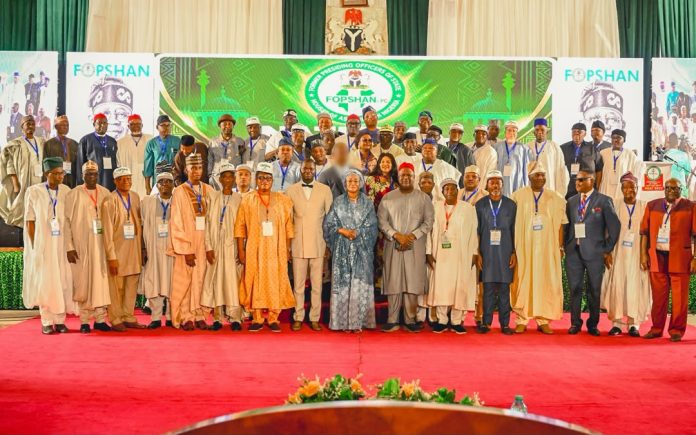
Former Speakers and Deputy Speakers of State Houses of Assembly on Thursday unanimously endorsed President Bola Ahmed Tinubu for a second term and resolved to launch a nationwide grassroots mobilisation for his re-election in 2027.
Under the plan, members of the Forum of Former Presiding Officers of State Houses of Assembly of Nigeria (FOPSHAN) will mobilise across the 36 states and the Federal Capital Territory (FCT), explain the administration’s policies and programmes, and canvass support for the President.
The former legislative leaders also endorsed the administration’s economic reforms, particularly the removal of petrol subsidy, arguing that the immediate difficulties associated with the measures should be weighed against their anticipated long-term benefits.
The resolutions were adopted at FOPSHAN’s National Summit in Abuja, themed: “Bold Leadership, Bold Reforms: From Subsidy to Renewed Hope – Affecting the Economic Trajectory and Digital Leadership of President Bola Ahmed Tinubu’s Administration”.
Former Senate President Pius Anyim chaired the summit, while First Lady Senator Oluremi Tinubu attended as Special Guest of Honour.
The forum’s National Chairman, Senator Wasiu Eshilokun Sani, hosted the gathering.
Ebonyi State Governor, Francis Ogbonna Nwifuru, a former Speaker of the Ebonyi State House of Assembly, chairs the forum’s Board of Trustees.
In its resolutions, the forum declared its support for what it described as the administration’s “bold economic reforms”, particularly petrol subsidy removal, saying the policy should be viewed within the broader objective of securing long-term economic prosperity.
It subsequently announced a unanimous endorsement of Tinubu’s second-term bid.
“In recognition of the President’s colourful, visionary leadership and commitment to national development, FOPSHAN unanimously endorses President Bola Ahmed Tinubu, GCFR, for a second term in office in the 2027 general elections”, the resolution stated.
The forum resolved to move beyond the endorsement by deploying its membership across the country to build grassroots support for the administration.
Former legislators at the national, state, and local government levels are expected to engage citizens, explain government policies and programmes, and take the summit’s message to communities across the 36 states and the FCT.
FOPSHAN also appealed to the First Lady to enlist its members as ambassadors for the administration’s social intervention programmes, particularly initiatives targeting women, children and vulnerable Nigerians.
The former presiding officers further urged the President and state governors to make greater use of their legislative and governance experience in appointments and policy formulation.
“The conference calls on the President and governors to continue to tap into the wealth of legislative experience of former presiding officers in appointments and policy formulation for the good governance of the country”, the resolution stated.
On party affairs, the forum reaffirmed its commitment to the unity and progress of the All Progressives Congress (APC), urging members to close ranks and support the administration at the federal and sub-national levels.
Earlier, Nwifuru said former legislative leaders could not afford to become spectators in national affairs after leaving office, arguing that their experience should continue to strengthen governance and democratic institutions.
Drawing from his years as Speaker of the Ebonyi State House of Assembly before becoming governor, Nwifuru stressed the importance of cooperation between the executive and legislature.
“Those years taught me an enduring lesson. Governance is not the responsibility of the executive alone; it is a partnership between institutions”, he said.
Nwifuru said the ultimate objective of the ongoing economic reforms should be to expand Nigeria’s productive capacity and create opportunities for citizens, particularly young people.
“We must invest in agriculture, manufacturing, infrastructure, education, energy and technology. We must create an environment where Nigerians can produce more, businesses can grow, and young people can find meaningful opportunities,” he said.
The governor also called for stronger legislative oversight, greater fiscal responsibility, stronger democratic institutions and further devolution of powers.
He said the experience former Speakers and Deputy Speakers accumulated placed them in a position to continue contributing to governance beyond their years in legislative office.
“We have occupied the chambers where laws are made, scrutinised and voices of our constituents were amplified. We therefore cannot afford to be spectators in the journey of national development”, Nwifuru said.
He urged the former lawmakers to deploy their legislative experience, networks, and understanding of governance to strengthen democratic development and promote accountability in public administration.
-
 Health & Wellness1 year ago
President Tinubu Directs Cut in Dialysis Cost from ₦50,000 to ₦12,000
-
 News1 year ago
PICTURE: In Lagos Couple Sentenced to 22½ Years for Cannabis Trafficking
-

 Business6 months ago
Dangote Refinery Reduces Petrol Gantry Price To ₦1,200 Per Litre
-
 Trending News1 year ago
NELFUND Disburses ₦86bn To 449,000 Beneficiaries
-
 Business2 years ago
Heritage Bank Customers’ Path to Securing ₦5m Insured Funds: A Step-By-Step Guide by NDIC”
-
Business2 years ago
Dangote; We Did Not Fix ₦600/Litre Petrol Price
-

 International News6 months ago
Indian Police Arrest Nigerian Over ₦290m Drug Haul
-
 Business6 months ago
After Plea Bargain, Court Discharges Stella Oduah of ₦2.5bn Fraud