
News
The Abiodun Effect: Infrastructure, Industry and Ogun’s Economic Transformation By Kayode Akinmade

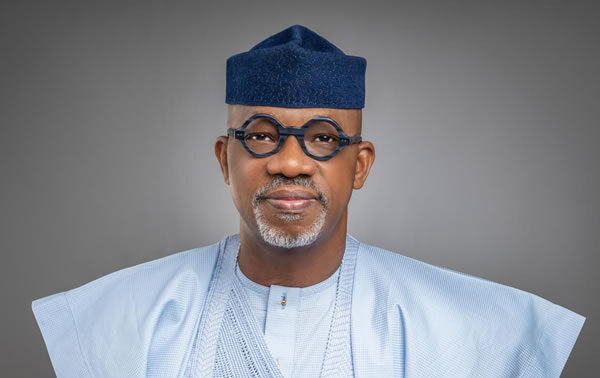
How Strategic Investments, Fiscal Reforms, Industrial Expansion and Bold Infrastructure Projects Propelled Ogun State to Become Nigeria’s Second Best-Performing State and One of the Nation’s Fastest-Growing Economies
When the 2025 State Performance Index (pSPI), released by Phillips Consulting, ranked Ogun State second only to Lagos among Nigeria’s 36 states and the Federal Capital Territory, it validated what years of strategic investments in infrastructure, industrialisation, logistics, and fiscal reforms had already signposted.
Since assuming office on May 29, 2019, Governor Dapo Abiodun has pursued a development agenda anchored on connectivity, economic expansion, and sustainable revenue growth. The result is a state increasingly regarded as one of Nigeria’s most competitive destinations for investment and industrial activity.
Importantly, the pSPI is not a political award. The index combines 70 per cent objective performance data drawn from audited records covering fiscal management, infrastructure, healthcare, education, and economic output, with 30 per cent citizen perception surveys. Ogun’s emergence as the nation’s second-best performing state reflects measurable outcomes rather than political sentiment.
## Economic Growth Backed by Data
Any assessment of Ogun State’s transformation begins with the numbers.
When Governor Abiodun took office in 2019, the state’s Gross Domestic Product (GDP) stood at approximately ₦2.9 trillion. By 2024, it had risen to ₦7.3 trillion, while projections based on expanding industrial productivity place the figure closer to ₦17 trillion.
Internally Generated Revenue (IGR) has followed a similar trajectory. From about ₦50.6 billion in 2020, IGR rose to ₦100.7 billion in 2021, climbed to ₦146 billion in 2023, and reached nearly ₦192 billion in 2024. The state is targeting ₦250 billion in 2025 and ₦500 billion by 2026.
The growth has been driven by tax digitisation, the elimination of multiple taxation, improved compliance, and the expansion of industrial activities across the state.
Reflecting its growing economic capacity, Ogun’s 2025 Budget of Hope and Prosperity stood at ₦1.054 trillion, with over ₦600 billion dedicated to capital projects. Infrastructure, education, and healthcare received the largest allocations, reinforcing the administration’s emphasis on long-term development.
## Building Prosperity Through Roads
One of the most visible achievements of the Abiodun administration has been its extensive investment in road infrastructure.
More than 1,700 kilometres of roads have been constructed or rehabilitated across the state since 2019. These projects include the reconstruction of the Abeokuta-Sagamu Expressway and intervention works on the Lagos-Ota-Abeokuta Expressway, one of Nigeria’s busiest commercial corridors.
After more than two decades of jurisdictional disputes stalled progress on the Lagos-Ota-Abeokuta road, the state government secured federal approval and commenced reconstruction in 2024.
Road projects have also been executed across industrial and agricultural corridors in Ifo, Sango-Ota, Idiroko, Remo, Yewa, and Ijebu areas, improving mobility, reducing logistics costs, and strengthening economic integration.
For the administration, roads are more than physical infrastructure; they are economic assets that facilitate trade, attract investment, and improve competitiveness.
## The ISEYA Development Framework
The administration’s governance philosophy is encapsulated in its ISEYA agenda—Infrastructure, Social Investment, Education, Youth Empowerment, and Agriculture.
Under this framework, infrastructure development has remained a priority, while investments in healthcare, education, housing, youth development, and agriculture have sought to ensure inclusive growth.
The revitalisation of primary healthcare centres, recruitment of teachers, rehabilitation of schools, support for small businesses, youth skills acquisition programmes, and agricultural interventions have all contributed to improvements in human capital development.
The strong citizen perception scores recorded in the pSPI suggest that residents are experiencing tangible benefits from these investments.
## Gateway Airport and Aviation Connectivity
A major milestone in the administration’s infrastructure drive was the completion of the Gateway International Agro-Cargo Airport.
The airport received its first commercial flight in February 2023, marking a historic moment for Ogun State. Strategically located to serve industrial clusters along the Lagos-Ogun corridor, the facility was designed to provide manufacturers and exporters with faster logistics options and strengthen the state’s export competitiveness.
The project has received commendation from prominent national figures, including former President Olusegun Obasanjo and former Vice President Yemi Osinbajo, both of whom described it as a significant economic asset.
Complementing the airport is the Gateway Airline initiative, aimed at improving regional connectivity and supporting business travel.
## Kajola and Mojoda Dry Ports: Redefining Logistics
Among the administration’s most transformative economic initiatives are the Kajola and Mojoda Dry Ports.
The Kajola Dry Port, located near the Lagos-Ibadan Railway corridor, was conceived as an inland cargo terminal that enables importers and exporters to process goods closer to their businesses rather than relying exclusively on congested seaports.
The facility is supported by the Kajola Specialised Railway Industrial Free Trade Zone, a partnership expected to unlock substantial industrial investment and employment opportunities.
In 2025, the Federal Government approved a second dry port in Mojoda, Ijebu-Ode. Situated on 130 hectares, the facility is expected to serve as a major cargo consolidation and distribution hub for the Southwest region.
Together, both projects position Ogun as a critical logistics gateway for Nigeria’s manufacturing and export sectors.
## Industrial Expansion Across the State
Ogun remains one of Nigeria’s foremost industrial destinations, with major companies operating within its borders.
The administration has prioritised the rehabilitation of key industrial corridors, particularly the Agbara-Atan-Lusada axis, which hosts numerous multinational firms.
Improved infrastructure within these industrial zones has enhanced operational efficiency and encouraged further investment.
Beyond Agbara, the state has expanded industrial development through initiatives such as the Remo Economic Industrial Cluster, a partnership with ARISE Integrated Industrial Platforms valued at approximately $400 million.
These efforts have ensured that industrial growth is spread across the state’s three senatorial districts.
## A Multimodal Transport Strategy
Governor Abiodun’s long-term vision extends beyond roads.
The administration is pursuing a multimodal transport strategy that integrates road, rail, air, and maritime infrastructure. Existing rail connections, the Gateway Airport, proposed port projects, and an extensive road network are being developed as interconnected assets designed to reduce transportation costs and improve supply chain efficiency.
This integrated approach strengthens Ogun’s position as a strategic logistics hub serving both Nigeria and the wider West African market.
## Creating an Investor-Friendly Environment
Infrastructure development has been matched by reforms aimed at improving the ease of doing business.
Through agencies such as OgunInvest and the Business Environment Council, the administration has streamlined investment processes, digitised tax administration, reduced bureaucratic bottlenecks, and actively engaged local and international investors.
The results have been significant. Ogun now hosts more than 6,000 registered industries and continues to attract substantial domestic and foreign investments across manufacturing, logistics, tourism, housing, and agro-processing.
The state’s growing reputation as a business-friendly destination has further strengthened its economic profile and revenue base.
## The Phillips Consulting Verdict
The 2025 State Performance Index evaluated states across key indicators, including fiscal management, infrastructure, healthcare, education, economic performance, and citizen satisfaction.
Ogun’s second-place ranking confirms that its development is the product of deliberate policy choices and sustained execution rather than geographical advantage alone.
The assessment also validates the administration’s ISEYA framework, demonstrating that strategic investments in infrastructure, human capital, and economic development can deliver measurable outcomes.
## A Model of Deliberate Development
The transformation of Ogun State under Governor Dapo Abiodun illustrates how governance can drive economic growth when policies are designed to complement one another.
Roads improved access to industrial hubs. Industrial growth expanded the tax base. Increased revenues funded additional infrastructure, while logistics projects strengthened the state’s attractiveness to investors.
From GDP growth and rising internally generated revenue to extensive road construction, aviation infrastructure, dry ports, industrial expansion, and national recognition through the pSPI ranking, Ogun State’s development trajectory reflects a deliberate effort to position the state as one of Nigeria’s leading economic centres.
As major projects near completion and new investments continue to flow in, the challenge ahead will be sustaining the momentum and consolidating the gains already achieved.




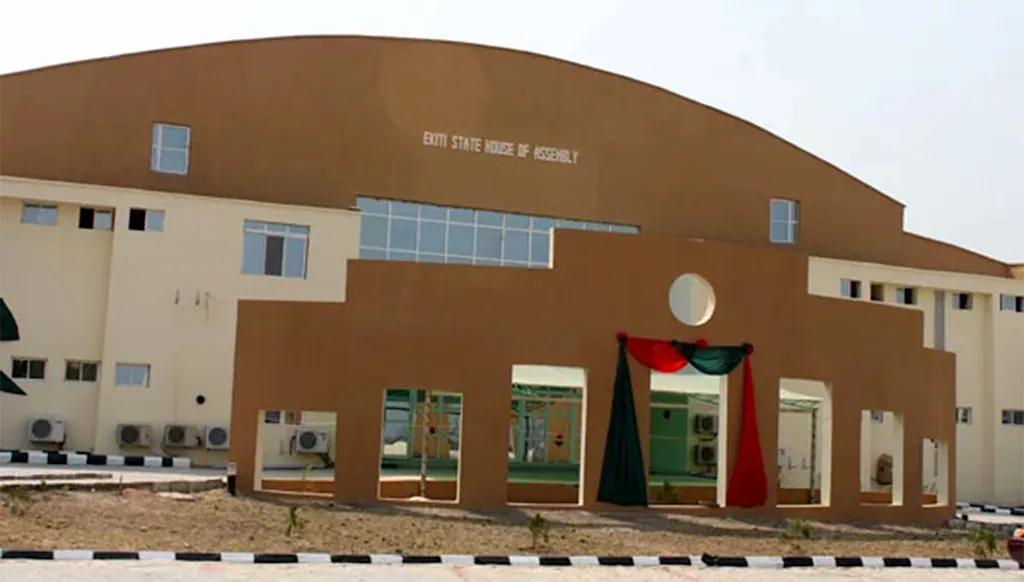
The Ekiti State House of Assembly has passed a bill seeking to amend the 1999 Constitution to provide for the establishment of state police services across the country.
The House disclosed that the bill, known as the Constitution of the Federal Republic of Nigeria, 1999 (Sixth Alteration) Bill, 2026, scaled its second and third readings during plenary.
At the plenary, all 21 lawmakers present supported its passage, signalling the Assembly’s endorsement of the proposed constitutional framework for decentralised policing.
The Speaker, Rt Hon Adeoye Aribasoye, following the passage, directed the Clerk of the House to transmit the bill to the National Assembly alongside the observations made by the state legislature.
Aribasoye described the proposed establishment of state police as an issue that had dominated national discourse for more than two decades.
He said the country needed an effective and responsive policing system capable of addressing the security challenges confronting communities.
Aribasoye noted that Nigerians had repeatedly expressed concerns over delayed responses to distress calls, operational limitations and the distance between security agencies and the communities they were expected to protect.
According to him, inadequate and poorly coordinated local policing in some areas had contributed to insecurity, threatening livelihoods, disrupting education, undermining business confidence and weakening public trust.
He said a properly structured state police system could improve accountability by bringing policing leadership and oversight closer to the people and their elected representatives, subject to appropriate constitutional safeguards.
Aribasoye added that Nigeria could not afford unnecessary delays in tackling insecurity, describing state police as a practical necessity rather than a theoretical option.
In its report, the Committee of the House recommended that the Assembly concur with the proposed constitutional alteration, subject to an amendment to Section 317A(5).
The committee said it considered the bill clause by clause before recommending its passage, with a specific proposal to insert the words, “an Act of the National Assembly or a Law of the State House of Assembly, as applicable,” after the words “this Constitution” in the newly proposed Section 317A(5).
It said the amendment was intended to recognise the legislative authority of the National Assembly and state Houses of Assembly, within their respective constitutional jurisdictions, in authorising relevant security arrangements.
The committee recommended that the House approve the bill subject to the proposed amendment, which forms part of the observations to be forwarded to the National Assembly for consideration.
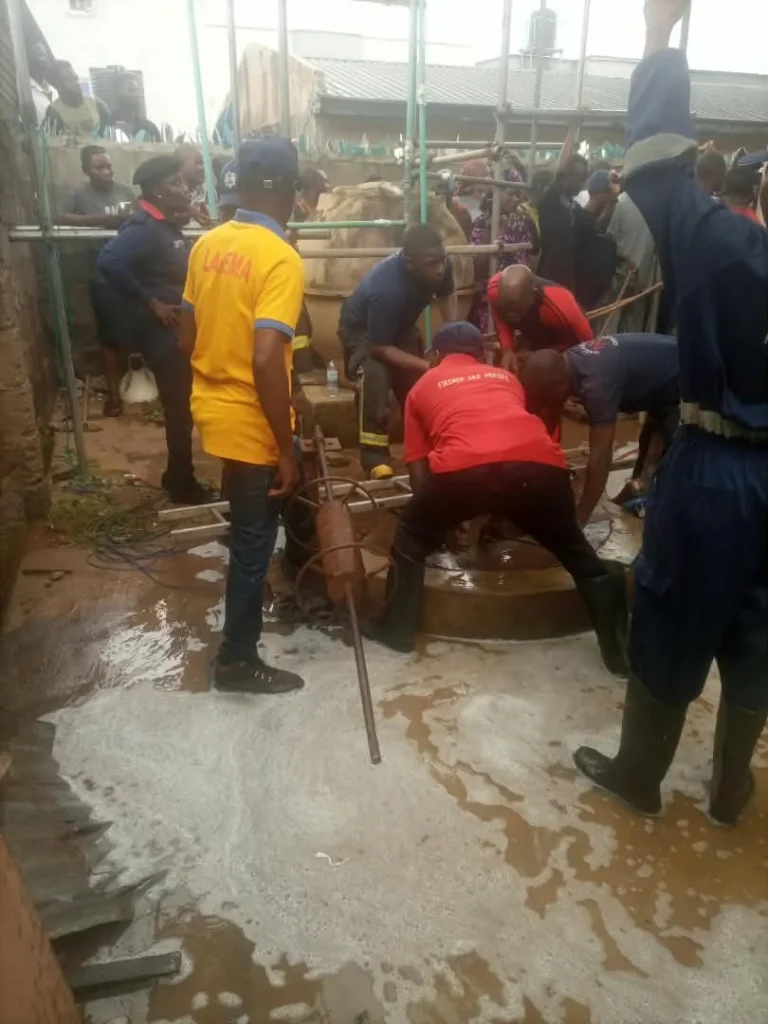
A man has died while attempting to rescue a two-year-old child who fell inside a well in Abule Egba, Lagos State, while the toddler remains missing.
The Lagos State Emergency Management Agency, LASEMA, disclosed this in a statement issued by its Permanent Secretary, Dr Olufemi Oke-Osanyintolu, on Tuesday.
The incident occurred on Paul Street, inward Agbe Road, after the toddler, whose mother reportedly worked as a cleaner in the compound, accidentally fell into the well.
A male resident reportedly entered the well in an attempt to save the child but became trapped and was unable to climb out.
LASEMA said it received a distress call and deployed a response team from its Igando Base. However, the man was found dead.
“The gallant rescuer who attempted the rescue was recovered deceased,” Oke-Osanyintolu stated.
His remains were handed over to his relatives and members of the Hausa community for burial in accordance with their customs.
Emergency responders, including the Lagos State Fire and Rescue Service, the Lagos State Neighborhood Safety Corps and the police, subsequently launched a search for the missing toddler.
However, the operation was hampered by the large volume of water and thick mud inside the well. Efforts to drain the water failed to yield the desired result.
According to LASEMA, a specialist local diver was later deployed for a final search but confirmed that the child had sunk deep into the mud and could not be retrieved. Only one shoe belonging to the toddler was recovered.
The agency said the operation was discontinued after consultations with the family and community leaders.
LASEMA commiserated with the deceased man’s family and the Hausa community, describing his attempt to save the child as an act of uncommon bravery.
It also urged residents to properly secure wells and other openings around their homes to prevent similar incidents.
The agency warned against attempting dangerous rescue operations without professional assistance, advising residents to contact emergency responders through 767 or 112 when such incidents occur.
A 45-year-old man, Abubakar Musa, alias Daddy, has been condemned to death by hanging by Yobe State High Court 1 in Damaturu for the killing of his wife, Ammi Mamman.
The High Court delivered the verdict on Wednesday, about two years after the crime was committed.
Musa was apprehended on January 4, 2024, by operatives of the Yobe State Police Command over the killing of his wife at New Bra-Bra Housing Estate, Damaturu, and was arraigned for culpable homicide.
In a judgement, the court dismissed the not-guilty plea entered by the defendant, holding that it could not stand in the face of credible evidence presented before the court.
The court ruled that the prosecution successfully proved all elements of culpable homicide beyond reasonable doubt.
Consequently, the defendant was found guilty and sentenced to death by hanging.
The judgement provides that the convict may file an appeal within the legally allowed timeframe, otherwise the sentence will be executed.
-
 Health & Wellness1 year ago
President Tinubu Directs Cut in Dialysis Cost from ₦50,000 to ₦12,000
-
News2 years ago
CBN Debunks Fake Circular on New ₦5,000 and ₦10,000 Notes
-
 Business7 months ago
Dangote Refinery Reduces Petrol Gantry Price To ₦1,200 Per Litre
-

 International News7 months ago
Indian Police Arrest Nigerian Over ₦290m Drug Haul
-
 Business7 months ago
After Plea Bargain, Court Discharges Stella Oduah of ₦2.5bn Fraud
-
Business2 years ago
Dangote; We Did Not Fix ₦600/Litre Petrol Price
-
 Trending News1 year ago
NELFUND Disburses ₦86bn To 449,000 Beneficiaries
-
 Opinion2 years ago
Championing the People’s Voice: Obasa’s Dedication to Grassroots Representation By Dave Agboola⁰