
News
Flooded Mine Shaft Claim 13 Illegal Gold Miner’s Lives In Indonesia, More Still Missing

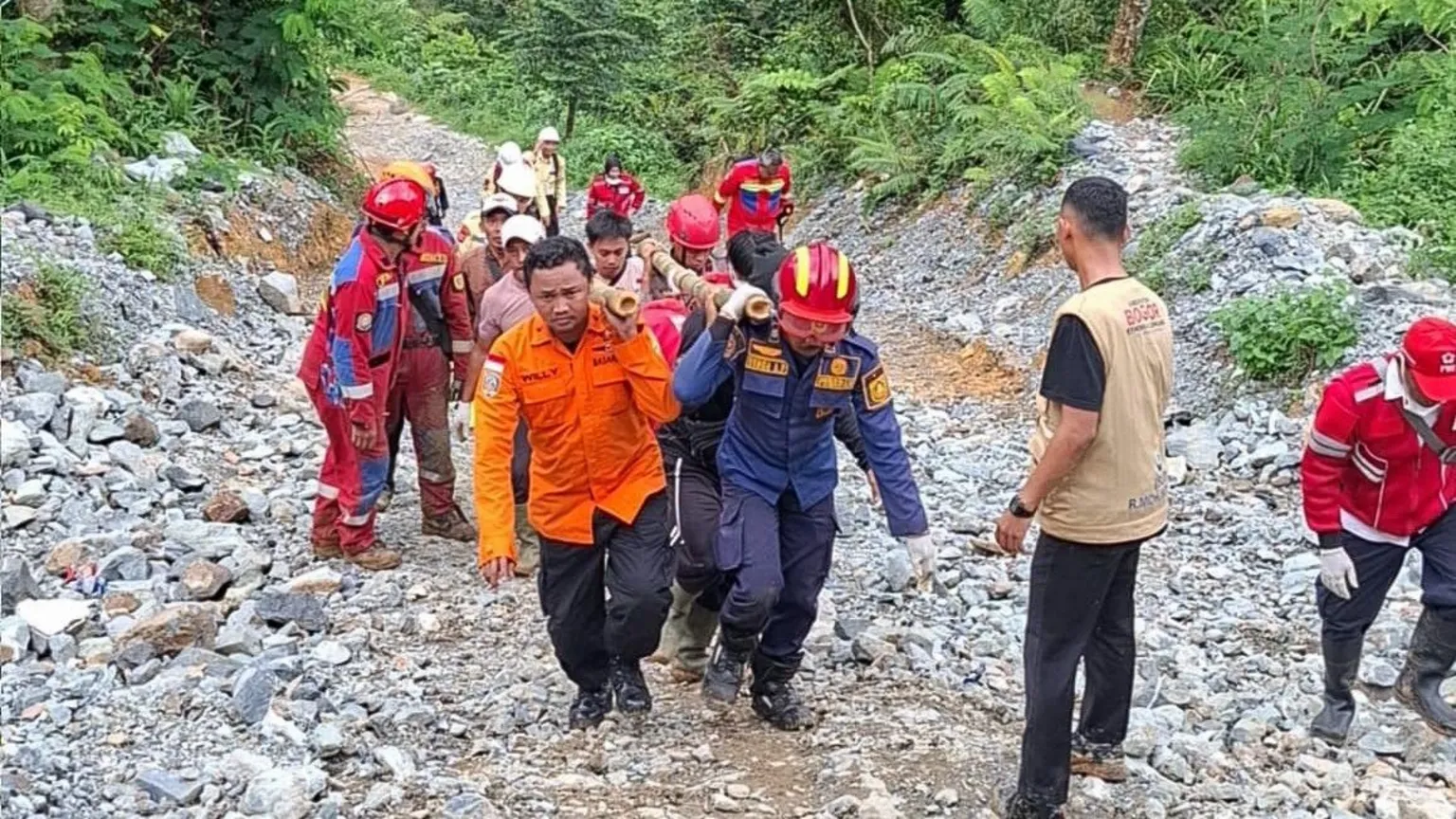
Authorities on Thursday confirmed that 13 people had died and their bodies were recovered from a good mining site in Indonadia . At least 13 more are thought to still be missing.
Search-and-rescue operations are ongoing, with personnel using ropes to access the depths of the dark, narrow and slippery mine shafts, which are continually being flooded from below.
Above ground, ambulances and medical personnel are ready and waiting to transport victims.
“We are coordinating with all search and rescue personnel involved in the operation to monitor water conditions and assess access to the mine shaft,” Desiana Kartika Bahari, head of the Jakarta Search and Rescue Office, said in a statement on Wednesday.
“The depth of the shaft, narrow access and limited lighting are key considerations in determining the search strategy so that personnel can operate safely.”
Rescuers have been working day and night to find survivors in the flooded mine shaft
Small-scale gold mining is banned in Indonesia, but remains widespread in rural parts of the mineral-rich archipelago.
Multiple studies show that over the past ten years the illegal industry has rapidly flourished, often in correlation with rising gold prices. In early 2026, those prices reached an all-time high – spurring a gold rush that prompted mine operators across the country to expand their operations.
This included state-owned mining company Aneka Tambang (Antam), which owns the business permit for the area in which this week’s flooded mine is located. Antam have said the mine was not theirs and was operating without their authorisation.
On Wednesday, while rescue operations there were underway, West Java Regional Police separately announced that they had uncovered 24 cases of illegal mining across the province between October and November alone.
But Bisman Bakhtiar, Executive Director of the Center for Energy and Mining Law Studies, said earlier this year that the actual number of illegal mines in Indonesia is higher than the government’s figures.
“[The government figures are] what’s been recorded. That means there must be more than that,” he said, noting that law enforcement operations have had little impact on the sector.
“It’s still very massive and very big because this has been going on for a very long time.”
Others allege that the illegal industry is underpinned by corruption.
Laode M Syarif, former deputy chairman of the Corruption Eradication Committee, said that unofficial mining is difficult to eradicate because every illegal mine has “backing”, usually from “police and military or high-ranking officials in local and provincial governments”.
“As long as these backers are not dealt with firmly, illegal mining will continue,” he said.
In many cases, though, the allure of these mines is simple: they offer an economic lifeline to people with few other viable prospects.
Despite the value of gold having dipped in recent months, countless illegal miners throughout Indonesia are still eagerly digging for paydirt.
But the lack of regulation and poor construction in the pits also means accidents are relatively common – whether from landslides, floods, or exposure to hazardous gases, all of which have claimed lives in recent years.
Relatives of the missing Bogor miners have been waiting near the site for news of their loved ones
Earlier this year, in the same area as this week’s flooded mine, 11 illegal gold miners reportedly died after a carbon monoxide leak inside a shaft.
The Indonesian Ombudsman on Thursday urged law enforcement officials to conduct a thorough investigation of the incident and to address the larger systemic issue behind it.
“This should be a momentum for all parties to resolve the [illegal gold mining] problem comprehensively, not just taking action after the incident or closing the holes discovered,” said Abdul Ghoffar, a member of the Indonesian Ombudsman.
“We need to uncover the entire [illegal gold mining] chain,” he continued. “We must not allow only the miners in the field to be seen and prosecuted, while those who control the activities, provide capital and facilities, store, and market the mined products remain untouched.
“Law enforcement must target the actors and networks that keep this illegal activity going.”
As rescue operations continue and more bodies are recovered, the picture is becoming less murky. But even if there are survivors among those who remain missing, time may be running out.
More than three days since the shafts flooded, the relatives of the anonymous men in the mines are desperately waiting to hear whether their loved ones survived.