
News
Farmers Accuse Banks Of Diverting Agric Funds To Real Estate


A former Chairman of the Agriculture and Non-Oil Group of the Lagos Chamber of Commerce and Industry, Prince Wale Oyekoya, opened a can of worms on the financial institution in Nigeria, Thursday, when he accused them of diverting funds meant for agricultural development into the real estate sector.
Oyekoya, who is also the Managing Director and Chief Executive Officer of Bama Farms Limited, said the action has worsened the financing crisis farmers across the country are facing.
He made the accusation at a panel session during the 2026 Agriculture and Agro-Allied Summit organised by the Nigerian-British Chamber of Commerce in Lagos. The theme of the summit was: “Ensuring Food Security in Nigeria: Innovations, Investments and Policy for a Resilient Future” .
Fielding questions on whether Nigeria has adequate data to identify genuine smallholder farmers at the point of loan disbursement, Oyekoya insisted that such information already exists within government structures through cooperatives and farmer clusters.
“Yes, there’s always data when you go to the ministries. When you go to any government establishment, that is why they say they deal with cooperatives and clusters. So every farmer, every stakeholder in farming in any state must be registered,” he said.
According to him, poor implementation and weak financial commitment remain major obstacles to sustainable agricultural development.
“I believe financial institutions are mostly the problem farmers have. I’m a living witness and I have so many experiences with them that when some of these funds are being given to the banks to be given to the farmers, most of them divert the funds to real estate,” he alleged.
He added that government, banks and private sector players all have roles to play in ensuring food security and sustainable growth in the sector.
However, Manager, Agribusiness and Non-Oil Export, Union Bank, Mr. Utomi Ezinwa, slightly disagreed with Oyekoya. He said that access to finance remained difficult for smallholder farmers because of the risks associated with fragmented production systems.
According to him, lenders are more willing to finance farmers when they operate in groups and have guaranteed markets through anchor arrangements.
“Some smallholder farmers can’t work alone. It is important that they work in association and link up to an anchor. When the market is guaranteed, we check the anchor himself, does he have capacity, does he have track record? There’s nothing stopping us from funding smallholder farmers,” he said.
Ezinwa noted that financing costs also remain a major burden on agricultural production.
“One of the major challenges apart from financing itself is the cost of the financing and we need to talk about it,” he added.
In his presentation, Guest speaker, Founder And Managing Director of Babban Gona , Mr. Kola Masha warned that Nigeria’s food security crisis could worsen if investment in agriculture and rural youth empowerment is not urgently scaled up.

An 18-year-old landlord, Similoluwa Akande, has been arraigned before an Akungba-Akoko Magistrate’s Court in Ondo State for allegedly setting fire to a tenant’s belongings valued at N898,000.
Akande was docked on a four-count charge bordering on felony following the incident, which reportedly occurred on August 19, 2026, at Okusa in Akungba-Akoko.
According to the police prosecutor, Olasunkanmi Boboye, the defendant allegedly set ablaze property belonging to his tenant, Aseluwa Ezekiel.
The items destroyed included a bed, bed frame, clothes, carpet, gas cylinder, travelling box, shoes, curtains, rods and cash.
The prosecutor told the court that the burnt items were valued at N898,000, while some official documents were also reportedly destroyed in the fire.
Boboye said the alleged offences contravened Section 249(D) of the Criminal Code, Cap. 37, Vol. 1, Laws of Ondo State of Nigeria, 2006.
The defendant pleaded not guilty to the charges when they were read to him.
He was not represented by legal counsel and informed the court that he had health challenges.
Presiding Magistrate Kolapo Kolawole granted the defendant bail in the sum of N500,000 and adjourned the matter until September 9, 2026, for hearing.
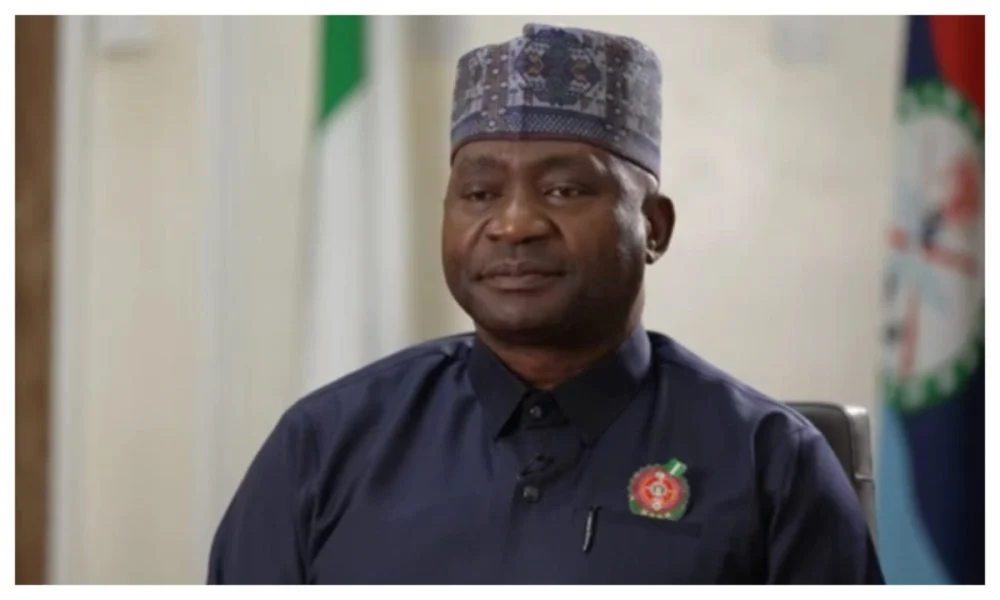
The Minister of Defence, Gen. Christopher Musa (retd.), on Thursday said terrorists are using motorcycles given to Nigerians as palliatives to wreak havoc across the country.
He, however, advised the state governors and lawmakers to stop giving motorcycles as palliatives, arguing that some of the motorcycles eventually end up in the hands of terrorists to facilitate and enhance their nefarious activities.
Musa, who stated this when he appeared on Channels Television’s Politics Today, said efforts are being made to curb terrorism and the operational challenges confronting the country’s security forces.
“We try to appeal to even governors to stop giving motorcycles out as palliatives. Because these motorcycles are the same ones that still end up with these terrorist
“Even if you have to give, don’t give them the big capacity motorcycles; give them the small capacity ones that they won’t be able to use to run around, because that gives them leverage. They can easily enter and then disappear,” he said.
The minister also warned that motorcycles distributed through constituency projects and other palliative programmes by lawmakers could find their way back to bandits and terrorists.
“Those bikes… before you know it, they’re already back to the bandits, and that’s what they’re using. So we must stop that,” he said.
According to him, security agencies had identified illegal markets and motor parks as channels through which terrorists move arms and ammunition into areas where they operate.
“What we realise from experience is they establish illegal markets or illicit motor parks. They go to those motor parks; that’s where they move arms and ammunition into those areas,” he added.
The defence minister also called for greater involvement of local governments in tackling insecurity, saying their proximity to communities gives them an advantage in identifying criminals and preventing crime.
“We must allow our local governments to work. Failure of local government is what is aggravating what we’re dealing with, and if we want a better solution, a quick fix, our local governments must work.
“Crime and development are local. If every local government chairman is dealing with criminals within his locality, it’s easier to manage them than leaving it to the state or to the federal,” he said.
Musa said local government chairmen should hold regular security meetings and report developments in their areas.
He further urged state and local authorities to strengthen monitoring of markets, motor parks and other locations through which drugs, weapons and ammunition could be moved.
“If we’re able to make sure that we man all the markets, all the motor parks, all these areas where drugs, weapons, ammunition move, it will make it difficult for them,” he added.
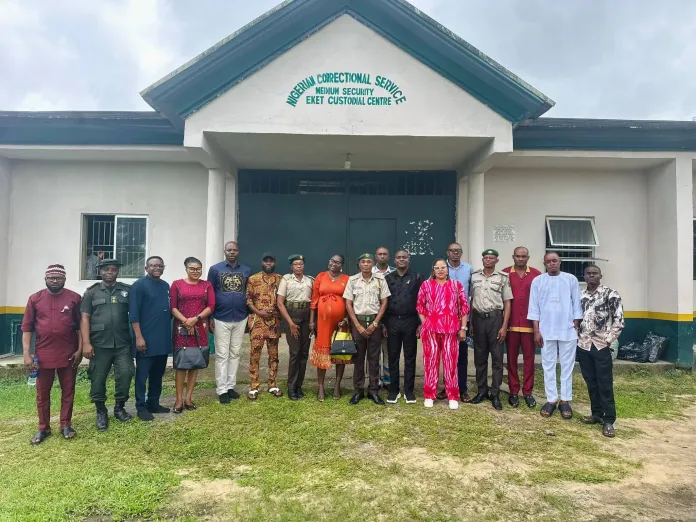
At least 49 inmates at the Medium Security Correctional Centre in Eket, Akwa Ibom State, have reportedly spent more than a decade awaiting trial, exposing the human cost of prolonged detention and delays in Nigeria’s criminal justice system.
Sources inside the facility disclosed the figure during an inspection of the centre on September 2, 2026.
According to the sources, some of the inmates have spent more than 10 years in custody without their cases being concluded, while others allegedly face difficulties because their case files are unavailable.
Some inmates were reportedly arrested over relatively minor offences, while sources also alleged that others were detained in connection with activism.
The prolonged detention means that people who have not been convicted of the offences for which they were arrested have spent years behind bars.
The situation is particularly troubling because the Nigerian Constitution guarantees the right to a fair hearing within a reasonable time.
The problem is not entirely new at Eket.
In 2023, the Akwa Ibom Chief Judge released six inmates from the facility after finding that they had spent between two and three years in custody without case files to charge them to court.
In March 2026, another eight inmates were released from Eket during a jail-delivery exercise conducted by the state Chief Judge, with the judiciary citing compassionate grounds and want of prosecution.
The Chief Judge has repeatedly raised concerns about prolonged detention.
In March, Justice Ekaete Fabian-Obot said it was unconstitutional to keep suspects in custody for prolonged periods without trial.
The problem is compounded by the centre’s transportation crisis.
Transport
The Officer-in-Charge, Chief Superintendent of Corrections Samuel Bassey, recently said over 40 awaiting-trial inmates were unable to attend court because the centre had no functional vehicles.
The revelation was made on Tuesday, September 1, when a forum of Eket Federal Constituency media professionals (EFCMP), led by its Chairman, Comrade Enobong Nsimah, visited the facility to assess its condition and explore ways of providing pro bono legal assistance to inmates without legal representation.
Akwa
He said some inmates transferred to the facility from Nsit Ubium Local Government Area as far back as 2023 had never appeared in court because of the transportation problem.
“About 46 inmates are unable to appear in court. It is difficult to take the inmates to court without having operational vehicles,” Bassey said.
According to him, more than 40 inmates on the awaiting-trial list have remained at the centre because there is no functional escort van or other vehicle to transport them to court. He also disclosed that the roofs of the sections housing inmates had deteriorated badly and leaked heavily whenever it rained, leaving the inmates soaked.
In 2025, the Chief Judge released inmates across the state’s correctional facilities on grounds including excessive remand periods, lack of diligent prosecution, missing case files, health conditions and compassionate considerations. The judiciary said some inmates had already spent longer in custody than the maximum sentence they might have received if convicted.
-
 Health & Wellness1 year ago
President Tinubu Directs Cut in Dialysis Cost from ₦50,000 to ₦12,000
-
 News1 year ago
PICTURE: In Lagos Couple Sentenced to 22½ Years for Cannabis Trafficking
-

 Business5 months ago
Dangote Refinery Reduces Petrol Gantry Price To ₦1,200 Per Litre
-
 Trending News1 year ago
NELFUND Disburses ₦86bn To 449,000 Beneficiaries
-
 Business2 years ago
Heritage Bank Customers’ Path to Securing ₦5m Insured Funds: A Step-By-Step Guide by NDIC”
-
Business2 years ago
Dangote; We Did Not Fix ₦600/Litre Petrol Price
-

 International News5 months ago
Indian Police Arrest Nigerian Over ₦290m Drug Haul
-

 Business5 months ago
After Plea Bargain, Court Discharges Stella Oduah of ₦2.5bn Fraud