
International News
Indian Police Arrest Nigerian Over ₦290m Drug Haul


A Nigerian national has been arrested in Bengaluru, India, for allegedly running a major drug distribution network, with authorities recovering MDMA crystals (ecstasy)worth about Rs 2 crore (over N290 million).
The arrest forms part of a wider crackdown on narcotics operations targeting both students and the general public in the city.
According to the Indian Express on Tuesday, the suspect, Samuel Ikkena, 44, was apprehended by the Yelahanka police in Bengaluru, Karnataka State, for allegedly running an MDMA racket disguised as a clothing business.
MDMA, also known as ecstasy, is a psychoactive drug often sold illegally for recreational use.
Ikkena reportedly “procured MDMA near Bannerghatta for Rs 50,000 (around N3.5 million) and sold it at higher rates through a structured illegal network.”
He arrived in India in 2012 on a business visa, initially trading garments in Delhi and Mumbai before moving to Bengaluru in 2025.
Police said investigators recovered 2 kg of MDMA crystals, valued at around Rs 2 crore (N140 million), along with 31.396 kg of cannabis (ganja), 220 g of hydro ganja, additional heroin, and a two-wheeler used for transporting the drugs.
Police Commissioner Seemant Kumar Singh described the total contraband as “estimated at Rs 2.57 crore (N180 million), with a potential street value of approximately Rs 5.14 crore (N360 million).”
Ikenna’s arrest was part of a larger operation that led to 11 arrests, including two foreigners and eight locals, at locations across Bengaluru, including Yelahanka, Adugodi, Bharathinagar, Jalahalli, and Pulakeshinagar. The Adugodi police also arrested Baljit Singh, from Uttar Pradesh, and Arjun Joshi, a Nepalese national, for allegedly supplying heroin in the city.
Police said Joshi, who initially consumed drugs, began selling heroin after sourcing it from Baljit Singh. Authorities recovered 162 g of heroin worth Rs 55 lakh (N3.85 million) and three mobile phones from the duo.
Police said the accused procured drugs from both foreign and interstate suppliers and sold them at inflated prices. Investigators have registered cases under the Narcotic Drugs and Psychotropic Substances (NDPS) Act and are working to trace the main kingpins behind the network.






Uganda has clarified that as of Tuesday, October 21, 2026, when Nigerian health authorities confirmed an active case of Ebola in its capital city, Abuja, it had no active case of the virus.
Health Minister, Muhammad Ali, had announced that a female patient who had travelled from Uganda in East Africa, tested positive for the virus.
“The Federal Government of Nigeria confirms one case of Ebola disease in the Federal Capital Territory (FCT), following laboratory confirmation today, 20 October 2026. The patient, a woman who recently arrived in Nigeria on an international flight from Uganda, was admitted to a private hospital in the FCT, where she received care for several days before the diagnosis was confirmed. She is currently in isolation and receiving medical care.
“The FG calls on all public and private healthcare facilities nationwide to be on high alert. Healthcare workers must maintain a high index of suspicion, promptly identify and isolate suspected cases, observe strict infection prevention and control measures, and immediately report suspected cases to public health authorities.
“Investigations are ongoing, and we will continue to provide accurate and timely information,” Pate had said.
The development had made many Nigerians look towards the direction of Uganda, just like Patrick Sawyerr, a Liberian, imported the disease to Nigeria in 2014.
But in a statement issued after Pate’s comment, Charles Olaro, Director-General of Health Services in the East African country, clarified that the patient is a Nigerian.
Olaro said the woman had travelled to Eastern Democratic Republic of the Congo (DRC), which has over nearly 10,000 active cases with 4,500 deaths from Ebola, for business and transited through Uganda in early October.
According to Olaro, she showed no symptoms while in Uganda but developed symptoms after arriving in Nigeria.
“Travel through Uganda does not establish that infection occurred here. The location of exposure remains under investigation,” the ministry said.
“The Government of Nigeria is yet to provide detailed information on her travel itinerary and clinical history which will guide further investigations and any necessary contact tracing.
“We wish to clarify that, as at the time of this statement, Uganda has NO confirmed active Ebola cases.”
The Ugandan government said it had maintained limited provisions for humanitarian and diplomatic movement, adding that it would strengthen screening and public health controls at points of entry.
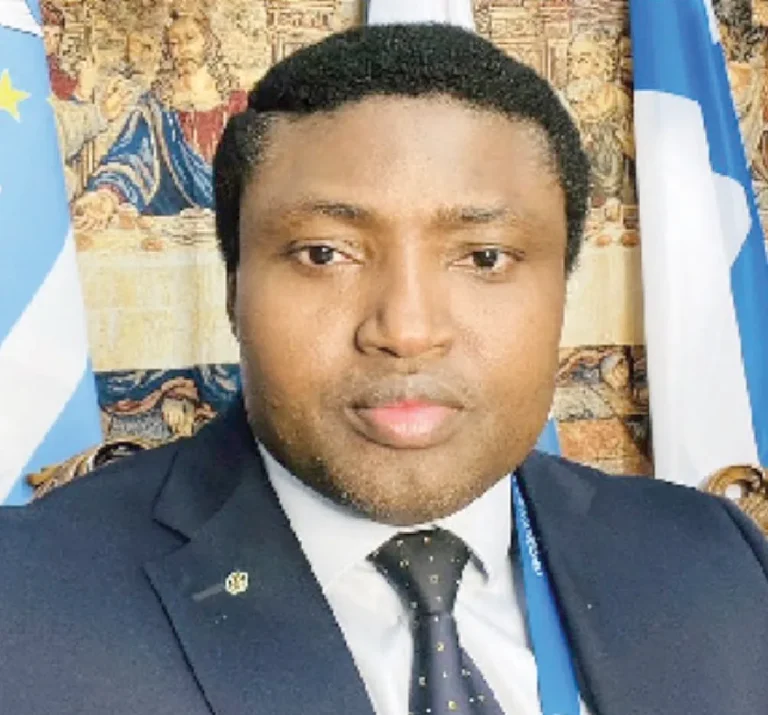
A Finnish appeal court has reduced the prison sentence of Biafran separatist leader, Simon Ekpa, from six to four years.
Finnish newspaper Yle disclosed this in a report on Thursday.
However, the Court of Appeal upheld the decision of the Päijät-Häme District Court, which found Ekpa guilty of terrorism-related charges last year.
The charges were related to Ekpa’s alleged activities aimed at re-establishing an independent state of Biafra in southeastern Nigeria.
Ekpa subsequently appealed the ruling, seeking to have his conviction and sentence overturned.
In a ruling that offered some relief to Ekpa, the Court of Appeal found him guilty of the same offences but reduced his prison term after considering the circumstances surrounding his actions. The court noted that the situation in the Biafran region closely resembled, but did not meet the definition of, a civil war.
Ekpa had told the court that his involvement was not motivated by terrorist intent, citing the political turmoil in the Biafran region.
The prosecutor in the case had also appealed the district court’s decision, arguing that the prison sentence did not reflect the seriousness of Ekpa’s offences.
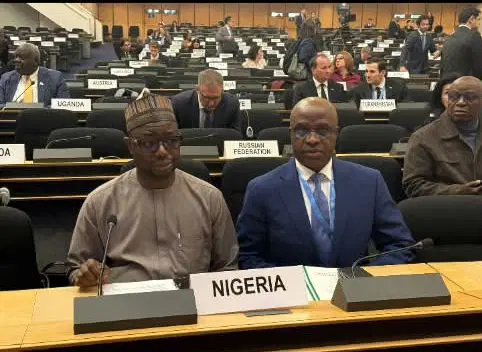
The Federal Government has called for stronger international responsibility sharing and innovative arrangement to address the growing humanitarian needs of over 142,000 refugees and asylum seekers from 42 countries.
The Minister of Humanitarian Affairs and Poverty Reduction, Dr. Bernard Doro, made the call while delivering Nigeria’s national statement at the 77th Session of the Executive Committee of the United Nations High Commissioner for Refugees (UNHCR), currently holding at the Palais des Nations in Geneva.
In a statement by his Senior Technical Adviser on Information Systems and Data Analysis, Dr. Abimbola Fasanu, the Minister disclosed that as of September 2026, Nigeria had received over 24,000 returnees and was managing a population of more than 6.7 million internally displaced persons (IDPs).
Doro reaffirmed Nigeria’s commitment to international refugee protection obligations, noting that the country continues to maintain an asylum system under the National Commission for Refugees, Migrants and Internally Displaced Persons (NCFRMI) Act of 2022.
He stated that no case of refoulement had been recorded in Nigeria in 2026, reaffirming the country’s commitment to protecting people fleeing persecution from being returned to situations where their lives or freedom could be threatened.
Highlighting progress on durable solutions, the Minister disclosed that over 7,000 Nigerian refugees had voluntarily returned from neighbouring countries this year under Tripartite Agreements, while another 14,000 in Cameroon had registered their intention to return. An agreement covering the return of 2,000 Nigerians from Niger is also being finalised.
He acknowledged the continued hospitality of Cameroon, Chad and Niger in providing refuge to displaced Nigerians.
According to the Minister, improved security conditions in parts of the country are creating opportunities for voluntary return, while Resettlement Cities established in seven locations are supporting the phased closure of displacement camps in conditions of safety and dignity.
Beyond return and resettlement, Dr. Doro outlined measures aimed at promoting self-reliance and reducing prolonged dependence on humanitarian assistance.
He explained that refugees in five states are benefiting from access to land, agricultural inputs and skills training, while the newly established Public-Private Partnership Department of the NCFRMI is supporting efforts to expand livelihood opportunities.
The Minister also cited the successful local integration of former Liberian and Sierra Leonean refugees, some of whom have established businesses and become economically active members of their host communities.
On access to essential services, he disclosed that displaced persons and host communities are being enrolled in Nigeria’s national identity system to facilitate access to banking, education and social services.
He added that refugees are being incorporated into state action plans and social registers, while ten mobile documentation buses are expected to extend identity services to underserved and remote communities.
Doro further highlighted the development of a Digital Gateway in collaboration with UNHCR to provide refugees with secure online access to information.
Addressing the growing pressure on humanitarian financing, the Minister urged the international community to strengthen support for refugee-hosting countries through expanded resettlement opportunities, complementary pathways and greater responsibility-sharing.
He specifically called on UNHCR to explore partnerships with regional and subregional financial institutions, including the African Development Bank and the ECOWAS Bank for Investment and Development, as a means of mobilising additional resources for refugee protection and durable solutions.
The Minister emphasised that the responsibility for addressing displacement could not rest on host countries alone, particularly at a time of increasing humanitarian needs and declining international resources.
-
 Health & Wellness1 year ago
President Tinubu Directs Cut in Dialysis Cost from ₦50,000 to ₦12,000
-
News2 years ago
CBN Debunks Fake Circular on New ₦5,000 and ₦10,000 Notes
-
 Business7 months ago
Dangote Refinery Reduces Petrol Gantry Price To ₦1,200 Per Litre
-

 Business7 months ago
After Plea Bargain, Court Discharges Stella Oduah of ₦2.5bn Fraud
-
Business2 years ago
Dangote; We Did Not Fix ₦600/Litre Petrol Price
-
 Trending News1 year ago
NELFUND Disburses ₦86bn To 449,000 Beneficiaries
-
 Opinion2 years ago
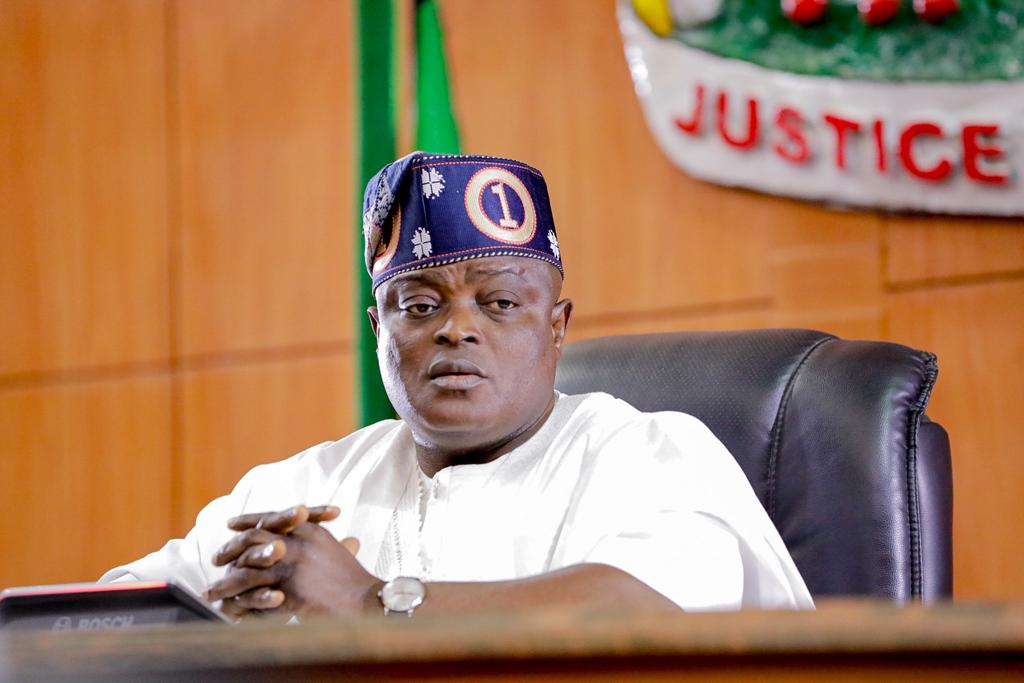
Championing the People’s Voice: Obasa’s Dedication to Grassroots Representation By Dave Agboola⁰
-
Business2 years ago
CBN: FG’s Borrowing Pushes Money Supply Up 51% to ₦108.96tn