
News
DHQ: No Foreign Soldier involved in Ground Battle Against Al-Minuki


No foreign soldier participated in the operation that eliminated terrorist commander, Abu Bilal Al-Minuki, Maj.-Gen. Michael Onoja, Director, Defence Media Operations, has said.
According to NAN, Onoja said this in a monitored television programme where he gave update on the operation.
Onoja was quoted to have said the United States only provided intelligence and surveillance assistance.
“There were no foreign boots on the ground during this operation. What we received were intelligence, surveillance, reconnaissance support and other force enablers,” he said.
Onoja described the mission as a carefully executed precision strike against a high-value terrorist target.
He said the operation reflected the professionalism, discipline and tactical readiness of troops involved.
“We are happy to state that due to our troops’ professionalism, there was no loss of life on our side,” Onoja said.
He said the mission was planned through detailed intelligence and close operational coordination.
According to him, earlier reports about Al-Minuki’s death in 2024 were based on mistaken identity.
Onoja said the man neutralised was the original Abu Bilal Al-Minuki, who used multiple aliases.
He explained that the aliases helped the terrorist evade detection for years.
“This individual has been on international watchlists for a very long time,” he said.
He added that security records linked the commander to several global monitoring agencies.
“These include the United Nations, the United States, the European Union and Nigeria,” he added.
Onoja said months of intelligence gathering led troops to the terrorist’s exact location.
He said the final operation was launched only after commanders confirmed credible intelligence.
He said Nigeria would continue strengthening strategic security partnerships against terrorism.
Onoja also said other notorious terrorist leaders remained under active surveillance.
He specifically mentioned wanted bandit leader, Bello Turji, saying, “He cannot hide forever. It is only a matter of time.”
Onoja urged citizens to support military operations with timely information.
He warned that ransom payments often strengthen criminal networks and prolong insecurity.
He reaffirmed the military’s determination to restore peace across affected communities in Nigeria.

An 18-year-old landlord, Similoluwa Akande, has been arraigned before an Akungba-Akoko Magistrate’s Court in Ondo State for allegedly setting fire to a tenant’s belongings valued at N898,000.
Akande was docked on a four-count charge bordering on felony following the incident, which reportedly occurred on August 19, 2026, at Okusa in Akungba-Akoko.
According to the police prosecutor, Olasunkanmi Boboye, the defendant allegedly set ablaze property belonging to his tenant, Aseluwa Ezekiel.
The items destroyed included a bed, bed frame, clothes, carpet, gas cylinder, travelling box, shoes, curtains, rods and cash.
The prosecutor told the court that the burnt items were valued at N898,000, while some official documents were also reportedly destroyed in the fire.
Boboye said the alleged offences contravened Section 249(D) of the Criminal Code, Cap. 37, Vol. 1, Laws of Ondo State of Nigeria, 2006.
The defendant pleaded not guilty to the charges when they were read to him.
He was not represented by legal counsel and informed the court that he had health challenges.
Presiding Magistrate Kolapo Kolawole granted the defendant bail in the sum of N500,000 and adjourned the matter until September 9, 2026, for hearing.
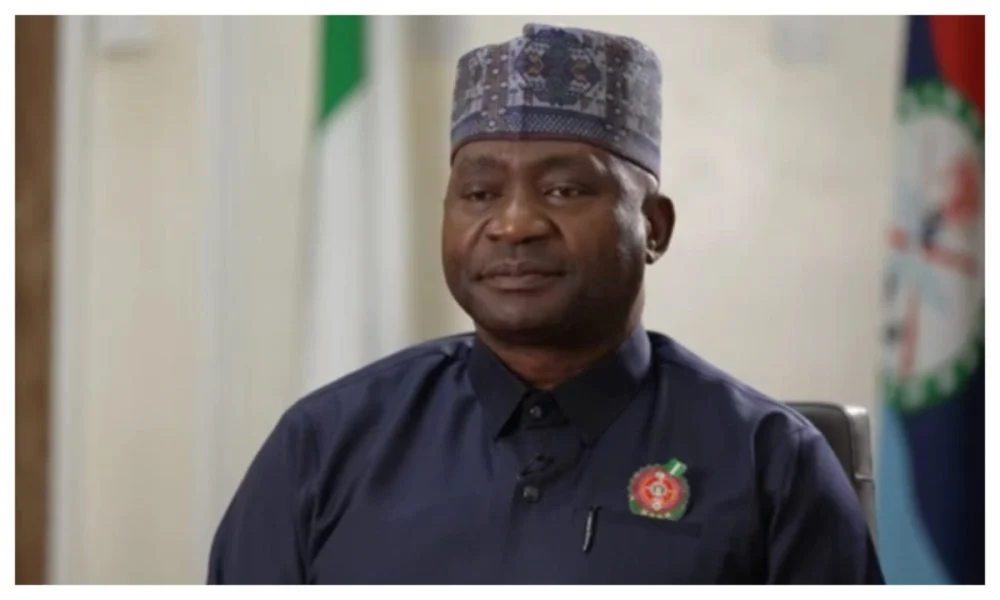
The Minister of Defence, Gen. Christopher Musa (retd.), on Thursday said terrorists are using motorcycles given to Nigerians as palliatives to wreak havoc across the country.
He, however, advised the state governors and lawmakers to stop giving motorcycles as palliatives, arguing that some of the motorcycles eventually end up in the hands of terrorists to facilitate and enhance their nefarious activities.
Musa, who stated this when he appeared on Channels Television’s Politics Today, said efforts are being made to curb terrorism and the operational challenges confronting the country’s security forces.
“We try to appeal to even governors to stop giving motorcycles out as palliatives. Because these motorcycles are the same ones that still end up with these terrorist
“Even if you have to give, don’t give them the big capacity motorcycles; give them the small capacity ones that they won’t be able to use to run around, because that gives them leverage. They can easily enter and then disappear,” he said.
The minister also warned that motorcycles distributed through constituency projects and other palliative programmes by lawmakers could find their way back to bandits and terrorists.
“Those bikes… before you know it, they’re already back to the bandits, and that’s what they’re using. So we must stop that,” he said.
According to him, security agencies had identified illegal markets and motor parks as channels through which terrorists move arms and ammunition into areas where they operate.
“What we realise from experience is they establish illegal markets or illicit motor parks. They go to those motor parks; that’s where they move arms and ammunition into those areas,” he added.
The defence minister also called for greater involvement of local governments in tackling insecurity, saying their proximity to communities gives them an advantage in identifying criminals and preventing crime.
“We must allow our local governments to work. Failure of local government is what is aggravating what we’re dealing with, and if we want a better solution, a quick fix, our local governments must work.
“Crime and development are local. If every local government chairman is dealing with criminals within his locality, it’s easier to manage them than leaving it to the state or to the federal,” he said.
Musa said local government chairmen should hold regular security meetings and report developments in their areas.
He further urged state and local authorities to strengthen monitoring of markets, motor parks and other locations through which drugs, weapons and ammunition could be moved.
“If we’re able to make sure that we man all the markets, all the motor parks, all these areas where drugs, weapons, ammunition move, it will make it difficult for them,” he added.
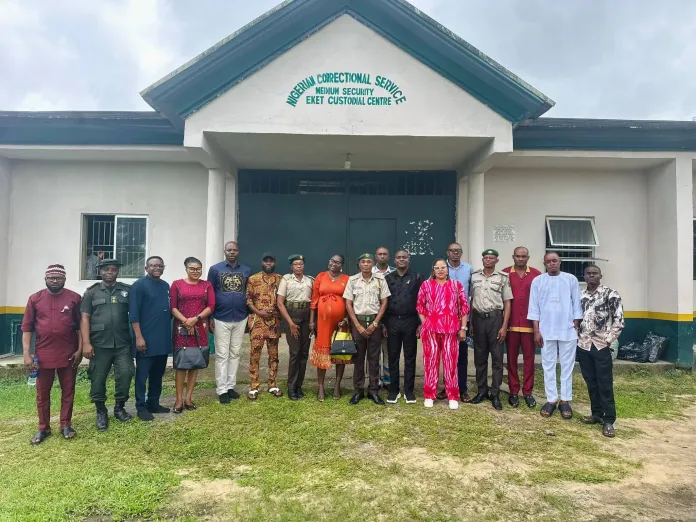
At least 49 inmates at the Medium Security Correctional Centre in Eket, Akwa Ibom State, have reportedly spent more than a decade awaiting trial, exposing the human cost of prolonged detention and delays in Nigeria’s criminal justice system.
Sources inside the facility disclosed the figure during an inspection of the centre on September 2, 2026.
According to the sources, some of the inmates have spent more than 10 years in custody without their cases being concluded, while others allegedly face difficulties because their case files are unavailable.
Some inmates were reportedly arrested over relatively minor offences, while sources also alleged that others were detained in connection with activism.
The prolonged detention means that people who have not been convicted of the offences for which they were arrested have spent years behind bars.
The situation is particularly troubling because the Nigerian Constitution guarantees the right to a fair hearing within a reasonable time.
The problem is not entirely new at Eket.
In 2023, the Akwa Ibom Chief Judge released six inmates from the facility after finding that they had spent between two and three years in custody without case files to charge them to court.
In March 2026, another eight inmates were released from Eket during a jail-delivery exercise conducted by the state Chief Judge, with the judiciary citing compassionate grounds and want of prosecution.
The Chief Judge has repeatedly raised concerns about prolonged detention.
In March, Justice Ekaete Fabian-Obot said it was unconstitutional to keep suspects in custody for prolonged periods without trial.
The problem is compounded by the centre’s transportation crisis.
Transport
The Officer-in-Charge, Chief Superintendent of Corrections Samuel Bassey, recently said over 40 awaiting-trial inmates were unable to attend court because the centre had no functional vehicles.
The revelation was made on Tuesday, September 1, when a forum of Eket Federal Constituency media professionals (EFCMP), led by its Chairman, Comrade Enobong Nsimah, visited the facility to assess its condition and explore ways of providing pro bono legal assistance to inmates without legal representation.
Akwa
He said some inmates transferred to the facility from Nsit Ubium Local Government Area as far back as 2023 had never appeared in court because of the transportation problem.
“About 46 inmates are unable to appear in court. It is difficult to take the inmates to court without having operational vehicles,” Bassey said.
According to him, more than 40 inmates on the awaiting-trial list have remained at the centre because there is no functional escort van or other vehicle to transport them to court. He also disclosed that the roofs of the sections housing inmates had deteriorated badly and leaked heavily whenever it rained, leaving the inmates soaked.
In 2025, the Chief Judge released inmates across the state’s correctional facilities on grounds including excessive remand periods, lack of diligent prosecution, missing case files, health conditions and compassionate considerations. The judiciary said some inmates had already spent longer in custody than the maximum sentence they might have received if convicted.
-
 Health & Wellness1 year ago
President Tinubu Directs Cut in Dialysis Cost from ₦50,000 to ₦12,000
-
 News1 year ago
PICTURE: In Lagos Couple Sentenced to 22½ Years for Cannabis Trafficking
-

 Business5 months ago
Dangote Refinery Reduces Petrol Gantry Price To ₦1,200 Per Litre
-
 Trending News1 year ago
NELFUND Disburses ₦86bn To 449,000 Beneficiaries
-
 Business2 years ago
Heritage Bank Customers’ Path to Securing ₦5m Insured Funds: A Step-By-Step Guide by NDIC”
-
Business2 years ago
Dangote; We Did Not Fix ₦600/Litre Petrol Price
-

 International News5 months ago
Indian Police Arrest Nigerian Over ₦290m Drug Haul
-

 Business5 months ago
After Plea Bargain, Court Discharges Stella Oduah of ₦2.5bn Fraud