
News
Plateau: Gunmen Kill 4 In Renewed Attack


Four people have reportedly been killed after gunmen attacked Sabon Angwa community, around Bet/Zat in Barkin Ladi Local Government Area of Plateau State, on Thursday night, raising fresh concerns over the safety of residents despite an existing curfew.
The attackers reportedly stormed the community at about 8pm and opened fire on residents, triggering panic in the area.
Report quoted a Barkin Ladi resident, Bulus Jok, as confirming the gunmen operated despite the curfew imposed in parts of the state to curb attacks and restore security.
“The gunmen struck the community around 8pm despite the curfew in place and started shooting sporadically,” he said.
Jok added that the attackers shot at anything in sight, leaving four people dead and residents terrified.
He described the incident as particularly disturbing because an early warning alert had reportedly been sent to the relevant authorities a day before the attack.
The Publicity Secretary of the Berom Youth Moulders-Association (BYM), Rwang Tengwong, also confirmed the incident, saying suspected terrorist gangs attacked the community and shot four people dead.
Tengwong condemned the killings, describing the loss of innocent lives as unacceptable. He questioned the continued attacks on communities despite security measures introduced to protect residents.
“It is disturbing that communities are still being attacked despite the security measures and curfew put in place to protect residents,” he said.
The BYM spokesman urged security agencies to strengthen surveillance in vulnerable communities, improve their response to early warning alerts and take proactive steps to prevent further attacks.
He also called for a stronger security presence in the affected areas to protect residents from further violence.
Efforts to reach security operatives for comments and further details were unsuccessful as of the time of filing this report.
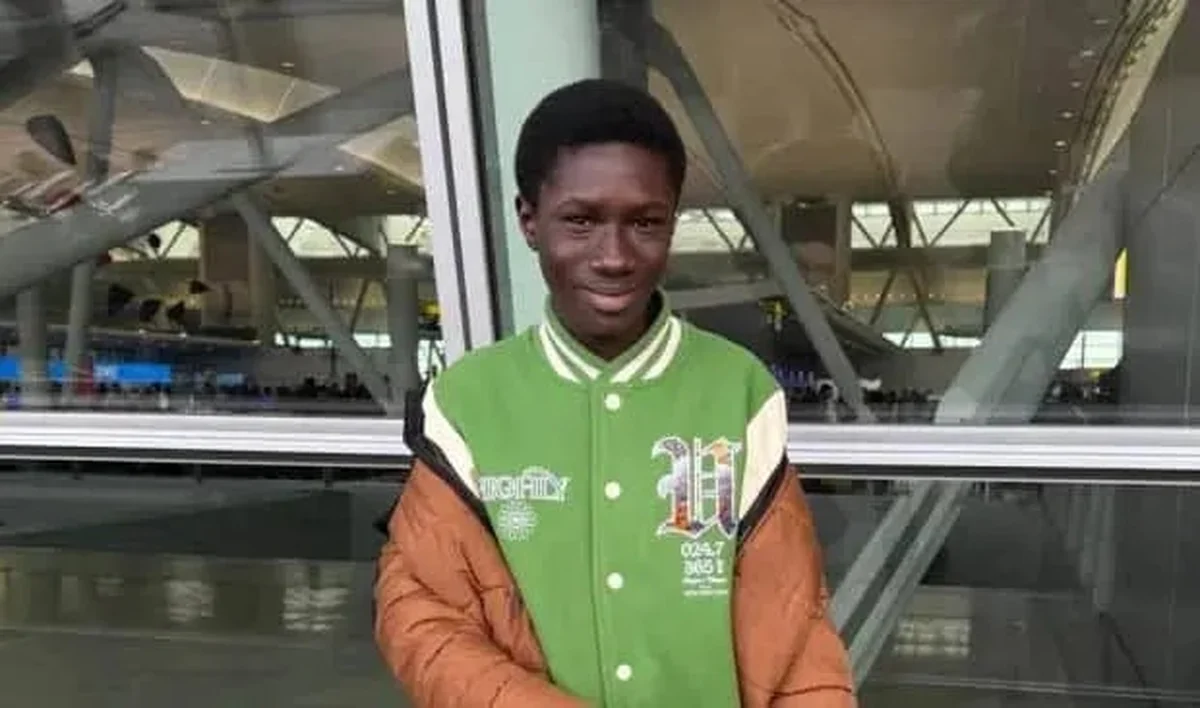
A 15-year-old Ghanaian boy, Javits Frimpong, has been shot dead while on his way to school in the Bronx, New York, with his father suspecting that the killing was connected to bullying at school.
Javits was reportedly shot in the stomach at about 9:30 a.m. on Thursday near Crotona Park. He was rushed to a hospital but later died from his injuries.
According to the New York Police Department, three teenage boys are being sought in connection with the killing. Investigators said the suspects fled the scene wearing black tracksuits and blue surgical masks.
Surveillance footage reportedly showed a person matching the description of one of the suspects fleeing the area after the shooting. The victim was said to have run for about a block after being shot before collapsing.
The teenager’s father, Thomas Frimpong, said he believed bullying was behind the incident, claiming that his son had been targeted by two schoolmates who were recently suspended.
Frimpong disclosed that the school principal informed him about the bullying just three days before his son was killed.
He also maintained that his son was not the aggressor in a recent confrontation at school.
“The principal told me Javits is innocent. Javits is innocent. He was defending himself,” the grieving father said.
Frimpong said he brought his son from Ghana to New York about a year ago in the hope of giving him a better life, while the boy’s mother remained in Ghana.
Describing his son, he said: “My son was precious, very clever.”
The father, who works as a taxi driver, said his last conversation with Javits on Thursday morning was a reminder to get to school on time.
The killing has sparked outrage among residents of the Crotona Park neighbourhood, with some calling for increased after-school activities and youth programmes to keep teenagers away from violence.
Police have yet to publicly identify any suspects or announce arrests as investigations into the teenager’s killing continue

The Independent National Electoral Commission, INEC, has rejected 64 petitions filed by political parties over the 2027 governorship and State Houses of Assembly candidates’ lists, following a review that also led to the removal of some candidates.
The commission disclosed this in a statement signed by Mohammed Kudu Haruna, Chairman of its Information and Voter Education Committee, on October 30, 2026.
INEC said 12 political parties filed 69 petitions across 26 states over governorship candidates.
It approved 41 of the complaints but dismissed 28.
For the State Houses of Assembly elections, 61 petitions were submitted by 11 political parties across 11 states.
The commission upheld 25 and rejected 36.
The complaints involved political parties allegedly omitted from the lists, candidates whose names were included despite not appearing in their parties’ membership registers, and cases of multiple nominations.
Following its review, INEC approved the inclusion of candidates and parties whose complaints were justified.
It also removed names that were wrongly published and candidates whose nominations did not meet legal requirements.
The commission said the revised lists would be published on its website, with details of the affected candidates, political parties and states.
“The Commission assures the public of its commitment to transparency and the credibility of the electoral process,” the statement added.
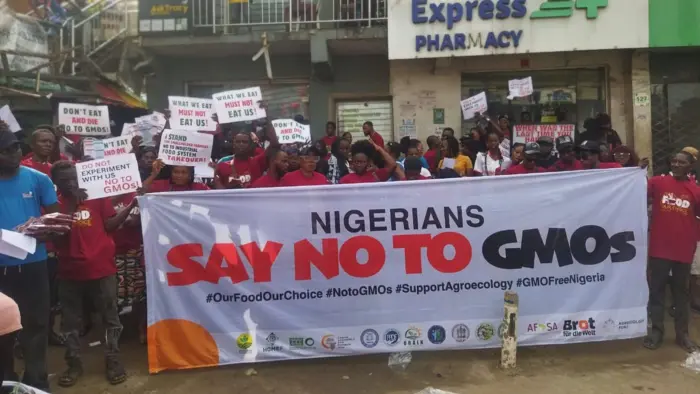
As genetically modified organisms (GMOs) gain a foothold in the country’s agricultural sector, farmers and food sovereignty campaigners fear they could lose control over what they plant, how they farm and, ultimately, what Nigerians eat.
To nip the trend, dozens of farmers, women leaders, activists, civil society groups and youth coalitions converged at Ikeja Bridge, Lagos, yesterday, in a protest against what they described as the growing corporate control of Nigeria’s food system.
Carrying placards and chanting, “GMOs will not address Nigeria’s food crisis,” the protesters argued that genetically engineered seeds were not the answer to food insecurity.
Instead, they called for greater investment in smallholder farmers, the protection of indigenous seeds and a shift towards agroecology, which promotes sustainable farming practices and environmental conservation.
The rally, which began at about 9:00a.m., was organised by the Health of Mother Earth Foundation (HOMEF), Corporate Accountability and Participation Africa (CAPPA), Environmental Rights Action/Friends of the Earth Nigeria (ERA/FoEN) and the GMO-Free Nigeria Alliance.
For the participants, the issue went beyond agricultural technology. It was about whether farmers would retain the freedom to save and exchange seeds or become increasingly dependent on commercial suppliers for successive planting seasons.
Addressing the crowd, an organiser from HOMEF, Ms Joyce Brown, reminded the demonstrators that food was a concern shared by everyone, regardless of social or economic status.
“There is nobody who doesn’t eat food, whether you are rich or poor, educated or uneducated,” she said, drawing applause.
She questioned the long-term implications of altering the genetic characteristics of seeds in laboratories, arguing that the consequences might not be fully understood.
“Scientists and corporations are changing the genes of seeds, the very traits given by nature. They claim it is for pest control, but when you change those genes, other unpredictable side effects emerge. As our people say, ‘you cannot cheat nature,’” she said.
The campaigners also warned that patented genetically modified seeds could weaken traditional farming practices by making farmers reliant on biotechnology companies for fresh supplies.
They argued that such dependence could increase production costs and undermine farmers’ independence. They further expressed concern that cultivating genetically modified crops, including cotton, could affect soil conditions and the ability of conventional and indigenous varieties to thrive.
However, these claims were presented by the campaigners as concerns requiring further investigation.
Public health was another major issue raised at the rally. A molecular biologist, public health expert and food policy analyst, Dr Casmir Ifeanyi, questioned whether Nigeria had sufficient independent, long-term research to establish the safety of genetically engineered crops and assess their potential health implications.
He cited possible allergenicity and toxicity, as well as concerns about changes to proteins during genetic engineering.
He also questioned whether the country had adequate baseline health data to assess long-term trends in cancer and other chronic diseases alongside changes in dietary habits.
Ifeanyi expressed concern that genetic modification could affect the nutritional composition of food and the human gut microbiome.
The speakers called for comprehensive, independent assessments before further approvals and wider commercial use of genetically modified crops.
By about 11:00 a.m., the demonstrators had begun marching from Ikeja Bridge towards the Lagos State House of Assembly in Alausa, taking their demands to lawmakers.
Chanting, “Food, Not Poison!” and “GMO-Free Nigeria Now!”, they distributed informational flyers to market women, motorists and other residents along the route.
At the Assembly complex, security officials and administrative representatives received the protesters.
Speaking on behalf of CAPPA, Mr Olamide Martins urged the Lagos State Government to support a ban on genetically modified crops and foods, arguing that public health and the protection of local farming communities should take priority over corporate interests.
“Our public health system is already overwhelmed. Hospitals are witnessing an influx of non-communicable diseases, including unexplained cancers, linked directly to what ends up on our dining tables,” Martins said.
He called on Lagos to promote agroecological farming and introduce policies that would protect farmers from excessive corporate influence.
“Government must stop subjecting our food sovereignty to corporate actors whose primary motive is profit. Lagos must lead the way by establishing policies that protect local farming and promote agroecology,” he added.
Also speaking, HOMEF’s Director of Programmes, Ms Joyce Brown, warned that cross-pollination between genetically modified crops and conventional varieties could threaten the preservation of indigenous seeds.
She argued that the spread of modified genetic material into local crops could make it difficult for farmers to maintain traditional varieties and retain control over their seeds.
“If our local cassava, cowpea and corn varieties are contaminated, our farmers lose their independence forever,” she said.
Brown cited Mexico and more than 30 other countries as examples of places that, according to her, had introduced restrictions or bans on GMOs to protect indigenous crops and food sovereignty.
She also urged the Lagos Assembly to enforce what she described as a 2024 House of Representatives resolution calling for a suspension of new GMO approvals pending comprehensive, long-term and independent risk assessments and clinical trials.
Despite the delegation’s efforts to present its demands directly to lawmakers, the protesters did not meet any legislators during the visit.
Administrative and security officials told them that the Assembly was on recess until November 9. They acknowledged receipt of the coalition’s submission and advised its representatives to send a formal reminder addressed to the Speaker, Mudashiru Obasa, when plenary resumed.
The officials also advised the group to direct its petition to the Speaker for possible referral to the appropriate committees on agriculture and health.
The organisers said they would return with a formal letter detailing their concerns and demands.
-
 Health & Wellness1 year ago
President Tinubu Directs Cut in Dialysis Cost from ₦50,000 to ₦12,000
-
News2 years ago
CBN Debunks Fake Circular on New ₦5,000 and ₦10,000 Notes
-

 International News7 months ago
Indian Police Arrest Nigerian Over ₦290m Drug Haul
-

 Business7 months ago
Dangote Refinery Reduces Petrol Gantry Price To ₦1,200 Per Litre
-

 Business7 months ago
After Plea Bargain, Court Discharges Stella Oduah of ₦2.5bn Fraud
-
 Opinion2 years ago
Championing the People’s Voice: Obasa’s Dedication to Grassroots Representation By Dave Agboola⁰
-
Business2 years ago
Dangote; We Did Not Fix ₦600/Litre Petrol Price
-
 Trending News1 year ago
NELFUND Disburses ₦86bn To 449,000 Beneficiaries