
Opinion
Abiodun’s Road Revolution: From Forgotten Communities To Connected Economic Corridors By Kayode Akinmade


How more than 1,700 kilometres of roads are reshaping mobility, opening up rural communities, strengthening industrial corridors and redefining infrastructure development across Ogun State
Infrastructure development is one of the most visible measures of governance because its impact is felt in the everyday lives of citizens. A good road connects communities, shortens travel time, facilitates commerce, improves access to healthcare and education, enhances security and creates opportunities for economic growth. Beyond the convenience of transportation, roads are critical instruments of social integration and economic transformation.
For Ogun State, whose strategic location places it at the intersection of major commercial and industrial activities in Nigeria, road infrastructure is particularly important. Sharing boundaries with Lagos, the country’s commercial nerve centre, and serving as a major gateway to the Southwest and other parts of the country, Ogun requires an extensive and efficient road network to sustain its expanding population, growing industrial base and increasing commercial activities.
It was against this background that Governor Dapo Abiodun placed infrastructure development at the centre of his administration’s development agenda upon assuming office in May 2019.
The task before the administration was enormous. Years of inadequate maintenance, increasing population pressure, rapid urbanisation and the expansion of commercial activities had left several roads across the state in deplorable conditions. Many communities, particularly in rural and semi-urban areas, had endured prolonged difficulties accessing neighbouring towns, markets, schools, healthcare facilities and other essential services.
For some communities, travelling a few kilometres could become an exhausting experience, especially during the rainy season. Farmers struggled to move their produce to markets, traders incurred additional transportation costs, while residents of emerging urban settlements faced the daily frustration of deteriorating roads.
The Abiodun administration therefore adopted a statewide approach to road development, recognising that infrastructure should not be concentrated in a few urban centres but distributed across the state’s 20 local government areas.
More than seven years into the administration, the scale of the intervention is reflected in the approximately 1,700 kilometres of roads constructed or rehabilitated across the state since 2019. The government has set a target of delivering 2,000 kilometres before the end of its tenure.
The figures represent an extensive infrastructure programme involving the construction of new roads, reconstruction of failed roads, rehabilitation of existing routes and the provision of supporting infrastructure.
But beyond the kilometres, the more important story is what these interventions mean for communities and the state’s economy.
CONNECTING COMMUNITIES, OPENING UP OPPORTUNITIES
One of the defining features of the administration’s road programme is its attention to communities that have historically struggled with poor road access.
In Ogun West, the reconstruction of the Ilaro–Owode Road has strengthened connectivity across the Yewa axis, while the completion of the Odo-Afa and Afon bridges along the Imeko-Afon corridor has addressed critical transportation challenges in rural communities.
Other interventions, including the General Hospital–Aferiku Road and Oke Erinja–Erinja Road Phase 2, have improved access to communities in Yewa South.
These projects demonstrate the importance of infrastructure beyond major urban centres. For farming communities, an accessible road can determine how quickly agricultural produce reaches markets, how much farmers spend on transportation and how much value they ultimately derive from their investments.
In a state with considerable agricultural potential, connecting farming communities to markets is central to food security, rural development and poverty reduction.
The same development philosophy is evident in other parts of the state.
In Obafemi-Owode Local Government, the Mowe–Ofada and Siun–Owode roads have improved access within rapidly developing communities. The Siun–Owode–Ofada corridor is particularly significant because of its connection to economic activities and settlements along the Lagos–Ibadan Expressway.
In Ifo Local Government, the rehabilitation of roads such as Akute–Gbero–Isase, Alhaji Kosoko, Ajuwon–Akute and other adjoining routes has addressed long-standing transportation difficulties in communities experiencing increasing population growth and urban expansion.
For residents of these communities, road infrastructure is not an abstract government achievement. It is about spending less time in traffic, reducing vehicle maintenance costs, improving access to workplaces and making daily commercial activities less stressful.
REBUILDING THE INDUSTRIAL CORRIDORS
Perhaps nowhere is the economic significance of road infrastructure more evident than in Ogun’s industrial belt.
Ogun is home to several manufacturing clusters, industrial estates and commercial centres, many of which depend on efficient road networks for the movement of raw materials, finished products, workers and other logistics.
The reconstruction of the Ota–Abeokuta Road, a major 70-kilometre corridor, is one of the significant interventions in this regard. The road serves communities and commercial establishments across the Ado-Odo/Ota and Abeokuta axes.
Similarly, road projects around Lusada, Alapoti, Igbesa and other industrial communities are important to the continued expansion of manufacturing activities in Ogun West.
The Lusada–Alapoti Road and other adjoining routes are particularly relevant to industrial development in the Agbara–Ota axis, where manufacturing companies depend on reliable transportation infrastructure.
The administration’s road programme also complements its broader efforts to attract investments and position Ogun as a preferred destination for industrial and commercial enterprises.
The relationship between roads and investment is straightforward. Investors require access to industrial locations, efficient movement of goods, dependable logistics and connectivity to major markets. Without these, the cost of doing business increases and the attractiveness of an investment destination diminishes.
This explains why road infrastructure remains an essential component of the administration’s economic development strategy.
The emerging industrial developments around the Gateway International Airport, the proposed Gateway Deep Sea Port and the Blue Marine Economic Zone further underscore the importance of expanding and improving road connectivity across the state.
These projects require an integrated transportation network capable of supporting industrial production, maritime activities, warehousing, distribution and international trade.
URBAN RENEWAL AND THE GROWING POPULATION
Ogun’s proximity to Lagos has created enormous demographic and economic opportunities, but it has also placed considerable pressure on existing infrastructure.
Communities such as Mowe, Ibafo, Magboro, Arepo, Akute, Ajuwon, Alagbole, Ijoko and Ota have experienced rapid population growth as more people seek residential accommodation outside Lagos.
This expansion has increased demand for roads, drainage, public transportation and other essential infrastructure.
The administration’s interventions in these areas are therefore significant to the management of urban growth.
The reconstruction of Magboro Road, Alagbole–Ajuwon Road, Akute–Ajuwon Road and other connecting routes reflects the government’s response to the transportation challenges associated with expanding settlements.
These projects are expected to improve connectivity within the communities and strengthen their links with Lagos and other parts of Ogun State.
In Abeokuta, the state capital, several road projects have also been undertaken to improve mobility and enhance the urban environment.
Similar interventions across Sagamu, Ijebu-Ode, Ikenne and other major towns form part of the wider effort to improve road infrastructure throughout the state.
FROM ROAD CONSTRUCTION TO ECONOMIC TRANSFORMATION
The significance of the road revolution should ultimately be measured by its contribution to economic and social development.
A road connecting a rural community to a major market is an economic asset. A road providing access to a hospital can make a difference in emergency situations. A road linking an industrial estate to a major highway can improve productivity and reduce logistics costs.
These are the practical outcomes that give meaning to infrastructure investment.
The Abiodun administration has consistently argued that its infrastructure policy is designed to democratise development by ensuring that communities across the three senatorial districts benefit from government interventions.
With approximately 1,700 kilometres of roads constructed or rehabilitated since 2019, the administration continues to pursue its 2,000-kilometre target.
The government has also incorporated inherited road projects into its programme, demonstrating that infrastructure development requires continuity and sustained investment beyond political and administrative transitions.
Nevertheless, the scale of the remaining infrastructure needs must not be overlooked. Several communities continue to demand improved roads, while increasing traffic, population growth and heavy-duty industrial vehicles place additional pressure on existing infrastructure.
The challenge, therefore, is to sustain the pace of construction, ensure quality delivery, maintain completed roads and prioritise projects according to their economic and social importance.
Road construction must also be accompanied by adequate drainage systems, proper engineering standards and effective maintenance arrangements to ensure that public investments deliver lasting value.
THE ROAD AHEAD
As Ogun State moves towards the final phase of the Abiodun administration, the ambition of delivering at least 2,000 kilometres of roads provides a measurable benchmark for assessing the government’s infrastructure programme.
But the broader significance of the initiative extends beyond the numbers.
From the rural communities of Yewa to the industrial clusters of Agbara and Ota, from the expanding settlements along the Lagos–Ibadan Expressway to the commercial centres of Ijebu-Ode and Sagamu, road infrastructure is an important part of the state’s evolving development story.
The objective is to create a connected Ogun where communities are not isolated by poor roads, farmers can move their produce more efficiently, businesses can operate with reduced logistical constraints and residents can enjoy improved access to opportunities.
The journey is far from complete. The demands of a rapidly expanding state will continue to require investment, planning and sustained attention to infrastructure.
Yet the approximately 1,700 kilometres of roads already constructed or rehabilitated provide a substantial basis for examining the administration’s road development record.
Ultimately, the true measure of a road revolution is not simply the number of kilometres delivered. It is the number of communities connected, the economic activities stimulated, the transportation difficulties reduced and the opportunities created for the people.
That is the larger development story behind Abiodun’s road infrastructure programme: moving Ogun from isolated communities towards an increasingly connected network of economic corridors.
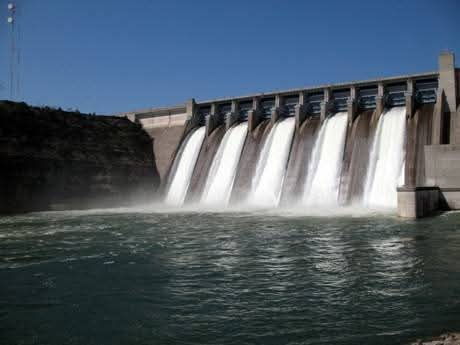
For decades, three great dams in southern Kano held back billions of cubic metres of water while the farmlands around them waited. Tiga Dam was completed in 1974, Kafin Chiri in 1975 and Challawa Gorge in 1992. Each was built with the promise of year round farming, yet large stretches of the land they were meant to serve stayed dry once the rains ended. It has taken the vision and political will of President Bola Ahmed Tinubu to finally put that old promise to work.
The Kano River Irrigation Project intervention is a special ecological intervention of the Tinubu administration, implemented by the Ecological Project Office in the Office of the Secretary to the Government of the Federation. It sits squarely within the President’s Renewed Hope Agenda, which places food security, agricultural productivity, job creation and the welfare of rural Nigerians at the centre of national development. Its purpose is simple to state and ambitious in scale: rehabilitate and expand irrigation infrastructure at the three dams, open new sectors for cultivation, and in doing so strengthen food security, build resilience against a changing climate and lift the livelihoods of farming households across 16 local government areas of Kano South.
President Tinubu deserves commendation for recognising that Nigeria cannot feed itself on rain alone. By directing investment to dams that had been underused for decades, his administration has chosen to build on assets the nation already owns, turning idle reservoirs into engines of production. It is a practical expression of the Renewed Hope promise that government must reach ordinary farmers where they live and work.
The dams themselves are among the most important water assets in Northern Nigeria. Tiga, the largest, has a reservoir capacity of about 1.97 billion cubic metres and an irrigation potential of roughly 230,000 hectares, and it also supports hydropower generation. Challawa Gorge holds about 930 million cubic metres. Kafin Chiri is smaller, but it has long been central to local agriculture in its catchment. The challenge was never the water. It was getting that water to the fields.
At Tiga, the intervention is opening new irrigation sectors at Yakasai, Gwamma and Gurjiya, with about 875 hectares of arable land to be served by more than 20 kilometres of distribution canals and over 77 kilometres of field canals. Work at the Gwamma sector includes land development, access roads and canal embankments, alongside rehabilitation works at the dam embankment and outlet to secure reliable water conveyance.
At Challawa Gorge, the focus is on 240 hectares of irrigable land, roughly the size of 336 football pitches. Engineers are building main canals, distribution and field canals, pipe extensions, head regulators, crossover culverts, collector drains and 10.5 kilometres of access roads within the canal network. At Kafin Chiri, about 165 hectares are being opened across the Kunpada, Matanfa and Maida sectors through new main, distribution and field canals, with concrete canal construction, a night storage reservoir and penstock pipe procurement all part of the work.
For farmers like Faruku Musa Haruna of Kumfada, the change is already tangible. He recalls how farmers once pooled their money to buy plastic sheets just to trap enough water for a tiny patch of land, and how a poor rainy season meant no dry season farming at all. “Now water has been brought directly to our farms in abundance, without us even needing to run a generator,” he says. “You just turn the valve, and water flows right into your field. Because of this project, we no longer need to migrate to other places for work.” He adds that crops the community long wanted to try, such as rice and wheat, are now within reach. It is exactly the kind of outcome the Renewed Hope Agenda set out to achieve: more food grown at home, and young people able to earn a living without leaving their communities.
The intervention reaches well beyond the canals. Under its watershed management programme for all season farming, the Ecological Project Office reports 18 projects delivering 5,380 tube wells and 5,380 pumping machines, serving about 16,140 households, with average completion put at 99.7 percent. Communities in Garko, Sumaila, Rano, Gaya, Albasu, Ajingi, Rogo, Bunkure, Tudun Wada, Takai, Wudil and other areas now have water for dry season cultivation close to their farms.
Water has also changed daily life at home. Amina Sani Ibrahim of Yarkasuwa in Karaye remembers walking long distances in search of water before a borehole arrived in her neighbourhood. In Kwanar Dangora, residents say they now draw water morning, noon and night, and that it is never left idle.
Alongside irrigation, the project has tackled the erosion and flooding that have long cut communities off from markets, schools and hospitals. More than 30 erosion control, flood control, bridge and road improvement works are listed across communities including Zambur, Dederi, Darki, Kibiya, Gana, Dinyar Madiga, Kwanar Dangora, Sumaila, Rano, Wudil, Bebeji, Kiru and Karaye.
The testimonies from these places are striking. Sani Haruna, a driver from Dinyar Madiga, describes how he once carried a hoe, a pickaxe and a shovel on every journey to dig vehicles out of potholes, and how a heavy evening rain left travellers stranded overnight. Children needed escorts to school, and pregnant women could not travel for antenatal care. “Today, our trade has progressed, farm produce is transported easily, and our children can pursue their education without fear,” he says. In Gana, Abdullahi Hamza says onions no longer arrive at market crushed and spoiled. In Dederi, Isiaku Abdullahi says erosion had already begun consuming houses, and that residents only believed the project was real when the heavy equipment arrived. Halima Ahmad of Zambar says the new bridge means the sick can now reach hospital safely when the stream floods. “We are truly grateful to President Bola Ahmed Tinubu and Senator Kawu Sumaila,” she says.
The intervention has also invested in the people who will make the infrastructure productive. Farmers in 20 communities have received mini tillers, hand tractors and harrows, while 1,450 beneficiaries each received hand planters and sprayers, and 165 received tricycles and motorcycles for moving produce to market. Through a technical partnership with the International Institute of Tropical Agriculture, a total of 1,890 farmers, a fifth of them women, have benefited from climate smart agricultural support. A baseline survey and community situation analysis covered 155 communities, 501 smallholder farmers were trained in soil fertility management, climate smart irrigation and water harvesting, 16 extension officers of the Kano State Agricultural Development Authority received training, and eight farmer field schools and 86 demonstration plots were established across the 16 local government areas. Local ecological champions trained in sustainable farming have gone on to teach other farmers in their own communities.
Oversight has been built into the work as well. The Hadejia Jama’are River Basin Development Authority provides technical supervision at all three dams, validating designs, inspecting works, assessing contractor performance and checking construction against approved specifications. It also trains water user associations and dam managers in operation, maintenance and participatory irrigation management, so that farmers themselves take responsibility for keeping the schemes running.
Taken together, the intervention marks a shift in how dams built half a century ago are being used, and it stands as one of the clearest demonstrations of the Renewed Hope Agenda at work in Northern Nigeria. President Tinubu’s commitment to food security is no longer a policy statement in Kano South. It can be seen in the canals, measured in the hectares and heard in the voices of farmers who now plant through the dry season. For the people of Kano South, the water that once sat behind the walls of Tiga, Challawa and Kafin Chiri is finally finding its way to the fields, and with it, renewed hope.
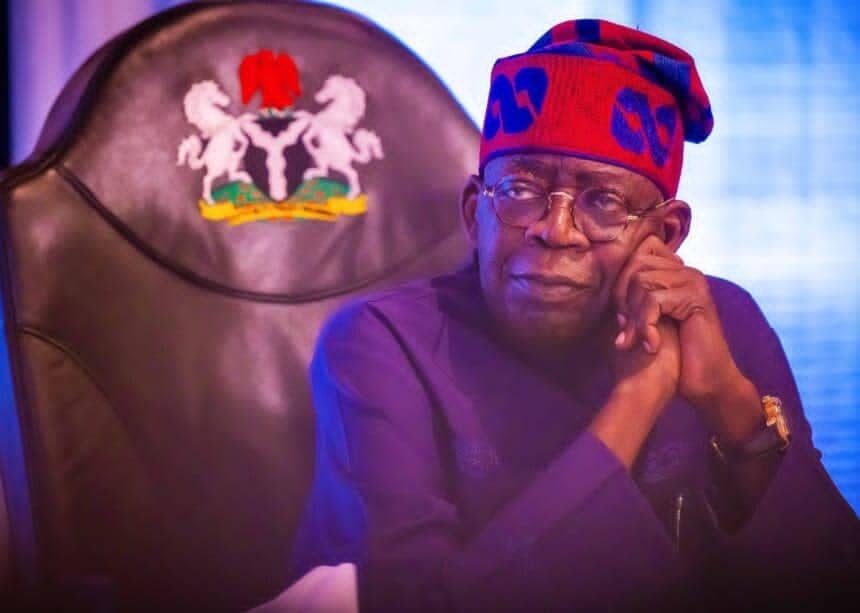
Tuesday, 21st July, 2026. Abuja. On Thursday, 9th July, 2026, the PBAT Door-to-Door Movement, a grassroots political platform for mobilising voters for the re-election of the President and Commander-in-Chief of the Federal Republic of Nigeria, Senator Bola Ahmed Tinubu, GCFR, inaugurated its national leaders.
The ceremony at the Events Centre of the Transcorp Hilton in Abuja, attracted attendants from the low, high, mighty and very important personalities, and successfully projected the president’s re-election campaign as a mission majority of citizens are committed to actualise, contrary to erroneous opposition claims.
As a sign of approval, heaven opened its firmament for showers of blessings very early in the morning and, again, in the afternoon with torrential rains and thunderstorms that left flash floods on roads. Yet, the inclement weather did not stop supporters of the president from the All Progressives Congress (APC) and other political parties from converging at the Transcorp Hilton.
Addressing members of the movement, President of the Senate of the Federal Republic, Chief Godswill Akpabio, GCON, who represented President Tinubu, charged supporters of the president to knock on every door, respectfully, and canvass for votes to re-elect him for a constitutional second term.
“Knock on every door with respect. When they open, listen before you explain. Convince them with facts,” Akpabio stated.
Echoing the advice of the National Assembly leader, the National Chairman of the APC, Professor Nentawe Goshwe Yilwatda urged the movement to by-pass no door as they canvass for votes for the party’s national leader, Tinubu.
“Your assignment is simple. Knock on every door. Move from house to house. Elections are not won on television or social media. They are won in marketplaces and in villages. 2027 is a choice between moving forward and moving backward. A choice between reform and retreat.
“Every door you knock on will become a vote and every heart you win will become a voice that will echo the Renewed Hope Agenda of our party,” Yilwatda stimulated the movement.
The PBAT Door-to-Door Movement was founded by the rights activist, High Chief (Dr.) Government Oweizide Ekpemupolo, alias Tompolo, who also nurtures the movement as its Grand Patron.
A detribalised Nigerian from Gbaramatu Community in Ijaw Land, Warri South West Local Government Area of Delta State, Tompolo is the founder and chairman of Tantita Security Services Nigeria Limited (TSSNL), a leading Nigerian indigenous security firm protecting and securing Nigeria’s oil and gas facilities, to whose patriotism Nigeria owes a big gratitude for the huge revenues currently deriving from a higher crude oil production that stands at 1.8 million barrels per day, today.
Explaining how Tinubu’s genuine love for Nigeria inspired the formation, Tompolo said, “Tinubu has done a lot for this country, the Federal Republic of Nigeria. The people are ready to support him to do more when properly enlightened and galvanised.
“The people are ready to reward his genuine and transparent love in 2027 and this movement is an affirmation of our appreciation and goodwill to ensure that President Bola Ahmed Tinubu, GCFR, gets votes from every home in Nigeria for his re-election and consequential prosperity of the nation.”
Fondly called the ‘General Officer Commanding’ (GOC) of the Niger Delta, Tompolo is a successful Niger Delta leader, who is highly respected by men and women of all walks of life, who are proven and successful in different fields of endeavours.
At the forefront of Tompolo’s men and women driven by altruism and patriotism, a force in the reckoning of the PBAT Door-to-Door Movement’s success, is the Administrator of …
Opinion
Inside Nigeria’s “Ghost Government”: How A Phantom Agency Allegedly Penetrated The Presidency And What They’re Not Saying
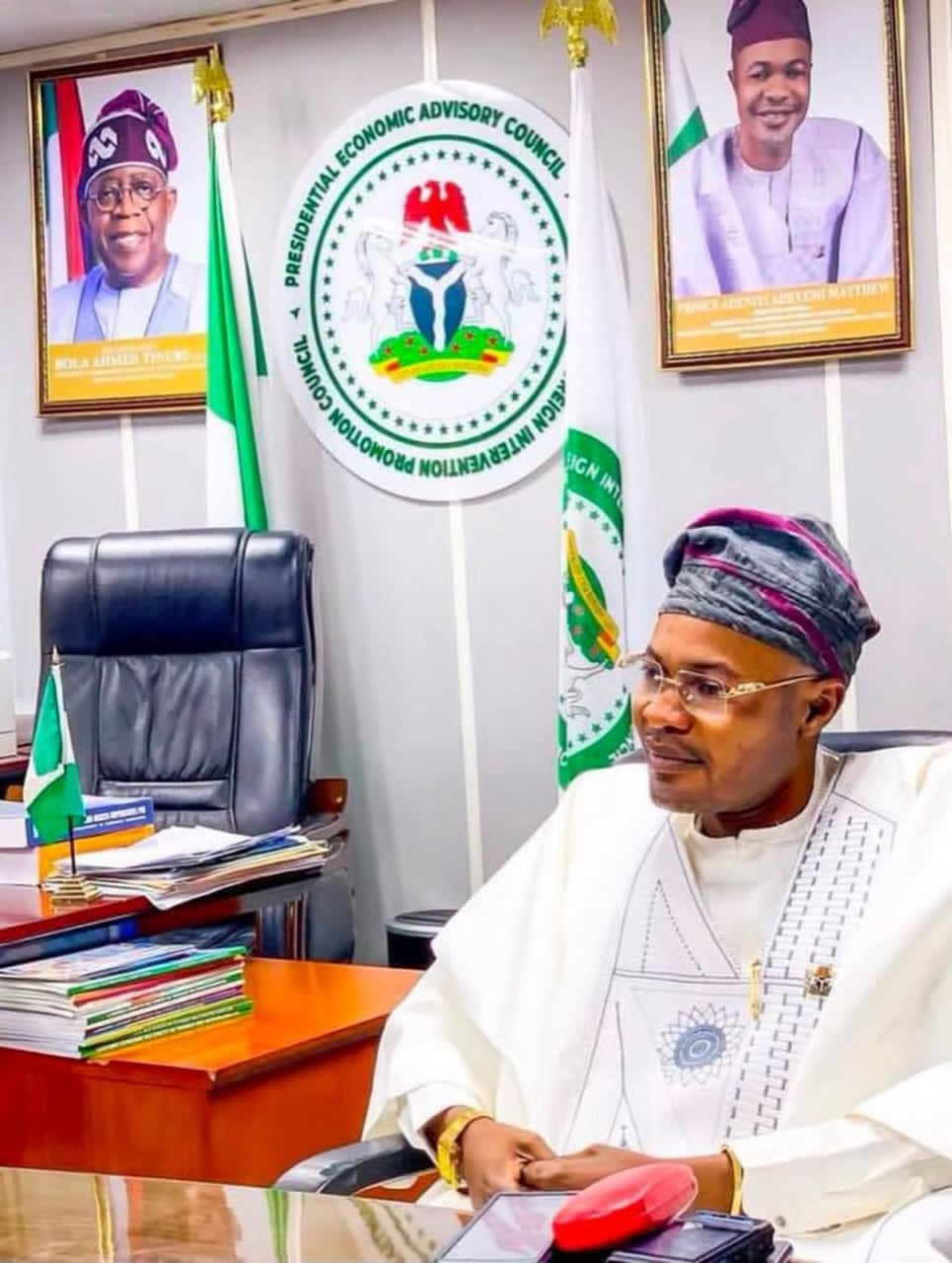
By: Faleye Oluwatosin Simon
In Abuja’s power corridors, there is a quiet rule everyone understands but rarely admits: not everything that operates within government is officially recognized, and not everything officially recognized is legitimate.
That is why the unfolding scandal around Prince Adeniyi Matthew is less shocking to insiders and more embarrassing to those now pretending it couldn’t have happened.
Because the real story is not that a man allegedly created a fake agency. The real story is how the system made room for him.
According to the presidency, Matthew allegedly forged documents and paraded himself as Director-General of a non-existent entity the Presidential Foreign Intervention Promotion Council. On paper, it sounds like a crude scam. But inside Abuja, this is where the narrative begins to fall apart.
Sources within the bureaucracy quietly admit that access at that level is never accidental.
You don’t just walk into the Federal Secretariat and secure office space without someone “clearing” you. You don’t operate a government-linked account without institutional touchpoints. You certainly don’t get a line item in the national budget ₦1.3 billion, no less without passing through layers of review, endorsements, and approvals.
So, who signed off?
That is the question the official statements are carefully avoiding.
Because what is being presented as a lone actor’s deception looks, to those familiar with the system, like something far more structured: a convergence of influence, silence, and complicity.
Inside sources suggest that what often passes for “verification” in government circles is little more than paperwork and perceived backing. Once a file carries the right stamps or appears to originate from the right office doors open. Questions disappear. And responsibility becomes everyone’s and no one’s at the same time.
It is a system where legitimacy is not always proven it is assumed.
And Matthew, allegedly, understood that better than most.
The speed and depth of his access raise uncomfortable realities. Meetings with ministers. Engagements with ambassadors. Strategic sessions that should have triggered background checks at multiple levels. Yet nothing happened.
Not because no one noticed but because no one wanted to be the one to ask.
In Abuja, questioning authority is often seen as career suicide. Delaying a “presidential initiative” can end postings. Challenging a figure who appears connected can isolate you within the system.
So people comply. Files move. Meetings hold.
And the illusion becomes real.
Even more telling is how the situation reportedly unravelled not through internal safeguards but through external friction. It was the Nigerian Investment Promotion Commission raising concerns about overlapping mandates that forced attention onto the so-called agency.
In other words, the system didn’t catch the anomaly. It tripped over it.
Then comes the most explosive layer Matthew’s own allegations.
His claims that senior figures demanded billions from the agency’s take-off funds and facilitated his appointment for hundreds of millions of naira may be dismissed officially. But within insider circles, such allegations are not treated as outrageous they are treated as familiar.
Because the uncomfortable truth is this: the structure he allegedly exploited is the same structure many operate within just with more discretion.
This is where the Presidency’s narrative begins to look less like a full explanation and more like damage control.
Framing this as a simple case of forgery isolates the problem. It suggests the system worked that a bad actor slipped through but was eventually caught.
But the timeline tells a different story.
This was not a breach. It was prolonged access.
This was not deception at the gates. It was acceptance at the table.
And until there is transparency around who approved what, who endorsed whom, and who looked the other way, the official version will remain incomplete.
Here is the question insiders are already asking:
Was this man truly operating alone or did he simply become the most visible face of a system that routinely blurs the line between formal authority and informal power?
Nigeria does not just have a problem with fraud.
It has a parallel governance problem where influence can manufacture legitimacy, and legitimacy can be rented long enough to become reality.
Until that shadow system is confronted, exposed, and dismantled, this will not be the last “ghost agency.”
It will simply be the one that got caught.
By: Faleye Oluwatosin Simon
-
 Health & Wellness1 year ago
President Tinubu Directs Cut in Dialysis Cost from ₦50,000 to ₦12,000
-
News2 years ago
CBN Debunks Fake Circular on New ₦5,000 and ₦10,000 Notes
-

 International News7 months ago
Indian Police Arrest Nigerian Over ₦290m Drug Haul
-
 Business7 months ago
Dangote Refinery Reduces Petrol Gantry Price To ₦1,200 Per Litre
-

 Business7 months ago
After Plea Bargain, Court Discharges Stella Oduah of ₦2.5bn Fraud
-
 Opinion2 years ago
Championing the People’s Voice: Obasa’s Dedication to Grassroots Representation By Dave Agboola⁰
-
Business2 years ago
Dangote; We Did Not Fix ₦600/Litre Petrol Price
-
 Trending News1 year ago
NELFUND Disburses ₦86bn To 449,000 Beneficiaries