
International News
Dozens Of Afghan Women Blocked From Departing For Studies In UAE

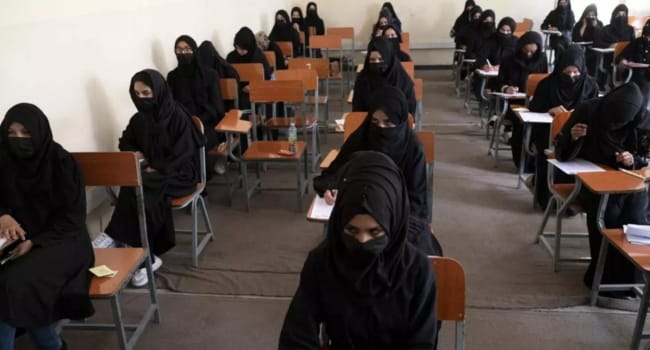
Dozens of Afghan women granted scholarships to study in the United Arab Emirates have been blocked from leaving Afghanistan, one of the women told AFP on Thursday, following outcry from their Emirati sponsor.
Laila, 22, was one of around 30 women who had been sponsored to study in the UAE by prominent Emirati businessman Khalaf Ahmad Al Habtoor, but were stopped from departing on their flights from Kabul airport on Wednesday.
Women and girls were banned from attending high school and university in Afghanistan after Taliban authorities took control of the country in August 2021.
“It was our only hope to go abroad to continue our education,” said Laila, whose name has been changed for fear of reprisals.
“This was an amazing opportunity for us but, like everything else, this opportunity was taken from us.”
She was due to start a law degree in Dubai, having been forced to abandon her journalism studies under the Taliban government ban.
Laila said she and the other women made it to their departure gate but were turned away at the last moment by men in airport uniforms who said they had an order that those with student visas were not allowed to leave the country.
Taliban officials did not respond to AFP requests for comment or confirmation.
Al Habtoor, the founding chairman of the Al Habtoor Group, slammed the Afghan authorities on Wednesday in a post on X, formerly known as Twitter, and urged them to let the women leave.
He said about 100 women had been granted scholarships in collaboration with the University of Dubai and that Al Habtoor Group staff had worked for months to ensure everything was in place for them.
“The authorities in Afghanistan, without justification, prevented their departure, unjustly curtailing their freedom… I request all involved parties to quickly step in and help rescue and assist these struggling students,” Al Habtoor said in the post.
“They have the right to study, they have the right to do whatever the men can do and there is no exception to that,” he said in an accompanying video.
‘Alarming’
The video included what it said was a voice note from another of the women at the airport: “When they see the student visa and the student ticket they don’t allow us (to board). I don’t know what to do. Please help us.”
Heather Barr, associate women’s rights director at Human Rights Watch, said the incident marked “an alarming step”.
“This is holding them prisoner to prevent others from helping them study,” Barr said.
Taliban authorities have imposed their strict interpretation of Islam in the two years since their takeover, with women bearing the brunt of laws the United Nations has called “gender apartheid”.
The Taliban government has also barred women from visiting parks, fairs and gyms, and has ordered them to cover up in public. Women are mostly blocked from working for UN agencies or NGOs, with thousands sacked from government jobs or paid to stay at home.
Laila said she still hoped they would be allowed to leave for Dubai and urged the international community to support them.
“It is very difficult to imagine my future without proper education,” she said.
AFP
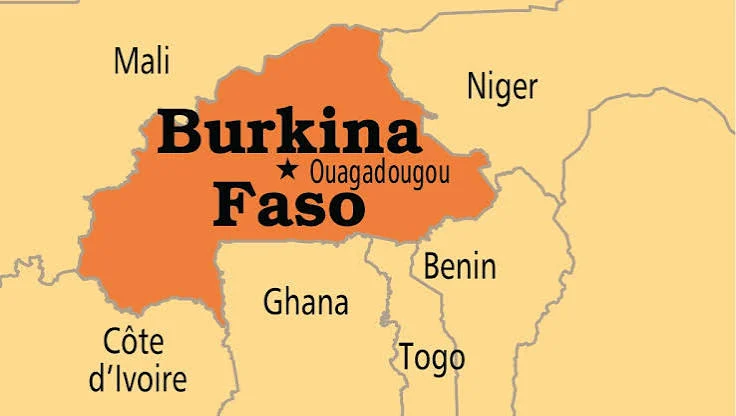
Burkina Faso’s parliament has voted unanimously to reinstate the death penalty for crimes including terrorism, espionage and treason, ending the country’s abolition of capital punishment for ordinary crimes in 2018.
All 71 members of the West African country’s transitional legislature supported the revised penal code on Tuesday, October 20, following its presentation by Justice Minister Edasso Rodrigue Bayala, according to the Associated Press.
The decision restores capital punishment nearly four decades after the country’s last known execution, which took place in 1988, according to Human Rights Watch.
The military-led government’s Council of Ministers approved a bill to restore the death penalty in December 2025, prompting criticism from international human rights organisations.
Amnesty International and Human Rights Watch warned that the move could threaten fundamental rights and be used to suppress critics of the authorities.
Burkina Faso’s military government has previously faced allegations of detaining journalists, human rights defenders and other perceived opponents. The authorities also dissolved political parties earlier in 2026 and repealed the laws governing their activities.
The reinstatement comes as the country continues to battle an armed insurgency involving militant groups linked to al-Qaida and the Islamic State group. The violence has killed thousands of people and displaced millions across Burkina Faso and the wider Sahel region.
The government has presented the tougher penal code as part of its response to the security crisis. Bayala had indicated in 2024 that the death penalty would be included in a revised criminal code.
According to Reuters, the revised code also provides for capital punishment in cases involving the importation of expired or prohibited products that result in death, although the precise scope and implementation of the new provisions will depend on the final legal text.
Human rights organisations have questioned whether restoring the death penalty will improve security, warning that it could deepen repression and create additional risks for people accused of offences.
Human Rights Watch previously said the proposed change could intensify a climate of fear and send a chilling message to critics of the military authorities.
The country’s security forces have also faced allegations of serious abuses during counterinsurgency operations. Human Rights Watch reported this year that government forces killed more than twice as many civilians as jihadist fighters between 2023 and 2025.
Armed groups, including Jama’at Nusrat al-Islam wal-Muslimin, an al-Qaida-linked organisation, have also been accused of war crimes and crimes against humanity by rights groups.
Burkina Faso, a landlocked country with a population of about 23 million, has been governed by military authorities since a coup in 2022. The junta has repeatedly delayed a return to civilian rule as it seeks to contain the insurgency.
The parliamentary vote marks a significant change in the country’s criminal justice policy. Burkina Faso abolished the death penalty for ordinary crimes in 2018 under former President Roch Marc Christian Kaboré, although the last known execution had taken place decades earlier.
The decision is likely to renew scrutiny of the country’s human rights record as authorities pursue their security campaign against armed groups.
(APNews)

Uganda has clarified that as of Tuesday, October 21, 2026, when Nigerian health authorities confirmed an active case of Ebola in its capital city, Abuja, it had no active case of the virus.
Health Minister, Muhammad Ali, had announced that a female patient who had travelled from Uganda in East Africa, tested positive for the virus.
“The Federal Government of Nigeria confirms one case of Ebola disease in the Federal Capital Territory (FCT), following laboratory confirmation today, 20 October 2026. The patient, a woman who recently arrived in Nigeria on an international flight from Uganda, was admitted to a private hospital in the FCT, where she received care for several days before the diagnosis was confirmed. She is currently in isolation and receiving medical care.
“The FG calls on all public and private healthcare facilities nationwide to be on high alert. Healthcare workers must maintain a high index of suspicion, promptly identify and isolate suspected cases, observe strict infection prevention and control measures, and immediately report suspected cases to public health authorities.
“Investigations are ongoing, and we will continue to provide accurate and timely information,” Pate had said.
The development had made many Nigerians look towards the direction of Uganda, just like Patrick Sawyerr, a Liberian, imported the disease to Nigeria in 2014.
But in a statement issued after Pate’s comment, Charles Olaro, Director-General of Health Services in the East African country, clarified that the patient is a Nigerian.
Olaro said the woman had travelled to Eastern Democratic Republic of the Congo (DRC), which has over nearly 10,000 active cases with 4,500 deaths from Ebola, for business and transited through Uganda in early October.
According to Olaro, she showed no symptoms while in Uganda but developed symptoms after arriving in Nigeria.
“Travel through Uganda does not establish that infection occurred here. The location of exposure remains under investigation,” the ministry said.
“The Government of Nigeria is yet to provide detailed information on her travel itinerary and clinical history which will guide further investigations and any necessary contact tracing.
“We wish to clarify that, as at the time of this statement, Uganda has NO confirmed active Ebola cases.”
The Ugandan government said it had maintained limited provisions for humanitarian and diplomatic movement, adding that it would strengthen screening and public health controls at points of entry.

A Finnish appeal court has reduced the prison sentence of Biafran separatist leader, Simon Ekpa, from six to four years.
Finnish newspaper Yle disclosed this in a report on Thursday.
However, the Court of Appeal upheld the decision of the Päijät-Häme District Court, which found Ekpa guilty of terrorism-related charges last year.
The charges were related to Ekpa’s alleged activities aimed at re-establishing an independent state of Biafra in southeastern Nigeria.
Ekpa subsequently appealed the ruling, seeking to have his conviction and sentence overturned.
In a ruling that offered some relief to Ekpa, the Court of Appeal found him guilty of the same offences but reduced his prison term after considering the circumstances surrounding his actions. The court noted that the situation in the Biafran region closely resembled, but did not meet the definition of, a civil war.
Ekpa had told the court that his involvement was not motivated by terrorist intent, citing the political turmoil in the Biafran region.
The prosecutor in the case had also appealed the district court’s decision, arguing that the prison sentence did not reflect the seriousness of Ekpa’s offences.
-
 Health & Wellness1 year ago
President Tinubu Directs Cut in Dialysis Cost from ₦50,000 to ₦12,000
-
News2 years ago
CBN Debunks Fake Circular on New ₦5,000 and ₦10,000 Notes
-

 Business7 months ago
Dangote Refinery Reduces Petrol Gantry Price To ₦1,200 Per Litre
-

 International News7 months ago
Indian Police Arrest Nigerian Over ₦290m Drug Haul
-
 Business7 months ago
After Plea Bargain, Court Discharges Stella Oduah of ₦2.5bn Fraud
-
Business2 years ago
Dangote; We Did Not Fix ₦600/Litre Petrol Price
-
 Trending News1 year ago
NELFUND Disburses ₦86bn To 449,000 Beneficiaries
-
 Opinion2 years ago
Championing the People’s Voice: Obasa’s Dedication to Grassroots Representation By Dave Agboola⁰