
News
LAHA Tackles IGP, Egbetokun Over Statement On State Police

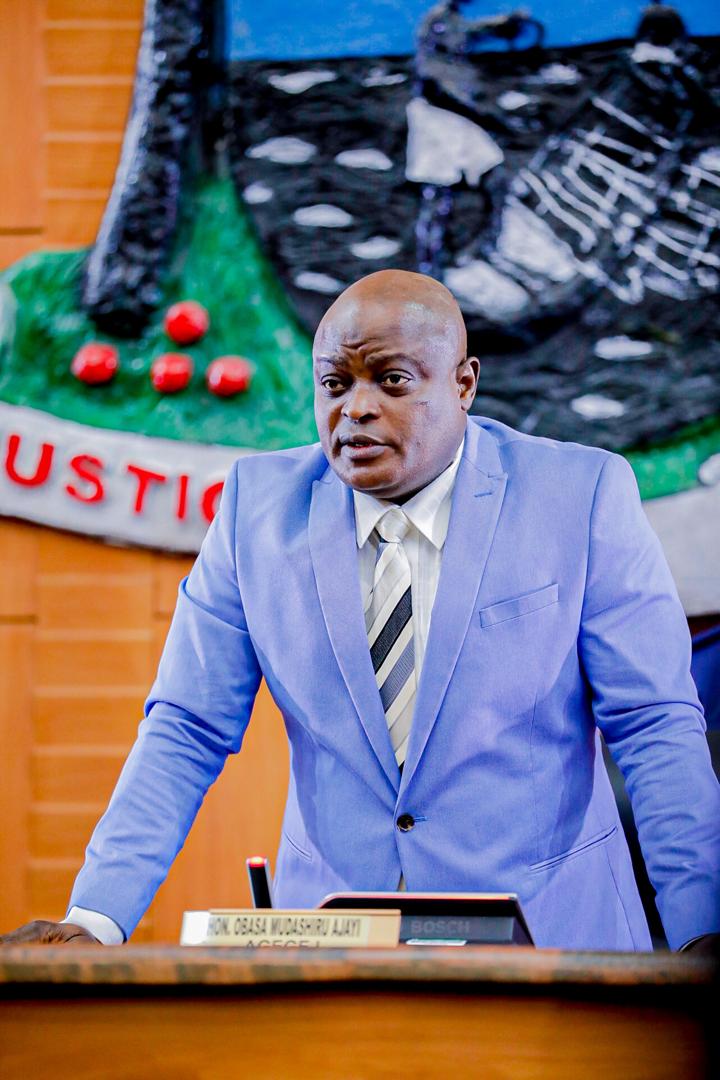
The Lagos State House of Assembly has kicked against the position of the Inspector-General of Police, IGP, Olukayode Egbetokun, that Nigeria is not ripe for the establishment of state police.

According to a brief on Monday’s plenary session of the Assembly, made available to The Column.ng, by the Chief Press Secretary to the Speaker, Lagos State House Of Assembly,Eromosele Ebhomele, the Speaker of the House, Rt. Hon. Mudashiru Obasa, directed the Clerk of the House, Barr. Olalekan Onafeko, to write the Inspector-General and the National Assembly stating that the state lawmakers reject Egbetokun’s position.
Recall that the IGP, represented at a recently held one-day dialogue on state policing, themed, ‘Pathways to Peace: Reimagining Policing in Nigeria’, opposed the establishment of state police, arguing that it would increase ethnic tension and cause divided loyalty in states of the federation.
The IGP also suggested that the Federal Road Safety Corps and the Nigeria Security and Civil Defence Corps be merged with the police force.
However, speaking at plenary on Monday, Dr. Obasa, who noted that the FRSC and the NSCDC have not been able to solve the problems of accidents on roads and pipeline vandalism respectively, wondered how effective they would be if they are merged with the police force.
“In Lagos State, we have the Security Trust Fund through which successive administrations starting from that of Asiwaju Bola Ahmed Tinubu have provided enormous support to the police command in Lagos State. Yet, crime of different dimensions continued.
“This shows that no matter what Egbetokun has proffered as solution, such won’t solve our problem. The position of the IGP is unacceptable.
“We strongly believe that if we have state police, we would be able to solve the issues of crime in our nation or reduce it to the minimum.
“As we have seen in other climes, the United Kingdom has different levels of policing just like the United States of America. So why should ours be different?
“The lives of our people are very important and we must do everything possible to make sure we protect lives and property. We want to state categorically that we believe in state police and we want to urge the National Assembly to continue with its intendment to establish state police through the process of constitutional amendment,” Obasa said while praising President Tinubu for his resolve to end insecurity in the country.
Commending the Speaker for his stand on the issue of state police, the lawmaker representing Badagry Constituency 1, argued that with its current structure, it would be difficult for the Nigeria Police Force to effectively secure the country.
Also declaring his support for state police, another lawmaker, Hon. Sa’ad Olumoh (Ajeromi/Ifelodun 1), said each Nigerian state currently has a local security outfit in the semblance of state police.
“Today, which state does not have state police one way or the other? This is a cause that should be supported. For the IG to come out and say state police is not in the interest of Nigeria shows he is not considering the reality of insecurity on Nigerians,” he said.
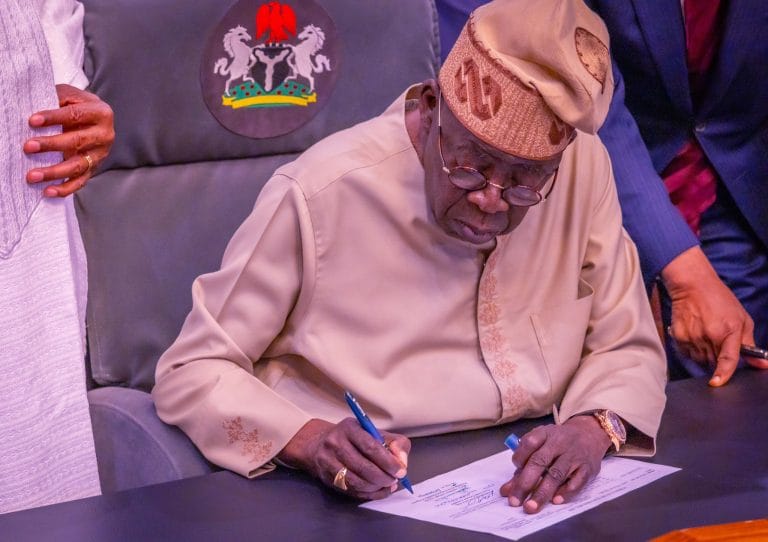
The Federal Government has inaugurated a 10-member independent committee to investigate the deaths of 37 people detained by the Nigeria Security and Civil Defence Corps in Niger State over suspected illegal mining.
The Minister of Interior, Olubunmi Tunji-Ojo, inaugurated the committee on Tuesday in Abuja, following a directive by President Bola Tinubu for a comprehensive investigation into the incident.
The committee is chaired by retired Deputy Director-General of the Department of State Services, Jonathan Kure, while a former Director-General of the Nigerian Law School, Prof Isa Hayatu Chiroma, SAN, will serve as secretary.
Other members are retired AIG Hosea Hassan Karma; Prof Olayinka Buhari, a professor of Histopathology and former Chief Medical Director of the University of Ilorin Teaching Hospital; a representative of the Minna Emirate Council; and a representative of the Niger State Government.
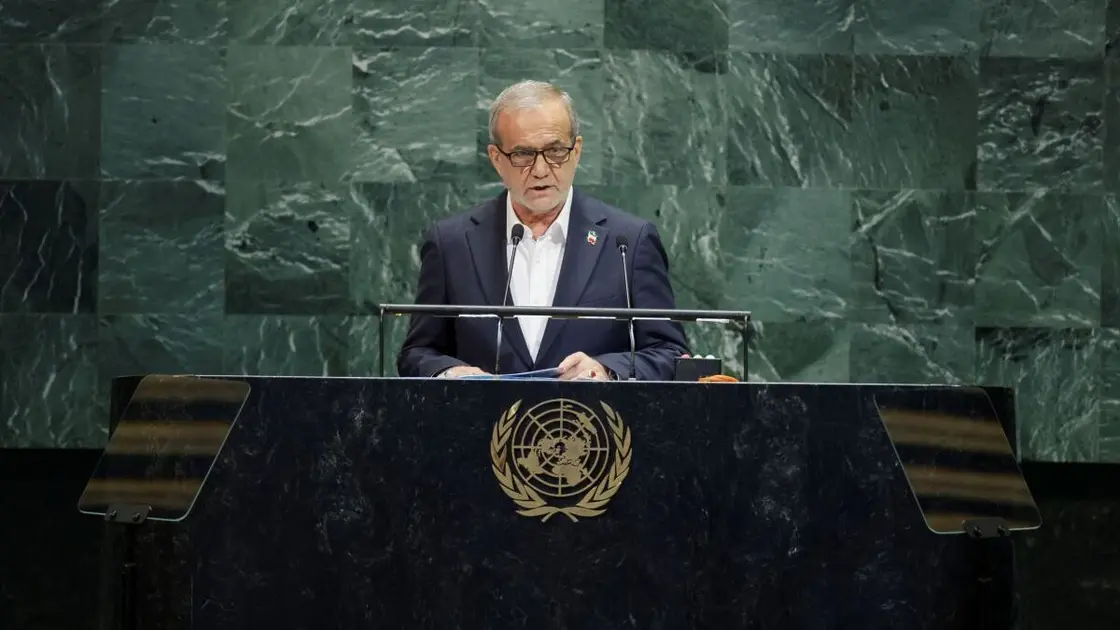
The United States has refused to issue visas for members of Iranian President Masoud Pezeshkian’s delegation, including his communications team, for this week’s trip to the UN General Assembly, Iranian state media reported Monday.
Pezeshkian will be the highest-ranking Iranian official to enter the United States since the Middle East war began with US-Israeli strikes on Iran in February.
“In an unprecedented hostile move by the US government, (US President Donald) Trump has denied US visas to certain members of the president’s high-level delegation, including members of his communications team,” state news agency IRNA reported.
The Mehr news agency also carried the story, citing a spokesperson for the Iranian presidency, and added that Pezeshkian will address the UN General Assembly on Wednesday.
The US has authorised the Iranian delegation to travel for the UN General Assembly but will, like last year, put restrictions in place.
Iran’s delegation will not, for instance, be allowed to purchase luxury goods or other items, the State Department said on Thursday.
Iranian Foreign Minister Abbas Araghchi, part of the delegation to the UN, left Iran on Sunday evening for a stopover in Qatar.
Iran says it has conveyed to the US, via Qatar as mediator, conditions for reopening the strategic Strait of Hormuz oil and gas shipping route, which it has choked off since the war began.
The United States, in turn, is imposing a counterblockade of Iranian ports.
AFP
Civil servants under the Joint National Public Service Negotiating Council, JNPSNC, Trade Union Side, have written to President Bola Ahmed Tinubu, demanding an urgent intervention to address the worsening economic hardship facing workers and their dependants.
The workers called on the Federal Government to stabilise the price of Premium Motor Spirit, PMS, at N500 per litre, approve an immediate Wage Award and upwardly review salaries and allowances across the public service.
They also demanded the immediate constitution of a committee to negotiate a new National Minimum Wage ahead of January 2027.
In a letter addressed to the President at the State House, Abuja, the workers said the recent increase in fuel prices to N1,430 per litre and above in some locations had further worsened the cost-of-living crisis.
They gave the Federal Government until Wednesday, September 30, 2026, to take action on their demands, warning that the prevailing hardship was creating palpable tension among workers and Nigerians.
The JNPSNC said the removal of fuel subsidy three years ago had triggered an astronomical increase in fuel prices and produced multiplier effects on the prices of essential commodities across the economy.
The council said the situation had made life increasingly unbearable for workers, adding that the provision of food palliatives was not a sustainable solution to the economic crisis.
It said: “It has dawned on Nigerian workers that the provision of palliatives such as bags of rice, Indomie, vegetable oil, garri, among other edible foods, is as good as weaponising Nigerians with poverty because it is a Pyrrhic intervention which is unsustainable, inaccessible to the majority of Nigeria’s population and also limited to political cronies.”
The workers argued that a more sustainable intervention would be to reduce the cost of fuel to N500 per litre, saying the measure would have a multiplier effect across the economy.
“Consequent upon the above, it is preferable that the Federal Government should provide an intervention that will trickle down to all Nigerians by making fuel available at an affordable amount as low as N500 (five hundred Naira), the amount at which fuel was being sold when the subsidy was first removed in the year 2023,” they said.
The council identified the restoration of workers’ purchasing power, improved productivity and service delivery, promotion of integrity and accountability, and the reinforcement of trust and industrial peace as major reasons for its demand for improved remuneration.
On fuel prices, the workers said the government should “look inward and stabilize the prices of fuel to an affordable minimum,” arguing that fuel remained an essential commodity with significant implications for the Nigerian economy.
“As a matter of reality, the current hardship being faced by the hapless Nigerian workers is caused by the astronomical increase in the price of Premium Motor Spirit (PMS) to as much as N1,430.00, or more per one litre (this is a killing amount),” the council stated.
The JNPSNC further called for an intervention fund for stakeholders in the oil sector to stabilise fuel prices and eventually bring the pump price down to N500 per litre.
The council said the government could adopt another description for the intervention if the term “fuel subsidy” was considered unacceptable.
“The fuel intervention fund will give the opportunity to every Nigerian to benefit from the intervention fund because it will have multiplier effect in the life of every Nigerian and will naturally trickle down to the downtrodden and all the remotest parts of the country,” it said.
The council also endorsed a position attributed to Nigeria Labour Congress (NLC) President, Joe Ajaero, on measures to address the fuel crisis.
Ajaero was quoted as saying: “Nigeria as an oil-producing country we have sufficient local refining capacity even as this substantially resides with the private sector.”
He also said: “As a nation, and as a people endowed with enormous fossil resources, we are deserving of a certain level of protection or buffer against the gales from the Gulf, and indeed, other gales.”
According to the NLC position cited by the council, “As part of the process of creating this buffer government should sell sufficient crude in Naira to our local refineries; expand our national storage capacity in pursuance of meeting energy emergencies and security. These measures will create jobs, economic value as well as deal with mutating security challenges.”
The statement further said: “There is nothing wrong with government subsidizing the needs of citizens, especially in emergency situations like this. At the moment, there is no oil-producing country we know of that has not intervened or come up with sustainable palliatives in one way or the other in these perilous times.”
The NLC position also stated: “Government is making extra money in the international spot market (of between USD35 and 40 per barrel above the budgeted figure). This translates to trillions of Naira a month.”
It added: “On a long term basis, we are equally concerned that local refineries are importing crude. This is unreasonable and unacceptable and defeats the logic and purpose of local capacity.”
The JNPSNC said it “wholeheartedly subscribe[s] to the submission of NLC leadership” and urged the government to consider the proposals for urgent implementation.
On wages, the council demanded the immediate introduction of a Wage Award covering Federal, State and Local Government workers.
“Wage Award as an urgent intervention and upward review of salaries and allowances of all serving Public Servants in the Nigeria Public Service should be provided with immediate effect to cut across all Federal, State and Local Government workers,” it said.
According to the council, the Wage Award would serve as a precursor to the substantive New National Minimum Wage expected to take effect in January 2027.
The workers also demanded the immediate setting up of a committee to negotiate the new National Minimum Wage, saying early commencement of the process would prevent delays in implementation.
“There is urgent need to immediately set up committee for the negotiation of New National Minimum Wage to accelerate the commencement of the New National Minimum Wage before 2027 so that it can take effect from January, 2027,” the council stated.
The JNPSNC proposed that the minimum salary payable to an officer on Grade Level 01, Step 1, should be N500,000 per month under the 2027 salary template.
The council also called for harmonised wages across Ministries, Departments and Agencies (MDAs), while urging that the review be encouraged at the State and Local Government levels.
It further demanded periodic salary and allowance adjustments linked to inflation, as well as welfare measures including subsidised transportation and affordable housing for civil servants.
The council said public servants remained “the backbone of governance and national development” and the “live wire of any administration,” noting that workers were responsible for policy formulation, implementation of government programmes and the provision of essential public services.
It said rising inflation, fuel prices, transportation costs and the increasing cost of food, housing, healthcare and education had eroded the real value of workers’ salaries.
“Many workers are now struggling to meet basic financial obligations, which has inevitably affected the morale, motivation, and overall productivity within the Public Service,” it stated.
The JNPSNC urged the President to direct the National Salaries, Incomes and Wages Commission (NSIWC) to commence discussions with the Nigeria Labour Congress, NLC, Trade Union Congress of Nigeria TUC, JNPSNC and other relevant stakeholders on the Wage Award and upward review of salaries and allowances.
The council said: “Your Excellency, we trust that this request will receive the prompt attention and action it deserves in the interest of Nigerian workers and their dependants, the Public Service as an age-long institution and the nation at large on or before Wednesday 30th September, 2026 to douse the palpable tension that may erupt.”
It also expressed the expectation that the President’s Independence Day broadcast would address the concerns raised by workers.
“It is the high expectations of Nigerian workers and all patriotic Nigerians that your Independence Day broadcast will attend to our sincere suggestions in order to bring succour and life back to all dying Nigerians,” the council said.
-
 Health & Wellness1 year ago
President Tinubu Directs Cut in Dialysis Cost from ₦50,000 to ₦12,000
-
 News1 year ago
PICTURE: In Lagos Couple Sentenced to 22½ Years for Cannabis Trafficking
-
 Business2 years ago
Heritage Bank Customers’ Path to Securing ₦5m Insured Funds: A Step-By-Step Guide by NDIC”
-
 Business6 months ago
Dangote Refinery Reduces Petrol Gantry Price To ₦1,200 Per Litre
-

 International News6 months ago
Indian Police Arrest Nigerian Over ₦290m Drug Haul
-
 Trending News1 year ago
NELFUND Disburses ₦86bn To 449,000 Beneficiaries
-
 Business6 months ago
After Plea Bargain, Court Discharges Stella Oduah of ₦2.5bn Fraud
-
Business2 years ago
Dangote; We Did Not Fix ₦600/Litre Petrol Price