
News
Pray for Peaceful Coexistence In Lagos State Sanwo-olu Urges Muslim

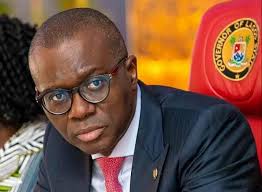
Babajide Sanwo-Olu
Governor of Lagos State
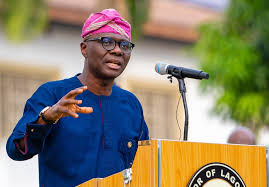
The Governor of Lagos State, Mr. Babajide Olusola Sanwo-Olu has appealed to all Lagosians, especially the Muslim community to offer prayers for Nigeria and Lagos in particular, for continued growth and peaceful co-existence
Sanwo-Olu made the plea at the Special Ramadan Lecture and Tafsir programme held at the Lagos House Mosque Complex and organised by the Ministry of Home Affairs to usher in the commencement of the Ramadan Fast.
He noted that no government can achieve any success without divine intervention and support from its citizens, adding that peaceful and harmonious living will galvanise the desired growth of the economy and foster prosperity for all.
He solicited continuous prayers for the administration in order to continue to serve the people right and exceed their expectations.
Governor Sanwo-Olu, who was represented by his deputy, Dr. Kadri Obafemi Hamzat at the event, also seized the opportunity to appreciate residents of the State for massively voting for the President-elect, Asiwaju Bola Ahmed Tinubu and his re-election, adding that the trust reposed in his administration will not be taken for granted.
In his lecture titled, “Indeed After difficulty Comes Ease”, Sheikh Abdul Rahman Ahmad explained that every difficulty is imbedded in ease as God uses difficulties to instruct, correct and redirect the attention of man to Himself.
He appealed to all Muslim Faithful to trust Allah even in the face of challenges and hardship as difficulties also reproduce security instead of fear, joy instead of doom.
Ahmad also charged the government to eradicate unlawful taxes and levies as demanded by unauthorised individuals in the State.
Earlier in his welcome address, the Commissioner for Home Affairs, Prince Anofiu Elegushi stated that the Ramadan fast is a command from Almighty Allah as recorded in the Holy Quran Chapter Two.
He admonished all Muslims to avail themselves of the training and serenity that Ramadan affords, which is “To cleanse our hearts, enrich our souls with virtues and re-dedicate ourselves to the good of humanity and the development and progress of our dear State, Lagos and our great country, Nigeria”.
Elegushi reminded Muslims to cater for the less privileged around us as commanded by the Holy Quran even as they abstain from all forms of wrongdoing even beyond the Fasting period.
The Commissioner also implored everyone to embrace harmonious co-existence devoid of prejudice, hatred, acrimony and bigotry, while exhibiting attributes of charity and good neighbourliness during and beyond the Fasting period.
The event was attended by members of the State Executive Council, Permanent Secretaries, Muslim Clerics and other top government officials.

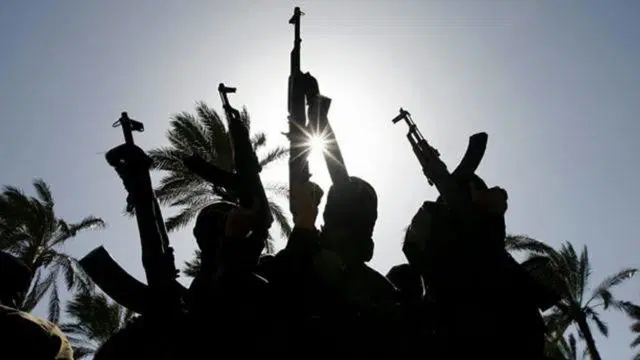
The Katsina State Community Watch Corps has reportedly captured Samagi, a top commander in the bandit network led by notorious kingpin Kachalla Maha in Katsina State.
The group was reportedly responsible for the death of former Director of Defence Information, Major General Rabe Abubakar (rtd.).
Samagi was apprehended alongside another associate.
Samagi’s gang has been linked to several brutal attacks across the Matazu area of the state.
The development came a few days after Katsina vigilantes arrested two suspected ammunition suppliers to Kachalla Maha.
Meanwhile, bandits have continued to terrorise the North-West region amid worsening insecurity, with kidnappings and killings recorded in parts of the region.
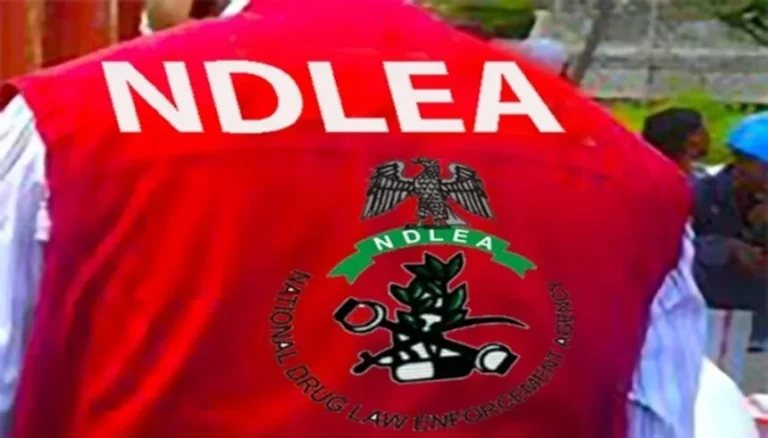
The National Drug Law Enforcement Agency, NDLEA, on Saturday lost one of its officers while another is battling for his life after they reportedly jumped into the River Ethiope while pursuing fleeing suspects in Obiaruku, Ukwuani Local Government Area of Delta State.
The drug enforcement operation, however, turned fatal after the body of one of the officers was later recovered from the river.
The suspect and others being pursued reportedly escaped through the river.
Report quote community sources, as saying that a suspected drug offender who had reportedly been apprehended on the other side of the river jumped into the water while being taken towards the River Ethiope Bridge in an attempt to escape.
The officers pursuing the suspect subsequently entered the river in an effort to apprehend him. One of the officers reportedly drowned, while another was rescued and taken to a hospital for medical attention.
Community sources said traditional rites associated with drowning incidents in Obiaruku were performed before the remains were released to the relevant authorities.
Report said the rites included the provision of a goat and other items.

The Cross River State Police Command has arrested a 24-year-old student, Emmanuel Ejim, in connection with a viral video allegedly showing suspected cult members firing gunshots from a moving vehicle in Calabar.
The Command, in a statement signed by its Police Public Relations Officer, ASP Sunday Eitokpah, said the incident occurred in the early hours of September 17, 2026, prompting Commissioner of Police, CP Ajo Geoffrey Ordue, to direct the immediate identification and arrest of those involved.
According to the police, the Deputy Commissioner of Police, Operations, and operatives of the Violence Crime Response Unit (VCRU) commenced an intelligence-led operation at about 11:30 p.m. on September 17.
The operation, the Command said, led to the identification and tracking of the vehicle captured in the viral footage and the subsequent arrest of its driver.
The information obtained from the driver reportedly helped the police trace Ejim to a hotel in Calabar, where he was arrested.
The police identified Ejim as a student of the University of Cross River (UNICROSS) and said he allegedly identified himself during questioning as a leader of the Vikings Confraternity.
He allegedly admitted being the person seen firing the shots in the viral video.
The suspect also allegedly told investigators that he participated in a sign-out activity on the day of the incident and that another suspected member of the group handed him the pistol allegedly used in the shooting.
The Command said efforts had been intensified to identify and arrest other persons linked to the incident, adding that the circumstances surrounding the possession of the firearm and movement of the vehicle remained under investigation.
The Commissioner of Police directed that the investigation be conducted professionally and comprehensively, with anyone found to have participated in or facilitated the alleged act brought before the law.
The Command warned that the unlawful discharge of firearms in public places constituted a serious security concern and urged residents to report suspicious movements, possession of firearms and cult-related activities to the police.
-
 Health & Wellness1 year ago
President Tinubu Directs Cut in Dialysis Cost from ₦50,000 to ₦12,000
-
 News1 year ago
PICTURE: In Lagos Couple Sentenced to 22½ Years for Cannabis Trafficking
-
 Business6 months ago
Dangote Refinery Reduces Petrol Gantry Price To ₦1,200 Per Litre
-
 Trending News1 year ago
NELFUND Disburses ₦86bn To 449,000 Beneficiaries
-
 Business2 years ago
Heritage Bank Customers’ Path to Securing ₦5m Insured Funds: A Step-By-Step Guide by NDIC”
-
Business2 years ago
Dangote; We Did Not Fix ₦600/Litre Petrol Price
-
 International News6 months ago
Indian Police Arrest Nigerian Over ₦290m Drug Haul
-
 Business6 months ago
After Plea Bargain, Court Discharges Stella Oduah of ₦2.5bn Fraud