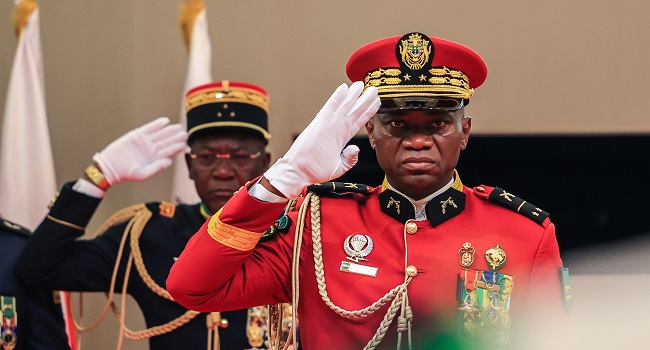
Gabon’s new strongman General Brice Oligui Nguema (R) salutes as he is inaugurated as Gabon’s interim President, in Libreville on September 4, 2023. (Photo by AFP)
A year after seizing power, Gabon’s General Brice Oligui Nguema appears to have his sights set beyond events starting Thursday to mark the coup’s anniversary and firmly on elections next year.
The Central African nation’s new strongman, who deposed president Ali Bongo Ondimba to end the Bongo dynasty’s 55-year rule, has promised to hand power back to civilians next year.
But Oligui already seems to be campaigning for the presidential election set for August 2025, touring the oil-rich country last month.
“If we’ve been able to do certain things in 10 months, that means we could do a lot in seven years,” he said, referring to a presidential term.
The 48-year-old brigadier general was already able to revel in his popularity during Independence Day celebrations, a few days before the anniversary of his August 30 “coup of liberation”.
Fireworks, a banquet, a military parade and several inaugurations of large projects are planned for Thursday and Friday.
With Ali Bongo since then confined to his private estate, according to his lawyer, and his wife and eldest son held in conditions denounced by their lawyers, his junta-led transitional government has said little about the Bongo family’s fate.
Instead, it has claimed to focus on the return to civilian rule, as well as the economic recovery of a country at once rich and underdeveloped, plagued by years of poor governance.
‘Tailored for General Oligui’
Two months after being sworn in as transitional president, the former head of the presidential guard reassured the international community by setting a two-year timetable for the handover of power.
As part of the process towards free and transparent elections, an “inclusive national dialogue” took place in April.
It came up with a thousand proposals presented by around 680 participants — all appointed by Oligui.
The proposals included the introduction of a presidential system without a prime minister and the temporary suspension of the Gabonese Democratic Party, the influential party of the Bongos.
Daniel Mengara, a former political exile who declared his candidacy for the presidential election on Monday, decried the creation of “institutions tailored for General Oligui”.
He said the proposals amounted to “hyper-presidentialism”, similar to the Bongo’s hold on Gabon.
Presented as a synthesis of the national dialogue, a new constitution is due to be published in the coming days.
After going before parliament, it will be put to a referendum by year’s end.
Quality of life
In a recent editorial, the Gabonreview.com news outlet warned against the referendum being treated as a confidence vote in the post-coup authorities, rather than a vote on the constitution itself.
Splashed across gigantic billboards, the transitional government boasts of its efforts to improve Gabon’s quality of life.
It has introduced free school tuition, repaired more than 600 kilometres (370 miles) of roads and launched youth-in-work programmes to tackle an unemployment rate close to 40 per cent among under-25-year-olds.
But day-to-day problems persist, including regular water and electricity cuts, a high cost of living and supply issues.
Accustomed to living off the proceeds of oil, manganese and timber, the country manufactures almost nothing and imports nearly everything else.
That includes fruit and vegetables, despite its fertile land that receives abundant rainfall.
In Africa’s third-richest country in terms of per-capita GDP, one in three lives below the poverty line, according to the World Bank.
‘Discipline’
Oligui’s oft-repeated goal of “economic recovery” has run up against “shortcomings” in the management of public companies and a public debt of 70.5 percent of GDP, highlighted in an International Monetary Fund report in May.
Styled as a “saviour” and a “liberator”, Oligui has kept to his credo: “Union, discipline, work and justice”.
His detractors say, however, it is a line veering towards authoritarianism.
Seven trade unionists from the water and electricity company, SEEG, were arrested after calling for a strike over the abolition of their 13th-month bonus.
They were questioned for three days by the intelligence services before being released with their heads shaven.
Last week, the authorities widely circulated images of a group of youths arrested on accusations of “sowing fear” in the economic capital Port Gentil — they also had their heads shorn.
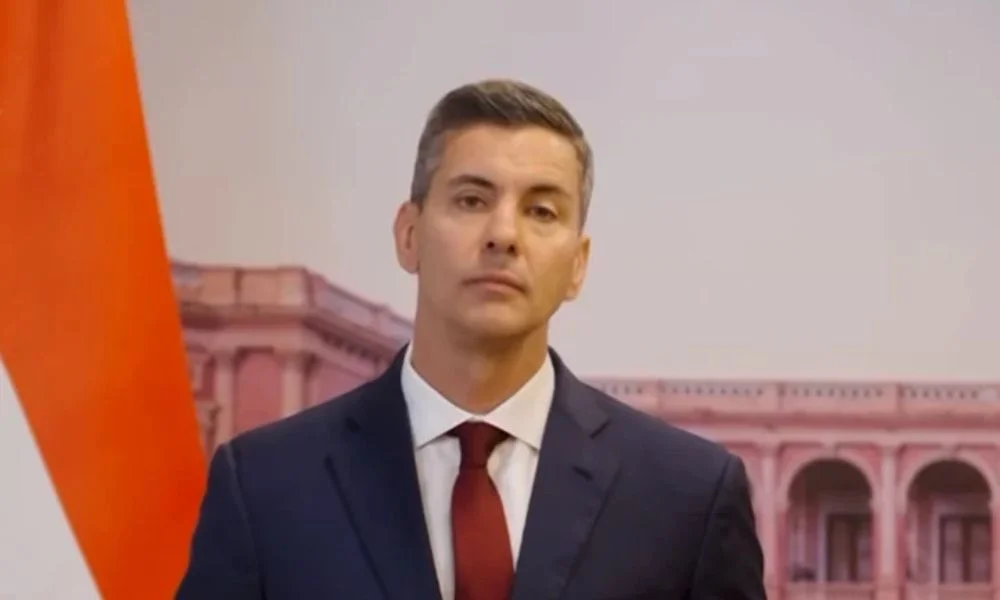
Paraguay’s President Santiago Peña has been impeached and placed under house arrest.
Peña was arrested on Friday minutes after lawmakers, including from his own party, voted to remove him from office due to a crisis triggered by the collapse of Ueno Bank earlier this week.
He had offered to step down on Thursday, but the move to impeach him and charge him with misconduct rather than accept his resignation meant he was stripped of his lifetime Senate seat and the immunity granted to ex-presidents.
Peña, who until last year held shares in the company that owned the bank, has denied any wrongdoing.
The demise of the digital bank has left more than half of Paraguay’s population without access to their savings after it was seized by Paraguay’s central bank.
An estimated three million depositors remain unable to access their savings and pensions prompting widespread protests particularly in the capital, Asunción.
The impeachment charges that led to Peña’s removal alleged he had conflicts of interest, manipulated regulatory oversight, diverted pension funds, and participated in an institutional cover-up involving the central bank.
Peña is due to be questioned today (Saturday) over allegations of breach of trust, influence peddling, and misappropriation of funds, prosecutor Silvia Margarita Gonzalez Vester said.
Peña’s impeachment passed with 44 out of 45 senators voting in favour of it. One lawmaker was absent.
Afterwards, senate president Basilio Núñez said Peña was found guilty of “dereliction of duty”.
Paraguay’s Vice-President Pedro Alliana was then sworn in as interim President.
“Compatriots who are now going through a difficult time as a result of the financial collapse will be fully compensated,” said Alliana, who will serve as President until 2028.
Pedro Alliana takes the oath of office as interim President
Senator Rafael Filizzola said: “We are facing the biggest corruption scandal in our democratic history – a tremendous blow to the state, to private citizens, and to the country’s credibility and image.”
Analysts say Peña is likely to now be prosecuted over the bank’s collapse.
His defence lawyer Ricardo Preda described the allegations as a “reckless accusation” that was “irresponsible and opportunistic”.
In an address to the nation on Thursday, Peña said that he was sorry and that “it was never my intention to betray the trust you placed in me”.
A Kenyan court has sentenced the leader of a doomsday cult, Paul Mackenzie, to 200 years in prison for murdering 191 people, all but one of them children.
Alongside 27 others, Mackenzie was found guilty of the murders for instructing members of his cult to starve their children to death so they could “meet Jesus”.
Justice Diana Mochache said Mackenzie bore the “primary criminal culpability” for ordering his followers to fast to death, in one of Kenya’s deadliest episodes of religious extremism.
“The sentence is appropriate and just, to send an unmistakable message that such atrocities warrant the maximum penalties allowed by law,” the judge added.
The self-styled pastor was arrested in 2023 after the discovery of more than 400 bodies in shallow graves in Shakahola forest near the Kenyan coast. The sprawling investigation into the cases shocked Kenya and drew international attention.
Ahead of sentencing, prosecutors in the court in Mombasa had argued for the death penalty for Mackenzie because of the gravity of the crimes. Capital punishment has not been carried out in Kenya since 1987.
The prosecutors also cited what they described as Mackenzie’s lack of remorse for the crimes. They requested life sentences for his co-accused.
Before the hearing began on Friday morning, Francis Wanje, who lost eight relatives in Shakahola forest, including two grandchildren, told the BBC’s Newsday programme that he was “hoping for… a sentence which will match his [Mackenzie’s] deeds in the forest”.
Mackenzie and the co-accused have formally pleaded for mercy and asked for leniency from the court.
Before their conviction on 19 October, they had all pleaded not guilty and repeatedly insisted that nobody was forced to die.
Mackenzie’s followers believed he was “Jesus’s mouthpiece”, Justice Diana Mochache said as she delivered her eight-hour judgement last month.
Those who opposed Mackenzie’s teachings were beaten to death.
One of his co-accused said he had told his followers that anyone who “resisted the directive to fast must be forced to go to heaven through kicks and blows”.
Burials inside the forest where the cult was based were called “weddings” and those who died “were celebrated as having wedded with Jesus” the judge said.
The judge found that the deaths arose from an organised system, including religious teachings and directives that compelled followers to follow the deadly fasting.
Post-mortem results showed the cause of deaths to be starvation for most victims, while others died from suffocation, strangulation or head injuries.
The cause of death could not be determined for some, with their bodies having decomposed, while others died soon after their rescue as they were so emaciated.
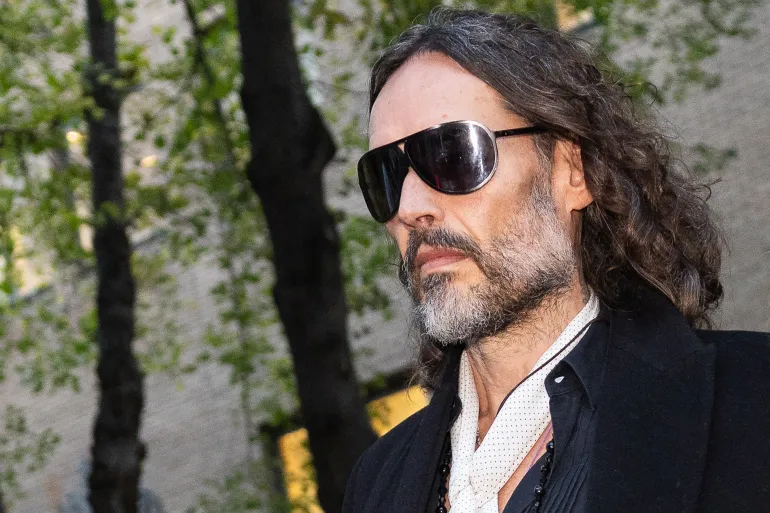
Comedian Russell Brand, once one of Britain’s most high-profile broadcasters and star of several Hollywood movies, faces a lengthy jail term after being convicted in a London court on Thursday of raping a woman and sexually assaulting three more.
Prosecutors said Brand, the former husband of US pop singer Katy Perry, was obsessed with sex and used women to satisfy his own desires. One victim said he treated her “like an animal”.
Funny and charming when he wanted to be, but also ruthless, calculating and manipulative, the 51-year-old, who starred in “Get Him to the Greek” and “Arthur”, was interested only in getting what he wanted from women, prosecutors told jurors at Southwark Crown Court.
“The evidence showed Brand to be a calculated sexual predator, using his growing fame and power to create situations in which he could pursue women sexually, regardless of what they wanted,” senior Crown prosecutor David Roberts said outside court.
Brand now faces jail and potentially further action as police said he was still under investigation for two other alleged rapes, one involving a then 16-year-old girl.
BRAND DENIED THE CHARGES
Brand, known for his loquacious manner and flamboyant appearance, had denied all the charges and ever having non-consensual sex, saying the incidents, which dated back more than 20 years, had either been consensual, reinvented or re-imagined.
He acknowledged in evidence he had dedicated a lot of his life to “reckless philandering and idiocy” but said sexual consent was fundamental.
But, following a four-week trial, the jury found him guilty of rape and three sexual assaults committed between 2004 and 2009. He was acquitted of two other rape charges and an attempted indecent assault.
Judge Joel Bennathan said Brand, who was refused bail, would be sentenced on Monday and faced a lengthy prison term.