
International News
Cambridge Scientist Going To Receive Award Among Victims Of Spanish Train Crash


An award-winning University of Cambridge researcher, Dr Marta Shahbazi has been identified as one of the victims in the Spanish train disaster last week Wednesday, where over 60 people died. She died while on her way to collect a prize for scientific excellence.
Dr Shahbazi was travelling to an awards ceremony on Wednesday when the train she was on crashed into another near Urda, south of Madrid, killing 69 people.
The mother of two was an affiliate associate professor leading a group of researchers at MRC Laboratory of Molecular Biology (LMB) in Cambridge and had earned several awards for work on human embryos and cell biology.
In a statement, the LMB paid tribute to the “inspiring, talented and passionate scientist” and described her death as a “profound shock and a huge loss”.
The expert in cell biology ran the Shahbazi Laboratory at the LMB, based on the Cambridge Biomedical Campus.
She had been announced as the winner of a Spanish Society for Developmental Biology award for her contributions to the study of early human development and was due to collect the award at a conference in El Rompido in Andalusia.
The LMB said: “As a wife and mother of two young children, Marta wrote eloquently about balancing her family and career, serving as a much-admired role model for a ‘mother scientist’, a term she used to describe herself.
“Marta was an inspiring, talented and passionate scientist whose research shed light on the earliest steps in the development of human embryos and how errors occur that lead to failed pregnancies,” the LMB said.
The institute said her death was “a profound shock and a huge loss for LMB”.
Her work had been recognised with “many awards and prizes”, the laboratory added.
Shahbazi is listed on the University of Cambridge website as a principal investigator at its Stem Cell Institute (CSCI).
Institute director Prof Bertie Gottgens said its community was “shocked and deeply saddened” by her death.
The crash in Spain happened when a state-operated Renfe high-speed train smashed into the back of a stationary train operated by the Iryo company.
It is one of the worst rail disasters in Europe’s modern history, and Spain’s worst crash since 2013.
Three days of national mourning were declared in the country.
More than 540 people were on board both trains.
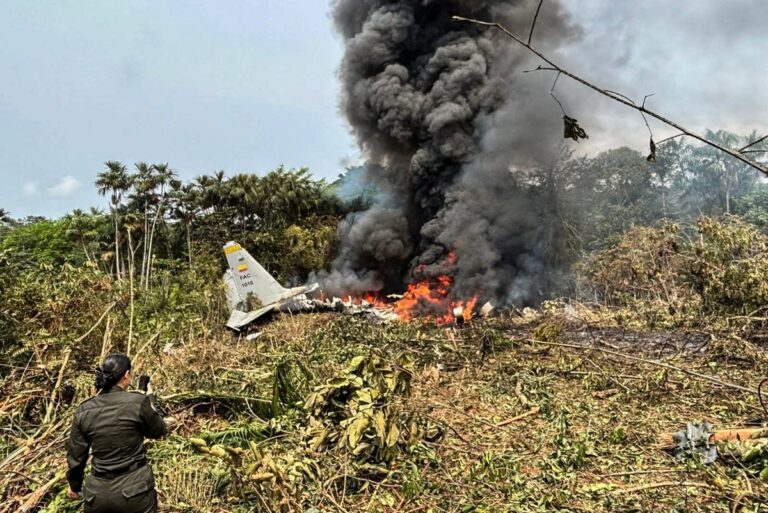
Emergency crews on Sunday afternoon responded to the scene of a plane crash in Greenacres, a city in Palm Beach County, Florida, United States.
The Palm Beach County Sheriff’s Office, in a statement, said the incident occurred in the area of Military Trail, between Cresthaven Boulevard and 10th Avenue North.
All northbound and southbound lanes of Military Trail are currently closed until further notice, with motorists advised to avoid the area and seek alternate routes.
Videos online show the aircraft taking a sharp turn before nosediving into the ground near a mobile home park, demolishing one trailer in a huge fireball.
There are reports of “several fatalities,” although the figure is still unconfirmed. It is also not yet clear whether anyone on the ground was killed or injured.
The aircraft, a Learjet 60, had departed Austin-Bergstrom International Airport in Texas and was heading to North Eleuthera Airport in the Bahamas.
Learjet 60, a business jet manufactured by Bombardier Aerospace, is typically configured to accommodate six to seven passengers alongside a two-person crew.
The Federal Aviation Administration and the National Transportation Safety Board will investigate the crash, according to the FAA.
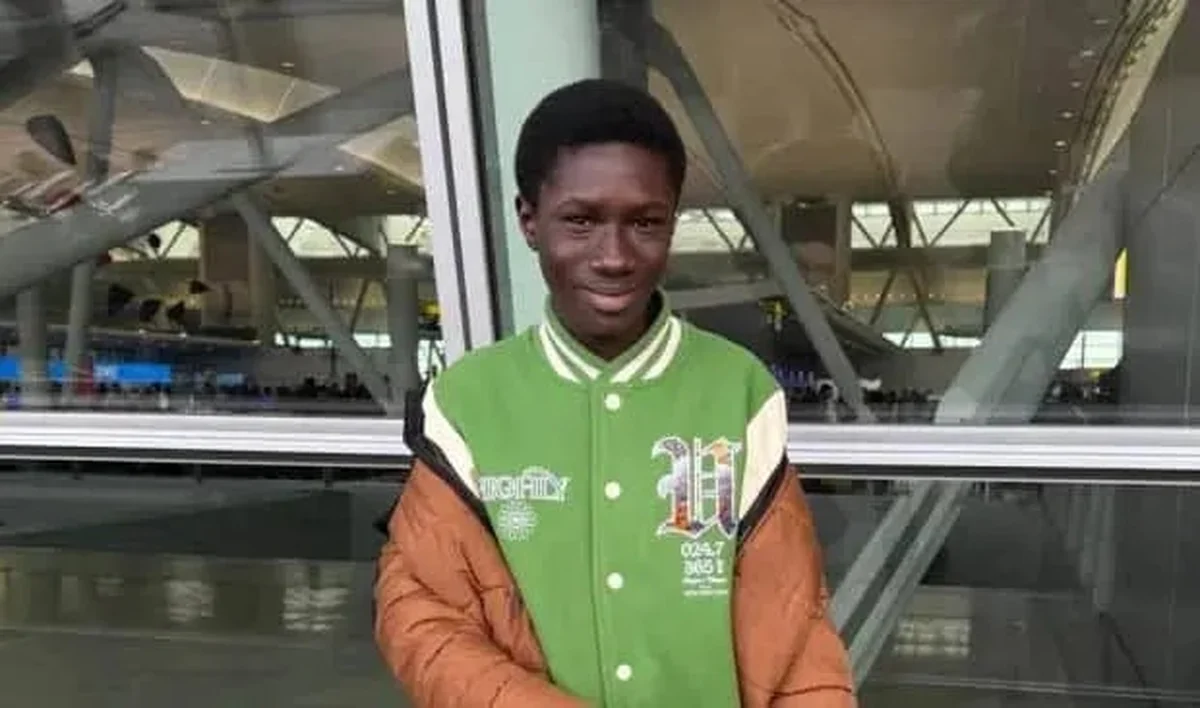
A 15-year-old Ghanaian boy, Javits Frimpong, has been shot dead while on his way to school in the Bronx, New York, with his father suspecting that the killing was connected to bullying at school.
Javits was reportedly shot in the stomach at about 9:30 a.m. on Thursday near Crotona Park. He was rushed to a hospital but later died from his injuries.
According to the New York Police Department, three teenage boys are being sought in connection with the killing. Investigators said the suspects fled the scene wearing black tracksuits and blue surgical masks.
Surveillance footage reportedly showed a person matching the description of one of the suspects fleeing the area after the shooting. The victim was said to have run for about a block after being shot before collapsing.
The teenager’s father, Thomas Frimpong, said he believed bullying was behind the incident, claiming that his son had been targeted by two schoolmates who were recently suspended.
Frimpong disclosed that the school principal informed him about the bullying just three days before his son was killed.
He also maintained that his son was not the aggressor in a recent confrontation at school.
“The principal told me Javits is innocent. Javits is innocent. He was defending himself,” the grieving father said.
Frimpong said he brought his son from Ghana to New York about a year ago in the hope of giving him a better life, while the boy’s mother remained in Ghana.
Describing his son, he said: “My son was precious, very clever.”
The father, who works as a taxi driver, said his last conversation with Javits on Thursday morning was a reminder to get to school on time.
The killing has sparked outrage among residents of the Crotona Park neighbourhood, with some calling for increased after-school activities and youth programmes to keep teenagers away from violence.
Police have yet to publicly identify any suspects or announce arrests as investigations into the teenager’s killing continue
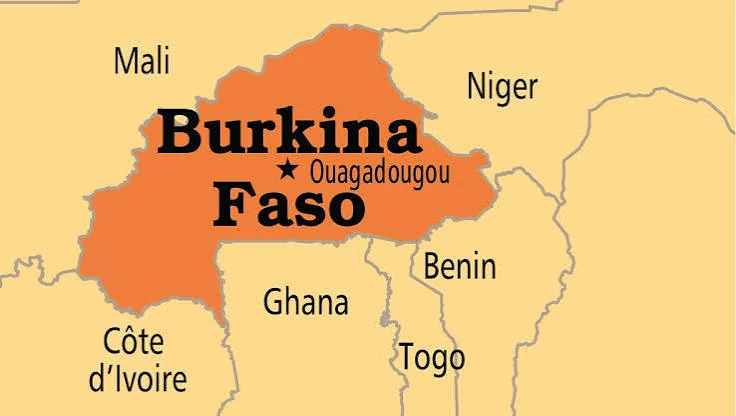
Burkina Faso’s parliament has voted unanimously to reinstate the death penalty for crimes including terrorism, espionage and treason, ending the country’s abolition of capital punishment for ordinary crimes in 2018.
All 71 members of the West African country’s transitional legislature supported the revised penal code on Tuesday, October 20, following its presentation by Justice Minister Edasso Rodrigue Bayala, according to the Associated Press.
The decision restores capital punishment nearly four decades after the country’s last known execution, which took place in 1988, according to Human Rights Watch.
The military-led government’s Council of Ministers approved a bill to restore the death penalty in December 2025, prompting criticism from international human rights organisations.
Amnesty International and Human Rights Watch warned that the move could threaten fundamental rights and be used to suppress critics of the authorities.
Burkina Faso’s military government has previously faced allegations of detaining journalists, human rights defenders and other perceived opponents. The authorities also dissolved political parties earlier in 2026 and repealed the laws governing their activities.
The reinstatement comes as the country continues to battle an armed insurgency involving militant groups linked to al-Qaida and the Islamic State group. The violence has killed thousands of people and displaced millions across Burkina Faso and the wider Sahel region.
The government has presented the tougher penal code as part of its response to the security crisis. Bayala had indicated in 2024 that the death penalty would be included in a revised criminal code.
According to Reuters, the revised code also provides for capital punishment in cases involving the importation of expired or prohibited products that result in death, although the precise scope and implementation of the new provisions will depend on the final legal text.
Human rights organisations have questioned whether restoring the death penalty will improve security, warning that it could deepen repression and create additional risks for people accused of offences.
Human Rights Watch previously said the proposed change could intensify a climate of fear and send a chilling message to critics of the military authorities.
The country’s security forces have also faced allegations of serious abuses during counterinsurgency operations. Human Rights Watch reported this year that government forces killed more than twice as many civilians as jihadist fighters between 2023 and 2025.
Armed groups, including Jama’at Nusrat al-Islam wal-Muslimin, an al-Qaida-linked organisation, have also been accused of war crimes and crimes against humanity by rights groups.
Burkina Faso, a landlocked country with a population of about 23 million, has been governed by military authorities since a coup in 2022. The junta has repeatedly delayed a return to civilian rule as it seeks to contain the insurgency.
The parliamentary vote marks a significant change in the country’s criminal justice policy. Burkina Faso abolished the death penalty for ordinary crimes in 2018 under former President Roch Marc Christian Kaboré, although the last known execution had taken place decades earlier.
The decision is likely to renew scrutiny of the country’s human rights record as authorities pursue their security campaign against armed groups.
(APNews)
-
News2 years ago
CBN Debunks Fake Circular on New ₦5,000 and ₦10,000 Notes
-
 Health & Wellness1 year ago
President Tinubu Directs Cut in Dialysis Cost from ₦50,000 to ₦12,000
-
 Opinion2 years ago
Championing the People’s Voice: Obasa’s Dedication to Grassroots Representation By Dave Agboola⁰
-

 International News7 months ago
Indian Police Arrest Nigerian Over ₦290m Drug Haul
-

 Business7 months ago
Dangote Refinery Reduces Petrol Gantry Price To ₦1,200 Per Litre
-

 Business7 months ago
After Plea Bargain, Court Discharges Stella Oduah of ₦2.5bn Fraud
-
Business2 years ago
Dangote; We Did Not Fix ₦600/Litre Petrol Price
-
 Trending News1 year ago
NELFUND Disburses ₦86bn To 449,000 Beneficiaries