
Opinion
Celebrating Gbajabiamila’s Twin Babies In NASS

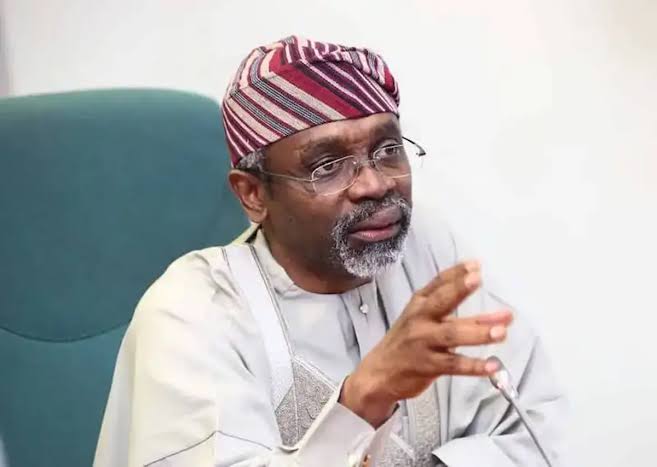
As the dust settles on the newly renovated main Chambers of the National Assembly, a sense of pride and accomplishment fills the air. As I sit down to write this piece, I can’t help but marvel at the transformation that has taken place within the hallowed halls of the National Assembly, all thanks to the indomitable spirit and vision of Rt. Hon. Femi Gbajabiamila.
The recent renovation of the main Chambers of the National Assembly, which now houses the Representatives and the Senate, is nothing short of a dream come true. The newly established National Assembly Library and Research Centre stands as evidence of the unwavering dedication of Femi Gbajabiamila, the current Chief of Staff to the President.
The Book of History was filled again with overwhelming salient paragraphs when the Chief of Staff to the President and immediate past, Speaker, House of Representatives, Rt. Hon Femi Gbajabiamila, CFR visits the new National Assembly Library/Resource Centre and the Newly renovated House of Representatives Chambers, projects facilitated in the 9th Assembly under Gbajabiamila’s leadership. There, he was received by the Speaker of the House of Representatives, Rt. Hon. Abbas Tajudeen, Ph.D., principal officers, and other members of the House of Representatives at the National Assembly on Monday.
In a manner reminiscent of a woman in the labour room discovering she’s been carrying twins, the unveiling of these projects has brought an unexpected and delightful surprise to the forefront. The parallel between the birth of new life and the rebirth of the National Assembly is both humorous and enlightening, underscoring the unforeseen potential that lay dormant, waiting to be realized.
What sets these achievements apart is not just their aesthetic appeal but the fact that they were executed and delivered by indigenous contractors. The successful completion of these projects and the inspection of both facilities on Monday has confirmed what many of us have long believed – that we are more than capable of achieving greatness without relying on foreign companies who often seek to exploit us for their gain.
The inspection of these facilities has not only confirmed their quality but has also served as a resounding rebuttal to the notion that foreign companies are the only ones capable of delivering large-scale projects. This display of homegrown excellence stands as a testament to the ingenuity and proficiency of Nigerian contractors, dispelling the myth that foreign entities hold a monopoly on quality construction.
Drawing parallels to the biblical story of Solomon completing the temple started by David, the current Speaker of the House of Representatives, Rt. Hon. Abbas Tajudeen, Ph.D., exemplifies humility and dedication, which I found admiring and worthy of note. Just as Solomon saw to the completion of his predecessor’s grand vision, Speaker Tajudeen has carried forward Gbajabiamila’s initiatives with grace and commitment.
Hon. Abbas is not given to self-aggrandizement, but the one I know to be filled with total humility and respect. His leadership and collaborative approach have been instrumental in ensuring the successful realization of these projects, thereby further reflecting Nigeria’s commitment to democratic governance.
The significance of these developments extends beyond the physical structures themselves. The renovated chambers and the establishment of the research center not only elevate the image of the parliament, but also reflects the grandeur of renowned parliaments, positioning the National Assembly as a hub for legislative research and innovation, not only within Nigeria but across the African continent. This development opens doors for collaboration and knowledge sharing among lawmakers, fostering a more informed and progressive legislative environment. The impact of these facilities will undoubtedly reverberate far beyond the walls of the National Assembly, leaving an indelible mark on the legislative landscape.
Reflecting on my visit to the British Parliament in 2018, I am struck by the uncanny resemblance between those esteemed halls and the newly refurbished chambers here in Abuja. This is a testament to the remarkable work of Gbajabiamila, and I am honoured to witness such a significant milestone during my tenure as a member of the House.
Now let’s picture this – the National Assembly undergoing a makeover, complete with a stylish new library and research centre. It’s as if the hallowed halls received a fabulous makeover, courtesy of none other than Gbajabiamila. The thought of stately politicians surrounded by the trappings of modernity is enough to bring a smile to anyone’s face.
In the spirit of education and enlightenment, it’s crucial to highlight the transformative power of these developments for a clearer understanding. The establishment of a state-of-the-art research centre within our National Assembly is a cause for celebration, as it signifies our commitment to intellectual growth and legislative prowess. With these new facilities, the possibilities for groundbreaking research, innovative legislation, and collaborative efforts are simply boundless.
Special credit must also be given to Hon. Dan Amos, the current House Committee Chairman on House Services, for his outstanding supervision throughout the renovation and establishment processes. His meticulous oversight also ensured that these projects were executed seamlessly, delivering a result that meets the highest standards. Hon. Amos and his committee can be likened to the midwives who facilitated the successful delivery of Gbajabiamila’s vision for the National Assembly. Their dedication and attention to detail deserve good recognition.
As I sit privileged to serve as a member of the House, the transformation of the National Assembly under the leadership of Gbajabiamila has not only inspired a sense of pride but has also evoked a sense of humour and awe at the unexpected and delightful turn of events. The collaborative efforts and dedication of all those involved in making this dream a reality is much overwhelming and it’s a testament to the existing unity in Nigeria as a whole, irrespective of party affiliations or political loyalty. The juxtaposition of the unexpected twin babies and the unveiling of these projects serves as a profound testament to the fulfilment of a grand vision.
Truly for a fact, this recent unveiling of the refurbished chambers, alongside the inauguration of the National Assembly Library and Research Centre, marks a significant milestone in transforming Nigeria’s legislative hub. The brain behind this remarkable feat, Rt. Hon. Femi Gbajabiamila has not only delivered on his vision but has also set a new standard for indigenous excellence in infrastructure development.
In conclusion, the transformation of the National Assembly under the stewardship of Femi Gbajabiamila is not only a testament to his vision and leadership but a resounding declaration of the capabilities and potential of indigenous talent. Gbaja’s unwavering dedication to the betterment of the National Assembly has brought about a renaissance that will leave an indelible mark on the fabric of our legislative institution. The humour, the unexpectedness, and the educational significance of these developments all coalesce to paint a picture of a man who has redefined the landscape of the National Assembly and has emerged as the perfect embodiment of fulfillment.
As we bask in the glory of these achievements, let us not forget the humour and joy that accompanies such momentous occasions. After all, laughter and lightheartedness can make even the most serious of endeavours all the more enjoyable. With great delight and pride, I celebrate the birth of Gbajabiamila’s “twin babies” in the National Assembly, a testament to his vision, leadership, and the potential of indigenous excellence. Cheers to Gbajabiamila and the vibrant future of the National Assembly!
By Philip Agbese
Agbese MHR is the Deputy Spokesperson, National Assembly’s House of Representatives, writing from Abuja.

I have watched, with deep concern, how the lines between journalism and broadcasting are being carelessly blurred in Ibadan. As someone who has devoted years to the practice of investigative journalism, I cannot stay silent while many On-Air Personalities (OAPs) parade themselves as journalists simply because they hold a microphone or sit in a studio.
Let me state it plainly: a journalist is trained to gather, verify, analyse, and report facts. My work as a journalist begins long before I speak into a microphone. It takes research, interviews, documents, and a constant weighing of truth against falsehood. That is what journalism is – service to the public through truth.
A broadcaster, on the other hand, is a presenter. He or she may read news, play music, anchor programs, or entertain listeners. Broadcasting is about delivery. Journalism is about content. Both are important, but they are not the same.
The problem in Ibadan today is that many presenters who specialise in banter, slang, and social media virality now call themselves “journalists.” They are not. I say this with all sense of responsibility: if you have not gone through the rigours of news gathering, fact-checking, and ethical reporting, then you are not a journalist. You are a broadcaster, and there is dignity in that role.
What worries me most is the damage this confusion causes. When broadcasters misrepresent themselves as journalists, the public begins to doubt the credibility of real journalism. Sensationalism takes the place of facts. Noise replaces truth. And the noble profession I belong to is dragged into ridicule.
I am not against broadcasters. I work with them daily, and I respect their craft. But they must respect mine too. A journalist digs out the story; a broadcaster delivers it. Neither should wear the other’s title without merit.
If Ibadan wants to retain its reputation as Nigeria’s media hub, it must correct this error. Broadcasters should embrace their role proudly, and those who desire to be journalists must get the training and discipline the profession demands.
I owe it to my profession – and to the public that depends on it – to keep saying this: a broadcaster is not automatically a journalist. The earlier Ibadan’s media practitioners accept this truth, the better for us all.
Cover Stories
“Melody Hymns with Sean Polotee” Returns, Rekindling Sunday Mornings with Soulful Inspiration

In a welcome return to the airwaves, “Melody Hymns with Sean Polotee” is back on Melody 107.7 FM, set to grace Sunday mornings once again from 9:00 AM to 10:00 AM. The show, known for its soul-stirring hymns and uplifting content, is hosted by Sean Polotee, a seasoned broadcast journalist, poet, and media personality.
Renowned for his charismatic on-air presence and deep connection with listeners, Polotee brings nearly two decades of media experience to the program. He is also the recently appointed Special Adviser on Media and Communications to the National Coalition of Apostles, Bishops, Archbishops, and Cardinals (NCABAC) — a role that further highlights his commitment to using media as a force for positive change.
“Melody Hymns” blends carefully curated gospel music with personal reflections and conversations that spark hope, resilience, and faith. Polotee frequently engages guests from various walks of life, offering listeners stories that resonate far beyond the studio walls.
Drawing on his background as a poet and storyteller, Polotee’s style is warm, engaging, and deeply human. His previous hosting credits include popular radio shows like “Maagbon” on Miliki 101.3 FM and the award-winning “Deflower Your Mind” on Jordan 105.5 FM — programs that showcased his ability to connect meaningfully with audiences.
Listeners can expect more than just music — “Melody Hymns” is a celebration of community, faith, and shared experience. It invites audiences to participate by sharing personal testimonies, song requests, and reflections, reinforcing the show’s mission to uplift and unite.
Whether you’re seeking peace, encouragement, or simply a beautiful start to your Sunday, “Melody Hymns with Sean Polotee” offers a refreshing hour of inspiration.
Tune in to Melody 107.7 FM every Sunday at 9:00 AM.
News
Ogbeni Rauf Aregbesola; A Political Titan Whose Relevance Transcends Party Lines – by Adio Abiodun
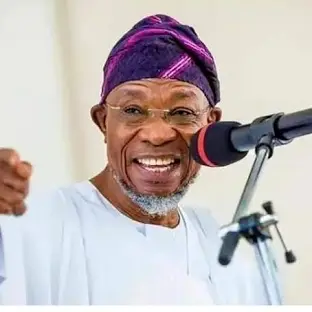
In the ever-evolving theatre of Nigerian politics, it is rare to find a figure whose presence, long after leaving office, continues to shape discourse, influence outcomes, and unsettle opponents. Such is the story of Engr. Rauf Adesoji Aregbesola, popularly called Ogbeni, whose recent appointment as the National Secretary of the African Democratic Congress (ADC), Nigeria’s newly rising opposition platform, has again jolted political structures, particularly within his former party, the All Progressives Congress (APC).
For many, Aregbesola’s reemergence in a new partisan home should have been a moment for sober reflection on his enduring relevance, capacity, and value. Instead, what we have witnessed is an uncoordinated, if not laughable, barrage of attacks and verbal potshots from a few politically naive individuals, most of whom are long-standing rivals within the Osun APC, individuals who, despite their years of scheming, have failed to erase Ogbeni’s towering legacy in the state and beyond.
To understand the roots of this resentment, one must journey back to the formative years of Aregbesola’s political life. From his youthful days as an activist and organiser during the pro-democracy struggles of the 1990s, Ogbeni has always been driven by ideological clarity and revolutionary commitment to the people. He was never the kind of politician who sought office for its trappings; rather, he wielded power as a tool for societal transformation.
His association with Asiwaju Bola Ahmed Tinubu in Lagos became the defining point of his emergence as a political strategist of immense depth. As Commissioner for Works and Infrastructure in Lagos State from 1999 to 2007, Aregbesola helped entrench a new governance model that many states later tried to emulate. His strategic input was critical to the survival of opposition politics in Lagos and other parts of the Southwest, especially during the years when the Peoples Democratic Party (PDP) threatened to overrun the region.
But it was his electoral triumph in Osun State in 2010, following a titanic legal battle, that cemented his status as a political lion. For eight years, Aregbesola redefined governance in Osun, focusing on infrastructure, education, social protection, and youth development. His policies were bold, at times controversial, but undeniably impactful. Even after he left office in 2018, his presence has continued to loom large, which understandably unsettles some within the Osun APC establishment, who have since struggled to fill the vacuum he left behind.
Their discomfort with Aregbesola’s sustained popularity is the real reason for the recent attacks on his person. They fear what his mobilization strength could mean in the lead-up to 2027, particularly now that he is realigning through the ADC, a platform increasingly being seen as the nucleus of a credible third force in Nigerian politics.
His critics, mostly lacking in historical perspective and real grassroots engagement, have failed to acknowledge the fact that Aregbesola’s contributions to the APC’s evolution were not just significant, they were foundational. In Lagos, he helped build the structures that won elections even in the face of federal hostility. In Osun, he delivered two electoral cycles and helped mobilize the Southwest for the APC in the 2015 and 2019 general elections. Across Nigeria, his role as a political tactician was always in demand.
That the APC has now become a party in desperate need of ideological reawakening, internal cohesion, and mass trust, is in part due to the marginalization of men like Aregbesola, men who built, bled, and sacrificed for the party when it was unpopular to do so.
His new role in the ADC, far from being an act of political betrayal, is a reflection of the maturity of Nigeria’s democracy. It signals the possibility of alternative platforms gaining traction, especially when steered by individuals with credibility and experience. If anything, Aregbesola’s involvement in the ADC is bound to reshape alignments, particularly among disenchanted progressives within the APC who now seek a home more reflective of their ideals.
As Nigeria inches towards another defining electoral cycle in 2027, it is clear that Ogbeni remains a central factor in any serious political calculation. His reach, particularly among the youth and the working class, remains formidable. His political structure, developed over decades of activism, governance, and strategic engagement, is not one to be dismissed by opportunistic upstarts.
To dismiss Aregbesola is to misunderstand Nigerian politics. To try and undermine his legacy is to deny reality. For now, and for the foreseeable future, Ogbeni remains not just a man of history, but a man of destiny.
And that, perhaps, is what threatens his rivals the most.
-
 News3 years ago
Just In: President Tinubu returns to Nigeria
-
 News3 years ago
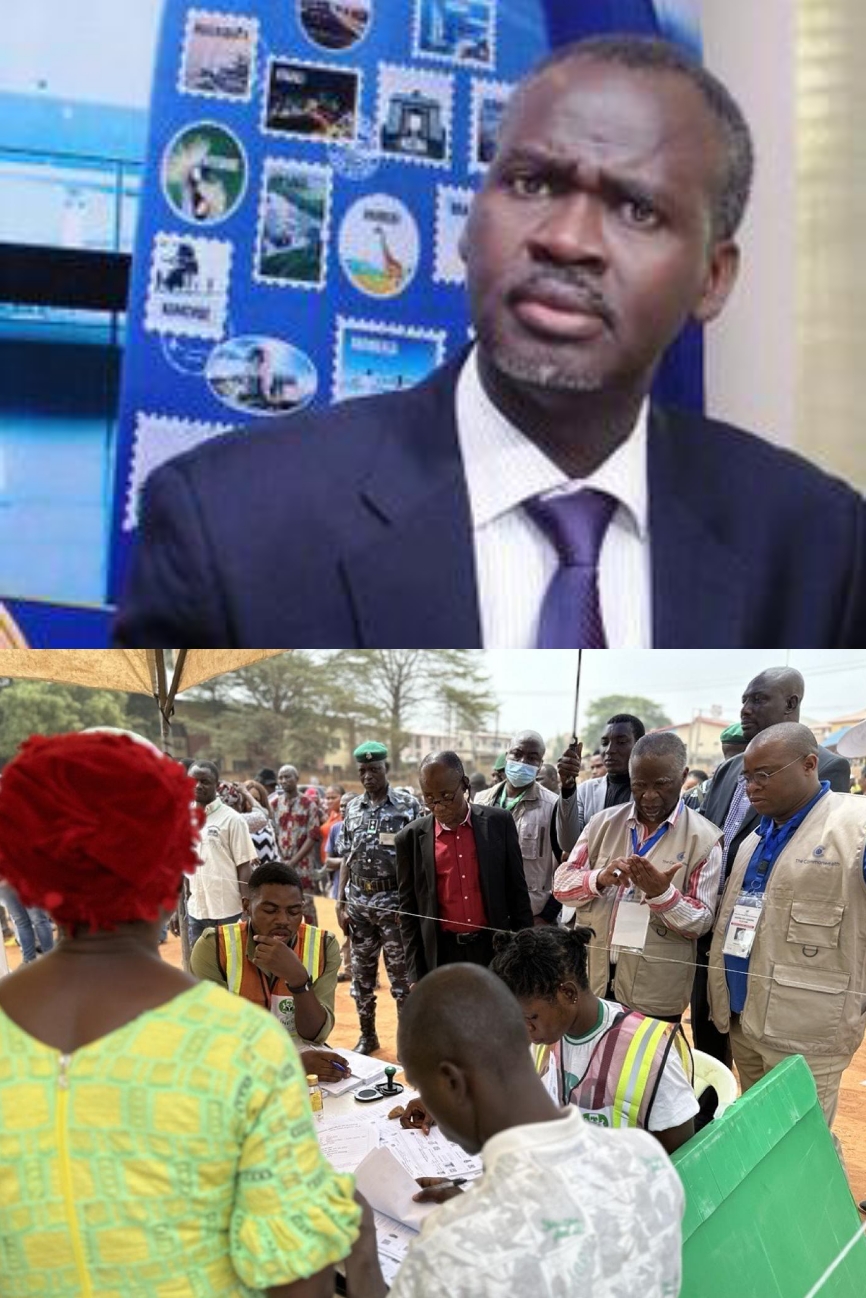
2023 Elections: Outgoing Rwandan High Commissioner say s Nigeria, ‘ handle their destiny’ in a peaceful way.
-
 Entertainment3 years ago
Social media cloth Vendor Found Dead In Ibadan Hotel.
-
 News3 years ago
Ogun HoS Solicit Affordable Housing For Civil Servants
-
Sports3 years ago
CAF SALUTES RIVERS UNITED AFTER SEALING QUARTER-FINAL TICKET.
-
 Trending News3 years ago
FG begins 40% pay rise for workers.
-
 Entertainment3 years ago
9mobile Ambassadors Begin “Meet And Greet” Session With Staffs, Customers.
-
 Business3 years ago
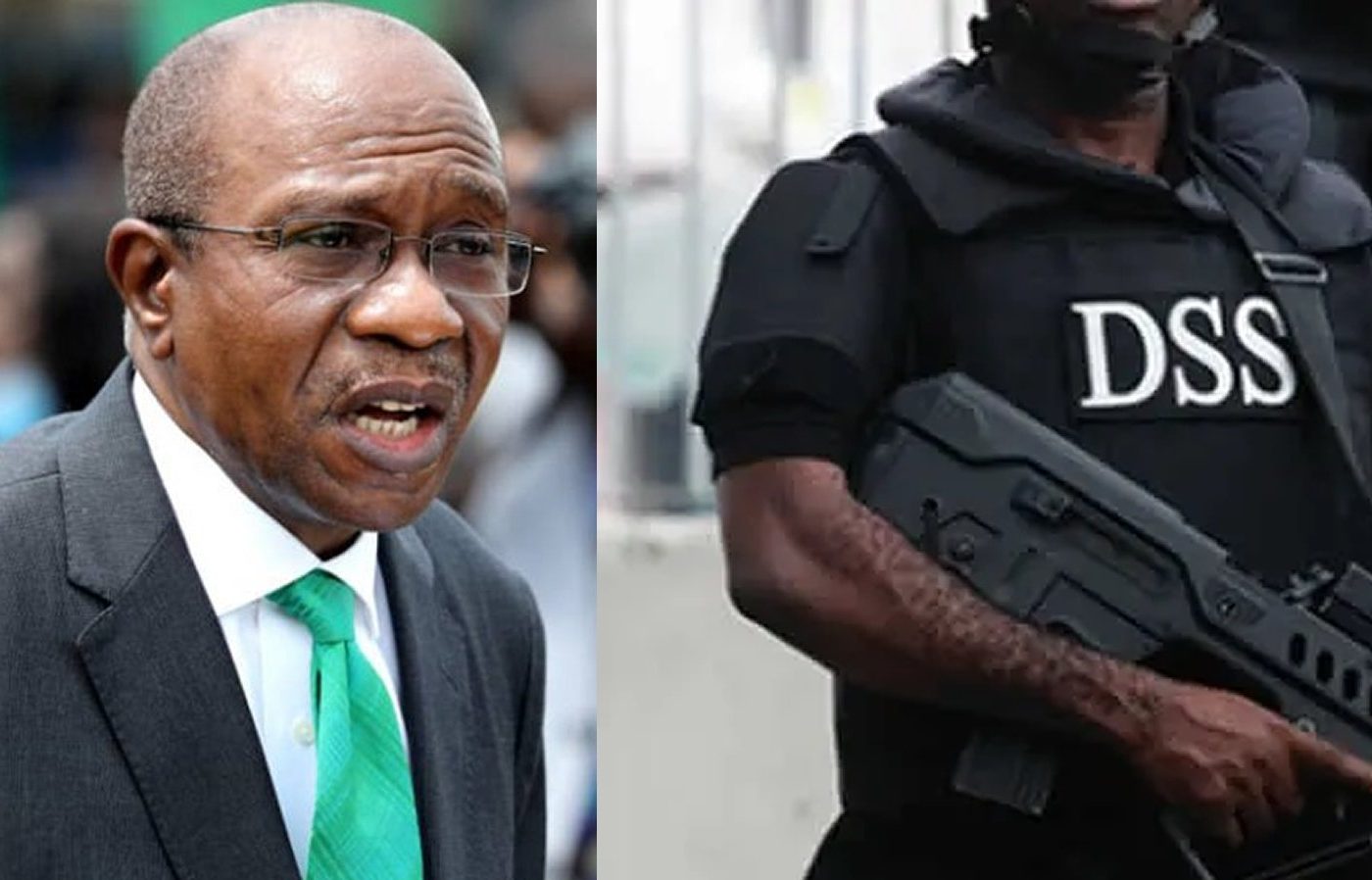
JUST IN: DSS Arrests Godwin Emefiele