
News
FCT polls: Yiaga Africa Releases Preliminary Report


A civil society organization, Yiaga Africa, has released its preliminary report on the 2026 Federal Capital Area Council Elections held on Saturday.
The civic group reported that vote buying was witnessed at various polling units in the election.
The Independent National Electoral Commission, INEC, conducted elections for the position of chairman in the six area councils of the FCT, as well as for 62 councillorship seats.
Yiaga Africa said it deployed trained and duly accredited roving observers to systematically monitor the conduct of the elections.
It said that its observers were deployed by 7:30 a.m. and covered polling units across the sixty-two wards of the FCT, with their mandate including observing key aspects of the voting process, including opening procedures, accreditation, voting, and counting.
Yiaga Africa said it observed that the election was conducted in a largely peaceful atmosphere, adding that voters who presented themselves at polling units were afforded the opportunity to exercise their franchise without widespread disruption but added that notwithstanding this enabling environment, voter turnout was generally low, with most polling units recording poor turnout.
It said that logistical challenges adversely affected the timely commencement of polling, particularly in the Abuja Municipal Area Council, AMAC, where delays in the deployment of personnel and materials contributed to late opening in several locations.
It added that the relocation of certain polling units coupled with inadequate and untimely communication of these changes to voters generated confusion and may have resulted in voter disenfranchisement saying that such administrative lapses have significant implications for electoral access and public
On its preliminary findings, the election watch agency said: “Yiaga Africa observers reported a delayed commencement of polling in several polling units, primarily attributable to logistical inefficiencies and, in some instances, election security–related challenges.
“As of 9:00 a.m., set-up activities were still ongoing in the majority of polling units observed, indicating that essential preparatory procedures had not been completed within the timeframe prescribed by electoral guidelines.
“In the Abuja Municipal Area Council (AMAC), particularly in Wuse and Gwarinpa wards, several polling units opened significantly behind schedule. Observers noted that polling officials were still arranging materials and organizing the voting environment as at 9:00 a.m., with accreditation and voting commencing only after 10:00 a.m. On average, across the sampled polling units observed, accreditation and voting began at approximately 10:00 a.m.
“Consistent with the Commission’s guidelines, critical election materials including the Bimodal Voter Accreditation System (BVAS) devices and the voter register—were deployed in the polling units observed.
“However, in Polling Unit 004, Wuse Ward, Zone 2 Primary School, the voter register was not initially available and was only produced after observers raised concerns and voters objected. In addition, essential voting materials were absent in certain locations. Voting cubicles were not observed in PU002 (Ward 09), PU006 (Ward 01), and PU012 (Ward 10) in Abaji
Area Council. Furthermore, an ink pad required for the voting process was reportedly missing in one polling unit observed.
“Observers reported instances in which voters were reassigned to newly created polling units without prior or adequate notification. While Yiaga Africa acknowledges INEC’s efforts to notify affected voters via SMS, many of these messages were delivered on Election Day, with some received hours after polling had already commenced. The lack of timely and effective communication generated confusion at several polling locations, as numerous voters spent over an hour attempting to ascertain their designated polling units.
“In multiple instances, this administrative shortcoming contributed to congestion and
overcrowding, thereby undermining orderly queue management and potentially
discouraging voter participation.
“The observation further revealed significant disparities in voter distribution within the same polling locations. Such pronounced imbalances raise serious concerns regarding the coherence, and reliability of the Commission’s polling unit expansion and voter redistribution framework.
“Closing of Polling Unit before the official 2:30pm: Observers reported some polling
units closing the polling process before the official 2:30pm close time. While some
polling units experienced poor voter participation, the guideline requires the polling unit to remain open until 2:30pm or the last person on the queue votes.
“Security Deployment and Observer Access: Yiaga Africa observed heavy security deployment in certain locations, which, in some instances, impeded the movement of accredited election observers and restricted access to polling units. Observers further noted that the heightened security presence created barriers for citizens attempting to
access polling units to exercise their right to vote.
“Vote buying: The persistent menace of vote buying once again manifested during the election. Yiaga Africa observers documented incidents of vote buying at polling units, underscoring the continued vulnerability of the electoral process to monetary inducement.
“Despite prior assurances and directives issued by INEC to security agencies to identify and apprehend both vote buyers and sellers, these illicit practices reportedly continued in several locations.”









Police operatives have arrested a 45-year-old man, identified as Adeniyi Benjamin, for allegedly operating an unlicensed medical facility and administering treatments for about seven years without any medical qualification or licence.
The spokesperson for Oyo Police Command, DSP Ayanlade Olayinka, in a statement on Wednesday said Benjamin was arrested on 2 October 2026 at about 3:00 p.m. by operatives of the Command Monitoring Unit at his clinic, ‘Life Is Good Hospital’ in the Olodo area of Ibadan.
Ayanlade said the arrest followed credible intelligence about his activities at the facility.
“The suspect was found attending to patients and administering treatments, particularly fertility-related treatments, despite not being a certified medical doctor,” the statement said.
The Police spokesperson listed items recovered from the premises of the suspect’s facility to include two weighing scales, four Quantum Magnetic Resonance Body Analysers, one stethoscope, a large carton of assorted medicines, and specimen bottles.
The Oyo police spokesperson added that during preliminary investigation, Benjamin confessed that he had been operating as a quack practitioner for about seven years without any licence to practise medicine.
He further stated that he specialized in fertility-related treatment, which he administered to patients at the facility.
DSP Olayinka said the confession raised concerns about potential risks to members of the public who may unknowingly seek treatment from unqualified persons, especially in sensitive areas such as fertility care.
Investigation is ongoing to establish the full extent of the suspect’s activities and determine whether other persons were connected to the operation of the facility. Appropriate action will be taken in accordance with the law, the police said.
The command advised residents to verify the professional credentials and registration status of anyone offering medical services before entrusting their health or that of their loved ones to them.
Oyo Police Command also appealed to residents to promptly report suspicious medical facilities or persons presenting themselves as medical practitioners without verifiable credentials to the police or relevant regulatory authorities.
The Command also reaffirmed its commitment to protecting lives and property and said it would continue to collaborate with relevant regulatory agencies and members of the public to address activities that endanger residents’ health and safety.
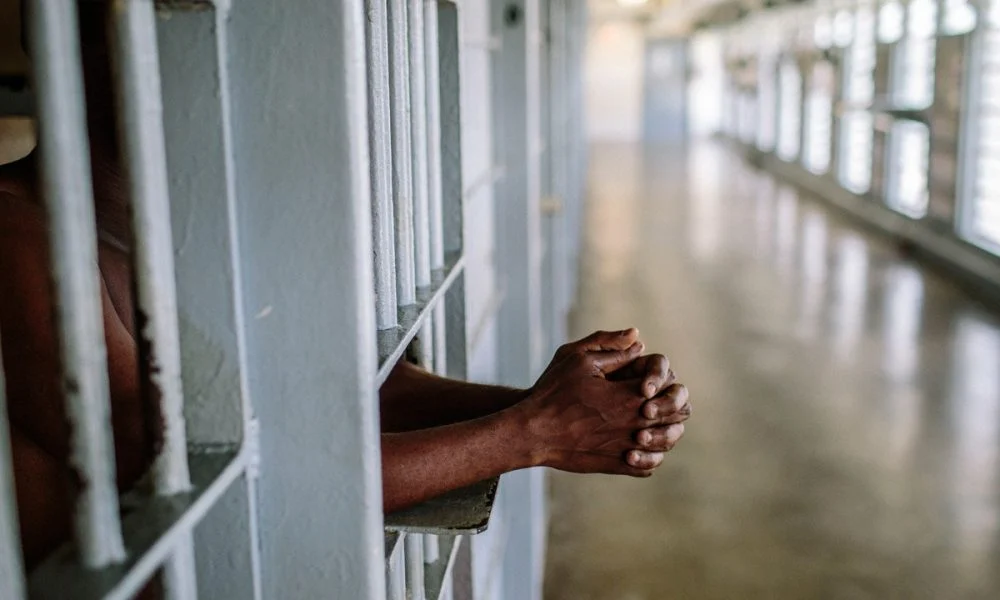
Ogun State Police Command has arraigned five suspects before the Ota Magistrate Court over their alleged involvement in the assault and obstruction of police officers carrying out their lawful duties in Ota.
The suspects were brought before the court following an incident around The Bells area of Iyana-Iyesi, Ota, on October 2, 2026, according to a statement issued on Wednesday by the command’s Police Public Relations Officer, DSP Oluseyi B. Babasiyi.
The police said the incident occurred after a patrol team intercepted and arrested a suspect allegedly found with a large quantity of substances suspected to be Indian hemp.
According to the command, the officers were taking the handcuffed suspect to the station when they were allegedly ambushed by a group of people armed with cutlasses, stones and bottles.
The attack reportedly resulted in injuries to some of the officers, damage to the police operational vehicle and the escape of the suspect in custody.
Following the incident, the command said an intelligence-led operation was launched, leading to the arrest of five suspects identified as Morenikeji Badmus, 36; Adedoja Segun, 40; Jeremiah Odise Ugbede Onride, 49; Mike Stephen, 28; and David Odeh, 32.
The suspects were arraigned on charges bordering on conspiracy, serious assault on police officers, obstruction of lawful duty and conduct likely to cause a breach of the peace.
The police said efforts were still ongoing to arrest other suspects who fled the scene of the incident.
The Commissioner of Police, Ogun State Command, CP Bode Ojajuni, reaffirmed the command’s commitment to protecting police officers carrying out their lawful responsibilities.
“Members of the public are urged to refrain from physical confrontation with law enforcement personnel and channel grievances through established lawful channels,” the statement said.
The command added that “the safety of police officers performing lawful duties remains a priority of the command.”

The Yobe State Police Command has arrested a nine-year-old boy over the alleged killing of four family members in Rugan Badali community, Karasuwa Local Council of the state.
The police said the child allegedly set fire to the family house while his two stepmothers and two younger brothers were asleep, resulting in their deaths.
According to report, the suspect was said to have committed the act after his father flogged him over an allegation that he had stolen a fowl.
Speaking with journalists in Damaturu yesterday, the suspect, whose name was withheld because of his age, allegedly confessed to setting the house ablaze.
He said he bought matches the following day and set fire to the house.
“I carried one of our fowls to sell. People reported me to my father, and I was beaten. The following day, I bought N50 worth of matches in the neighbourhood. While my two stepmothers and two younger brothers were asleep, I set our house on fire as revenge for what my father did to me,” he said.
The boy added: “People came to the rescue. I did not tell them that I was the one who did it until after three days of prayer. I then confessed and was later arrested by policemen and brought here to Damaturu.”
Parading the suspect alongside his father, Abubakar Idi, the police spokesperson, ASP Yusuf Ali, said the boy remained a suspect despite his age.
Ali said the case would be handled in accordance with the law, stressing that the incident underscored the need for greater attention to criminal activities involving children.
He expressed concern over the development, particularly as the state continues to recover from the effects of Boko Haram insurgency and other security challenges.
-
 Health & Wellness1 year ago
President Tinubu Directs Cut in Dialysis Cost from ₦50,000 to ₦12,000
-
News2 years ago
CBN Debunks Fake Circular on New ₦5,000 and ₦10,000 Notes
-

 International News6 months ago
Indian Police Arrest Nigerian Over ₦290m Drug Haul
-

 Business7 months ago
Dangote Refinery Reduces Petrol Gantry Price To ₦1,200 Per Litre
-

 Business7 months ago
After Plea Bargain, Court Discharges Stella Oduah of ₦2.5bn Fraud
-
Business2 years ago
Dangote; We Did Not Fix ₦600/Litre Petrol Price
-
 Trending News1 year ago
NELFUND Disburses ₦86bn To 449,000 Beneficiaries
-
 Opinion2 years ago
Championing the People’s Voice: Obasa’s Dedication to Grassroots Representation By Dave Agboola⁰