
News
Chief Judge Expresses Concern Over Increasing Witchcraft Cases

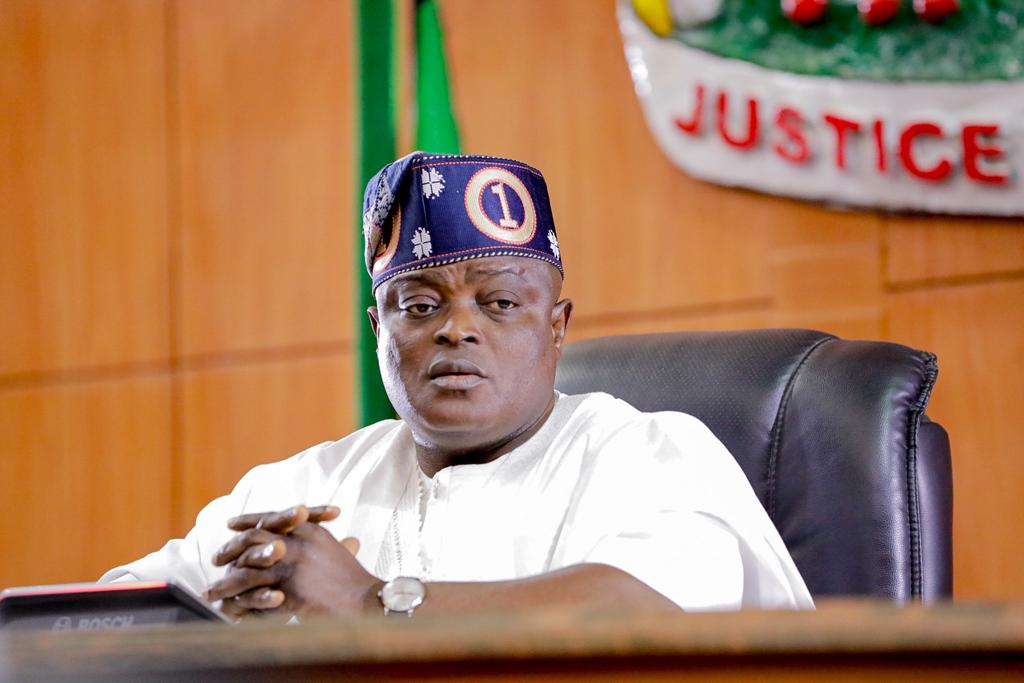
The Chief Judge of Bauchi State, Justice Rabi Talatu Umar, has raised alarm over the increasing number of cases involving witchcraft, describing it as a persistent challenge in legal jurisprudence.

Bauchi-Chief-Judge-Justice-Rabi-Talatin-Umar
She stated this while reviewing the cases of awaiting trial inmates at Jama’are Maximum Correctional Centre during a two-day quarterly routine visit by the Administration of Justice Committee, which she chairs.
Justice Rabi said, “If you are not a witch, you cannot identify one. It is an issue that is difficult to prove unless the accused confesses.”
The Administration of Justice Committee includes key legal and security officials such as the State Controller of Custodial Centres, the State Grand Khadi, the Commissioner of Police, the Director of Public Prosecution, and the Chairman of the Nigerian Bar Association in Bauchi.
During the visit, the Chief Judge cautioned judges and magistrates against imposing excessive compensation on convicts, especially in cases where fines are an option.
She noted that high compensation fees often prolong the convicts’ stay in correctional facilities.
“Moving forward, any judge who imposes unreasonable compensation on a convict will be required to pay or settle it themselves,” she warned.
Justice Rabi criticised the imposition of hefty compensation amounts such as N100,000, N200,000, or even N300,000, arguing that it encourages criminal behaviour.
She urged judges to ensure that compensation is fair while maintaining a balance between justice and mercy.
“I am troubled by the trend of excessive compensation imposed by judges. Where do you expect a convict to get such large sums? If they cannot pay, they may resort to crime again upon release just to meet the court’s demands,” she explained.
She emphasised the need for reasonability when determining compensation, adding that it is nearly impossible for a victim to recover stolen or lost property fully.
“When sentencing a convict, consider the punishment they have already served. If they have been imprisoned for two or three years, requiring them to repay the full value of stolen items could be unfair. The other party may have to forfeit something as well,” she added.
During the review exercise, she ordered the release of 18 inmates awaiting trial-seven from Jama’are Maximum Correctional Centre, seven from Bauchi Custodial Centre, three from Ningi Correctional Centre, and one from Misau Correctional Centre.
Addressing those released, she remarked, “You have been in custody for too long without being charged or taken to court. Even if convicted, your sentence would not have exceeded the time already spent here. That is why this committee has decided to release you unconditionally.”
She urged them to learn from their experience and reintegrate into society as responsible individuals, advising them to acquire skills for self-reliance.



A Soldier, Private Utim Terwase, has bagged a monetary reward of N500, 000 for turning down a bribe of the same amount, from a suspected kidnapper,
The reward is in recognition of his honesty and commitment to duty.
The soldier, who reportedly rejected the money offered in exchange for the suspect’s release, has been rewarded with N500,000 by the Commander of Operation Enduring Peace (OPEP), Maj. Gen. Maxwell Dangana.
Terwase was said to have apprehended the suspect following an attempted escape. When the suspect allegedly offered him N500,000 to secure his freedom, the soldier turned down the offer and handed him over to the appropriate authorities.
Impressed by his conduct, Dangana approved a cash reward equivalent to the amount he had refused to collect, describing his action as an example of the integrity, discipline and professionalism expected of military personnel.
The development was disclosed in a statement issued at the weekend by the Media Information Officer of the Joint Task Force, 3 Division, Nigerian Army, Rukuba Barracks, Jos, Capt. Chinonso Polycarp Oteh.
Presenting the reward through the Commander of Sector 6, OPEP, Col. Philimon Malgwi, Dangana said Terwase’s decision to resist the temptation of personal gain reflected the highest standards of military professionalism, loyalty and commitment to duty.
He said the soldier had demonstrated that his responsibility to the nation and the values of the military were more important than personal financial benefits.
According to him, the commendation is intended to encourage other personnel to uphold similar standards of honesty, accountability and selfless service.
Oteh said the reward also sent a strong message that integrity and professionalism remained values worthy of recognition, particularly at a time when corruption continued to undermine public trust.
He described Terwase’s action as proof that integrity was a personal choice, even when faced with temptation.
“A soldier who refused N500,000 in dirty money has earned N500,000 in honour. Indeed, integrity pays,” he said.

A Kano State High Court on Friday sentenced Umar Auwalu and Yakubu Dayyabu, to death by hanging for the gruesome murder of a housewife, Fatima Abubakar, 35, and her six children at Dorayi Chiranchi Quarters, Kano.
The court also sentenced the two convicts to life imprisonment with hard labour each for conspiracy and armed robbery.
The third defendant, Isyaku Yakubu, 21, of Sabon Gida Sharada Quarters, was, however, discharged and acquitted for lack of credible evidence linking him to the murder.
Justice Nasiru Saminu found the two person guilty of the two count charges filed against them, insisting the prosecution proved charges against them beyond reasonable doubt.
Justice Saminu described the killing of the housewife and her six children as a horrific crime that challenged the conscience of the society.
He said the victims were entitled to the protection of their home but were attacked by people who ought to have protected them, particularly as the first defendant, Auwalu, was a nephew of the deceased.
Justice Saminu lamented that seven lives, which could have grown into responsible members of society, had been permanently lost.
“How I wish there is a punishment heavier than this. My emphasis is not to administer vengeance but justice,” the judge said.
On the third defendant, Justice Saminu held that although there were telephone conversations between him and the first and second defendants, the prosecution failed to establish the contents of the conversations or demonstrate that they amounted to conspiracy.
The judge further noted that evidence before the court showed that Isyaku was attending a Qur’anic graduation ceremony at the time of the incident.
Earlier, the prosecution counsel and Attorney-General of Kano State, Abdulkarim Kabiru-Maude, told the court that the defendants committed the offences on January 17, 2026, at about 11:30 a.m. at Dorayi Chiranchi Quarters, Kano.
He said the defendants allegedly conspired, armed themselves with sticks, iron rod and a sharp cutlass before trespassing into the residence of Fatima. According to him, they robbed the deceased of two mobile phones, an Infinix and an Itel, as well as N200,000 in cash.
The Attorney-General told the court that the defendants attacked Fatima with sticks and iron rod, hitting her on the neck before striking her head with a sewing machine, which resulted in her death.
He further alleged that the defendants attacked her six children, identified as Maimuna, 17; Aisha, 16; Bashir, 13; Abubakar, 10; Faruk, seven; and Abdulsalam Haruna, a toddler, with sticks, knives and cutlasses, inflicting injuries on their faces, bodies and heads.
The prosecution said Faruk and Abdulsalam were subsequently thrown into a well within the premises after the attack.
During the trial, Auwalu pleaded guilty to the charges but denied throwing the children into the well, while Dayyabu and Isyaku pleaded not guilty.
The prosecution presented eight witnesses and tendered 30 exhibits, including medical reports from Murtala Muhammad Specialist Hospital, Kano, confessional statements, a bloodstained broken iron rod, a stool, bloodstained trousers, N200,000 cash, two mobile phones and a flash drive containing audio-visual recordings.
The prosecution maintained that the offences contravened Sections 97, 221 and 298(c) of the Penal Code.

President Bola Tinubu says all funds recovered by the Economic and Financial Crimes Commission (EFCC) will be channelled into the Nigerian Education Loan Fund (NELFUND).
The president spoke on Friday at the launch of Arise Palm Resort in Uyo, the Akwa Ibom state capital.
Tinubu said the decision was informed by the need to ease the burden of tuition fees on parents and ensure equal access to education for all Nigerians.
“I feel your pain and share in the difficulty, and that’s why I decided to take away the responsibility of tuition fees from parents and equal opportunities for everyone who wants to read, taking education as the greatest weapon against poverty,” he said.
“And creating opportunities for those who are still coming behind. From today on, as we are fighting corruption, any money recovered by EFCC will be dumped into that education programme. It will be. No one can reverse it.”
On August 19, the president directed the EFCC to channel all recovered funds into NELFUND.
Tunji Alausa, minister of education, announced the development while answering questions from State House correspondents shortly after the weekly federal executive council (FEC) meeting that day.
He said the FEC also approved the allocation of all unclaimed dividends in the Capital Market Trust Fund and funds in the Dormant Account Trust Fund to the student loan scheme to expand its reach and improve its efficiency.
Speaking at a press briefing in Abuja on August 31 to highlight the commission’s achievements under his leadership, Ola Olukoyede, EFCC chairman, said the federal government had allocated N100 billion from funds recovered by the anti-graft agency to the student loan scheme since 2024.
He noted that when “recovered criminal value” helps finance education and household credit, enforcement moves beyond punishment to restoration and productive national use.
-
News2 years ago
CBN Debunks Fake Circular on New ₦5,000 and ₦10,000 Notes
-
 Opinion2 years ago
Championing the People’s Voice: Obasa’s Dedication to Grassroots Representation By Dave Agboola⁰
-
 Health & Wellness1 year ago
President Tinubu Directs Cut in Dialysis Cost from ₦50,000 to ₦12,000
-

 International News7 months ago
Indian Police Arrest Nigerian Over ₦290m Drug Haul
-

 Business8 months ago
Dangote Refinery Reduces Petrol Gantry Price To ₦1,200 Per Litre
-
 Business8 months ago
After Plea Bargain, Court Discharges Stella Oduah of ₦2.5bn Fraud
-
Business2 years ago
Dangote; We Did Not Fix ₦600/Litre Petrol Price
-
 Trending News1 year ago
NELFUND Disburses ₦86bn To 449,000 Beneficiaries