
International News
France Accuses Iran Of Supermarket Fridge Hacking

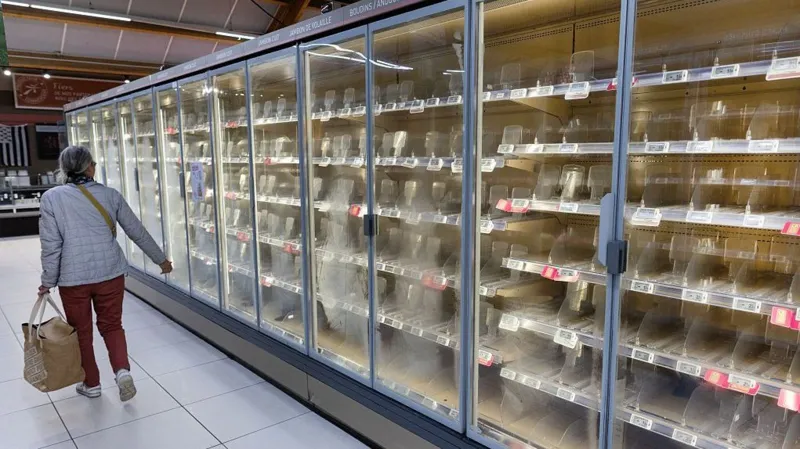
France has accused Iran’s Islamic Revolutionary Guard Corps (IRGC) of being behind cyber-attacks that raised the temperatures of supermarket fridges and freezers across the country last month.
Foreign Minister Jean-Noël Barrot said the attack was “unprecedented in both its scale and its level of aggression”, adding those who were responsible would be hit with sanctions.
Iran has yet to respond officially, but some Iranian media outlets have dismissed the allegations as baseless.
The French hacking, which led to the destruction of tons of frozen and chilled food in France was followed by a similar attack against supermarkets across several other European countries. It is not known if the instances are linked.
Barrot said the attack on France’s supermarkets “marks the first large-scale cyber-attack aimed at sabotage on our national territory, and it constitutes a major attack on the nation’s interests and the security of the French people”.
He said the government had summoned the Iranian ambassador to Paris to “lodge a very strong protest against this extremely grave act”.
France will take “any other necessary and proportionate measures” to respond to the incident and “deter anyone who might seek to repeat it”, Barrot added.
The Paris prosecutor said an investigation had been opened into the head of an offensive cyber unit associated with the IRGC as well as his two deputies.
Laure Beccuau named the unit as Shahid Kaveh, which she said had an affiliation with the electronic and cyber centre of the IRGC.
Shahid Kaveh is the name given to a cluster of hackers thought to be directly employed by the Iranian regime.
In recent weeks, a number of commentators and politicians in Iran have argued that the country should extend any retaliation beyond the Middle East if the US and Israel resume the war they started earlier this year.
If the IRGC carried out the cyber-attacks, it remains unclear whether they were part of Iran’s deterrence strategy.
On 11 October, hackers gained control of the software that regulates the temperatures of the refrigeration units used in many of France’s supermarkets.
More than 100 of Coopérative U’s supermarkets were hit, as well as 180 stores from Intermarché and its Netto brand. In some stores, temperatures of the fridges reportedly rose to 50C (120F) overnight.
Other major food retailers including Carrefour, Monoprix and E.Leclerc were also hit by the attack, which targeted software provided by Danish engineering firm Danfoss.
The software allows retailers to manage their cold units remotely.
Earlier this month a second wave of hacks took place, hitting more than 100 stores across Europe.
Supermarkets in Belgium and Luxembourg were affected, while a smaller number of shops were hit in countries including Sweden, Ireland, the Netherlands, Estonia and Finland.
Separately in August a small number of US military bases had fridges mysteriously malfunction, spoiling food. This incident is also being investigated as deliberate cyber-attacks, Reuters news agency has reported, citing sources familiar with the matter.
Since the waves of attacks on freezers, experts have been speculating which hacking groups could be responsible, with Iran being on a list of potential suspects.
In spite of a pair of Russian-aligned hacktivist groups claiming they were responsible on Wednesday, few believed them.
The French government has not said how it reached the conclusion that Iran was responsible, and attribution of cyber-attacks is extremely hard as hackers are able to hide their locations.
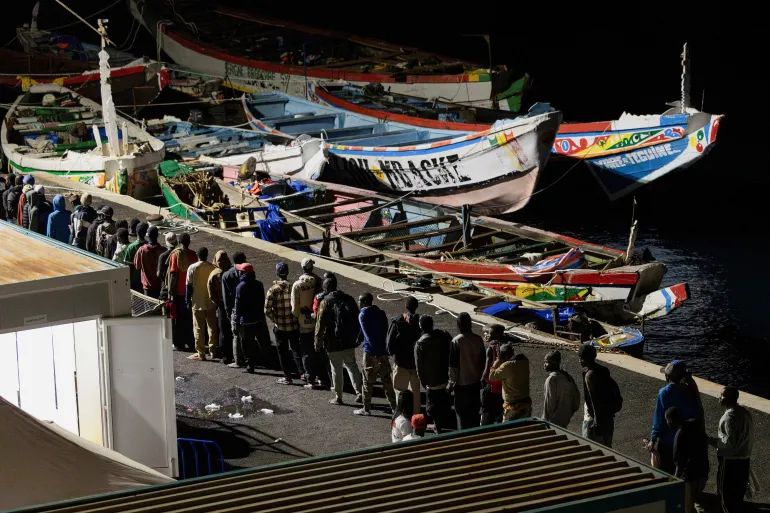
At least 39 people have died after a boat carrying migrants sank off the coast of Senegal, reports say.
The interior ministry said one person had been rescued, but the number of people still missing was yet to be established.
The small wooden boat capsized between the capital, Dakar and the northern city of Saint-Louis, as it headed towards Spain’s Canary Islands.
Spanish migrant rights group Walking Borders recorded 635 deaths on the Atlantic route to the Canary Islands between January and May 2026, the highest toll among the routes it monitors.
Saliou Diouf, founder of Senegalese migrant aid group Boza Fii, said all the bodies recovered by Sunday evening were Senegalese. The nationalities of other people on board was yet to be established, as search operations continued.
Four bodies were recovered on Monday morning in an advanced state of decomposition and buried following a collective funeral prayer organised by the fire service.
Rescue teams are searching along a 25km (15-mile)- stretch of coastline, but operations have been complicated by difficult access and strong ocean currents, which are pushing bodies further south.
Authorities say 24 of the 39 victims have been identified and their bodies returned to their families, while 11 others are still awaiting identification.
President Bassirou Diomaye Faye has expressed his condolences to the victims’ families and urged Senegalese nationals not to risk their lives on the dangerous sea crossings.
In a statement posted on X, he pledged to intensify efforts to dismantle the networks organising the journeys.
“We will relentlessly continue the fight against those who organise these crossings and the work that gives our young people reasons to hope here,” he said.
The tragedy comes amid renewed concerns over the dangers facing migrant attempting to reach Europe by sea.
Walking Borders estimates that about 21 people died for every 100 who reached the Canary Islands during the period it monitored.
Senegalese authorities said they had intercepted another boat, on Friday, carrying 142 migrants attempting to reach Spain.
Those on board included 23 women, two babies and two other children. Police said the group comprised nationals of Senegal, Gambia, Guinea-Bissau, Guinea and Nigeria.
Meanwhile, a state of emergency was declared on the Spanish island of El Hierro on Saturday following a surge in migrant arrivals.
More than 3,300 people have reached the island in about 30 boats since the beginning of November, according to local authorities.
This amounts to almost a third of the population on the island, one of the main entry points into Europe for migrants arriving from West Africa.
Fernando Clavijo, president of the Canary Islands regional government, described the situation as “absolutely unsustainable,”
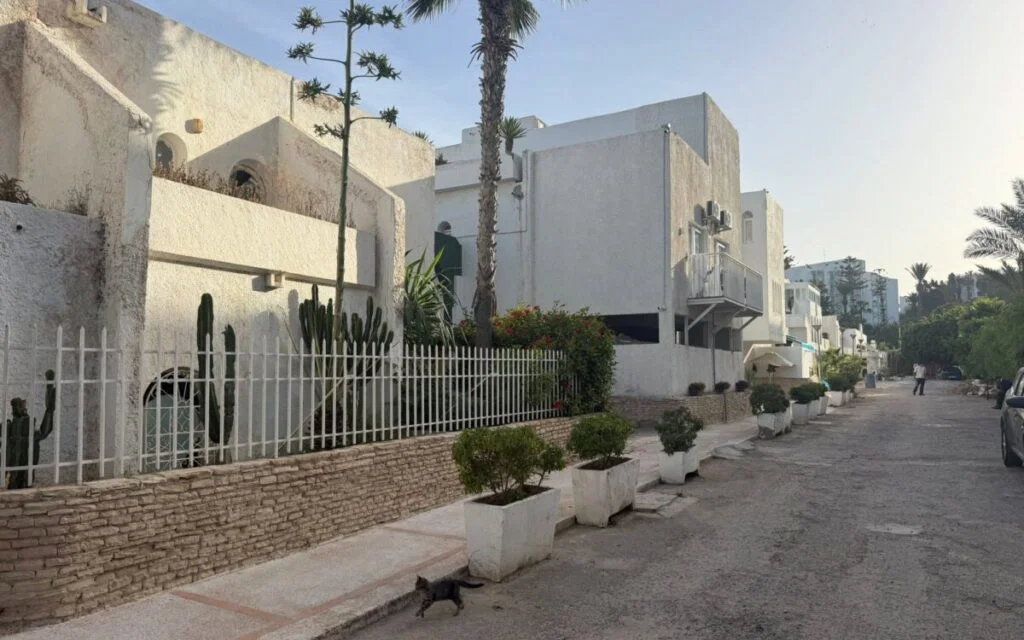
Two British tourists have been found dead in Agadir, Morocco, and two other guests at the same hotel were rushed to hospital in a critical condition
The tragedy unfolded on Monday at an unnamed hotel in Agadir, a coastal city and popular resort destination for holidaymakers. At least two other guests were rushed to hospital.
Local media reports hotel staff found the dead bodies in a room and immediately alerted hotel management, who then alerted the police. The two other guests were said to be in a “critical condition” when they were taken by ambulance to the university hospital in Agadir.
Police forensics teams were sent to the hotel and examined the room, collecting samples and other evidence. The bodies were moved to the morgue at the Hassan II Regional Hospital in Agadir for autopsies.
Investigators also reportedly searched the hotel’s kitchen, roof and outbuildings.
Authorities are yet to reveal exactly what they believe to be the cause of the deaths. Some local reports mention food poisoning or a gas leak as possibilities under review.
The names of the guests involved have not been released.
A Foreign Office spokesperson said “We are aware of the deaths of two British nationals in Morocco. We are supporting their families and are in contact with the local authorities.”
It comes weeks after another Brit tourist died at a hotel in Agadir. Clare Mitchell, 31, from Bolton, jetted out from Manchester Airport for a four-day break on October 8.
Tragically, she was found dead in her hotel room the following day. Her devastated loved ones launched a fundraiser in order to have her flown back to the UK. It has now raised more than £5,800.
Her sister Angel Davies, 25, said she was a ‘diva in the nicest way’
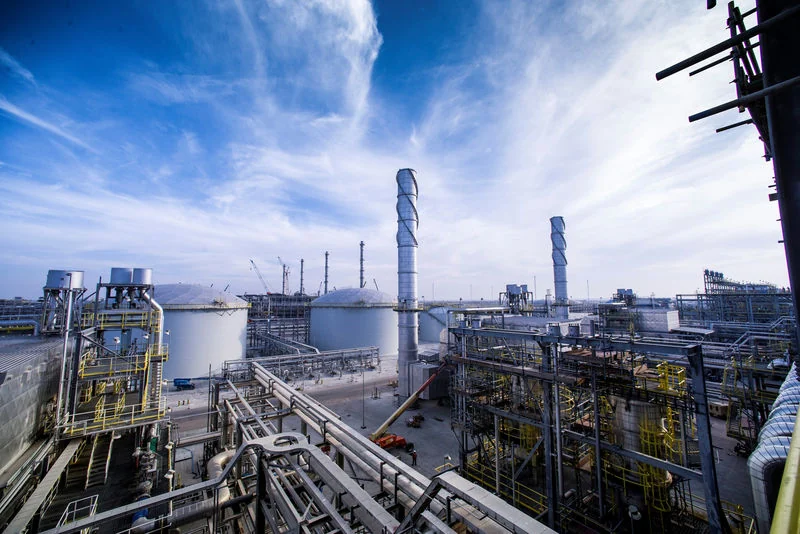
Windows were blown out across several floors of Saudi oil giant Aramco’s corporate office in the heart of the financial district of the capital Riyadh on Sunday by what the energy ministry said was debris from an attempt to attack the building.
The ministry said damage to the Aramco Tower was limited and there were no injuries or fatalities, without assigning responsibility for the attack.
The Saudi-led coalition fighting Iran-aligned Houthis in Yemen said Saudi air defences had intercepted Houthi missiles over the city in the early hours.
The Houthis, who claimed the attack, have escalated their fighting with the kingdom in what has become another front in the wider US-Israeli war against Tehran.
Many schools in the kingdom resumed in-person classes on Sunday after weeks of home learning and several Saudi government agencies returned to in-office work suspended after earlier Houthi attacks.
The Houthis have ramped up strikes on Aramco (2223.SE), opens new tab facilities in recent weeks, including the oil giant’s headquarters in Dhahran in the Eastern Province of Saudi Arabia.
The Saudi-led coalition said air defences also intercepted a Houthi missile on Sunday in the province, where most of the oil and gas reserves of the world’s largest crude exporter lie. It said they had also destroyed two ballistic missile launchers in Saada used by the Houthis in the Sunday attack on Riyadh.
The renewed fighting between the Houthis and the coalition backing Yemen’s internationally recognised government intensified after the group advanced in September toward the Bab el-Mandeb Strait, a strategic shipping chokepoint on the other side of the Arabian Peninsula from the Strait of Hormuz.
The Houthis have since stepped up missile and drone attacks on Saudi ports and airports, including Riyadh’s international airport. The group’s military spokesperson, Yahya Saree, said the airport was targeted in Sunday’s attacks, but there was no confirmation from Saudi authorities.
A strike on the airport in October killed 13 people and wounded more than 300.
In response to the attacks, Saudi Arabia has been carrying out air strikes against Houthi targets in Yemen.
The latest escalation comes a day after Yemen’s Houthi-run health ministry said Saudi airstrikes killed at least 33 people near Sanaa. Saudi authorities said they were investigating.
The kingdom, a key US ally, has also been requesting assistance from countries ranging from the US to Europe and the Middle East, for both defensive and offensive support against the Yemeni group.
Britain said in October it would fly fighter jets on defensive missions to help protect Saudi cities from Houthi aerial attacks.
-
News2 years ago
CBN Debunks Fake Circular on New ₦5,000 and ₦10,000 Notes
-
 Opinion2 years ago
Championing the People’s Voice: Obasa’s Dedication to Grassroots Representation By Dave Agboola⁰
-
 Health & Wellness1 year ago
President Tinubu Directs Cut in Dialysis Cost from ₦50,000 to ₦12,000
-

 International News7 months ago
Indian Police Arrest Nigerian Over ₦290m Drug Haul
-
 Business8 months ago
Dangote Refinery Reduces Petrol Gantry Price To ₦1,200 Per Litre
-

 Business8 months ago
After Plea Bargain, Court Discharges Stella Oduah of ₦2.5bn Fraud
-
Business2 years ago
Dangote; We Did Not Fix ₦600/Litre Petrol Price
-
Business2 years ago
CBN: FG’s Borrowing Pushes Money Supply Up 51% to ₦108.96tn