
Education
JAMB Registrar Struggles Hold Back Tears, Apologises 2025 UTME Errors

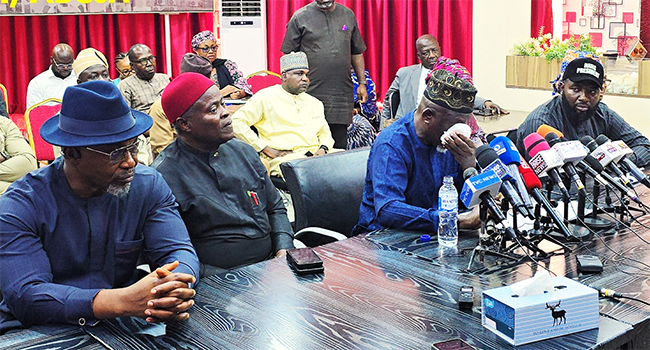
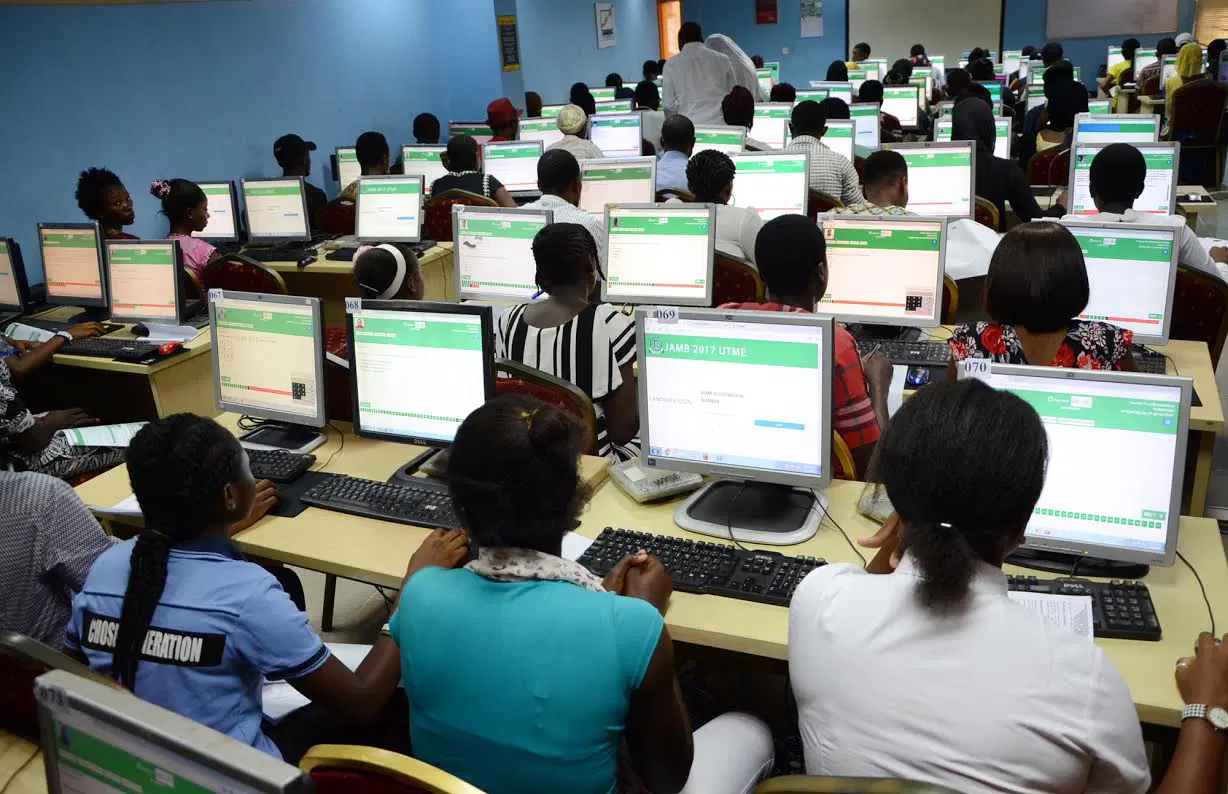
The Joint Admissions and Matriculation Board has admitted that errors affected candidates’ performance during the 2025 Unified Tertiary Matriculation Examination, which was held across different centres in the country.
The Registrar of the board, Ishaq Oloyede, who disclosed this during a media briefing in Abuja on Wednesday, also broke down in tears while admitting to the error.
“Once again, we apologise and assure you that this incident represents a significant setback…. We remain committed to emerging stronger in our core values of transparency, fairness and equity.
“It is our culture to admit errors because we know that in spite of the best of our efforts, we are human; we are not perfect,” Oloyede said as he wiped tears off his eyes with a white handkerchief.
He also announced that about 379,997 candidates in the just concluded 2025 exercise would retake the examination.
This followed widespread complaints of technical glitches, unusually low scores, and alleged irregularities in the questions and the answers during the exercise.
‘Man Proposes, God Disposes’
However, in a post on its X handle on Wednesday, the examination body established that a technical glitch affected 157 out of the 887 centres.
It said this was responsible for the general low performance of the candidates.
It said, “Man Proposes, God Disposes! It has been established that a technical glitch affected 157 centres out of the 887 centres in the 2025 UTME. This was basically responsible for the general low performance of the candidates scheduled to sit the examination in those centres.
“As such, all the affected candidates will be contacted to reprint their examination slips towards retaking their examinations starting from 16th May, 2025.”
2025 UTME Breakdown
JAMB released a statistical breakdown of the 2025 UTME, which revealed that over 1.5 million of the 1.95 million candidates who took the examination scored below 200.
In a post on its official X on May 5, it highlighted that 1,955,069 candidates sat for the examination, and 1,534,654 candidates—representing 78.5 percent—scored below the 200 mark.
A breakdown of the results showed that only 4,756 candidates (0.24 percent) achieved scores of 320 and above, while 7,658 candidates (0.39 percent) scored between 300 and 319.
Just 12,414 candidates (0.63 percent) scored 300 and above.
For the 250-299 score range, 73,441 candidates (3.76 percent) were recorded, while a larger proportion, 334,560 candidates (17.11%), scored between 200 and 249.
The category with the highest number of candidates was the 160 to 199 range, with 983,187 candidates (50.29 percent).
Further down the scale, 488,197 candidates (24.97 percent) scored between 140 and 159, and 57,419 candidates (2.94 percent) scored between 120 and 139.
A percentage of candidates, 3,820 (0.20 percent), scored between 100 and 119, while 2,031 candidates (0.10 percent) fell below the 100 mark.
In addition to the overall results, JAMB also disclosed that 40,247 underage candidates were allowed to participate in the examination due to their “exceptional abilities.”
However, only 467 of these candidates (1.16 percent) achieved scores that met the defined threshold for “exceptional abilities.”
In 2024, over 1.94 million candidates registered for the UTME, with 1,904,189 candidates taking the examination across 118 towns and more than 700 centres.
JAMB also said that only 0.4 percent of candidates who took the 2024 examination scored above 300, while 24 percent scored 200 or higher.
Malpractices, Investigation
JAMB also reported that 97 candidates were involved in examination infractions in the 2025 UTME, while 2,157 others were investigated for “suspected malpractices”.
The board further noted that 71,701 candidates were absent from the examination, and those facing biometric challenges were being investigated.
JAMB also noted that those cleared would be rescheduled for examination at designated centres.
It added that some results, including those of blind candidates and candidates in the JEOG category, are still being processed and will be released once finalised.
JAMB had assured that candidates who faced biometric challenges or were involved in investigations would be given fair treatment, with rescheduling for those cleared.j
2025 UTME Review
On Monday, it ordered an immediate review of the 2025 UTME following a wave of public complaints alleging technical glitches, incomplete questions, and unusually low scores.
In a statement issued by its Public Communication Advisor, Fabian Benjamin, the board acknowledged what it described as an “unusual volume of complaints” since the release of the UTME results last Friday.
It said the development had prompted it to fast-track its annual post-examination review process, typically occurring months after the exercise.
“We are particularly concerned about the unusual complaints originating from a few states within the federation. We are currently scrutinising these complaints in detail to identify and rectify any potential technical issues,” JAMB said in the statement.
Benjamin had added that if any faults were found in the system, the examination body would not hesitate to implement “appropriate remedial measures.
“To assist in this process, we have engaged a number of experts, including members from the Computer Professionals Association of Nigeria, chief external examiners, who are heads of tertiary institutions, the Educational Assessment and Research Network in Africa, measurement experts, and vice chancellors from various institutions.”
Last week the Minister of Education, Tunji Alausa, attributed the mass failure to the efficacy of JAMB’s anti-malpractice technology.
He said the Board’s computer-based testing system “had made cheating nearly impossible” and should be extended to other national examinations such as WAEC and NECO.
But pressure continued to mount, with reports of a planned legal action against JAMB by some aggrieved candidates.



The Academic Staff Union of Universities (ASUU) has urged the Federal Government to use the remaining 10 days of the one-month window granted to it to fully resolve lingering issues affecting the university system.
The call followed resolutions from the union’s National Executive Council meeting held at Taraba State University, Jalingo, between November 8 and 9.
In a statement, ASUU President, Prof. Chris Piwuna said the warning became necessary as some government officials were “undermining the negotiation process” by making statements that misrepresented government offers and the status of implementation.
ASUU suspended its two-week warning strike on October 22, giving government until November 22 to meet key demands, including the review of the 2009 ASUU-FG agreement, payment of outstanding salaries and earned allowances, and release of the university revitalisation fund.
The union warned it would resume industrial action without notice if concrete steps were not taken.
Prof. Piwuna said part-payment of promotion arrears dating back to 2017 and the release of third-party deductions were merely confidence-boosting gestures and not the core issues under negotiation. He stressed that while some progress had been made in non-monetary areas, salary and welfare matters required a more radical approach.
The union said the real challenge was lack of political will to prioritise education, insisting that academics deserve better living and working conditions.

The Federal Ministry of Education has announced the commencement of disbursement under the Tertiary Institution Staff Support Fund (TISSF) to strengthen staff welfare, institutional productivity, and innovation across Nigeria’s tertiary education system.
This was contained in a press statement released late Thursday night and made available to the media by Boriowo Folasade, Director of Press and Public Relations of the Ministry.
Launched in August 2025, following a high-level stakeholders’ session in July, the TISSF has now moved from planning to implementation, with over 9,000 staff beneficiaries receiving disbursements in the first year.
This represents 28 per cent of the 33,000 verified applicants drawn from 219 federal and state tertiary institutions across the federation.
According to the statement, in the first year of implementation, the beneficiary composition reflects a 30:70 ratio of academic to non-academic staff, underscoring the Ministry’s commitment to inclusive support for all categories of tertiary institution personnel.
Speaking on the milestone, the Minister of Education, Dr Maruf Tunji Alausa, commended the leadership and vision of President Bola Tinubu.
“The President is delivering for our tertiary institutions for welfare, for productivity, and for the future. Within just four months, payments havee started going out. This is a President that delivers, and the Ministry of Education is profoundly grateful for his continuous support and commitment to staff welfare,” he stated.
The TISSF initiative represents a critical component of the Federal Government’s Nigerian Education Sector Renewal Initiative (NESRI) framework.
It is strategically designed to improve the welfare, morale, and performance of tertiary institution staff while reinforcing the institutions as centres of excellence, innovation, and knowledge creation.
Through concessionary zero-interest loans and welfare support packages, the TISSF empowers staff by offering each member up to N10 million in loans to address key livelihood and productivity challenges, including access to housing, education, healthcare, mobility, and small business development.
“This Fund is not merely about disbursement; it is about restoring dignity, rewarding dedication, and rebuilding the foundation of our knowledge economy,” said Dr Alausa.

The Academic Staff Union of Universities (ASUU) has suspended the two-week warning strike it began on October 13, 2025.
The strike, which was set to expire next Monday, was suspended following renewed commitments from the Federal Government and the National Assembly to address the union’s demands.
ASUU President, Professor Chris Piwuna, made the announcement at a press conference in Abuja on Wednesday, citing recent interventions and engagements with the Yayale Ahmed-led committee and the Deputy Senate President as the reasons for suspending the action before its scheduled end.
However, the lecturers urged the government to take advantage of the one-month suspension window to meet their demands, which include the review of the 2009 ASUU-Federal Government agreement, payment of outstanding salaries and earned allowances, and disbursement of the university revitalisation fund, among others.
ASUU also warned that the union would resume the industrial action without prior notice if no concrete steps are taken within the next one month.
-
 News3 years ago
Just In: President Tinubu returns to Nigeria
-
 News3 years ago
2023 Elections: Outgoing Rwandan High Commissioner say s Nigeria, ‘ handle their destiny’ in a peaceful way.
-
 Entertainment3 years ago
Social media cloth Vendor Found Dead In Ibadan Hotel.
-
 News3 years ago
Ogun HoS Solicit Affordable Housing For Civil Servants
-
 Trending News3 years ago
FG begins 40% pay rise for workers.
-
 Entertainment3 years ago
9mobile Ambassadors Begin “Meet And Greet” Session With Staffs, Customers.
-
Sports3 years ago
CAF SALUTES RIVERS UNITED AFTER SEALING QUARTER-FINAL TICKET.
-
 Business3 years ago
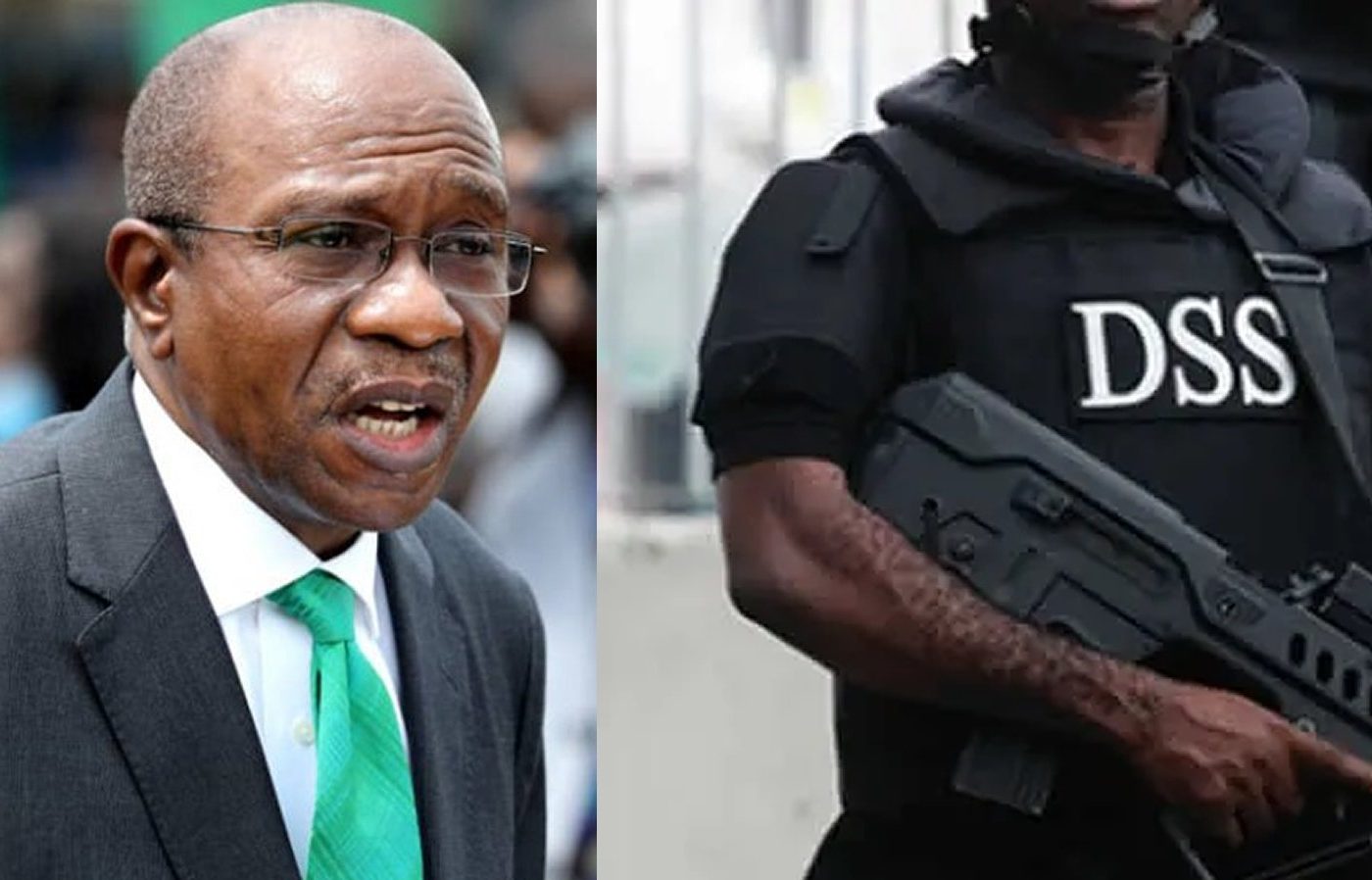
JUST IN: DSS Arrests Godwin Emefiele