Connect with us

International News

Jimmy Carter Wins Posthumous Grammy For Best Audiobook

Published

on

Spread the love
FILE: Jimmy Carter
On “Last Sundays in Plains: A Centennial Celebration,” Carter — who died at the age of 100 on December 29 — speaks about love, kindness, forgiveness and the afterlife at Maranatha Baptist Church in his hometown Plains.The audiobook — released in August 2024, just months before his death — also features music from Darius Rucker, Jon Batiste and LeAnn Rimes, among others. 

Jason Carter, one of the former president’s grandsons who delivered a eulogy at his funeral, appeared at the pre-gala ceremony in Los Angeles to accept the award.

“Having his words captured in this way for my family and for the world is truly remarkable,” he told members of the audience, many of whom rose to their feet to honor the former president.

Other nominees in the category included legendary singer Barbra Streisand, country superstar Dolly Parton and funk master George Clinton.

Carter — who served as US president for a single term from 1977 to 1981 — taught Sunday school for 50 years at Maranatha, usually more than once a month.

He garnered his previous three Grammy wins in the best spoken word album category: for “Faith – A Journey for All” in 2019; for “A Full Life: Reflections at 90” in 2016; and for “Our Endangered Values: America’s Moral Crisis” in 2007.

The late politician was nominated for a total of 10 Grammys.

Former president Bill Clinton and Barack Obama each have two Grammys.


AFP

Continue Reading
Click to comment

Leave a Reply

Your email address will not be published. Required fields are marked *

International News

Ghanaian Boy, 15, Shot Dead On Way To School In New York

Published

on

Spread the love


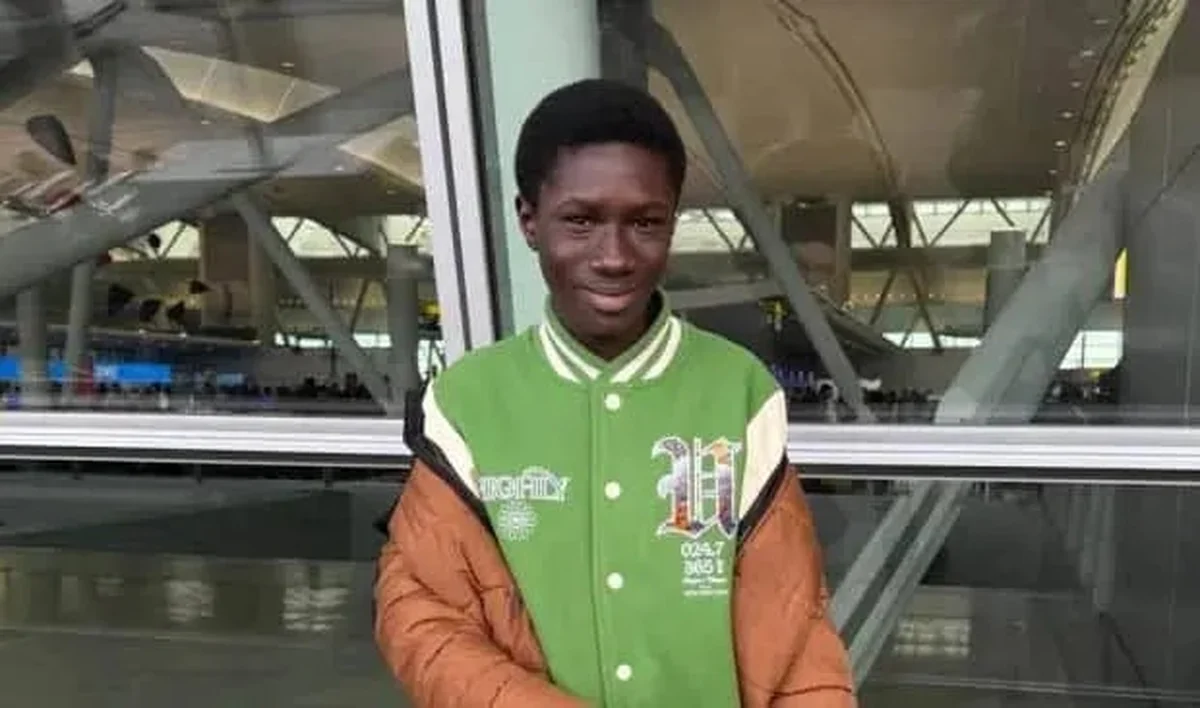
A 15-year-old Ghanaian boy, Javits Frimpong, has been shot dead while on his way to school in the Bronx, New York, with his father suspecting that the killing was connected to bullying at school.


Javits was reportedly shot in the stomach at about 9:30 a.m. on Thursday near Crotona Park. He was rushed to a hospital but later died from his injuries.

According to the New York Police Department, three teenage boys are being sought in connection with the killing. Investigators said the suspects fled the scene wearing black tracksuits and blue surgical masks.

Surveillance footage reportedly showed a person matching the description of one of the suspects fleeing the area after the shooting. The victim was said to have run for about a block after being shot before collapsing.

The teenager’s father, Thomas Frimpong, said he believed bullying was behind the incident, claiming that his son had been targeted by two schoolmates who were recently suspended.

Frimpong disclosed that the school principal informed him about the bullying just three days before his son was killed.

He also maintained that his son was not the aggressor in a recent confrontation at school.

“The principal told me Javits is innocent. Javits is innocent. He was defending himself,” the grieving father said.

Frimpong said he brought his son from Ghana to New York about a year ago in the hope of giving him a better life, while the boy’s mother remained in Ghana.

Describing his son, he said: “My son was precious, very clever.”

The father, who works as a taxi driver, said his last conversation with Javits on Thursday morning was a reminder to get to school on time.

The killing has sparked outrage among residents of the Crotona Park neighbourhood, with some calling for increased after-school activities and youth programmes to keep teenagers away from violence.

Police have yet to publicly identify any suspects or announce arrests as investigations into the teenager’s killing continue

Continue Reading

International News

Burkina Faso Reinstates Death Penalty For Terrorism, Fake Goods Import

Published

on

Spread the love


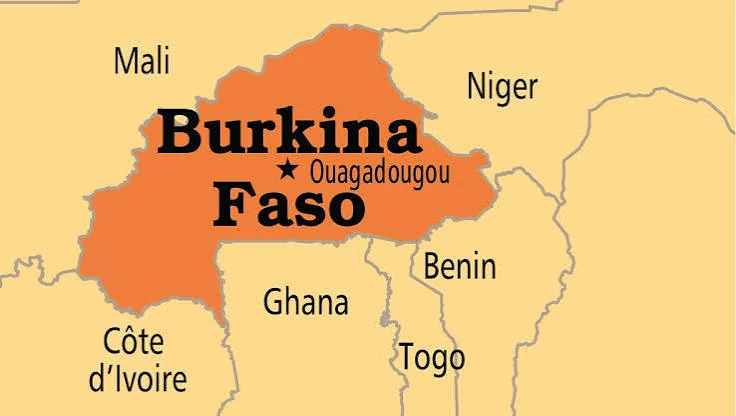
Burkina Faso’s parliament has voted unanimously to reinstate the death penalty for crimes including terrorism, espionage and treason, ending the country’s abolition of capital punishment for ordinary crimes in 2018.


All 71 members of the West African country’s transitional legislature supported the revised penal code on Tuesday, October 20, following its presentation by Justice Minister Edasso Rodrigue Bayala, according to the Associated Press.

The decision restores capital punishment nearly four decades after the country’s last known execution, which took place in 1988, according to Human Rights Watch.

The military-led government’s Council of Ministers approved a bill to restore the death penalty in December 2025, prompting criticism from international human rights organisations.

Amnesty International and Human Rights Watch warned that the move could threaten fundamental rights and be used to suppress critics of the authorities.

Burkina Faso’s military government has previously faced allegations of detaining journalists, human rights defenders and other perceived opponents. The authorities also dissolved political parties earlier in 2026 and repealed the laws governing their activities.

The reinstatement comes as the country continues to battle an armed insurgency involving militant groups linked to al-Qaida and the Islamic State group. The violence has killed thousands of people and displaced millions across Burkina Faso and the wider Sahel region.

The government has presented the tougher penal code as part of its response to the security crisis. Bayala had indicated in 2024 that the death penalty would be included in a revised criminal code.

According to Reuters, the revised code also provides for capital punishment in cases involving the importation of expired or prohibited products that result in death, although the precise scope and implementation of the new provisions will depend on the final legal text.

Human rights organisations have questioned whether restoring the death penalty will improve security, warning that it could deepen repression and create additional risks for people accused of offences.

Human Rights Watch previously said the proposed change could intensify a climate of fear and send a chilling message to critics of the military authorities.

The country’s security forces have also faced allegations of serious abuses during counterinsurgency operations. Human Rights Watch reported this year that government forces killed more than twice as many civilians as jihadist fighters between 2023 and 2025.

Armed groups, including Jama’at Nusrat al-Islam wal-Muslimin, an al-Qaida-linked organisation, have also been accused of war crimes and crimes against humanity by rights groups.

Burkina Faso, a landlocked country with a population of about 23 million, has been governed by military authorities since a coup in 2022. The junta has repeatedly delayed a return to civilian rule as it seeks to contain the insurgency.

The parliamentary vote marks a significant change in the country’s criminal justice policy. Burkina Faso abolished the death penalty for ordinary crimes in 2018 under former President Roch Marc Christian Kaboré, although the last known execution had taken place decades earlier.

The decision is likely to renew scrutiny of the country’s human rights record as authorities pursue their security campaign against armed groups.

(APNews)

Continue Reading

International News

We Have No Active Case’, Uganda Says Ebola Patient In FCT Is ,A Nigerian

Published

on

Spread the love


Uganda has clarified that as of Tuesday, October 21, 2026, when Nigerian health authorities confirmed an active case of Ebola in its capital city, Abuja, it had no active case of the virus.


Health Minister, Muhammad Ali, had announced that a female patient who had travelled from Uganda in East Africa, tested positive for the virus.

“The Federal Government of Nigeria confirms one case of Ebola disease in the Federal Capital Territory (FCT), following laboratory confirmation today, 20 October 2026. The patient, a woman who recently arrived in Nigeria on an international flight from Uganda, was admitted to a private hospital in the FCT, where she received care for several days before the diagnosis was confirmed. She is currently in isolation and receiving medical care.

“The FG calls on all public and private healthcare facilities nationwide to be on high alert. Healthcare workers must maintain a high index of suspicion, promptly identify and isolate suspected cases, observe strict infection prevention and control measures, and immediately report suspected cases to public health authorities.

“Investigations are ongoing, and we will continue to provide accurate and timely information,” Pate had said.

The development had made many Nigerians look towards the direction of Uganda, just like Patrick Sawyerr, a Liberian, imported the disease to Nigeria in 2014.

But in a statement issued after Pate’s comment, Charles Olaro, Director-General of Health Services in the East African country, clarified that the patient is a Nigerian.

Olaro said the woman had travelled to Eastern Democratic Republic of the Congo (DRC), which has over nearly 10,000 active cases with 4,500 deaths from Ebola, for business and transited through Uganda in early October.

According to Olaro, she showed no symptoms while in Uganda but developed symptoms after arriving in Nigeria.

“Travel through Uganda does not establish that infection occurred here. The location of exposure remains under investigation,” the ministry said.

“The Government of Nigeria is yet to provide detailed information on her travel itinerary and clinical history which will guide further investigations and any necessary contact tracing.

“We wish to clarify that, as at the time of this statement, Uganda has NO confirmed active Ebola cases.”

The Ugandan government said it had maintained limited provisions for humanitarian and diplomatic movement, adding that it would strengthen screening and public health controls at points of entry.

Continue Reading

Trending

Copyright © 2026 TheColumn NG