
News
Lagos Port Seizure: NDLEA Receives 6,778.5kg of Canadian Loud

The National Drug Law Enforcement Agency has formally taken custody of 6,778.5 kilograms of Canadian Loud, a potent strain of cannabis, intercepted at the Apapa Seaport in Lagos.
The illicit consignment was officially handed over to the NDLEA during a ceremony at the Apapa Port on Wednesday, following its interception during a joint examination of two containers by operatives of the NDLEA, the Nigeria Customs Service and other security agencies.
A statement on Wednesday by the agency’s spokesman, Femi Babafemi, revealed that the Chairman/Chief Executive Officer of the NDLEA, Brig. Gen. Buba Marwa (retd), represented by the agency’s Director of Seaport Operations, ACGN Ibinabo Archie-Abia, described the seizure as a landmark achievement made possible through inter-agency collaboration.
“Through two major seizures recorded on June 15 and June 24, 2026, we send a clear and unequivocal message that we are more determined than ever to dismantle organised criminal syndicates and drug trafficking networks operating within and beyond our borders,” Marwa said.
He disclosed that the seizures followed months of intelligence-led operations coordinated by the NDLEA Special Investigation Unit and the Marine Intelligence Unit in collaboration with the Royal Canadian Mounted Police and the Nigeria Customs Service.
According to him, the international drug syndicates deployed complex maritime routes in an attempt to evade security agencies, but sustained surveillance enabled operatives to track the consignments across multiple continents before their interception in Nigeria.
“It bears stating clearly how these consignments moved. The first container, CAAU 7569127, departed Toronto on 16th April 2026. In an apparent attempt to evade detection, it was moved by rail to Montreal before being loaded onto the vessel Ghallow Express*. It arrived at Tangier Med, Morocco, on 6th May 2026, where it was trans-shipped onto the Spartel Trader, which berthed at Tin Can Island Port on 27th May 2026.
“It was subsequently moved to the Global Bonded Terminal before being transferred by water to Apapa Port on 10th June 2026, where it was intercepted during a joint examination of the shipment between our men, our colleagues from the Customs Service and other security agencies,” he said.
Marwa added that the second container, identified as HAMU 3246311, left Montreal on May 1 aboard the vessel Africa Express before being trans-shipped onto the Algeciras Express on May 15.
“It arrived at Tin Can Island Port and, following discharge on 4th June 2026, was moved to Apapa Port on 22nd June 2026, where it fell into the hands of our waiting officers,” he added.
The NDLEA boss stressed that the agency would go beyond confiscating illicit drugs by targeting the financial networks behind the trafficking operations.
“We recognise that the staggering profits generated by illicit drug trafficking continue to fuel crimes against humanity and against our nation, despite the devastating toll they take on individuals, families and communities.
“As such, we remain resolute. Our work does not end with seizure. We are committed to identifying, arresting and prosecuting those responsible, to confiscating their criminal assets, and to ensuring that they derive no benefit whatsoever from their illegal enterprise,” he said.
Marwa also praised the officers of the NDLEA, the Nigeria Customs Service and other security agencies for their professionalism and commitment.
“I commend, in the strongest terms, the dedication, professionalism and courage of the officers and men of the NDLEA, the Nigeria Customs Service and all sister security agencies who refused to look away and allow these dangerous substances to flood our communities.
“Your patriotism and unwavering commitment have once again proven that you are effective guardians of our maritime gateways.
“This success was made possible by the intelligence-sharing and operational synergy displayed by every participating agency. It is a powerful demonstration of what inter-agency collaboration, international cooperation and intelligence-driven operations can achieve in the fight against transnational organised crime and illicit drug trafficking,” he said
The Independent National Electoral Commission (INEC) has explained why young people account for a smaller share of Nigeria’s registered voters ahead of the 2027 general elections than they did in 2023.
INEC Chairman, Professor Joash Amupitan, said the decline was largely due to the ageing of people who were classified as youths during the 2023 general elections, rather than a loss of interest in electoral participation.
Amupitan gave the explanation on Tuesday during the grand finale of the INEC Campus Debate held at the Law Theatre of the University of Abuja.
According to him, youths currently account for 29.79 per cent of the voter register being prepared for the 2027 elections, compared with 39.65 per cent in 2023.
He said many people who fell within the youth age bracket in 2023 had since moved into older age categories, accounting for the change in their share of registered voters.
“Some questions have been asked, why has the number reduced compared to what we have in 2023? But the truth of the matter is that there has been progressive migration of the categories of persons that were youth in 2023, they have now migrated into different age groups,” Amupitan explained.
The INEC chairman said the current register was still undergoing review through the claims and objections process.
The 2023 voter register contained 37,060,399 young people aged between 18 and 34, representing 39.65 per cent of the 93.4 million registered voters.
Amupitan said the campus debate was part of the commission’s efforts to address voter apathy and improve young Nigerians’ understanding of the electoral process.
“Our plan is to catch them young,” he said, recalling an earlier engagement where some participants could not identify the INEC chairman.
The debate, held under the theme, “Nigeria’s Electoral Process and Democracy”, ended with the University of Jos emerging winner. Bayero University, Kano, came second, the University of Ibadan placed third, while the University of Nigeria, Nsukka, finished fourth.
Amupitan, an alumnus of the University of Jos, commended the quality of the presentations and said the judges took considerable time to calculate the scores to ensure an accurate result.
He joked that the outcome was so clear that none of the participating universities should consider challenging it in court.
The chairman also directed INEC’s Director of Voter Education and Publicity to maintain contact with the finalists, saying he would have offered them automatic employment if the law permitted.
“They are not qualified to have been given automatic employment, if not I will have done that by now,” he said, explaining that they would first need to graduate and complete the National Youth Service Corps programme.
Amupitan also highlighted the commission’s recent electoral activities, saying it had conducted four off-cycle elections since he assumed office. They include the Anambra governorship election, Federal Capital Territory area council elections, Ekiti governorship election and Osun governorship election.
He said the Anambra and Osun elections, which had previously been inconclusive in earlier cycles, were concluded under his leadership.
On women’s participation in politics, he said INEC had a gender and inclusivity department but noted that Nigeria was yet to introduce legislation guaranteeing equal representation of women in political offices.
The Vice-Chancellor of the University of Abuja, Professor Hakeem Babatunde Fawehinmi, urged young Nigerians to obtain their Permanent Voter Cards, participate in elections and hold elected leaders accountable.
He commended INEC for organising the debate, saying it would help young people understand how to manage disagreements peacefully.
“It can be argued that debate is the opposite of violence,” he said.
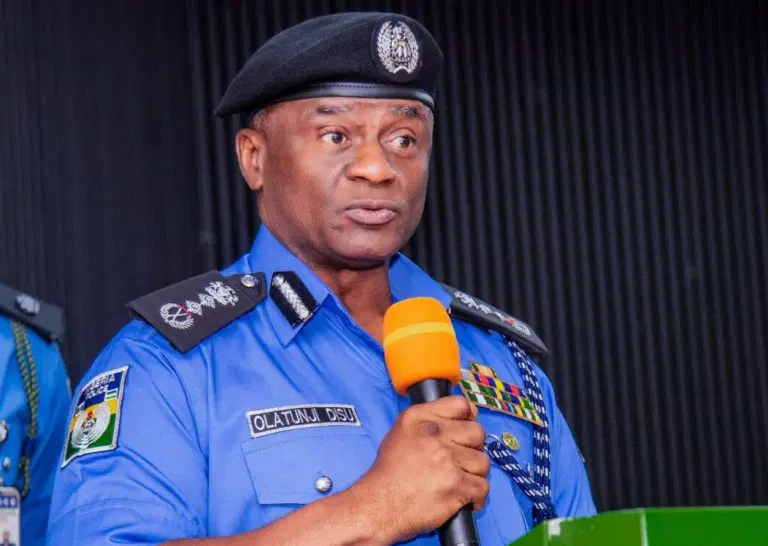
The Inspector-General of Police, IGP, Mr Olatunji Disu, says the Nigeria Police Force is ready for the successful conduct of the 2027 general elections.
Disu gave this assurance on Tuesday in Abuja, when a delegation from the Special Representative of the Secretary-General for West Africa and the Sahel paid him a courtesy visit.
The IGP told the delegation led by Dr Leonardo Simao that the Nigeria Police Force was adequately prepared for the elections.
Disu said the force had held a series of trainings with personnel of the Nigerian Army, Nigeria Security and Civil Defence Corps, Customs, Immigration Service and the Department of State Services, DSS, in preparation for the election.
He said the training also involved how to include everybody in the election process, especially those living with disabilities.
According to him, the officers have been trained to identify them, and know what to do when they see persons with disabilities.
“So far so good, we are not afraid. We are confident that even if the elections start tomorrow, the Nigerian Police Force is ready to do what is expected of the force.
“We are ever ready to go, and we want to assure you that Nigerians will not be disappointed with the activities of the Nigerian Police Force in the election,” he said.
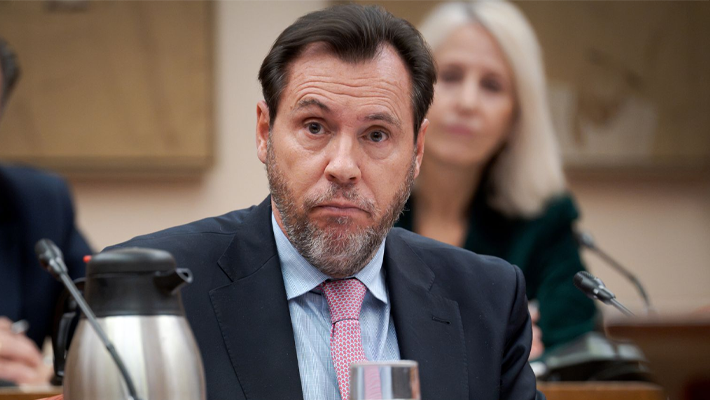
Spain’s Transport Minister Óscar Puente has resigned – six days after the high-speed train collision in which at least 69 people were killed and dozens injured.
He announced his decision in Congress, after giving evidence on last Wednesday’s disaster near the town of Urda, south of the capital Madrid, in which a train smashed into the back of another which had stopped on the same line.
“A transport minister in a country like Spain cannot remain in office after two accidents of this seriousness in less than a year,” he said – a reference to January’s crash on the same line in which 46 people were killed.
Last week’s crash was one of the worst rail disasters in Europe’s modern history, and Spain’s worst crash since 2013.
Rescuers had to use heavy lifting equipment to get access to derailed carriages where a number of passengers were trapped
Puente announced his decision at the end of a congressional session on Tuesday evening in which he had outlined new rail safety measures and been grilled by the opposition.
He said he had taken the decision to resign immediately after the 28 October disaster, but had not made it public.
Puente had been under mounting pressure in the wake of the disaster as opposition parties and some allies of the government called on him to step down.
His resignation comes as a blow to the Socialist-led government ahead of a general election set for 29 November.
During his lengthy hearing before lawmakers, Puente said: “I wish to inform you that I am not only stepping down from my position as minister of transport, but that I am also withdrawing my name from the lists for the early legislative elections.”
Last Wednesday’s accident involved a train run by state-owned operator Renfe with 397 passengers on board and a stationary train run by private operator Iryo, which was carrying 147 passengers.
A reported issue with the automatic signalling system – a computer failure – had forced all trains to halt on the affected stretch.
Leaked audio recordings published in Spanish media soon after the crash revealed conversations between train drivers and a control centre just minutes before the disaster.
The three recordings of conversations between Madrid’s control centre and two train drivers appear to show that the Renfe train was given clearance to move even though the other train had stopped on the track, about 25km (15 miles) ahead.
In one, a control centre operator is speaking to the driver of the Renfe train, which was having some technical difficulties.
After some exchanges, the control operator tells the driver: “Continue your journey and then proceed under [Lateral Signalling Block], at normal speed with normal operation.”
The driver replies: “At normal speed?” To which the controller answers: “Yes.”
The Lateral Signalling Block is a back-up system used when the automatic signalling or data transmission system fails.
The driver of the stationary Iryo train says in another audio recording that communication with the train-control system has been lost, and it is not moving.
The train “is stationary in front of the entry signal at Urda”, the driver tells the control centre operator. After a series of exchanges, the driver is then told to “resume the journey” normally.
The Iryo driver then contacts the control centre again, according to a later recording, saying they cannot start the train. “The train won’t allow me to control the [security] system. That’s why I am still stopped in front of the entry signal,” they say.
The latter recording suggests that the controller had been notified that the Iryo train remained stationary as the Renfe train approached.
Iryo said its carriages were “struck from behind” by the other train.
Puente said last week that the decision to instruct the trains to move again, without any speed restrictions, was “inexplicable”.
-
News2 years ago
CBN Debunks Fake Circular on New ₦5,000 and ₦10,000 Notes
-
 Health & Wellness1 year ago
President Tinubu Directs Cut in Dialysis Cost from ₦50,000 to ₦12,000
-
 Opinion2 years ago
Championing the People’s Voice: Obasa’s Dedication to Grassroots Representation By Dave Agboola⁰
-
 International News7 months ago
Indian Police Arrest Nigerian Over ₦290m Drug Haul
-
 Business7 months ago
Dangote Refinery Reduces Petrol Gantry Price To ₦1,200 Per Litre
-
 Business7 months ago
After Plea Bargain, Court Discharges Stella Oduah of ₦2.5bn Fraud
-
Business2 years ago
Dangote; We Did Not Fix ₦600/Litre Petrol Price
-
 Trending News1 year ago
NELFUND Disburses ₦86bn To 449,000 Beneficiaries