
News
NASS To Translate Laws Into Igbo, Hausa, Yoruba


The National Assembly will soon deepen the digitisation of parliamentary records by translating Nigerian laws into Igbo Hausa, Yoruba and other local languages to expand public access to legislative information.
Mr Henry Nwawuba, the Executive Secretary, National Assembly Library Trust Fund disclosed this while declaring open the 2026 National Assembly Library Week on Monday in Abuja.
The event was themed, “Parliamentary Memory: Connecting Records, Legislation and the People.”
Nwawuba said the three-day programme was designed as an annual platform to promote legislative research, access to information and effective utilisation of the resources of the National Assembly Library.
He described the library as more than a collection of books, saying “it serves as the knowledge infrastructure of the legislature and a repository of parliamentary records.”
He said the library was working to ensure that lawmakers, legislative aides, researchers and other stakeholders have access to authoritative parliamentary records, including Order Papers, Votes and Proceedings, Committee reports and Acts passed by the National Assembly.
Nwawuba said the Trust Fund was investing in electronic repositories and upgrading of its E-Library, while developing a National Assembly Library mobile application to make legislative information more accessible to lawmakers, staff members, researchers and members of the public.
He also announced plans for a Bills Tracker, which would enable users to follow bills and monitor their progress through the legislative process.
According to him, the library is developing infographics, audiovisual materials and video explainers to simplify Bills, Acts and legislative procedures for Nigerians.
He said the planned translation of laws into local languages would broaden access to legislative information and enable more citizens to understand laws that affect their daily lives.
Nwawuba said the library would also organise public policy dialogues to deepen citizens’ participation in public hearings and create more opportunities for interaction among legislators, citizens, researchers and other stakeholders.
He added that the initiatives were aimed at addressing inconsistencies in official parliamentary documents and the circulation of fake or unauthorised copies of National Assembly records.
Senate President, Godswill Akpabio, urged lawmakers to make greater use of the library, particularly in an era of increasing misinformation, disinformation and the rapid development of artificial intelligence.
Akpabio, represented by Sen. Osita Ngwu, described the library as a critical link between evidence, knowledge and legislative decision-making and called for continued support for its development.
The Speaker of the House of Representatives, Abbas Tajudeen, represented by the House Leader, Prof. Julius Ihonvbere, said legislative records were essential to understanding Nigeria’s legislative history and strengthening democratic governance.
Tajudeen said the strength of a legislature should be measured not only by the laws it enacted, but also on how effectively it documented its activities, preserved institutional knowledge and made such information available to future generations.
He said technology and artificial intelligence could improve legislative research, records preservation and access to information, but cautioned that their adoption must be guided by accuracy, security, professional judgment.
The Clerk to the National Assembly, Kamoru Ogunlana, said the National Assembly could not be truly independent if it lacked the capacity to generate, preserve, retrieve and authenticate its institutional knowledge and records.
Ogunlana said the library had an important role as a bridge between parliamentary records, legislation and the people, stressing that Parliament could not be fully transparent if its records could not be found, understood and trusted.
He identified the Order Paper, Votes and Proceedings and Hansard as key components of Nigeria’s democratic memory, explaining that the Order Paper provides the agenda for legislative business.
The Clerk warned against the circulation of incomplete, outdated, altered or unauthorised Bills, Acts and other parliamentary documents, saying digital technology had made it possible for documents to be manipulated and circulated.
He stressed that the integrity of an Act depended not merely on the existence of a document, but on the ability to establish which version was authentic, which was authoritative and the legal process through which it emerged.
He noted that the continued widespread use of the Laws of the Federation of Nigeria, LFN 2004, highlighted the challenges of maintaining a current and authoritative consolidated body of federal legislation.
He explained that the LFN 2004 reflected the laws covered by that revision exercise and was not automatically updated whenever a new Act was enacted.
Ogunlana said the National Assembly must also strengthen cybersecurity, digital preservation, secure authentication, access controls, backup systems and staff members’ training as parliamentary records become increasingly digitised.
He warned that while digitisation would make parliamentary information easier to access, search and disseminate, it could also expose records to cyberattacks, manipulation and impersonation of official sources.
The Clerk said digital platforms must therefore be accessible and secure, while electronic records must be available, authentic and traceable.
He said the National Assembly Library should evolve beyond being a repository where documents are kept to becoming an institution where parliamentary knowledge is preserved, authenticated and made accessible to lawmakers, researchers, journalists, civil society organisations, students and the wider public.
The President of the Nigerian Library Association, Dr Lawal Umar, called for sustained investment in libraries and modern information technology to improve access to legislative information, while urging stronger collaboration between the National Assembly and state Houses of Assembly.
The Secretary-General, Conference of Speakers of African Legislatures, Amb. Debo Oyewale, said African legislatures had much to learn from one another in building institutions capable of preserving legislative memory.
(NAN)

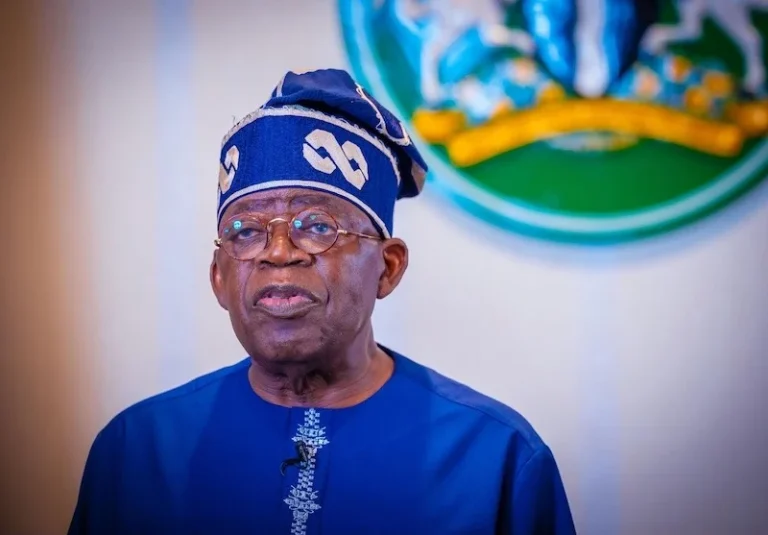
President Bola Tinubu has explained why he removed fuel subsidy upon assumption of office in 2023.
Tinubu explained that he removed the subsidy on fuel to prevent Nigeria from going bankrupt.
He issued the explanation during a meeting with the City Boys Movement in Abuja on Monday.
The president also dismissed promises by the opposition presidential candidates to restore fuel subsidy if they are elected in 2027.
According to Tinubu: “I came and I removed subsidy the first day, Nigeria will not go bankrupt because there is nothing left to pay subsidy.
“I listen to my political opponents promising a return to subsidy” but drawing a religious analogy, the president added, “I remember my scripture studies, both in the Bible and the Holy Quran. When Moses (Musa) left Egypt, the Red Sea parted and gave way. You cannot ask Moses to go back to Egypt. With your energy and support, we will never go back to Egypt.”
The president assured that he would campaign on the backdrop of original ideas that would move Nigeria forward.
“We will campaign with ideas, original thoughts and thinking to move this country forward,” he added.
Tinubu had declared an end to fuel subsidy during his presidential inauguration in Abuja in 2023.
The president had said the fuel subsidy only benefited a few Nigerians.
With the 2027 presidential election around the corner, the opposition have promised to return the subsidy on fuel as part of efforts to alleviate the suffering of Nigerians.

Suberu Aniviye, the suspended Niger state commandant of the Nigeria Security and Civil Defence Corps (NSCDC), has apologised to the families of 37 suspected miners who died in the agency’s custody.
According to reporr, Aniviye tendered the apology while testifying before a panel of inquiry investigating the deaths in Minna, the Niger state capital.
Speaking at the second sitting of the panel chaired by Mohammed Mohammed, a judge, Aniviye appealed to the bereaved families for forgiveness, describing the incident as a costly mistake that could have been avoided.
Aniviye said the operation followed complaints from residents around M.I. Wushishi Housing Estate about mining activities in their communities.
He said he visited the site on September 15 before deploying mining marshals, who arrested the suspected illegal miners the following evening.
The suspended commandant said he learnt of the deaths through a telephone call on September 17 and returned to the command’s office, where he found the bodies lying on the detention cell floor.
Aniviye said he informed Umaru Bago, governor of Niger state, who directed that the bodies be taken to the mortuary.
He added that he also contacted the state commissioner of police and the director of the Department of State Services (DSS).
According to Aniviye, the suspects were scheduled to be arraigned on September 17 before their deaths.
Stephen Tsado, the state’s NSCDC legal officer; and Maryam Etang, a nurse attached to the command’s medical unit; also testified before the panel.
After the sitting, Mohammed led other panel members to the Minna General Hospital mortuary, where the victims’ bodies were kept.
The Chairman of the Independent National Electoral Commission (INEC), Prof. Joash Amupitan (SAN), has warned commission staff against partisan politics, insisting that electoral officials must remain neutral and professional ahead of the 2027 general election.
Amupitan gave the warning on Monday during an interactive session with INEC staff from the South-East region shortly after arriving in Enugu on a working visit to engage traditional rulers and electoral stakeholders.
He said the commission would not tolerate unethical conduct or actions capable of undermining public confidence in the electoral process.
“You should not pick interest in any political party. Be neutral and firm. I am hearing that some of you are showing interest in some political parties. This is absolutely wrong.
“The commission wants you to be neutral and professional, both in your words and actions. The commission will not tolerate unprofessional or unethical electoral conduct from any staff,” he said.
The INEC chairman also disclosed that the commission had introduced a reward and sanction mechanism covering its local government, state and national offices to strengthen discipline and accountability among personnel.
He announced plans to move staff from the conventional civil service salary structure to a special salary structure, which he said would take effect from January 1, 2027.
According to him, the move is intended to improve staff welfare and reduce the risk of electoral officials being induced before, during and after elections.
“We want the new salary structure so that you will not easily be induced before, during and after election.
“We are working with other relevant governmental agencies and commissions to make the cash backing for the new salary structure possible,” he said.
Amupitan urged staff to remain diligent and help rebuild public trust in the commission, stressing that their conduct was central to the credibility of elections.
“As an unbiased umpire, we need to improve the confidence and trust the people repose in us by being disciplined and diligent in the discharge of our duties at all times,” he said.
On preparations for the 2027 general election, the INEC chairman disclosed that the commission had provided its Enugu office with 10 new pickup vans, adding that more logistics would be made available.
He said non-sensitive election materials were ready, while contracts for other required materials, including sensitive materials, were being processed.
Amupitan also said massive training and retraining exercises would begin soon to prepare personnel for the new guidelines and regulations introduced under the amended Electoral Act.
“Massive training and retraining will commence soon. The retraining is imperative, given the new guidelines and regulations introduced into the amended Electoral Act,” he added.
-
 Health & Wellness1 year ago
President Tinubu Directs Cut in Dialysis Cost from ₦50,000 to ₦12,000
-
News2 years ago
CBN Debunks Fake Circular on New ₦5,000 and ₦10,000 Notes
-

 Business7 months ago
Dangote Refinery Reduces Petrol Gantry Price To ₦1,200 Per Litre
-

 International News7 months ago
Indian Police Arrest Nigerian Over ₦290m Drug Haul
-
 Business7 months ago
After Plea Bargain, Court Discharges Stella Oduah of ₦2.5bn Fraud
-
Business2 years ago
Dangote; We Did Not Fix ₦600/Litre Petrol Price
-
 Trending News1 year ago
NELFUND Disburses ₦86bn To 449,000 Beneficiaries
-
 Opinion2 years ago
Championing the People’s Voice: Obasa’s Dedication to Grassroots Representation By Dave Agboola⁰