
News
Persistent Rainfall Causes Flooding in Lagos, Vehicles Trapped


Several communities in Lagos State, Nigeria’s commercial hub, experienced severe flooding on Monday following a prolonged downpour that began Sunday night and persisted nonstop into Monday evening.
Viral videos showed submerged houses and vehicles in Ijede in the Ikorodu area of the state. Coastal and flood-prone areas like Lekki, parts of Eti-Osa, Ajegunle, Agege, Surulere, and Alimosho local governments weren’t spared as residents delicately navigated pool-like streets and roads, which overflowed from clogged drainage channels and canals.
The environmental situation paralysed trade and economic activities in the nation’s commercial hub as residents took to their social media handles to cry for help.
Movement was also hampered as motorists avoided flooded roads to avoid their vehicles being submerged.
Similarly, floods submerged some communities in Niger State after heavy rainfall poured on communities and washed away farmlands in the Lapai, Paikoro and Mokwa Local Government Areas of the state. Last week, a flood submerged communities in eight communities in Adamawa State, in Nigeria’s North-East geopolitical zone.
Meanwhile, in a statement on Monday, Lagos State Commissioner for Environment and Water Resources, Tokunbo Wahab, acknowledged the pain of Lagosians with an assurance that the state has put in place resilient infrastructure to combat flash flooding.
According to the commissioner, a new weather advisory from the Nigerian Meteorological Agency on Monday warned of heavy rainfall and thunderstorms for the next three days.
He said, “Some parts of the state may experience flash flooding because of the inability of the major collectors not being able to contain the run-off resulting from the very heavy rainfalls.”
He stressed that the peculiar nature of Lagos as a coastal city and the effect of climate change make it susceptible to vagaries of flash flooding, asking residents not to panic.
Wahab urged parents and guardians to exercise vigilance over their wards during the holiday period and cautioned against children playing outside during this delicate period.
He warned residents not to engage in disposing of their refuse into the drains as the rains fall, warning that there are consequences for such acts and the refuse will end up blocking the drains and causing flash floods.
Wahab said the state would intensify the year-round cleaning and maintenance of all drainage channels to contain runoff from rainfalls.








Air Peace delayed a flight after an altercation between a passenger and cabin crew forced the aircraft to return to its parking area.
Michael Achimugu, director, public affairs and consumer protection at the Nigeria Civil Aviation Authority (NCAA), said the incident played out on an Air Peace flight P47866 to ABB, code belonging to Asaba International Airport, Delta state.
He did not say where the flight was taking off from.
In a statement on Monday night, Achimugu said Celestine Ezeudu, the passenger, refused direct instructions from cabin crew to stop taking pictures and put his device away while the flight attempted to take off.
According to the NCAA official, Ezeudu ignored the instructions and when a second member of the crew approached, an altercation ensued and the passenger said: “The anger I am feeling can burn down this plane.”
“The crew immediately alerted the captain who then initiated a ramp return at 1557HRS. The passenger complied with instructions to be removed from the aircraft without further struggle,” the statement reads.
“His friend and co-traveller on the same flight also disembarked of his own will, in solidarity with the unruly passenger.”
When interrogated, Ezeudu claimed his fury stemmed from missing an earlier flight, but he did not know that his behaviour would lead to a ramp return, Achimugu said.
Passengers are generally required to switch off their phones or put them on flight mode before take-off and keep them that way until after landing.
Achimugu said passengers must obey cabin crew at all times.
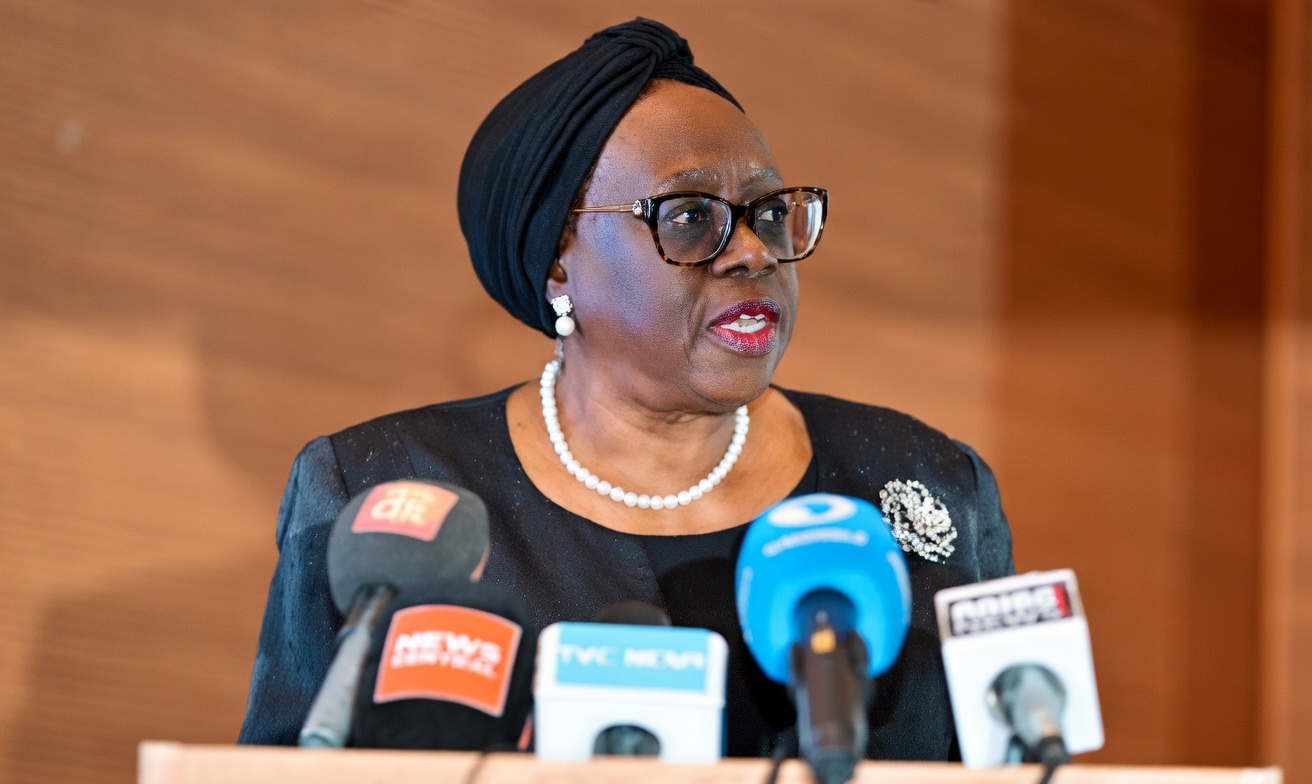
The Chief Justice of Nigeria (CJN), Justice Kudirat Kekere-Ekun, yesterday read the riot act to judicial officers, politicians, lawyers and other stakeholders, warning against turning the courts into political battlegrounds through intimidation, misinformation, conflicting orders and abuse of judicial processes.
The CJN declared that election petitions must be decided strictly on the strength of evidence and applicable laws, rather than political pressure, public sentiment or the popularity of candidates, insisting that the judiciary would not tolerate attempts to undermine its independence or manipulate judicial proceedings.
Her warning came as 375 judicial officers were sworn in to serve on election petition tribunals across the country, while the Attorney-General of the Federation and Minister of Justice, Lateef Fagbemi, called for a special code of conduct for lawyers handling electoral disputes to curb professional misconduct.
At the same event, Chairman of the Independent National Electoral Commission (INEC), Prof. Joash Amupitan, raised the alarm over the growing threat of deepfake videos, artificial intelligence-generated disinformation and manipulated electronic evidence, warning that the technologies could complicate election petitions and threaten political stability. The officials spoke at the swearing-in ceremony and opening of a three-day capacity-building workshop for Justices of the Court of Appeal and election petition tribunal members, themed “Election Tribunal as a Tool for Political Stability,” at the Body of Benchers Complex, Abuja.
Addressing the newly inaugurated judicial officers, Kekere-Ekun warned politicians, political parties, public officials and social media users against attempts to influence judicial decisions through public statements, intimidation, deliberate misinformation and campaigns designed to undermine the credibility of the courts.
“The judicial process is not a continuation of the electoral campaign by other means,” she declared, stressing that the volume of public opinion or the popularity of a candidate could not substitute for credible evidence before a court of law.
The CJN maintained that election petitions must be determined on the basis of pleadings, evidence and the relevant provisions of the Constitution and electoral laws, warning influential persons against prejudging cases or making inflammatory statements capable of heightening political tension.
“Misinformation, intimidation and attempts to prejudice pending proceedings have no place in a society governed by the rule of law,” she said. Kekere-Ekun also expressed concern over the increasing use of social media to attack judicial officers and influence public perception of pending cases, urging media organisations to exercise restraint and professionalism in reporting judicial proceedings.
She condemned the filing of multiple suits and appeals on the same subject matter, the procurement of conflicting orders from courts of coordinate jurisdiction and the use of ex parte applications to secure tactical advantages in political disputes.
According to her, such practices “can bring the administration of justice into disrepute,” and legal practitioners must resist the temptation to turn the judicial process into “another instrument of political contest.”
The CJN reminded the tribunal members that their duty was not to determine the political preferences of Nigerians but to resolve disputes arising from elections in accordance with the law, irrespective of the personalities or political interests involved.
She urged them to remain “firm where firmness is required, patient where patience is necessary, and impartial in every circumstance,” stressing that public confidence in the judiciary would depend largely on their conduct and the integrity of their decisions.
In his remarks, Amupitan warned that the 2027 elections could expose tribunals to sophisticated forms of digital manipulation capable of distorting evidence, misleading voters and creating confusion over election results.
He said threats to electoral integrity had moved beyond ballot snatching and physical intimidation to the use of artificial intelligence to impersonate election officials, circulate fabricated announcements and manufacture false evidence of electoral malpractice.
The INEC chairman identified three major threats, including AI-generated messages falsely announcing the relocation or cancellation of polling units, deepfake audio and video recordings circulated during the statutory broadcast blackout before voting, and cloned videos of Returning Officers falsely declaring election results before collation had been concluded.
He warned that fabricated recordings could subsequently be presented before election tribunals as evidence of malpractice, while genuine recordings could be dismissed as artificial intelligence-generated materials.
Amupitan described the latter phenomenon as the “Liar’s Dividend,” saying it could make the authentication of electronic evidence increasingly difficult and undermine confidence in judicial decisions.
He urged tribunal members to apply rigorous evidential standards under Section 84 of the Evidence Act, including verification of digital provenance, proper forensic chains of custody and reliance on certified electoral records obtained from INEC.
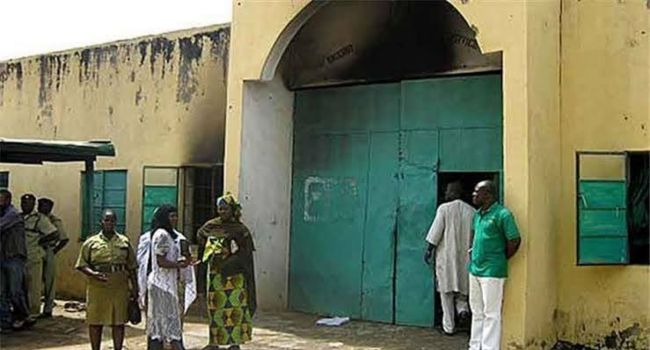
The Kogi state police command says two convicted inmates escaped from the Okene Correctional Centre on Sunday at about 10:30am.
According to report, Saliu Afusat, spokesperson of the Kogi police command, on Tuesday said that the command had received a report from the correctional centre and is collaborating with the Nigerian Correctional Service (NCoS) and other relevant security agencies to ensure the prompt rearrest of the escapees.
“The Kogi State Police Command confirms the escape of two convicted inmates from the Okene Correctional Centre on Sunday, 8th November 2026, at about 1030 hours,” the statement reads.
“Efforts to trace and apprehend the fleeing inmates are ongoing.”
Although Afusat did not disclose the identities of the escapees, reports indicate that a situation report from the Okene police division identified them as Samson David, convicted of theft, and Salvation Moro, convicted of armed robbery.
The two inmates were said to have escaped through the facility’s back fence, while their photographs were attached to the police situation report to aid their identification and facilitate their apprehension.
-
News2 years ago
CBN Debunks Fake Circular on New ₦5,000 and ₦10,000 Notes
-
 Opinion2 years ago
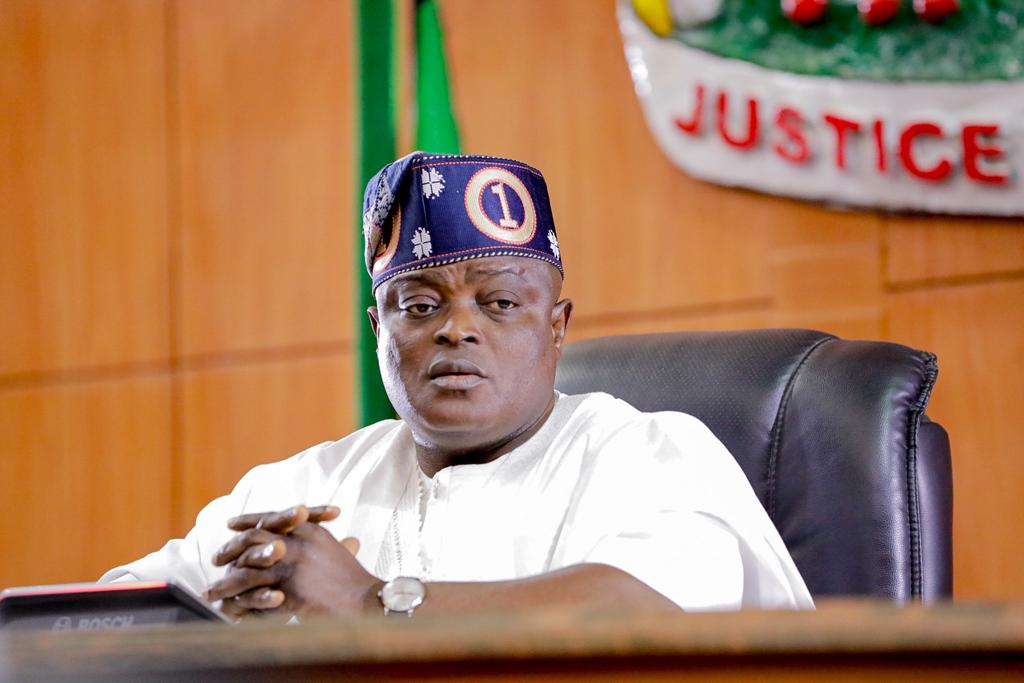
Championing the People’s Voice: Obasa’s Dedication to Grassroots Representation By Dave Agboola⁰
-
 Health & Wellness1 year ago
President Tinubu Directs Cut in Dialysis Cost from ₦50,000 to ₦12,000
-

 International News7 months ago
Indian Police Arrest Nigerian Over ₦290m Drug Haul
-

 Business8 months ago
Dangote Refinery Reduces Petrol Gantry Price To ₦1,200 Per Litre
-
 Business8 months ago
After Plea Bargain, Court Discharges Stella Oduah of ₦2.5bn Fraud
-
Business2 years ago
Dangote; We Did Not Fix ₦600/Litre Petrol Price
-
 Trending News1 year ago
NELFUND Disburses ₦86bn To 449,000 Beneficiaries