




Connect with us

Cover Stories

Protest; Women Come Out Half-Naked Over Incessant Killings In Ondo Community

Published

on

Spread the love


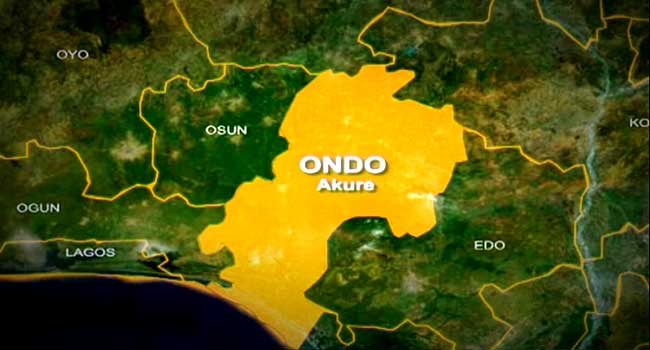
Some aggrieved women in the Uba-Oka Akoko community in Akoko South West Local Government Area of Ondo State have staged a peaceful protest to condemn the incessant killings by suspected Herdsmen in the area, calling on the government to salvage them from the invaders. 


Their clamour follows the recent murder of a farmer called Sunday Ayeni on his farm in the community.

The corpse of Ayeni was found on his farm, with machete wounds and his intestines exposed, indicating that he was brutally stabbed to death by his attackers.

The incident occurred just a few days after the deceased received monetary compensation for his farm, which was destroyed by cows allegedly belonging to herdsmen in the area.


A resident of the community who preferred anonymity revealed that Ayeni’s farm was destroyed by herdsmen last week. However, the situation was resolved by security agents and community elders, who intervened and facilitated the payment of an undisclosed amount of money as compensation to Ayeni by the herdsmen.

During the protest, the women, who were half-naked and without head ties, trekked to the palace of the traditional ruler of Oka Akoko, Oba Adebori Adeleye, chanting various solidarity songs.

The protesters also accuse the Herdsmen of raping women on their farmlands and destroying their crops.


Speaking on behalf of the protesting women, Abigail Ojo narrated their ordeal, stating that they had practically abandoned their farms due to fear of being attacked by the Herdsmen.

Ojo stated thus“We call on security agencies to help find lasting solutions to our problems. We are protesting to let the government know our plight.”

The Public Relations Officer of Ondo State Police Command, SP ‘Funmilayo Odunlami-Omisanya in her reaction to the development stated that police investigations have since commenced on the killings, expressing hope that the perpetrators would soon be apprehended and brought to justice.

Cover Stories

“Melody Hymns with Sean Polotee” Returns, Rekindling Sunday Mornings with Soulful Inspiration

Published

on

Spread the love

In a welcome return to the airwaves, “Melody Hymns with Sean Polotee” is back on Melody 107.7 FM, set to grace Sunday mornings once again from 9:00 AM to 10:00 AM. The show, known for its soul-stirring hymns and uplifting content, is hosted by Sean Polotee, a seasoned broadcast journalist, poet, and media personality.

Renowned for his charismatic on-air presence and deep connection with listeners, Polotee brings nearly two decades of media experience to the program. He is also the recently appointed Special Adviser on Media and Communications to the National Coalition of Apostles, Bishops, Archbishops, and Cardinals (NCABAC) — a role that further highlights his commitment to using media as a force for positive change.

“Melody Hymns” blends carefully curated gospel music with personal reflections and conversations that spark hope, resilience, and faith. Polotee frequently engages guests from various walks of life, offering listeners stories that resonate far beyond the studio walls.

Drawing on his background as a poet and storyteller, Polotee’s style is warm, engaging, and deeply human. His previous hosting credits include popular radio shows like “Maagbon” on Miliki 101.3 FM and the award-winning “Deflower Your Mind” on Jordan 105.5 FM — programs that showcased his ability to connect meaningfully with audiences.

Listeners can expect more than just music — “Melody Hymns” is a celebration of community, faith, and shared experience. It invites audiences to participate by sharing personal testimonies, song requests, and reflections, reinforcing the show’s mission to uplift and unite.

Whether you’re seeking peace, encouragement, or simply a beautiful start to your Sunday, “Melody Hymns with Sean Polotee” offers a refreshing hour of inspiration.

Tune in to Melody 107.7 FM every Sunday at 9:00 AM.

Continue Reading

Cover Stories

Singapore Hangs Third Drug Trafficker In A Week

Published

on

Spread the love

A hangman’s noose.


Singapore on Friday hanged a 55-year-old man for drug trafficking, its narcotics enforcement agency said, the city-state’s third execution in a week as the United Nations called for a halt.


The UN and rights groups say capital punishment has no proven deterrent effect and have called for it to be abolished, but Singaporean officials insist it has helped make the country one of Asia’s safest.


Singapore’s Central Narcotics Bureau (CNB) said the death sentence was carried out for Rosman Abdullah, convicted of trafficking 57.43 grams (2.03 ounces) of heroin.


Under the country’s tough drug laws, the death penalty kicks in for any amount above a 15-gram threshold.


The hanging at Changi prison followed the November 15 execution of two men — a 39-year-old Malaysian and a 53-year-old Singaporean — also for drug trafficking.


“Rosman was accorded full due process under the law, and was represented by legal counsel throughout the process,” CNB said in a statement.


The Singaporean, first sentenced in July 2010, had exhausted his appeals, including one for clemency from the president.


His execution was the eighth this year in the city-state, seven for drug trafficking and one for murder.


According to an AFP tally, Singapore has hanged 24 people since it resumed carrying out the death penalty in March 2022 after a two-year halt during the Covid-19 pandemic.

The UN on Thursday reiterated its call on Singapore to review its position on capital punishment.


“The use of the death penalty for drug-related offences is incompatible with international human rights law. There is increasing evidence showing the ineffectiveness of capital punishment as a deterrent,” UN Human Rights spokesperson Ravina Shamdasani said in a statement.


The CNB, however, said capital punishment was “imposed only for the most serious crimes, such as the trafficking of significant quantities of drugs which cause very serious harm” to users and society at large.


AFP

Continue Reading

Cover Stories

South Africa Central Bank Cuts Interest Rate to 7.75%

Published

on

Spread the love
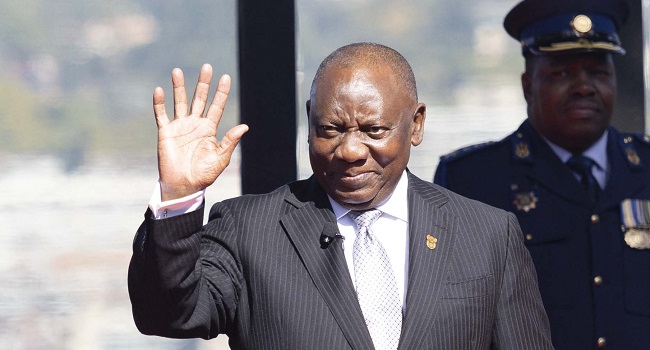
Cyril Ramaphosa waves as he prepares to take the oath of office for his second term as South African President during Ramaphosa’s inauguration ceremony at the Union Buildings in Pretoria on June 19, 2024. (Photo by Kim LUDBROOK / POOL / AFP)


South Africa’s central bank on Thursday cut its benchmark interest rate by 25 basis points to 7.75 percent, adopting caution amid mixed data and global uncertainty.


It follows a fall in inflation in October to 2.8 percent, its lowest level since June 2020 during the Covid-19 pandemic.


Inflation appears well contained in the near term, South Africa’s Reserve Bank governor Lesetja Kganyago told reporters.


However it was “highly uncertain” in the medium term given the possibility of higher costs of food, electricity and water, as well as insurance premiums and wage settlements.


While recent manufacturing data was subdued, mining was strong and unemployment had shifted lower to 32.1 percent in the third quarter from 33.5 percent in the previous quarter, Kganyago said.


South Africa’s economic growth could be higher from next year, given ongoing structural reforms including in the electricity and transport networks, he said.


“I think 25 basis points is cautious, and the environment is uncertain, and it calls for caution,” he said.


“Global interest rates could well shift higher again and the recent rand depreciation demonstrate how rapidly changes in the global environment can affect South Africa.”


Kganyago cited higher than expected inflation in the United States and Britain.


Another contributing factor was uncertainty about the policies that the incoming government of Donald Trump would adopt.


Generally there is “a rise about protectionism around the globe, and there is a concern that the protectionism that we are seeing could impact global trade, and global trade is the life blood of the global economy”,” Kganyago said.


AFP

Continue Reading

Trending

Copyright © 2026 TheColumn NG