
News
Sanusi Queries El-Rufai’s Prolonged Detention


Emir of Kano Muhammadu Sanusi II has questioned the fairness of Nigeria’s anti-corruption fight, saying political connections can influence how cases are investigated and prosecuted.
He also shared his thoughts on the prosecution and continued detention of Nasir el-Rufai, former governor of Kaduna state.
Sanusi spoke on Monday in an interview on the sidelines of the launch of ‘The Unexplained Wealth Trilogy’ by Wahab Shittu, a senior advocate of Nigeria (SAN), in Lagos.
The emir said having laws to tackle corruption are not enough, noting that existing legislation must also be properly implemented by institutions responsible for investigation, prosecution and adjudication.
“The laws are one thing. Even the existing laws we have need to be implemented better. You have institutions that are supposed to identify corrupt people and prosecute them. You have courts that are supposed to do it,” Sanusi said.
He alleged that some corruption cases have been dropped because the suspects had political connections or belonged to the “right political environment”.
“We have seen in this country people who are facing corruption charges who basically just get those charges dropped because they belong to the right political environment or have the right political support,” he said.
Sanusi said the handling of some cases had also raised questions about whether the anti-corruption campaign is being pursued consistently or used against political opponents.
“We have legal processes where people are questioning if, in fact, it is a fight against corruption or political persecution,” he said.
The emir cited the case involving el-Rufai who is facing alleged corruption and money laundering-related charges.
“An example is my brother, Nasir el-Rufai, who’s been denied bail. He’s been in detention for seven months, not having been convicted for anything, using the courts,” he stated.
Sanusi said cases such as el-Rufai’s could make the public question the motives behind anti-corruption proceedings.
“So people begin to wonder, is this really a fight against corruption, or is it a political battle?” he asked.
Sanusi added that political officeholders and judicial institutions must ensure that laws are applied for the purposes for which they were enacted.
“Now, until the politicians and those who control political office and the judiciary decide that they are going to use these laws for the purpose for which they are set up, we’re not going to get anywhere,” he said.
He added that reviewing anti-corruption laws is useful but argued that equal attention should be paid to the institutions responsible for enforcing them.
“So the laws are one thing, and I think it’s a good thing that we’re looking at the laws, but we also have to look at the institutions that are involved in the structure of the law, and that is only where you make progress,” Sanusi said.
“Otherwise, anyone knows that you can get away with anything if you have the right political connections.”
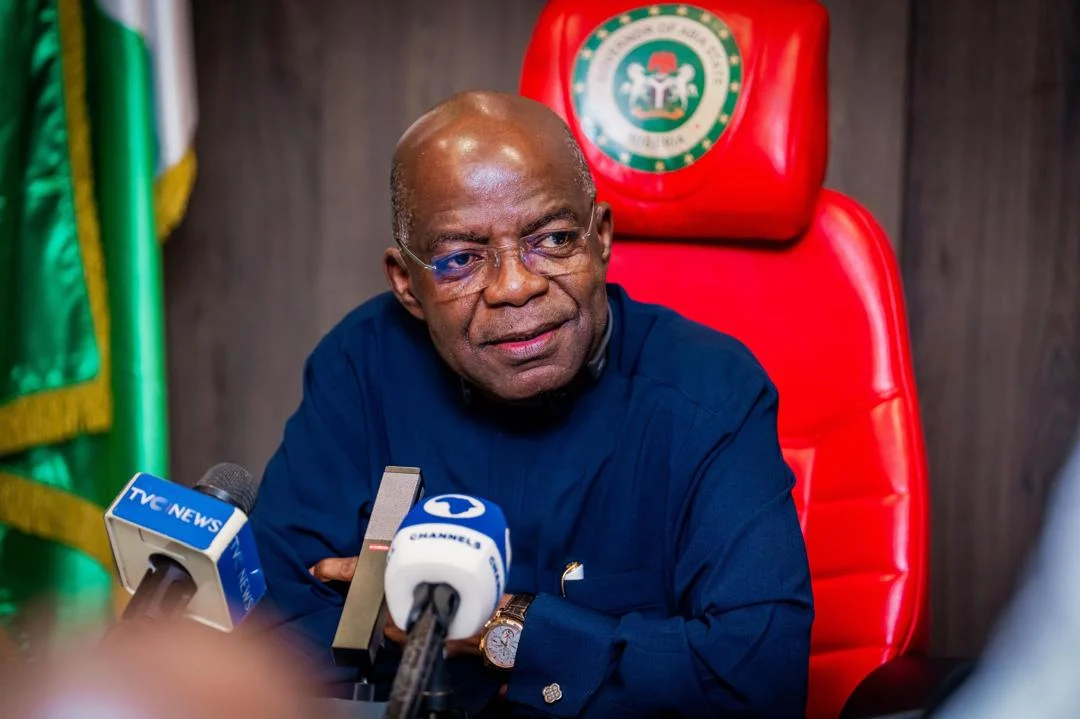
Abia State Governor, Dr Alex Otti, on Monday signed four laws strengthening legal provisions against cultism, rape, sexual assault, kidnapping, child exploitation and vandalism of public infrastructure.
The new legislation also provides for a sex offenders’ register, addresses offences involving electronic records and digital assets, and introduces restorative justice mechanisms to make offenders accountable for harm caused by their actions.
Otti assented to the four bills passed by the eighth Abia State House of Assembly at a ceremony held at the Michael Okpara Auditorium, Umuahia.
The laws are the Abia State Criminal Law No. 7 of 2026, the Administration of Criminal Justice Law No. 6 of 2026, the Restorative Justice Law No. 8 of 2026 and the Abia State University Amendment No. 2 Law No. 4 of 2026.
Explaining the crime-fighting provisions, the Attorney-General and Commissioner for Justice, Mr Ikechukwu Uwanna, said the new Criminal Law strengthened measures against unlawful societies and secret cults by addressing membership, sponsorship, meetings and the management of such groups.
He said the provisions extended beyond educational institutions to communities, widening the scope of the state’s response to cult-related activities.
The law also provides sanctions for vandalising government infrastructure and dealing in stolen public assets, while strengthening legal protections against rape, sexual assault, sexual harassment and spousal violence.
Uwanna said the legislation recognised both male and female rape victims and provided for a sex offenders’ register to promote accountability.
Other provisions target kidnapping, child exploitation, corporate responsibility and offences involving electronic records and digital assets.
The Attorney-General said the reforms were informed by public concerns over cult violence, kidnapping, the destruction of public facilities, sexual violence and delays in criminal proceedings.
Speaking during the signing ceremony, Otti said his administration was determined to ensure strict compliance with the new laws, noting that gaps in existing legislation had sometimes constrained the enforcement of government policies.
The governor lamented that some existing laws did not prescribe sufficiently stringent consequences for certain offences, citing illicit drug consumption as an example.
He argued that demand for illicit drugs sustained their supply, insisting that the law should adequately address the role of consumers in the drug trade.
Otti, however, acknowledged that enacting laws was only part of the task, assuring residents that his administration had the political will to enforce them.
Earlier, the Speaker of the House of Assembly, Rt. Hon. Emmanuel Emeruwa, said the legislature had followed the necessary procedures in passing the bills, describing them as important measures for strengthening governance and improving the administration of justice.
Uwanna explained that the three justice-related laws addressed criminal conduct, procedures for handling criminal cases and mechanisms for repairing harm caused by crime.
He said the broader sentencing options provided under the Criminal Law would allow for restitution where appropriate, enabling offenders to make amends for the consequences of their actions.
The Attorney-General also disclosed that the government planned to translate the new laws into Igbo to make their provisions more accessible to residents.
Abia varsity campus relocation
On the Abia State University Amendment Law, Otti said the relocation of the Umuahia campus to the institution’s main campus at Uturu was intended to reduce administrative costs and enable students to benefit from infrastructure and other investments at the main campus.
The governor commended the eighth House of Assembly, members of the judiciary and other stakeholders for their contributions to the legislative process.

The Adamawa State Police Command has warned residents against cyberbullying, blackmail and the non-consensual sharing of nude images and private videos on social media, describing such acts as criminal offences.
The Command said the unauthorised posting, forwarding or distribution of nude photographs, sex videos and other private images of individuals violates the law and could attract prosecution.
In a statement issued by the command’s Public Relations Officer,u Suleiman Yahaya Nguroje, said police noted that, the Command had observed with concern the increasing cases of cyberbullying, blackmail and the circulation of private images on social media.
Nguroje explained that the sharing of explicit content without the consent of the individuals involved was punishable under the Cybercrimes (Prohibition, Prevention, etc.) Act, 2015, as amended, and other applicable laws.
He said the Commissioner of Police in the state, CP Kabir Umar Hassan, had directed Divisional Police Officers, Area Commanders and tactical teams to arrest and prosecute anyone found engaging in cyberbullying, sextortion or the unauthorised distribution of explicit content.
According to the statement, the directive is part of efforts to protect residents from online harassment, blackmail and violations of their privacy.
The Command also urged parents and guardians to monitor their children’s online activities and guide them on responsible social media use to prevent them from becoming victims or perpetrators of cyber-related offences.
It further encouraged victims of cyberbullying, sextortion and the unauthorised sharing of private images to report such incidents to the nearest police station or contact the Command through its emergency lines.
The police assured residents that the Command would not tolerate any form of online harassment or invasion of privacy and urged members of the public to cooperate with security agencies in addressing the menace.
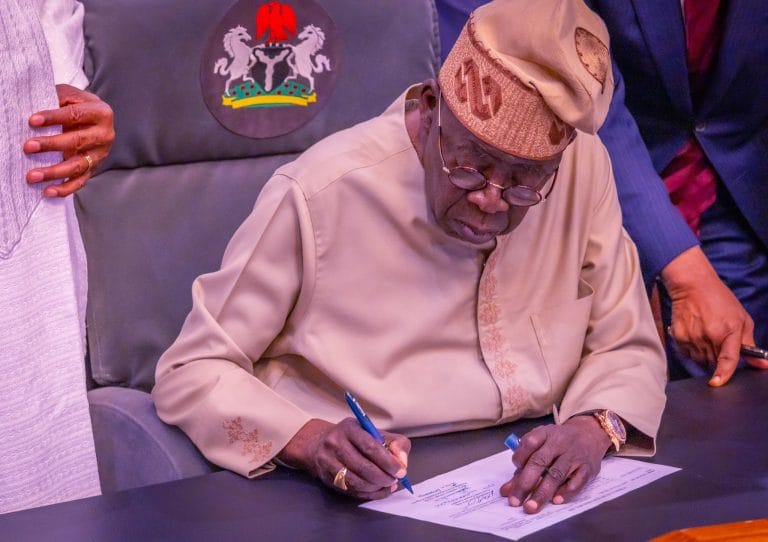
President Bola Tinubu has approved 18-month tenure extensions for Sylvester Nwakuche, controller-general of the Nigerian Correctional Service (NCS) and Kemi Nandap, comptroller-general of the Nigeria Immigration Service (NIS).
In a statement issued on Monday, Bayo Onanuga, special adviser on information and strategy to the president, said Nwakuche’s tenure would now end on May 26, 2028, while Nandap’s would end on June 30, 2028.
According to Onanuga, the approval followed a recommendation by Olubunmi Tunji-Ojo, minister of interior.
He said the extension would address a succession gap in both services and give their boards enough time to appoint successors.
“President Tinubu commended Nwakuche and Nandap for the reforms achieved under their leadership and charged them to consolidate these gains,” the statement reads.
Tinubu nominated Nwakuche as controller-general of the NCS in December 2024, and the senate confirmed his appointment in March 2025.
The president also nominated Nandap as comptroller-general of the NIS on February 21, 2024. The senate confirmed her appointment on March 1, 2024.
The NCS Act 2019 provides for the appointment of a controller-general to head the agency, with the appointment subject to senate confirmation.
The law stipulates a single five-year term for the office, subject to the applicable retirement limits.
Similarly, the Immigration Act, 2015, provides for the appointment of the comptroller-general of the NIS by the president on the recommendation of the Nigeria Immigration Service Board, but subject to senate confirmation.
However, the law does not stipulate a fixed term of office for the comptroller-general.
-
 Health & Wellness1 year ago
President Tinubu Directs Cut in Dialysis Cost from ₦50,000 to ₦12,000
-
News2 years ago
CBN Debunks Fake Circular on New ₦5,000 and ₦10,000 Notes
-

 Business7 months ago
Dangote Refinery Reduces Petrol Gantry Price To ₦1,200 Per Litre
-

 International News7 months ago
Indian Police Arrest Nigerian Over ₦290m Drug Haul
-
 Business7 months ago
After Plea Bargain, Court Discharges Stella Oduah of ₦2.5bn Fraud
-
Business2 years ago
Dangote; We Did Not Fix ₦600/Litre Petrol Price
-
 Trending News1 year ago
NELFUND Disburses ₦86bn To 449,000 Beneficiaries
-
 Opinion2 years ago
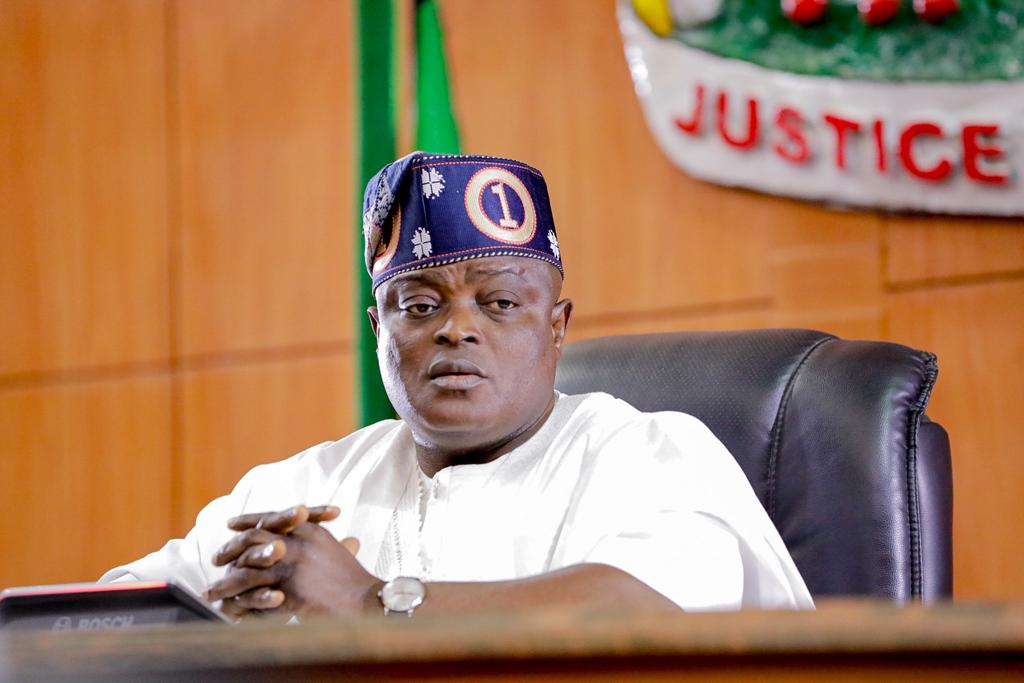
Championing the People’s Voice: Obasa’s Dedication to Grassroots Representation By Dave Agboola⁰