
News
Soldier, Pregnant Woman Killed, 15 Abducted In Taraba


Bandits on Tuesday night killed a soldier, a hunter and a pregnant woman at Sarkin Yamma village, near the Jeb-Jeb area of Karim-Lamido Local Government Area of Taraba State.
The attackers also shot and wounded another soldier and abducted several residents in the area.
Report says the bandits, armed with sophisticated weapons, launched the attacks 11 days after a deadly assault on Binnari town, where more than 60 people, including women and children, were reportedly killed.
The attackers also invaded Ruwan Zafi village, near Sarkin Yamma, and abducted 15 people, including women and children.
l
A community leader in the area, Tanko Bobbo Andami, was quoted in the report saying the attackers invaded the communities on Tuesday night, killing a soldier, a hunter and a pregnant woman and injuring another soldier.
He said five people were rescued after soldiers and local hunters engaged the attackers in a gun battle, forcing them to flee into the forest with some of their victims.
Andami said about 15 people were still in captivity, adding that the latest attacks had further heightened insecurity in Karim-Lamido.
“Before the attacks in Binnari town and the latest incident, we had called on the government to secure Karim-Lamido before bandits took over the area. This is where we are now,” he said.
“We still appeal to the Taraba State Government and the Federal Government to pay special attention to the area and provide adequate security to secure Karim-Lamido Local Government,” he added.
Karim-Lamido has long been a flashpoint of communal violence in Taraba State. This year, the area has witnessed several violent clashes between ethnic groups, as well as attacks by gunmen, resulting in loss of lives and destruction of property.
Its strategic location at the intersection of four states, coupled with difficult terrain and poor accessibility, makes the area vulnerable to infiltration by criminal elements who exploit jurisdictional boundaries to evade security operations.
The latest attack on Binnari, which occurred on October 23, 2026, claimed about 60 lives. The incident happened as villagers gathered at the market to buy and sell goods shortly after Friday prayers, when armed men suddenly opened fire on the crowd.
Although the state government has declared Karim-Lamido Local Government Area an area of particular security concern, residents said the designation must be backed by adequate deployment of security personnel to prevent further attacks.
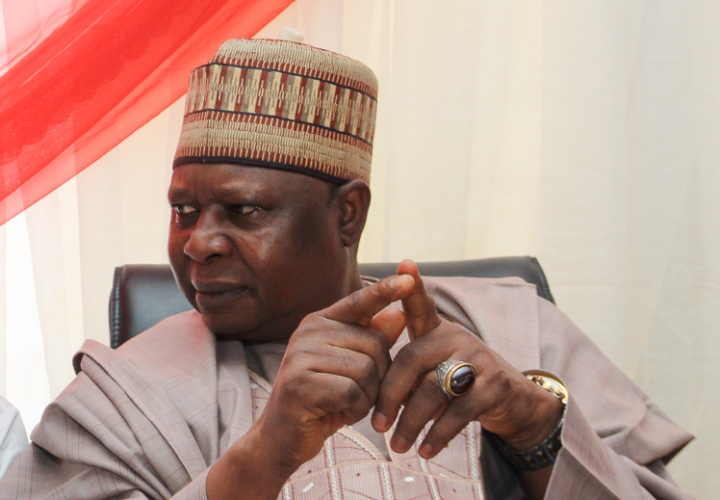
The court of appeal in Abuja has dismissed an appeal seeking to compel the Independent National Electoral Commission (INE) to recognise the Kabiru Turaki-led interim national working committee (NWC) of the Peoples Democratic Party (PDP).
A three-member panel of the appellate court dismissed the appeal on Wednesday, upholding the judgement of the federal high court in Abuja delivered in July 2026.
The panel was presided over by Ugochukwu Ogakwu, with Laja Balogun and Ruquayat Oremei Ayoola as the other members.
The appeal was filed by the Adolphus Wabara-led board of trustees (BoT) of the PDP faction.
In July, the federal high court in Abuja dismissed a suit seeking to compel INEC to recognise the Turaki-led interim NWC of the PDP.
The judgement was delivered by Salim Ibrahim, the presiding judge.
The suit, marked FHC/ABJ/CS/1159/2026, was filed by Wabara, former senate president; Muazu Babangida Aliyu, former governor of Niger state; Jerry Gana, former minister of information; and Olabode George, former deputy national chairman of the PDP.
Other plaintiffs are Maryam Ciroma, former minister of women affairs; Zainab Maina, former minister of women affairs and social development; Dame Esther Uduehi, a member of PDP BoT; and the PDP itself.
INEC was the sole defendant in the case.
The plaintiffs sought an order directing the INEC to publish on its website the composition of the party’s interim NWC led by Turaki, as forwarded to the commission by the national executive committee (NEC).
They asked the court to determine whether, by virtue of the provisions of Article 32 of the PDP constitution, INEC was obligated to recognise the interim NWC as forwarded by the NEC.
Reacting to the court of appeal judgement, the Turaki-led PDP faction said it had instructed its lawyers to approach the supreme court to seek justice.
In a statement signed by Ini Ememobong, the faction’s spokesperson, the Turaki-led PDP said the party must remain an opposition party and not become an “appendage” of the ruling All Progressives Congress (APC).
“While we respect the judgment of the court, we are determined to take our quest for justice anchored on truth to the apex court in the land. It is our belief that no matter how deep the truth is buried, if those seeking it are persistent in digging, it will one day resurface,” the statement reads
“We have instructed our lawyers to immediately file an appeal before the Supreme Court, in the hope that justice will eventually be done.”
International News
UN Calls For Violence-Free 2027 Nigeria General Election As INEC Discovers 1.27m Invalid Voters

Ahead of next year’s general elections, the United Nations has demanded violence-free polls, warning the Nigerian electorate against allowing the elections to become sources of violence and instability.
The UN Special Representative of the Secretary-General for West Africa and the Sahel, Leonardo Santos Simão, made the appeal during a courtesy visit to the management of the Independent National Electoral Commission (INEC) in Abuja on Wednesday. He also urged Nigerians to see the election as a democratic process to promote peace, national cohesion and development.
Simão emphasised that the UN recognised the enormous responsibility facing INEC, particularly amid the security challenges confronting Nigeria and other countries in the West African sub-region.
Announcing that the UN would maintain a presence during the electoral process to encourage positive conduct and support an atmosphere conducive to peaceful participation, he said: “We are here, pleased to give you moral support, that you are not alone in facing this mammoth task.”
Simão clarified that the UN would not participate as an election observer because it had no mandate to undertake election observation.
He stressed, however, that the outcome of Nigeria’s 2027 elections would have implications beyond its borders, particularly for democratic stability, regional integration and peace in West Africa.
According to him, peaceful elections in Nigeria could encourage other countries in the region, while instability could have wider consequences.
Earlier, INEC Chairman Joash Amupitan had disclosed that its technology-enabled verification exercise had identified about 1.5 million questionable voter registration records, with more than 1.27 million confirmed invalid and removed from the National Register of Voters.
Amupitan insisted that the Commission’s efforts to sanitise the National Register of Voters and address identified irregularities that could undermine the credibility of the electoral process had led to the identification of about 1.5 million questionable registration records.
He further explained that more than 1.27 million records had been confirmed invalid and removed from the database as part of preparations for the 2027 general elections.

The Senate has passed for second reading a bill seeking to make it compulsory for public and private hospitals across Nigeria to provide emergency medical treatment, prescribing up to six months’ imprisonment for facilities and individuals who violate its provisions.
The proposed legislation also prescribes a fine of up to ₦300,000, imprisonment for six months, or both, for anyone convicted of denying emergency medical treatment.
The bill, sponsored by Senator Abdulaziz Musa Yar’Adua (APC, Katsina Central), seeks to amend the National Health Act, 2014, to establish mandatory emergency medical treatment standards and referral protocols in healthcare facilities.
Titled, “A Bill for an Act to Amend the National Health Act, 2014 to Provide for Emergency Medical Treatment Standards and Referral Protocols in Healthcare Facilities; and for Related Matters, 2026” (SB. 759), it was referred to the Senate Committee on Health (Secondary and Tertiary) for further legislative action, with a directive to report back in four weeks.
Under the proposed amendment, no healthcare provider, health worker or medical establishment would be allowed to deny anyone emergency medical treatment for any reason.
It also requires healthcare professionals to commence life-saving interventions, including cardiopulmonary resuscitation, airway management and bleeding control, immediately after identifying a life-threatening condition.
The bill proposes that hospitals conduct triage and initial assessments within 15 minutes of a patient’s arrival, while basic stabilisation measures, including oxygen administration, intravenous fluids, pain management and initial diagnostic procedures, must begin within 30 minutes.
For patients requiring admission, hospital beds are to be assigned within two hours, subject to availability.
Where beds are unavailable, healthcare facilities would be required to commence immediate stabilisation and arrange the patient’s transfer to another hospital.
The proposed legislation further requires hospitals to initiate referral arrangements within two hours and complete the transfer process within three hours of a patient’s arrival, except where circumstances beyond their control prevent compliance.
It also mandates hospitals to dispatch an ambulance or arrange alternative transportation within 30 minutes of communicating a referral decision.
Beyond emergency response timelines, the bill seeks to introduce mandatory emergency care training and certification for healthcare workers, with recertification intervals not exceeding 18 months.
It also mandates the Medical and Dental Council of Nigeria and the Nursing and Midwifery Council of Nigeria to jointly develop a standardised national emergency care curriculum.
However, healthcare practitioners would be protected from penalties where resource constraints prevent compliance, provided the challenges are properly documented and prescribed referral procedures are followed.
Leading debate on the bill, Yar’Adua said the proposed amendment would address critical gaps in Nigeria’s healthcare system by establishing enforceable standards for emergency treatment and referral procedures.
He said it would guarantee timely and life-saving medical attention to Nigerians during emergencies, irrespective of their social status, wealth, influence or location.
According to him, preventable deaths persist because many healthcare facilities lack clearly defined and enforceable timelines for patient assessment, stabilisation and treatment.
He cited Nigeria’s contribution to approximately 10 per cent of global maternal deaths, attributing part of the problem to delays in accessing emergency obstetric care.
Yar’Adua said the proposed legislation would strengthen coordination among primary, secondary and tertiary healthcare facilities, while ensuring that patients are stabilised before being referred to other hospitals.
He added that the bill would protect healthcare workers acting in good faith within documented resource limitations while ensuring accountability for wilful negligence.
The senator said the proposed amendment was consistent with international practices, citing Ghana, South Africa, Kenya, the United Kingdom and the United States.
Supporting the bill, the Senate Whip, Senator Mohammed Monguno (APC, Borno North), said it would address deaths arising from road accidents and maternal emergencies.
He lamented that some healthcare providers neglected emergency patients, resulting in avoidable deaths, and said the proposed amendment would introduce criminal liability for such negligence.
Monguno said the legislation would address gaps in the existing National Health Act and reinforce government’s responsibility to protect the welfare of citizens.
Similarly, Senator Diket Plang (Plateau Central) said the bill would improve emergency admissions and establish appropriate referral procedures across different levels of healthcare delivery.
He noted that rural communities particularly needed the intervention because childbirth complications often required urgent referrals from primary healthcare centres to higher-level facilities.
Plang stressed that patients must be stabilised before transportation, adding that the proposed provisions would help prevent avoidable deaths during emergency transfers.
However, Senator Francis Faduyile (APC, Ondo South) cautioned against criminalising healthcare professionals without first addressing inadequate facilities, personnel shortages and other systemic challenges.
He said many hospitals lacked sufficient doctors, oxygen cylinders and emergency equipment, making it difficult for healthcare workers to meet the proposed timelines.
Faduyile questioned how a doctor attending to several patients simultaneously could be held criminally responsible when another emergency case arrived.
He also raised concerns about inadequate funding, noting that private healthcare providers frequently attended to emergency patients without receiving reimbursement for the services.
The senator argued that Nigeria’s healthcare challenges required a comprehensive review of the National Health Act rather than concentrating solely on sanctions against healthcare professionals.
The Senate Minority Leader, Senator Abba Moro (PDP, Benue South), said the bill had exposed several gaps requiring comprehensive legislative attention.
He expressed confidence that the committee stage and proposed public hearing would provide opportunities for healthcare professionals and other stakeholders to make contributions.
Moro, who cited experiences in Mexico where emergency responders and ambulances reportedly attended promptly to accident victims, condemned the practice of hospitals demanding police reports before treating emergency patients.
He stressed that saving lives should remain the priority in emergency situations.
In his remarks, the President of the Senate, Senator Godswill Akpabio, said the debate had highlighted important challenges requiring attention across the country’s healthcare system.
Akpabio urged lawmakers to support the bill’s progression, noting that identified shortcomings could be addressed through further legislative deliberations and consultations with relevant stakeholders.
He stressed that the Federal Government, state governments and local government authorities must work together to provide the facilities and resources required for effective healthcare delivery.
-
News2 years ago
CBN Debunks Fake Circular on New ₦5,000 and ₦10,000 Notes
-
 Health & Wellness1 year ago
President Tinubu Directs Cut in Dialysis Cost from ₦50,000 to ₦12,000
-
 Opinion2 years ago
Championing the People’s Voice: Obasa’s Dedication to Grassroots Representation By Dave Agboola⁰
-

 International News7 months ago
Indian Police Arrest Nigerian Over ₦290m Drug Haul
-

 Business7 months ago
Dangote Refinery Reduces Petrol Gantry Price To ₦1,200 Per Litre
-
 Business7 months ago
After Plea Bargain, Court Discharges Stella Oduah of ₦2.5bn Fraud
-
Business2 years ago
Dangote; We Did Not Fix ₦600/Litre Petrol Price
-
 Trending News1 year ago
NELFUND Disburses ₦86bn To 449,000 Beneficiaries