Connect with us

News

Ukraine Backs US Proposal For 30-Day Ceasefire In War With Russia

Published

on

Spread the love
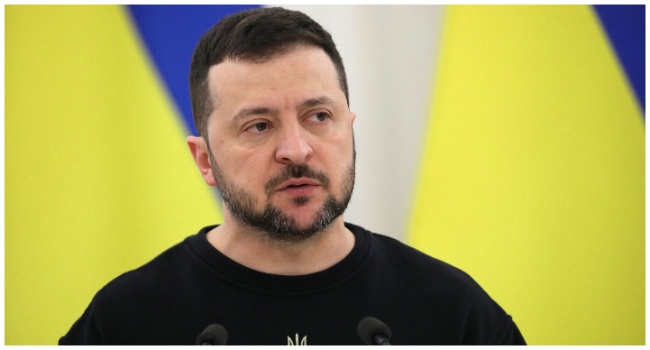
Ukraine's President Volodymyr Zelensky speaks during a joint press conference with Lithuania's President (not in picture) in Vilnius, Lithuania, on January 10, 2024. (Photo by PETRAS MALUKAS / AFP)
Ukraine’s President Volodymyr Zelensky. (Photo by PETRAS MALUKAS / AFP)


Ukraine endorsed an American proposal for a 30-day ceasefire and agreed to immediate negotiations with Russia in pivotal talks in Jeddah on Tuesday after three years of grinding war.

In the first high-level US-Ukraine meeting since President Volodymyr Zelensky’s White House dressing down, the Americans agreed to restore military aid and they pledged to conclude a deal on Ukrainian minerals “as soon as possible”, a joint statement said.

“Today we made an offer that the Ukrainians have accepted, which is to enter into a ceasefire and into immediate negotiations,” US Secretary of State Marco Rubio said.

“We’ll take this offer now to the Russians and we hope they’ll say yes to peace. The ball is now in their court,” he added.

The joint statement said that “Ukraine expressed readiness to accept the US proposal to enact an immediate, interim 30-day ceasefire, which can be extended by mutual agreement of the parties”.

The ceasefire is “subject to acceptance and concurrent implementation by the Russian Federation,” it added.

“The United States will communicate to Russia that Russian reciprocity is the key to achieving peace.”

National Security Advisor Mike Waltz said he would now speak to Russia about the proposal, adding it was now a question of “how” not “if” the war would end.

The talks in western Saudi Arabia took place after Ukraine launched its biggest direct attack on Moscow overnight, with hundreds of drones slamming into the capital and other areas, leaving three people dead.

The Ukrainians were hoping to restore the US military aid, intelligence sharing and access to satellite imagery that was cut off after Zelensky’s public row with President Donald Trump and Vice President JD Vance.

They entered the meeting with a proposal for a sea and sky ceasefire that had been cautiously welcomed by Rubio.

“We are ready to do everything to achieve peace,” the Ukrainian president’s chief of staff Andriy Yermak told reporters as he entered Tuesday’s meeting at a luxury hotel.

Kyiv said the “largest drone attack in history” was intended to push Russian President Vladimir Putin to agree to the aerial and naval ceasefire.

“This is an additional signal to Putin that he should also be interested in a ceasefire in the air,” said Andriy Kovalenko, a national security council official responsible for countering disinformation.


Minerals deal

Zelensky, who met Saudi Arabia’s de facto ruler in Jeddah on Monday, left the White House late last month without signing an agreement pushed by Trump that would give the US control over Ukrainian mineral resources.

Asked whether the overnight drone attack could derail peace talks, Kremlin spokesperson Dmitri Peskov said: “There are no (peace) negotiations yet, so there is nothing to disrupt here.”

He also declined earlier to comment on Russia’s stance on the proposed partial ceasefire.

“It is absolutely impossible to talk about positions yet,” he said.

“The Americans will find out only today, as they themselves say, from Ukraine to what extent Ukraine is ready for peace.”

For its part, Russia has escalated strikes on Ukrainian infrastructure, and said it had retaken 12 settlements in its Kursk region that Ukraine had captured in a bid for bargaining leverage.

Rubio seeks ‘concessions’

In the infamous White House meeting last month, Zelensky refused to bite his tongue in the face of criticism from Vice President JD Vance, with the Ukrainian leader questioning why his country should trust promises from Russia.

He has since written a repentant letter to Trump.

Rubio had signalled that the Trump administration would likely be pleased by the Ukrainian proposal of a partial ceasefire.

“I’m not saying that alone is enough, but it’s the kind of concession you would need to see in order to end the conflict,” he told reporters.

Rubio said he did not expect to be “drawing lines on a map” towards a final deal in the Jeddah meeting, but that he would bring ideas back to Russia.

Rubio and Waltz met last month with counterparts from Russia, also in Saudi Arabia, ending a freeze in high-level contacts imposed by former president Joe Biden after Russia defied Western warnings and launched its invasion.

Trump last week also threatened further sanctions against Russia to force it to the table as it carried out strikes on Ukraine.

But Trump’s abrupt shift in US policy — including suggesting Ukraine was to blame for the war, and recently siding with Russia at the UN — has stunned many allies.

Rubio said Monday that the United States would also object to “antagonistic” language on Russia from a forthcoming meeting of Group of Seven foreign ministers.


AFP

Continue Reading
Click to comment

Leave a Reply

Your email address will not be published. Required fields are marked *

International News

US, Iran in counter threats over Strait of Hormuz

Published

on

Spread the love

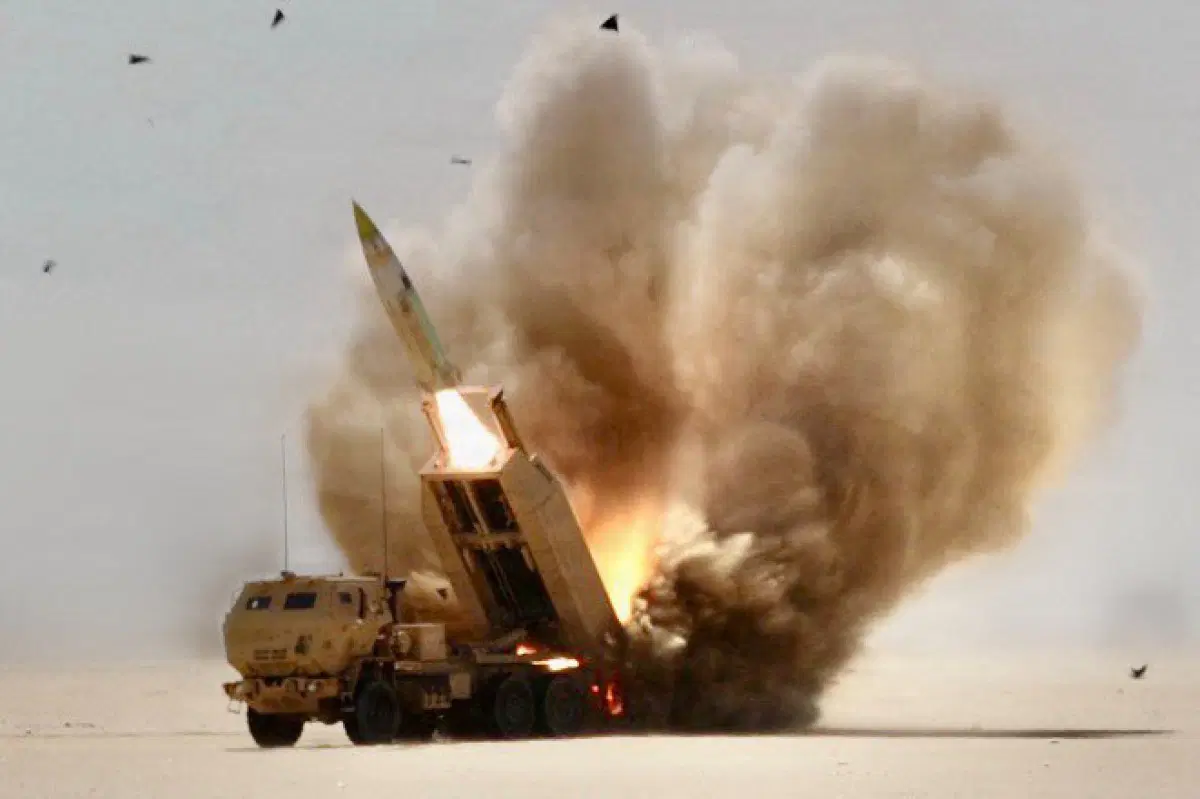
As the stand-off over the Strait of Hormuz continued, following its effective blockade by Iran, the US and the gulf state are trading threats of further destruction of energy and oil infrastructure across the Middle East with US President, Donald Trump, saying Tehran would face possible obliteration of its energy facilities if it failed to reopen the channel within 48 hours.


In a swift response, Iran threatened to irreversibly destroy US-linked energy sites across the Middle East if its power plants were targeted.

The 48 hours deadline expires today.

Trump’s ultimatum came hours after two Iranian missiles struck southern Israeli towns of Arad and Dimona, injuring more than 160 people in the most destructive attack since the war began.

This, the Israeli Prime Minister, Benjamin Netanyahu, vowed to retaliate “on all fronts”.

Iran had blocked the vital waterway, which carries a fifth of global crude oil trade in peacetime, as its key leverage in the war.

The standoff has sent crude oil prices soaring, with North Sea Brent crude now trading above $105 a barrel, as long-term consequences for the global economy become an acute concern.

The ultimatum, made just a day after the US president said he was considering winding down military operations after three weeks of war, came as the key oil passage remained effectively closed and thousands more US Marines headed to the Middle East.

Iran’s foreign minister, Abbas Araghchi, said Tehran had imposed restrictions only on vessels from countries involved in attacks against Iran, and would assist others that stayed out of the conflict.

Meanwhile, issuing the threat via  his Truth Social, Trump said that the US would “hit and obliterate various Iran power plants starting with the biggest one first if Tehran did not fully reopen the strait within 48 hours.”

Reinforcing Trump’s threat, US Treasury Secretary, Scott Bessent, said the US may need to “escalate” its attacks against Iran to be able to wind down the war.

Asked on NBC’s “Meet the Press” if Trump was winding down or escalating the war, Bessent said: “They’re not mutually exclusive. Sometimes you have to escalate to de-escalate.”

“This is the only language the Iranians understand,” he argued.

Iran threatens US-linked Gulf energy sites after

In response to Trump’s threat, Iran’s army said it would target energy and desalination infrastructure belonging to the US and the regime in the region, according to the Fars news agency.

In a post on X, speaker of the Iranian parliament, Mohammad-Bagher Ghalibaf,

said that vital infrastructure, energy and oil facilities throughout the region will be considered “legitimate targets” and would be destroyed in an irreversible manner.

“Immediately after the power plants and infrastructure in our country are targeted, the critical infrastructure, energy infrastructure, and oil facilities throughout the region will be considered legitimate targets and will be destroyed in an irreversible manner, and the price of oil will remain high for a long time,” Ghalibaf said.

Similarly, Iran’s Islamic Revolutionary Guard Corps (IRGC) intelligence unit in a post on X published by the IRGC affiliated Fars News Agency, said that it is thinking “beyond just the region”.

The post explained that this referred to a “red target bank” of technological and political targets in response to threats against power plants, suggesting that action could be taken “in less than 48 hours”.

The post also lists several achievements the IRGC claimed to have made during the war, including what it described as the “consolidation of power in the Strait,” and “control of global energy.”

To completely shut down the strait

Besides the threats of targeting energy infrastructure across the region,  Iran’s military also threatened to completely shut down the strategic Strait of Hormuz if Trump acts on threats to target the country’s power plants.

“If the United States’ threats regarding Iran’s power plants are carried out… the Strait of Hormuz will be completely closed, and it will not be reopened until our destroyed power plants are rebuilt,” the military’s operational command, Khatam Al-Anbiya, said in a statement carried by state TV.

The military said it would also strike Israel’s “power plants, energy, and information and communications technology (ICT) infrastructure”, along with power plants in regional countries hosting US bases and companies with US shareholders.

It added that the measures will be taken “to defend our country and the interests of our nation”.

Iran charges $2m from ships passing through Strait of Hormuz – Iranian MP

BBC quoted Iranian Member of Parliament, Alaeddin Boroujrrdi, as saying on state TV that some of the ships that pass through the Strait of Hormuz were being charged “ a $2 (£1.5) million fee” by Iran.

He said that a “new governing regime” was being imposed in the Strait claiming that “war has costs”. According to him, the closure of the Strait shows the “authority and right that the Islamic Republic of Iran possesses”.

Iran’s deadly strikes on southern Israel injures 160

Meanwhile, retaliating against Israel’s strike on its Natanz nuclear facility, Iran struck southern Israel towns of Arad and Dimona, injuring more than 160 people in the most destructive attack since the war began. The Israel prime minister, Benjamin Netanyahu, vowed to retaliate “on all fronts”

The strikes, which slipped through Israel’s missile defence systems, tore open the facades of residential buildings and carved craters into the ground.

First responders said 84 people were injured in the town of Arad, 10 of them seriously. Hours earlier, 33 were wounded in nearby Dimona, where AFPTV footage showed a large hole gouged into the ground next to piles of rubble and twisted metal.

Dimona hosts a facility widely believed to be the site of the Middle East’s only nuclear arsenal, although Israel has never admitted to possessing nuclear weapons.

The Israeli army told Agence France-Presse there had been a direct missile hit on a building in Dimona, with casualties reported at multiple sites, including a 10-year-old boy in serious condition with shrapnel wounds.

Iran said the targeting of Dimona was retaliation for Israeli strikes on its Natanz nuclear facility, with the IRGC saying forces also targeted other southern Israeli towns as well as military sites in Kuwait and the UAE.

After the Natanz attack, the UN nuclear watchdog chief, Rafael Grossi, reiterated his call for “military restraint to avoid any risk of a nuclear accident”.

The Natanz facility hosts underground centrifuges used to enrich uranium for Iran’s disputed nuclear programme; it sustained damage in the June 2025 war.

The Israeli military denied it was behind the Natanz strike, but said it had struck a facility at a Tehran university that it claimed was being used to develop nuclear weapon components for Iran’s ballistic missile programme.

Attacks on nuclear sites create escalating threat to public health, WHO chief warns

The Iran war has reached a “perilous stage” as both sides target nuclear facilities, the Director-General of the World Health Organisation, Tedros Adhanom Ghebreyesus, has warned.

Ghebreyesus cited reports about Israel striking the Natanz enrichment complex in Iran, and retaliatory Iranian attacks on the Israeli city of Dimona, where a nuclear facility is located.

Ghebreyesus said the International Atomic Energy Agency was looking into both attacks.

“No indications of abnormal or increased off-site radiation levels have been reported,” he said in a post on X.

But he added: “Attacks targeting nuclear sites create an escalating threat to public health and environmental safety.

“Since the outbreak of hostilities, WHO has provided critical training to its own staff and UN personnel across 13 countries to help them respond effectively to public health threats in the event of a nuclear incident.

“I urgently call on all parties to exercise maximum military restraint and avoid any actions that could trigger nuclear incidents.

“Peace is the best medicine.”

Continue Reading

News

Protest Rocks Egbeda/ Ona-Ara Over Akin Alabi’s 3rd Term Bid

Published

on

Spread the love

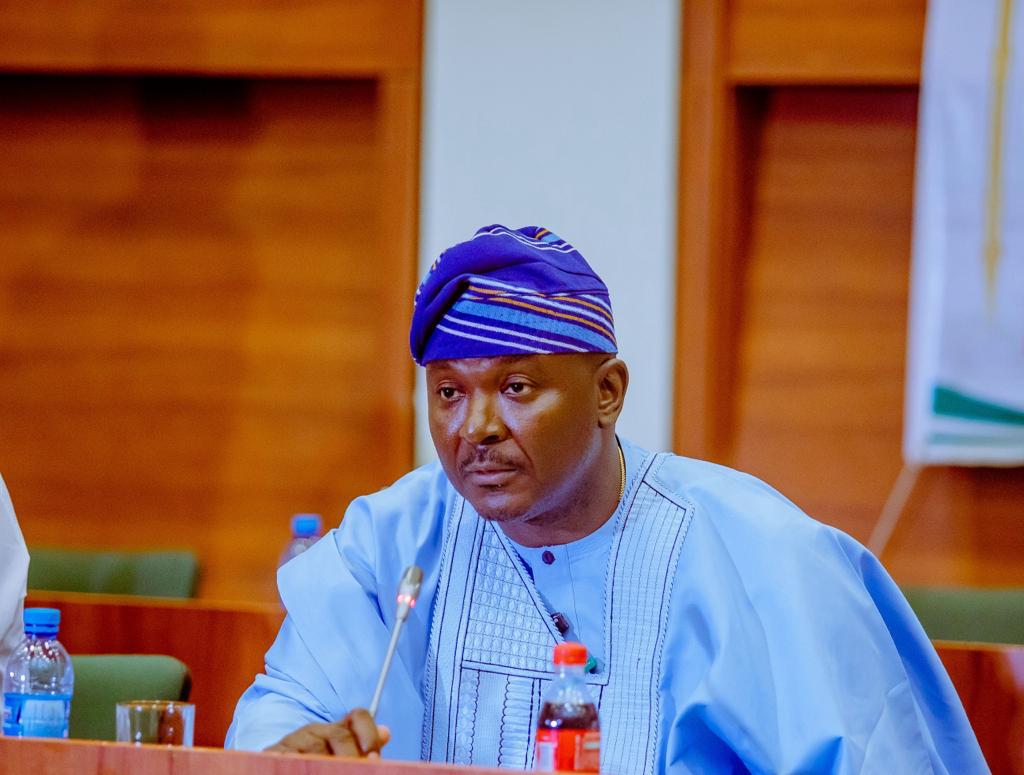
‎There is palpable tension in Egbeda/Ona-Ara Federal Constituency of Oyo State, as a group of youths staged a protest opposing what they described as an alleged move by Alabi to pursue a third term in the House of Representatives.


‎Alabi, an entrepreneur and author, is currently serving his second term in the 10th National Assembly, representing Egbeda/Ona-Ara. A ranking member of the House, he chairs the Committee on Works. He is also the founder of NairaBET and owner of Lekki United F.C.

‎According to a statement made available to the columng by a journalist Tosin Faleye, protesting youths opposed to his continued representation argued during a street procession, that after completing two terms — amounting to eight years — leadership should rotate to allow fresh representation and new ideas.

‎Placards displayed during the protest carried messages demanding accountability, transparency, and measurable development outcomes. Some demonstrators alleged that infrastructure projects and empowerment initiatives in parts of the constituency have not met expectations.

‎Several residents who spoke during the protest expressed concerns about what they described as limited grassroots engagement and insufficient visibility of constituency projects.

‎Allegations and Counterclaims

‎The development comes amid broader national conversations surrounding lawmakers’ constituency project allocations, particularly following the removal of petrol subsidy.

‎At a media and civil society roundtable organised by the International Press Centre (IPC) in Abuja, House spokesperson Akin Rotimi dismissed claims of increased constituency allocations as false, attributing the reports to political actors dissatisfied with previous electoral outcomes.

‎Separately, comments by Ayodele Asalu had alleged significant increases in funding for lawmakers’ projects. However, official representatives of the House have refuted those claims.

‎Governance Debate Intensifies

‎Critics within Egbeda/Ona-Ara maintain that performance should be assessed based on tangible impact, accessibility, and sustained community engagement. They argue that representation must translate into visible development and consistent communication with constituents.

‎Supporters of Alabi, however, point to his legislative experience and committee leadership as some of the bragging rights that qualifies him for another term of representation.

Continue Reading

News

Open Defecation: Ogun Orders Gas Stations, Eateries, Builds 200 Public Toilets

Published

on

Spread the love

The Ogun state government has directed gas stations , eateries and restaurants located within the state, to henceforth make their restrooms available to the general public for use without hindrance.

Speaking on the moves of government to address the worrisome issue of open defecation in the state, the Ogun State’s Commissioner for the Environment, Dr Ola Oresanya, said to nip the trend it in the bud, government has provided about 10 public toilets on the Ogun state end of the Lagos Ibadan Express road, specifically from Kahra, through Ibafo to Redeemed Church’s third gate.

Explaining that the public toilets are the labelled visible yellow buildings on the corridor, the Commissioner who made the disclosure while speaking on a program on Miliki FM, said, the 10 public toilets on the Ibafo corridor, are part of the newly built 100 public toilets out of 200 planned for the state.

He said the Karra through Ibafo to Sagamu interchange will eventually have 40 with 20 on each side of the road.

As part of efforts to curb open defecation in the state, the Commissioner said meetings have been held with owners of gas stations in the state to always make their toilet available for public use.The directive, he said also affects restaurant operators.In the bid to enforce the directive, which he said is backed by law, the Commissioner disclosed that three recalcitrant gas stations have already been shut for non compliance

Continue Reading

Trending

Copyright © 2026 TheColumn NG