
News
US Commends NDLEA’s “Magical Wins” As Marwa Seeks More Surport

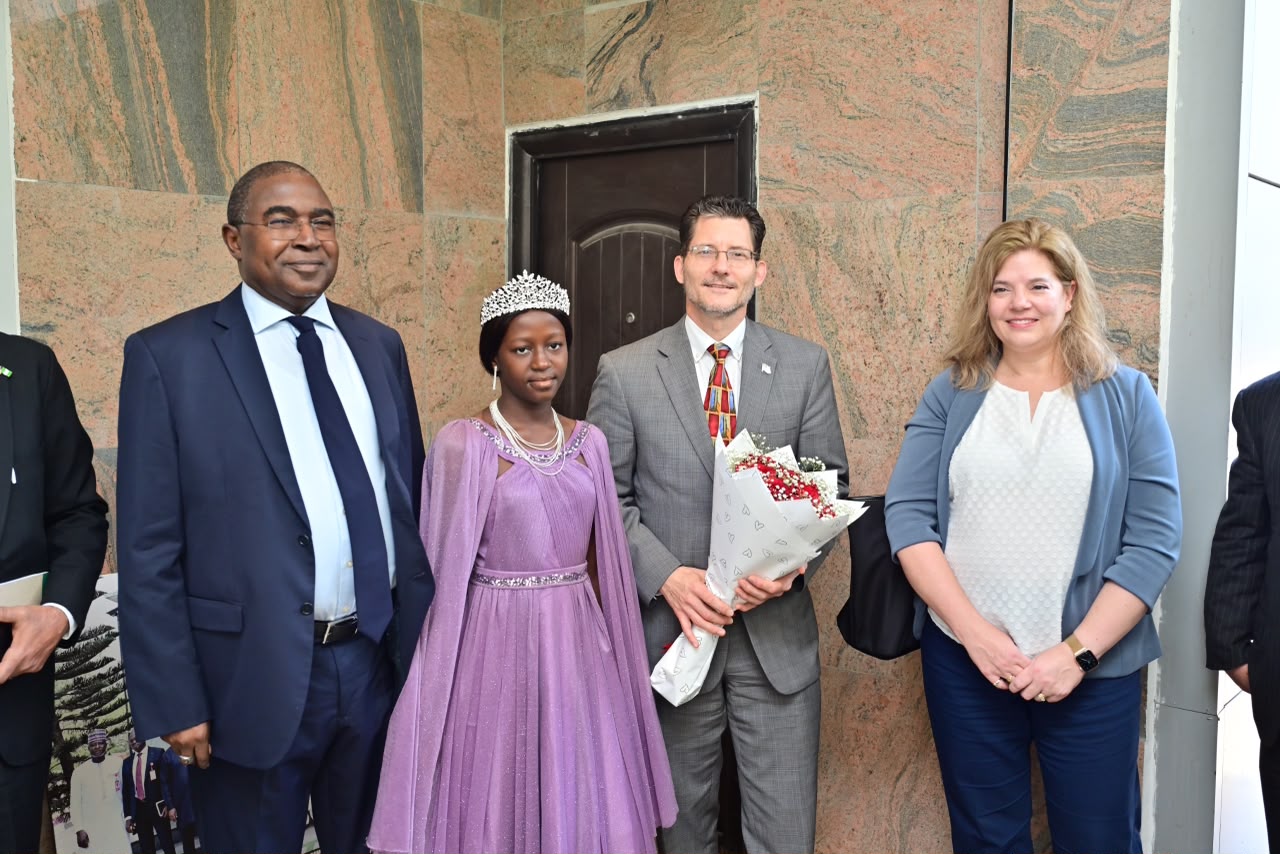
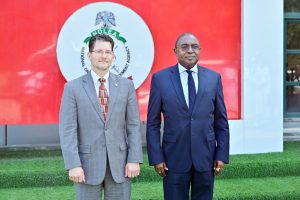
The United States Deputy Assistant Secretary of State for International Narcotics and Law Enforcement Affairs (INL) for Africa and the Middle East, Michael Gonzales has commended the National Drug Law Enforcement Agency (NDLEA) for its operational successes, describing Nigeria as the clear answer for the first country to visit after his appointment.
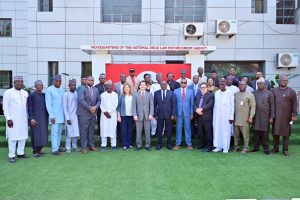
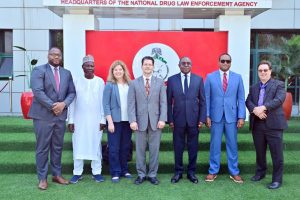
Gonzales made the remark on Tuesday, 20th October 2026, during a visit to the NDLEA national headquarters in Abuja, where he was received by the Chairman/CEO, Brig. Gen. Mohamed Buba Marwa (Rtd), and members of the agency’s management team.
Gonzales, who assumed office four months ago, said he chose Nigeria first because of its status as a leader and economic powerhouse on the continent, and because of the NDLEA’s leadership and the impressive wins the agency has recorded, adding that he wanted to see “firsthand where the magic happens.”
According to him, “I became the Deputy Assistant Secretary of State for International Narcotics and Law Enforcement just four months ago covering all countries of Africa and the Middle East. And when I was thinking where does it make the most sense to visit first, Nigeria was a clear answer. Because as a leader, as an economic powerhouse on the continent, but also particularly NDLEA for the leadership and the impressive wins that you and your team and your interagency counterparts have delivered time and again. In addition to the very robust partnership between INL and NDLEA, I wanted to see firsthand where the magic happens, as we say in the United States.”
He cited the four methamphetamine laboratory busts recorded this year as proof of the agency’s best-practice tradecraft: intelligence-led investigations, coordination across agencies and borders, operational excellence, and diligent interrogation, investigation and prosecution.
He said narcotics affect American communities more tangibly than almost any other foreign policy issue, and that the drug trade is international, with very few constraints. The work of INL and the NDLEA, he added, “fundamentally delivers for the Nigerian people, for the American people.”
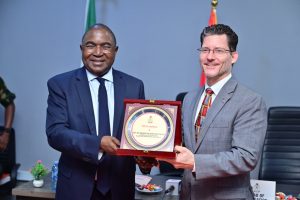
In his words, “the four meth lab busts just this year alone is a testament to the deployment of some of the best practices in our tradecraft, the intelligence-based knowledge collection, the coordination across national lines and agency lines, the operational excellence that goes into the actual bust, and then the interrogations, the investigations and prosecutions. They’re all so critical because ultimately counter-narcotics work, the work that each of us does day in and day out truly delivers for the people.
When I am talking to American audiences in the United States, I tell them there’s virtually no other issue of foreign policy that so tangibly affects the lives of every community, virtually every family across our country, than narcotics. And the reality of the narcotics trade is one that is international. It knows no boundaries, very few constraints. And so, the work that INL does in the United States and globally and the work that NDLEA does fundamentally delivers for the Nigerian people, for the American people.”
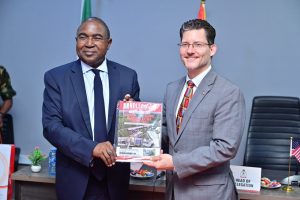
Gonzales noted that more than 40 years of INL partnership with countries worldwide has taken the form, in Nigeria, of training and equipment donations. He said intense US pressure on cartels in the Western Hemisphere was like “squeezing a balloon,” pushing trafficking flows toward Africa and onward to Europe and Oceania. He also pointed to the shift from plant-based drugs to harder-to-detect, deadlier synthetics, and called for sustained action against transnational criminal organisations as a network, including the money flows that facilitate them.
In his remarks, Marwa said the partnership, built through INL’s institutional assistance and the US Drug Enforcement Administration’s cooperation with the NDLEA is a shared investment in the collective security of both nations.
According to him, “Crime has no borders, and neither does the threat. The drugs we seize, the arms we intercept and the terrorist financing we trace are not separate problems.
When we seize narcotics and illicit weapons in the same operations and along the same routes, we are looking at the convergence of crime. Drug money buys guns, guns sustain armed groups, and armed groups sustain terrorism. Terrorism has no borders. What festers in the
Sahel and the Lake Chad Basin does not stay there, and what is trafficked through West Africa does not stop at our coastline.
“The Mexican cartel threat is real, and we are confronting it. In recent months, NDLEA operatives dismantled the largest clandestine methamphetamine laboratory ever discovered in Nigeria, in a forest in Ijebu East, Ogun State where we arrested three Mexican meth experts and their Nigerian collaborators right in the forest where illicit substances worth over $360 million US dollars were recovered. Barely four weeks later, we raided another industrial-scale laboratory at Tapa Village in neighbouring Oyo State and arrested a Mexican methamphetamine expert, brought in for large-scale synthesis, together with four Nigerian collaborators. We have since dismantled a similar facility in Enugu State and another in Ebonyi state, South East Nigeria, all linked to the Mexican cartels. These were not isolated incidents. They show a deliberate attempt to turn Nigeria into a manufacturing hub.
“Let me be plain about why this matters to Washington. These cartels are not setting up in our forests to supply Nigerian consumers alone. They want a West African corridor to ship industrial quantities of methamphetamine to Europe, to Asia, and to American cities. Especially taking into consideration the President Trump hammer that is smashing cartel traffic enroute America.
These cartels are now seeking alternative routes to get to the same America. Every Meth producing laboratory that we shut down is a supply line that never reaches an American street, and every cartel operative we arrest is one fewer in the pipeline. Our forensic chemists, our investigators and our tactical teams are, in effect, forward defence for communities in the United States.”
While linking the convergence of drugs, arms and terrorism, Marwa said drug money buys guns, guns sustain armed groups and armed groups sustain terrorism, and that what festers in the Sahel and Lake Chad Basin does not stay there.
Marwa said INL assistance underpins the agency’s capabilities in forensic and chemical analysis, professional training, investigative and financial-crime skills, and equipment maintenance. “This great partnership has fueled our offensives that yielded the arrest of 96,157 drug offenders including 250 drug barons, the seizure of over 15.8million kilograms of assorted illicit drugs and conviction of 16, 691 drug traffickers including the kingpins, in the last five years”, he added.
Warning that any withdrawal of INL support would leave a gap that criminal networks and terrorist groups would exploit, Marwa asked Gonzales to carry a message to Washington: that INL support, “as is, should be maintained if not increased.” He said traffickers, arms dealers and terrorists cooperate across borders every day, and that governments confronting them must do the same.
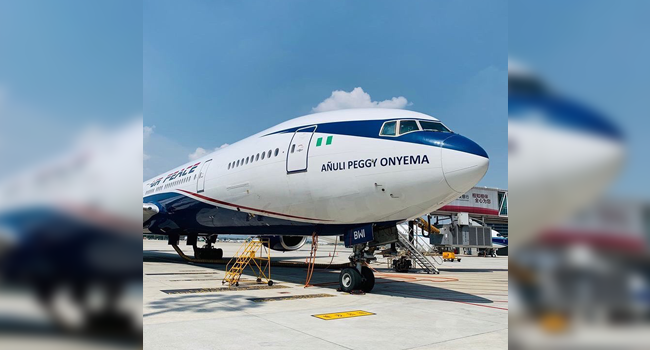
Air Peace delayed a flight after an altercation between a passenger and cabin crew forced the aircraft to return to its parking area.
Michael Achimugu, director, public affairs and consumer protection at the Nigeria Civil Aviation Authority (NCAA), said the incident played out on an Air Peace flight P47866 to ABB, code belonging to Asaba International Airport, Delta state.
He did not say where the flight was taking off from.
In a statement on Monday night, Achimugu said Celestine Ezeudu, the passenger, refused direct instructions from cabin crew to stop taking pictures and put his device away while the flight attempted to take off.
According to the NCAA official, Ezeudu ignored the instructions and when a second member of the crew approached, an altercation ensued and the passenger said: “The anger I am feeling can burn down this plane.”
“The crew immediately alerted the captain who then initiated a ramp return at 1557HRS. The passenger complied with instructions to be removed from the aircraft without further struggle,” the statement reads.
“His friend and co-traveller on the same flight also disembarked of his own will, in solidarity with the unruly passenger.”
When interrogated, Ezeudu claimed his fury stemmed from missing an earlier flight, but he did not know that his behaviour would lead to a ramp return, Achimugu said.
Passengers are generally required to switch off their phones or put them on flight mode before take-off and keep them that way until after landing.
Achimugu said passengers must obey cabin crew at all times.
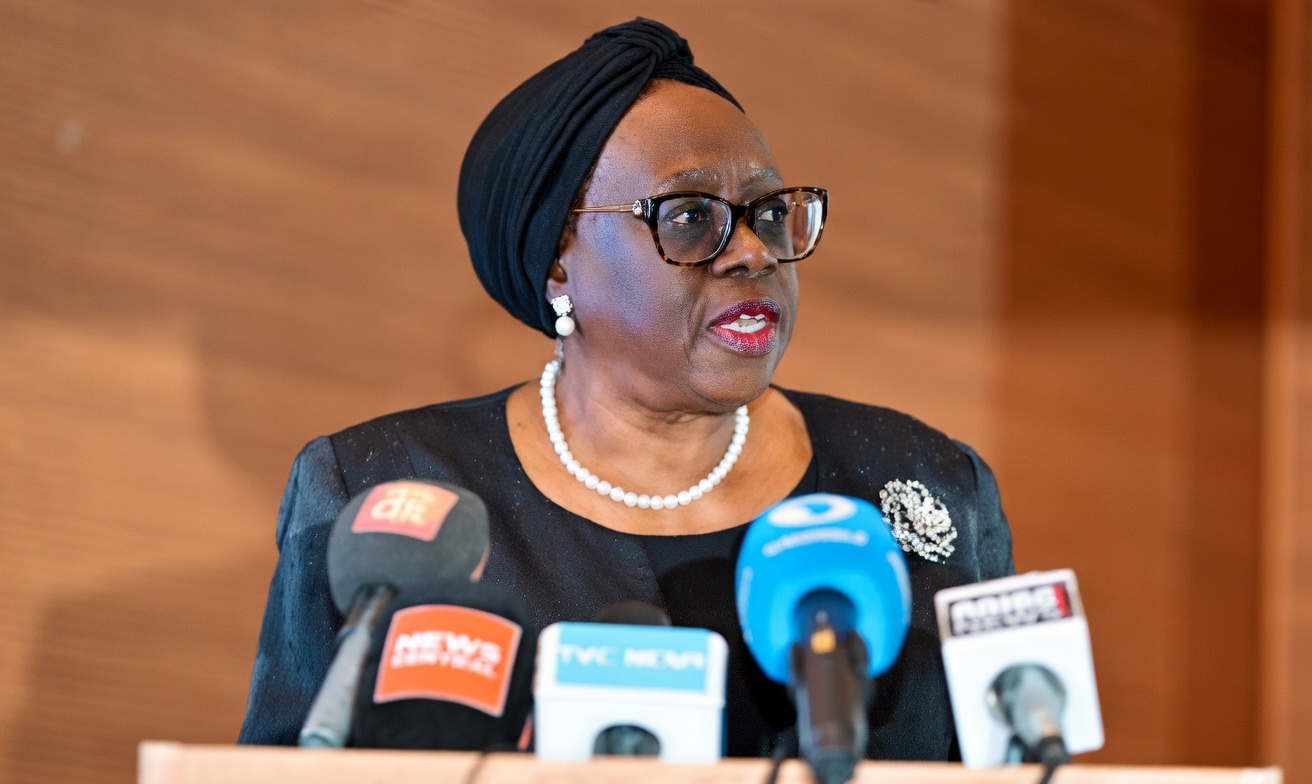
The Chief Justice of Nigeria (CJN), Justice Kudirat Kekere-Ekun, yesterday read the riot act to judicial officers, politicians, lawyers and other stakeholders, warning against turning the courts into political battlegrounds through intimidation, misinformation, conflicting orders and abuse of judicial processes.
The CJN declared that election petitions must be decided strictly on the strength of evidence and applicable laws, rather than political pressure, public sentiment or the popularity of candidates, insisting that the judiciary would not tolerate attempts to undermine its independence or manipulate judicial proceedings.
Her warning came as 375 judicial officers were sworn in to serve on election petition tribunals across the country, while the Attorney-General of the Federation and Minister of Justice, Lateef Fagbemi, called for a special code of conduct for lawyers handling electoral disputes to curb professional misconduct.
At the same event, Chairman of the Independent National Electoral Commission (INEC), Prof. Joash Amupitan, raised the alarm over the growing threat of deepfake videos, artificial intelligence-generated disinformation and manipulated electronic evidence, warning that the technologies could complicate election petitions and threaten political stability. The officials spoke at the swearing-in ceremony and opening of a three-day capacity-building workshop for Justices of the Court of Appeal and election petition tribunal members, themed “Election Tribunal as a Tool for Political Stability,” at the Body of Benchers Complex, Abuja.
Addressing the newly inaugurated judicial officers, Kekere-Ekun warned politicians, political parties, public officials and social media users against attempts to influence judicial decisions through public statements, intimidation, deliberate misinformation and campaigns designed to undermine the credibility of the courts.
“The judicial process is not a continuation of the electoral campaign by other means,” she declared, stressing that the volume of public opinion or the popularity of a candidate could not substitute for credible evidence before a court of law.
The CJN maintained that election petitions must be determined on the basis of pleadings, evidence and the relevant provisions of the Constitution and electoral laws, warning influential persons against prejudging cases or making inflammatory statements capable of heightening political tension.
“Misinformation, intimidation and attempts to prejudice pending proceedings have no place in a society governed by the rule of law,” she said. Kekere-Ekun also expressed concern over the increasing use of social media to attack judicial officers and influence public perception of pending cases, urging media organisations to exercise restraint and professionalism in reporting judicial proceedings.
She condemned the filing of multiple suits and appeals on the same subject matter, the procurement of conflicting orders from courts of coordinate jurisdiction and the use of ex parte applications to secure tactical advantages in political disputes.
According to her, such practices “can bring the administration of justice into disrepute,” and legal practitioners must resist the temptation to turn the judicial process into “another instrument of political contest.”
The CJN reminded the tribunal members that their duty was not to determine the political preferences of Nigerians but to resolve disputes arising from elections in accordance with the law, irrespective of the personalities or political interests involved.
She urged them to remain “firm where firmness is required, patient where patience is necessary, and impartial in every circumstance,” stressing that public confidence in the judiciary would depend largely on their conduct and the integrity of their decisions.
In his remarks, Amupitan warned that the 2027 elections could expose tribunals to sophisticated forms of digital manipulation capable of distorting evidence, misleading voters and creating confusion over election results.
He said threats to electoral integrity had moved beyond ballot snatching and physical intimidation to the use of artificial intelligence to impersonate election officials, circulate fabricated announcements and manufacture false evidence of electoral malpractice.
The INEC chairman identified three major threats, including AI-generated messages falsely announcing the relocation or cancellation of polling units, deepfake audio and video recordings circulated during the statutory broadcast blackout before voting, and cloned videos of Returning Officers falsely declaring election results before collation had been concluded.
He warned that fabricated recordings could subsequently be presented before election tribunals as evidence of malpractice, while genuine recordings could be dismissed as artificial intelligence-generated materials.
Amupitan described the latter phenomenon as the “Liar’s Dividend,” saying it could make the authentication of electronic evidence increasingly difficult and undermine confidence in judicial decisions.
He urged tribunal members to apply rigorous evidential standards under Section 84 of the Evidence Act, including verification of digital provenance, proper forensic chains of custody and reliance on certified electoral records obtained from INEC.
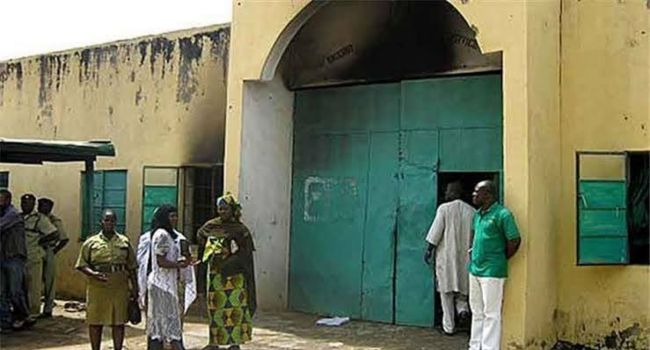
The Kogi state police command says two convicted inmates escaped from the Okene Correctional Centre on Sunday at about 10:30am.
According to report, Saliu Afusat, spokesperson of the Kogi police command, on Tuesday said that the command had received a report from the correctional centre and is collaborating with the Nigerian Correctional Service (NCoS) and other relevant security agencies to ensure the prompt rearrest of the escapees.
“The Kogi State Police Command confirms the escape of two convicted inmates from the Okene Correctional Centre on Sunday, 8th November 2026, at about 1030 hours,” the statement reads.
“Efforts to trace and apprehend the fleeing inmates are ongoing.”
Although Afusat did not disclose the identities of the escapees, reports indicate that a situation report from the Okene police division identified them as Samson David, convicted of theft, and Salvation Moro, convicted of armed robbery.
The two inmates were said to have escaped through the facility’s back fence, while their photographs were attached to the police situation report to aid their identification and facilitate their apprehension.
-
News2 years ago
CBN Debunks Fake Circular on New ₦5,000 and ₦10,000 Notes
-
 Opinion2 years ago
Championing the People’s Voice: Obasa’s Dedication to Grassroots Representation By Dave Agboola⁰
-
 Health & Wellness1 year ago
President Tinubu Directs Cut in Dialysis Cost from ₦50,000 to ₦12,000
-
 International News7 months ago
Indian Police Arrest Nigerian Over ₦290m Drug Haul
-

 Business8 months ago
Dangote Refinery Reduces Petrol Gantry Price To ₦1,200 Per Litre
-
 Business8 months ago
After Plea Bargain, Court Discharges Stella Oduah of ₦2.5bn Fraud
-
Business2 years ago
Dangote; We Did Not Fix ₦600/Litre Petrol Price
-
 Trending News1 year ago
NELFUND Disburses ₦86bn To 449,000 Beneficiaries