
News
2027: 4 INEC National Commissioners’ Seats Vacant


Four National Commissioner positions are currently vacant at the Independent National Electoral Commission (INEC), barely a year to the 2027 general elections, a senior official of the commission has disclosed.
Report says while speaking on Saturday, the official said three National Commissioners had already completed their five-year tenure and left the commission on September 14, while another is expected to leave this month.
He said the vacancies would not prevent the commission from taking decisions because the remaining commissioners could still form a quorum, but acknowledged that the absence of the commissioners had increased the workload of those still in office.
“Obviously, we should have the commission with the full complement. But that doesn’t mean that it’s an adverse effect because there was a precedent. Elections were held without the full complement, but the most important thing is that there is quorum,” he said.
According to him, after the four commissioners have left, INEC will still have eight National Commissioners, which is sufficient to form a quorum for the commission’s decisions.
“Because after the four have left, we still have eight. And the quorum is also there, so the decision, it doesn’t affect decisions in the quorum,” he said.
However, the official said the vacancies should be filled as soon as possible because serving commissioners were having to take on additional responsibilities.
He said the absence of commissioners resulted in taking over some of the responsibilities of the affected commissioner, including the supervision of states and chairmanship of committees by those on ground.
“So that means more work, of course, for those who are there. So that underscores the need for the government as quickly as possible to fill in those vacancies,” he said.
The names according to the source are; Professor Abdullahi Abdu Zuru from the North-West. He was the Chairman, Operations and Logistics committee; also, Professor Sani Adam from the North-Central. He was the Chairman, Legal services, clearance and compliance committee; while the third person who left already is Dr. Baba Bila, from North – East. He was the Chairman, Finance and General Purpose Committee.
The one person who is expected to leave this month is Professor Kunle Ajayi, who represents South-West. He is the Chairman, Outreach and Partnership Committee. Although, the source could not immediately confirm the exact date of his departure.
The official stressed that the affected commissioners left because their statutory five-year tenure had expired.
“Their tenure expired. They were sworn in exactly five years ago. To the date, their tenure expired. The three I told you, their tenure expired September 14th.
“So they were sworn in five years earlier, exactly five years earlier. So when it is on the dot, when your tenure expires, you leave,” he said.
On the process of replacing the commissioners, the official said INEC had no role in appointing either National Commissioners or Resident Electoral Commissioners, stressing that the responsibility rested with the government.
“You know the procedure. The President nominates, submits it to the National Council of State. If the National Council of State approves, then the Presidency sends it to the Senate.
“So INEC has absolutely no role in the appointment of its commissioners, whether they are National or Resident Electoral Commissioners,” he said.
He added that the process included security clearances, including screening by the Department of State Services (DSS), before the nominees could proceed through the constitutional process.
Asked whether the Presidency was aware of the vacancies, the official said he could not speak on behalf of the Presidency.
“I wouldn’t know. They should know, but I cannot speak for the Presidency,” he said.
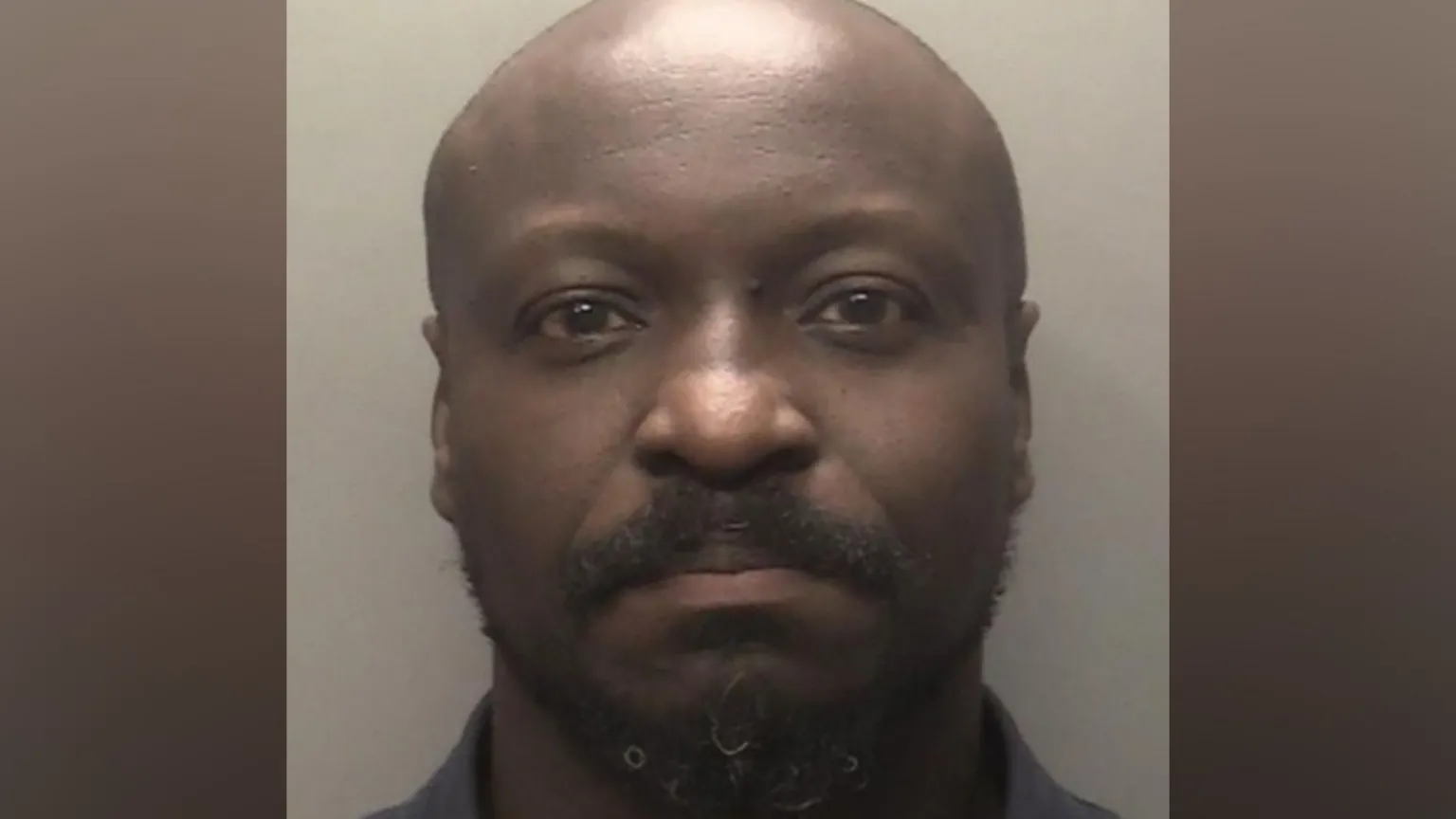
Brein Ayeni, the head of Christworld Nation church in Coventry, United Kingdom, has been sentenced to nearly 12 years in prison for repeatedly raping a woman who trusted him because of his religious position.
The 43-year-old Nigerian based in Hurst Road subjected his victim to repeated rapes and recorded some of the assaults, West Midlands police said.
He warned her he would share the footage if she tried to report the prolonged abuse, which began in June last year.
The woman reported Ayeni to police in March, and an investigation was launched.
In her impact statement, the victim said the title Ayeni held made her trust him, and that trust has been deeply damaged.
She said the abuse has affected her mental and emotional health to the point where she no longer feels like the same person she was before.
“The title he held made me trust him, and that trust has been deeply damaged. The impact on my mental and emotional health is that I do not feel like the same person I was before all of this happened,” she said.
“I struggle to trust people and allow them to get close to me because I am frightened of being taken advantage of me again. It has affected my family, who have had to watch someone they love go through something so painful.
“I understand how frightening it can be to speak up when you know that people may question you, judge you or turn against you. Reporting what happened took courage. It was not easy for me, and I have had to fight through fear, uncertainty and the emotional weight of revisiting these experiences.
“I am grateful for the people who have supported me. I do not want another woman to experience the fear, confusion, humiliation and emotional pain that I have had to live with.”
Ayeni was convicted of three counts of rape and another of coercive or controlling behaviour following a trial.
He was sentenced to 11 years and 9 months imprisonment at Warwick Crown Court on November 10.
Ayeni was also placed indefinitely on the sex offenders register.

The diplomatic row involving Nigeria’s High Commissioner to South Africa, Femi Fani-Kayode, and the South African authorities has deepened, with Pretoria summoning the Nigerian envoy over his allegations that his presentation of letters of credence to President Cyril Ramaphosa was deliberately excluded from a live broadcast.
South Africa also expressed concern over Fani-Kayode’s subsequent remarks on social media, invoking the 1961 Vienna Convention on Diplomatic Relations and insisting that official communication with the host government must be conducted through established diplomatic channels.
Director-General of South Africa’s Department of International Relations and Cooperation (DIRCO), Zane Dangor, conveyed the government’s position during a meeting with Fani-Kayode yesterday, following the controversy that erupted after the Nigerian envoy presented his credentials alongside 14 other foreign diplomats last Friday.
In a statement, DIRCO said Dangor expressed South Africa’s concern over developments following the ceremony and the Nigerian diplomat’s public comments, stressing the need to preserve the longstanding relationship between the two countries.
“The Director-General reaffirmed the importance of preserving the longstanding and historic bilateral relationship between South Africa and Nigeria, which is founded on mutual respect, friendship and cooperation,” the statement said.
The department disclosed that Dangor specifically drew Fani-Kayode’s attention to Article 41 of the Vienna Convention on Diplomatic Relations, which governs the conduct of diplomats in their host countries.
“Mr Dangor further recalled the provisions of Article 41 of the Vienna Convention on Diplomatic Relations (1961), which require diplomatic agents to conduct official business with the receiving State through the Ministry of Foreign Affairs.
“In this regard, it was emphasised that all official communication should be conducted through established diplomatic channels, including DIRCO,” the South African government stated.
The latest development followed a series of exchanges between Fani-Kayode, the South African Presidency and the South African Broadcasting Corporation (SABC) over the handling of the November 13 ceremony at the Sefako Makgatho Presidential Guest House in Pretoria.
Fani-Kayode, who presented his credentials alongside 14 other foreign envoys, alleged that his introduction and speech were deliberately excluded from the Presidency’s livestream, although the presentations of other diplomats were broadcast.
He claimed that the transmission was interrupted before his address and resumed after he had concluded his presentation to Ramaphosa.
The Nigerian envoy said he subsequently raised the matter with the South African President, who, according to him, intervened and directed officials to address the complaint.
However, Ramaphosa’s spokesperson, Vincent Magwenya, disputed aspects of Fani-Kayode’s account, explaining that the President had directed him to Sophie Mokoena, the SABC’s acting political and foreign editor, to resolve the broadcasting complaint.
The controversy took another turn when the Nigerian High Commission rejected Magwenya’s explanation and criticised his handling of the matter, widening what began as a disagreement over television coverage into a public exchange between the diplomatic mission and the South African Presidency.
The SABC subsequently defended its coverage, insisting that it operated as an independent public service broadcaster and that its editorial decisions were separate from the South African Presidency’s livestream arrangements.
In a statement issued on Sunday, the broadcaster said it covered the ceremony through its SABC News LIVE channel on SABC+ and also showed Fani-Kayode’s arrival on its television platform.
It disclosed that footage of the Nigerian envoy interacting with Ramaphosa had been published on its official social media account.
The broadcaster also expressed regret that Fani-Kayode declined an interview invitation following the ceremony, saying it remained willing to engage with him and the Nigerian High Commission.
However, the SABC’s explanation did not directly resolve the envoy’s complaint about the omission of his speech from the Presidency’s livestream.
The South African Presidency later released a recording containing Fani-Kayode’s address, although the development did not immediately end the disagreement.
Reports of the original broadcast indicated that the transmission appeared to develop a technical problem during the presentation by the French ambassador, Antoine Michon, who spoke immediately before Fani-Kayode. The available reports did not establish that the interruption was deliberate.
The diplomatic disagreement comes against the background of longstanding relations between Nigeria and South Africa, two major African economies whose ties have periodically been strained by attacks on foreign nationals, immigration-related tensions and disagreements over the treatment of Nigerian citizens.
Concerns over the safety of Nigerians in South Africa have remained a recurring issue in bilateral relations, with Nigerian authorities and lawmakers previously raising objections to attacks and harassment involving their citizens.
The latest dispute has therefore placed renewed attention on the conduct of diplomatic engagement between Abuja and Pretoria, particularly the procedures governing communication between foreign envoys and their host governments.
Despite the controversy, DIRCO maintained that South Africa remained committed to strengthening its strategic partnership with Nigeria and sustaining constructive diplomatic engagement in the spirit of African solidarity and mutual respect.

The Nigeria Labour Congress (NLC) and Trade Union Congress (TUC) have resolved to settle recent disagreements that stemmed from the N70,000 monthly transport allowance for public sector workers.
The reconciliation was announced on Wednesday during a joint press briefing addressed by leaders of both unions in Abuja.
The joint press statement was signed by Joe Ajaero, NLC president; Festus Osifo, TUC president; and Hassan Sunmonu, on behalf of former presidents of TUC and NLC
-
 Opinion2 years ago
Championing the People’s Voice: Obasa’s Dedication to Grassroots Representation By Dave Agboola⁰
-
News2 years ago
CBN Debunks Fake Circular on New ₦5,000 and ₦10,000 Notes
-
 Health & Wellness1 year ago
President Tinubu Directs Cut in Dialysis Cost from ₦50,000 to ₦12,000
-
 International News8 months ago
Indian Police Arrest Nigerian Over ₦290m Drug Haul
-
 Business8 months ago
Dangote Refinery Reduces Petrol Gantry Price To ₦1,200 Per Litre
-
 Business8 months ago
After Plea Bargain, Court Discharges Stella Oduah of ₦2.5bn Fraud
-
Business2 years ago
Dangote; We Did Not Fix ₦600/Litre Petrol Price
-
 Trending News1 year ago
NELFUND Disburses ₦86bn To 449,000 Beneficiaries