
International News
2027 Hajj: Saudi Arabia Rejects Nigeria’s Request For Additional Slots


The National Hajj Commission of Nigeria (NAHCON) has announced that the Kingdom of Saudi Arabia has declined Nigeria’s request for an upward review of its 2027 Hajj allocation, leaving the country’s quota unchanged despite growing demand from intending pilgrims nationwide.
The Commission disclosed that it had formally engaged the Saudi Ministry of Hajj and Umrah, seeking additional pilgrimage slots to accommodate the increasing number of Nigerian Muslims desirous of undertaking the sacred journey and to address appeals from several state pilgrims’ welfare boards for enhanced allocations.
However, Saudi authorities communicated their inability to grant additional slots, citing capacity limitations, structural constraints within the holy sites, and the Kingdom’s policy of strict adherence to approved country quotas under the current operational framework.
Consequently, Nigeria’s allocation for the 2027 Hajj exercise remains fixed at 35,000 slots for government pilgrims and 15,000 slots for licensed tour operators, bringing the country’s total approved allocation to 50,000 pilgrims.
Commenting on the development, the Chairman and Chief Executive Officer of NAHCON, Ambassador Ismail Abba Yusuf, said the Commission fully understands the disappointment the decision may cause many aspiring pilgrims and state pilgrim boards that had hoped for additional allocations.
According to him, the Commission explored all available diplomatic and operational channels in pursuit of an increased quota but respects the final decision of the Saudi authorities.
“We appreciate the deep spiritual desire of many Nigerian Muslims to perform Hajj and understand the expectations of states and stakeholders seeking additional slots. While every effort was made to secure an upward review, the Saudi authorities have communicated their final position based on operational realities and capacity considerations,” Ambassador Yusuf stated.
The NAHCON Chairman urged state pilgrims’ welfare boards, agencies and licensed tour operators to make judicious and transparent use of their approved allocations while ensuring strict compliance with all timelines established by the Commission and the Saudi Nusuk platform.
He emphasized that the deadline for uploading the data of all prospective pilgrims for the 2027 Hajj exercise remains September 26, 2026, warning that no extensions would be granted under any circumstance.
“Kindly note that the deadline for uploading prospective pilgrims’ data remains September 26, 2026. We urge all partners, state pilgrim boards, tour operators and representatives to ensure that all required information is submitted before this date, as no extensions will be granted,” he said.
Ambassador Yusuf further advised intending pilgrims who may be unable to secure a slot under the approved 2027 allocation not to lose hope, revealing that preparations for the subsequent pilgrimage season have already commenced.
“Individuals who were unable to secure a slot for the upcoming Hajj are encouraged to register for the 2028 Hajj. The Commission has officially opened the registration portal for this period, and applications are now being accepted,” he added.
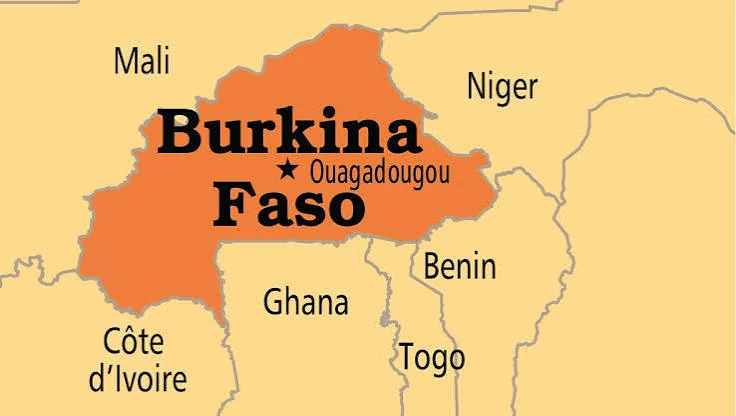
Burkina Faso’s parliament has voted unanimously to reinstate the death penalty for crimes including terrorism, espionage and treason, ending the country’s abolition of capital punishment for ordinary crimes in 2018.
All 71 members of the West African country’s transitional legislature supported the revised penal code on Tuesday, October 20, following its presentation by Justice Minister Edasso Rodrigue Bayala, according to the Associated Press.
The decision restores capital punishment nearly four decades after the country’s last known execution, which took place in 1988, according to Human Rights Watch.
The military-led government’s Council of Ministers approved a bill to restore the death penalty in December 2025, prompting criticism from international human rights organisations.
Amnesty International and Human Rights Watch warned that the move could threaten fundamental rights and be used to suppress critics of the authorities.
Burkina Faso’s military government has previously faced allegations of detaining journalists, human rights defenders and other perceived opponents. The authorities also dissolved political parties earlier in 2026 and repealed the laws governing their activities.
The reinstatement comes as the country continues to battle an armed insurgency involving militant groups linked to al-Qaida and the Islamic State group. The violence has killed thousands of people and displaced millions across Burkina Faso and the wider Sahel region.
The government has presented the tougher penal code as part of its response to the security crisis. Bayala had indicated in 2024 that the death penalty would be included in a revised criminal code.
According to Reuters, the revised code also provides for capital punishment in cases involving the importation of expired or prohibited products that result in death, although the precise scope and implementation of the new provisions will depend on the final legal text.
Human rights organisations have questioned whether restoring the death penalty will improve security, warning that it could deepen repression and create additional risks for people accused of offences.
Human Rights Watch previously said the proposed change could intensify a climate of fear and send a chilling message to critics of the military authorities.
The country’s security forces have also faced allegations of serious abuses during counterinsurgency operations. Human Rights Watch reported this year that government forces killed more than twice as many civilians as jihadist fighters between 2023 and 2025.
Armed groups, including Jama’at Nusrat al-Islam wal-Muslimin, an al-Qaida-linked organisation, have also been accused of war crimes and crimes against humanity by rights groups.
Burkina Faso, a landlocked country with a population of about 23 million, has been governed by military authorities since a coup in 2022. The junta has repeatedly delayed a return to civilian rule as it seeks to contain the insurgency.
The parliamentary vote marks a significant change in the country’s criminal justice policy. Burkina Faso abolished the death penalty for ordinary crimes in 2018 under former President Roch Marc Christian Kaboré, although the last known execution had taken place decades earlier.
The decision is likely to renew scrutiny of the country’s human rights record as authorities pursue their security campaign against armed groups.
(APNews)

Uganda has clarified that as of Tuesday, October 21, 2026, when Nigerian health authorities confirmed an active case of Ebola in its capital city, Abuja, it had no active case of the virus.
Health Minister, Muhammad Ali, had announced that a female patient who had travelled from Uganda in East Africa, tested positive for the virus.
“The Federal Government of Nigeria confirms one case of Ebola disease in the Federal Capital Territory (FCT), following laboratory confirmation today, 20 October 2026. The patient, a woman who recently arrived in Nigeria on an international flight from Uganda, was admitted to a private hospital in the FCT, where she received care for several days before the diagnosis was confirmed. She is currently in isolation and receiving medical care.
“The FG calls on all public and private healthcare facilities nationwide to be on high alert. Healthcare workers must maintain a high index of suspicion, promptly identify and isolate suspected cases, observe strict infection prevention and control measures, and immediately report suspected cases to public health authorities.
“Investigations are ongoing, and we will continue to provide accurate and timely information,” Pate had said.
The development had made many Nigerians look towards the direction of Uganda, just like Patrick Sawyerr, a Liberian, imported the disease to Nigeria in 2014.
But in a statement issued after Pate’s comment, Charles Olaro, Director-General of Health Services in the East African country, clarified that the patient is a Nigerian.
Olaro said the woman had travelled to Eastern Democratic Republic of the Congo (DRC), which has over nearly 10,000 active cases with 4,500 deaths from Ebola, for business and transited through Uganda in early October.
According to Olaro, she showed no symptoms while in Uganda but developed symptoms after arriving in Nigeria.
“Travel through Uganda does not establish that infection occurred here. The location of exposure remains under investigation,” the ministry said.
“The Government of Nigeria is yet to provide detailed information on her travel itinerary and clinical history which will guide further investigations and any necessary contact tracing.
“We wish to clarify that, as at the time of this statement, Uganda has NO confirmed active Ebola cases.”
The Ugandan government said it had maintained limited provisions for humanitarian and diplomatic movement, adding that it would strengthen screening and public health controls at points of entry.

A Finnish appeal court has reduced the prison sentence of Biafran separatist leader, Simon Ekpa, from six to four years.
Finnish newspaper Yle disclosed this in a report on Thursday.
However, the Court of Appeal upheld the decision of the Päijät-Häme District Court, which found Ekpa guilty of terrorism-related charges last year.
The charges were related to Ekpa’s alleged activities aimed at re-establishing an independent state of Biafra in southeastern Nigeria.
Ekpa subsequently appealed the ruling, seeking to have his conviction and sentence overturned.
In a ruling that offered some relief to Ekpa, the Court of Appeal found him guilty of the same offences but reduced his prison term after considering the circumstances surrounding his actions. The court noted that the situation in the Biafran region closely resembled, but did not meet the definition of, a civil war.
Ekpa had told the court that his involvement was not motivated by terrorist intent, citing the political turmoil in the Biafran region.
The prosecutor in the case had also appealed the district court’s decision, arguing that the prison sentence did not reflect the seriousness of Ekpa’s offences.
-
 Health & Wellness1 year ago
President Tinubu Directs Cut in Dialysis Cost from ₦50,000 to ₦12,000
-
News2 years ago
CBN Debunks Fake Circular on New ₦5,000 and ₦10,000 Notes
-

 International News7 months ago
Indian Police Arrest Nigerian Over ₦290m Drug Haul
-

 Business7 months ago
Dangote Refinery Reduces Petrol Gantry Price To ₦1,200 Per Litre
-
 Business7 months ago
After Plea Bargain, Court Discharges Stella Oduah of ₦2.5bn Fraud
-
Business2 years ago
Dangote; We Did Not Fix ₦600/Litre Petrol Price
-
 Opinion2 years ago
Championing the People’s Voice: Obasa’s Dedication to Grassroots Representation By Dave Agboola⁰
-
 Trending News1 year ago
NELFUND Disburses ₦86bn To 449,000 Beneficiaries