
News
PDP: Abuja Court Stops 2025 Convention Over Lamido

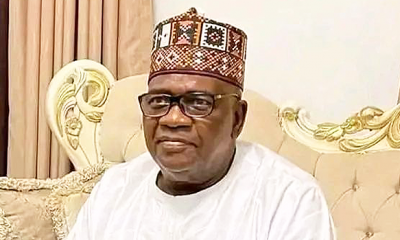
For the second time, a Federal High Court in Abuja, has restrained the People’s Democratic Party, PDP, from holding its 2025 National Convention scheduled for Ibadan, Oyo State between November 15 and 16.
The court also barred the Independent National Electoral Commission, INEC, from supervising, monitoring or recognizing the outcome of the National Convention where national officers are expected to be elected.
Justice Peter Odo Lifu on Tuesday issued the fresh order while delivering ruling in an application brought by a former governor of Jigawa state, Sule Lamido.
Lamido, a foundation member of PDP had dragged the party before the court complaining that he was denied opportunity to buy Chairmanship nomination form to enable him participate in the convention.
The judge predicated the restriction order against PDP on the grounds that the party refused, neglected and failed to comply with relevant conditions and laws for the conduct of such conventions.
The judge held that evidence from Lamido showed that the timetable for the convention was not published for the attention of its members as required by law.
Justice lifu also held that the balance of convenience tilted towards Lamido because he would suffer more if allowed to be unlawfully excluded from the planned convention.
To make remedy, the Judge said that the former governor had undertaken to pay damages to PDP in the event that his suit was found to be frivolous.
According to the Judge, in a Constitutional, due process of law must be strictly followed by those in charge, adding that to do otherwise, will endanger democracy itself.
He also said that in line with section 6 of the 1999 Constitution, a court of law must not abdicate its role of dispensing justice without fear or favour.
Justice Lifu held that anarchy would be the order of the day any time, any day and anywhere the court abdicates its constitutionally assigned functions.
In his final pronouncement, the Judge restrained PDP from proceeding with the convention billed for November 15 and 16 or any other date in Ibadan or any other place.
He also stopped INEC from supervising, monitoring or recognizing the outcome of any convention that be organized by PDP.
It will be recalled that another Judge of the same court, James Omotosho had on October 31 issued similar orders stopping INEC from supervising or recognizing outcome of the convention if conducted.



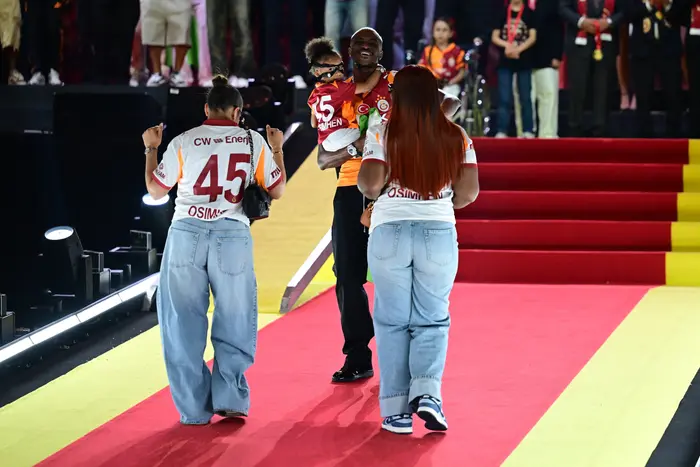
Victor Osimhen’s partner Stefanie Ladewig has reportedly been involved a motor accident.
According to report, that accident involved three vehicles, with Osimhen’s girlfriend driving one of the cars.
Report said the motor accident happened in Eyüpsultan,Turkey on Wednesday morning when Ladewig was on her way to the hospital.
Although there was no indication that she was at fault, Ladewig was reportedly driving an SUV on her way to the hospital before hitting two other vehicles in the accident.
However, the 26-year-old, who is eight months pregnant with her second child, was unhurt, along with the other people involved, according to the report.
Osimhen and Ladewig have known each other since they met in 2019, when the Super Eagles star was at Wolfsburg and she was a cheerleader.
The two started dating shortly afterwards and have never looked back, even though they are not officially married.
They also have a daughter, Hailey, who was born in October 2022, when Osimhen was still playing for Serie A giants Napoli.
The German-Cameroonian model also recently celebrated Hailey, who turned four, with a story post on her Instagram page.
Hailey herself also turned 26 last month, although she appeared to have had a low-key celebration this year.
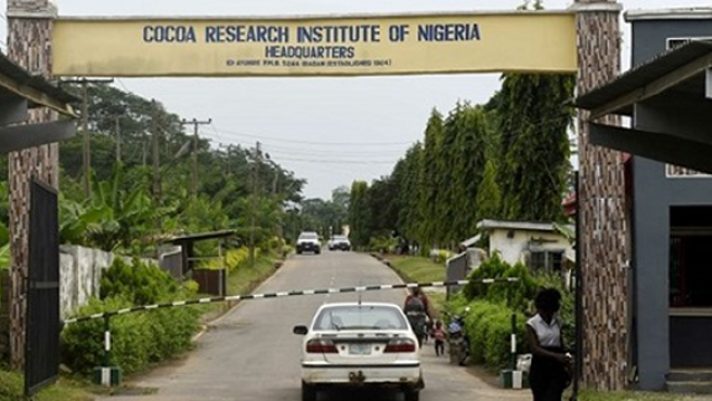
Three employees of the Cocoa Research Institute of Nigeria (CRIN), Ibadan, Oyo State, have regained their freedom six days after they were abducted by gunmen while working on a farm within the institute’s premises.
The victims were identified as Eunice Babalola, Kehinde Gbalajobi and another employee known as Nelson.
They were kidnapped last Thursday when armed men stormed the farm at about 1pm and whisked them away to an undisclosed location.
Sources familiar with the incident said the abductors initially demanded N40 million for each of the victims before the ransom demand was allegedly reduced to N50 million for all three workers following negotiations.
The workers regained their freedom in the early hours of Wednesday after security operatives traced them to a bush near Globus Farm, also known as Triton.
The Oyo State Police Command confirmed the rescue but did not disclose whether any ransom was paid to secure their release.
The Police Public Relations Officer, DSP Olayinka Ayanlade, said security agencies were continuing efforts to identify and arrest those responsible for the abduction.
The rescue came amid ongoing efforts by security operatives to track down the suspected kidnappers and bring them to justice.
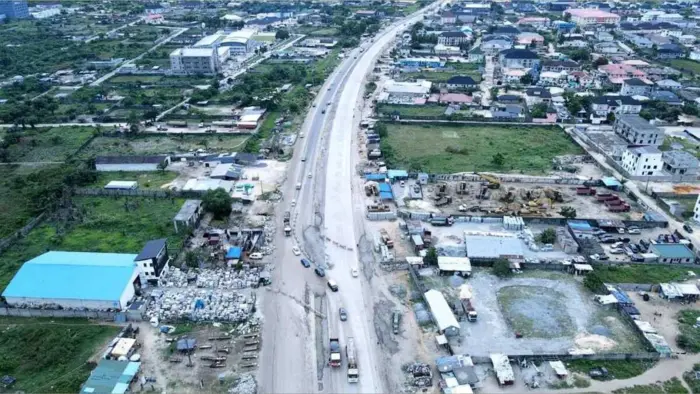
Motorists plying the deteriorating Eti-Osa-Lekki-Epe Expressway are expected to face temporary traffic disruptions as the Lagos State Government begins a 35-day rehabilitation of damaged sections from Bonny Camp to Admiralty Way Junction and around Victoria Garden City (VGC) tomorrow.
The government said traffic diversion arrangements would be introduced to minimise congestion and ensure the safety of road users during the exercise.
The Special Adviser to the Governor on Infrastructure, Olufemi Daramola, disclosed this yesterday at a stakeholders’ engagement organised by the Ministry of Works and Infrastructure to discuss the scope of work and traffic management plans for the project.
Daramola said the meeting was part of the government’s policy of consulting residents, businesses and other road users before embarking on major infrastructure projects, adding that feedback from stakeholders would inform the implementation process.
He appealed for the cooperation of residents and motorists, particularly as Lagos prepares for increased traffic during the festive season.
The rehabilitation is expected to improve road safety and ease movement along the strategic corridor, which connects residential communities, commercial centres and major industrial investments across the Lekki-Epe axis.
The expressway provides access to the Lekki Free Zone, Dangote Refinery, Dangote Fertiliser Factory, Lekki Deep Sea Port and Eleganza Industrial Estate. It also serves major housing developments and educational institutions, including Pan-Atlantic University and Lagos Business School.
However, rapid urbanisation, growing commercial activities and increasing traffic have accelerated the deterioration of some sections, leaving commuters struggling with difficult journeys along the busy route.
Daramola said the government was also addressing drainage concerns along the corridor, adding that the proposed Green Line rail project would form part of a broader plan to improve transportation infrastructure in the area.
-
 Health & Wellness1 year ago
President Tinubu Directs Cut in Dialysis Cost from ₦50,000 to ₦12,000
-
News2 years ago
CBN Debunks Fake Circular on New ₦5,000 and ₦10,000 Notes
-
 International News7 months ago
Indian Police Arrest Nigerian Over ₦290m Drug Haul
-
 Business7 months ago
Dangote Refinery Reduces Petrol Gantry Price To ₦1,200 Per Litre
-
 Business7 months ago
After Plea Bargain, Court Discharges Stella Oduah of ₦2.5bn Fraud
-
Business2 years ago
Dangote; We Did Not Fix ₦600/Litre Petrol Price
-
 Trending News1 year ago
NELFUND Disburses ₦86bn To 449,000 Beneficiaries
-
 Opinion2 years ago
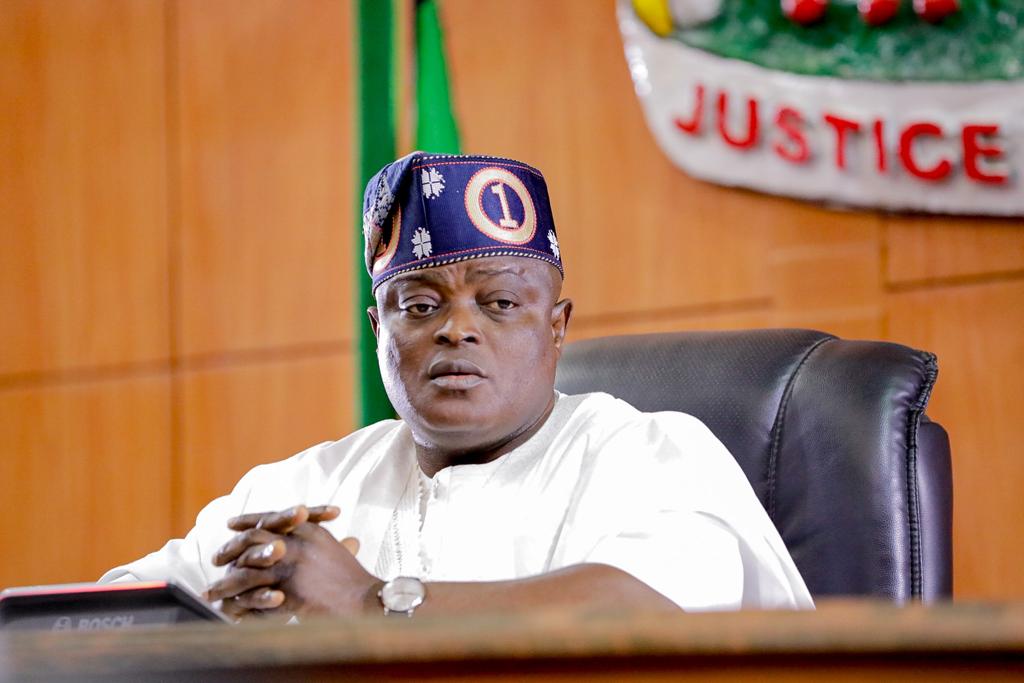
Championing the People’s Voice: Obasa’s Dedication to Grassroots Representation By Dave Agboola⁰