
Health & Wellness
Japa: Physicians Warn Govt To Fix Healthcare Or Lose All Doctors


Conference of the West African College of Physicians, WACP, has urged government at all levels to strengthen the health system or risk worsening the ongoing migration of skilled medical professionals, declining service delivery, and deepening pressures on already overstretched hospitals.
The position was made at a press conference held at the Theophilus Ogunlesi Hall, University of Ibadan on Monday, to formally announce activities marking the 50th Annual General and Scientific Conference of the West African College of Physicians, WACP, Nigeria Chapter.
WACP also highlighted systemic gaps in governance, funding, workforce retention, and healthcare delivery, while emphasising the need for reforms anchored on collaboration, innovation, and patient-centred care.
Speaking at the briefing, the Chairman of the Nigeria Chapter of WACP and Vice President of the College, Prof. Benjamin Uzochukwu, said Nigeria’s health system challenges cannot be solved by restrictive policies but by making local practice more attractive, functional, and sustainable.
Prof. Uzochukwu noted that while artificial intelligence is increasingly useful in modern medicine, especially in diagnosis, it cannot replace the empathy and judgment required in patient care.
He said: “For us and for me in particular, we should not rely solely on artificial intelligence. We must combine it with human intelligence.
“In our clinical practice, we have found that artificial intelligence is very helpful, particularly in diagnosis. However, when it comes to management, the human element is missing.
“Artificial intelligence will not say, ‘I’m sorry.’ However, a clinician’s empathy can help address the social aspects of a patient’s problem by saying, ‘I’m sorry. How are you doing?’ and so on.”
He, however, expressed concern over the continued migration of health workers abroad, warning that brain drain is weakening Nigeria’s healthcare system.
“Brain drain continues to strip our hospitals of experienced specialists,” he said, adding that inflation has further reduced the real value of healthcare workers’ earnings.
On past efforts to curb brain drain, he criticised restrictive measures that limited doctors’ access to international training opportunities, arguing that such policies were counterproductive.
“At one point, the Federal Government introduced a policy that indirectly prevented some doctors from travelling abroad to undertake specialist training. However, we do not believe that this is the appropriate approach.
“To curb brain drain, we must ensure that what we have within the country is sufficient, of high quality, and offers appropriate remuneration to sustain the health system.
“If we strengthen our health system, then anyone who visits a health facility will receive appropriate treatment and quality healthcare services.”
On how Nigeria’s health sector can be revitalised, he said: “We must allocate at least the agreed 15% of the national budget to health. At present, spending is below 6 percent.”
Health & Wellness
NCDC: 34 Ebola Contacts Have Completed 21-day Follow-Up — 28 Still Under Monitoring
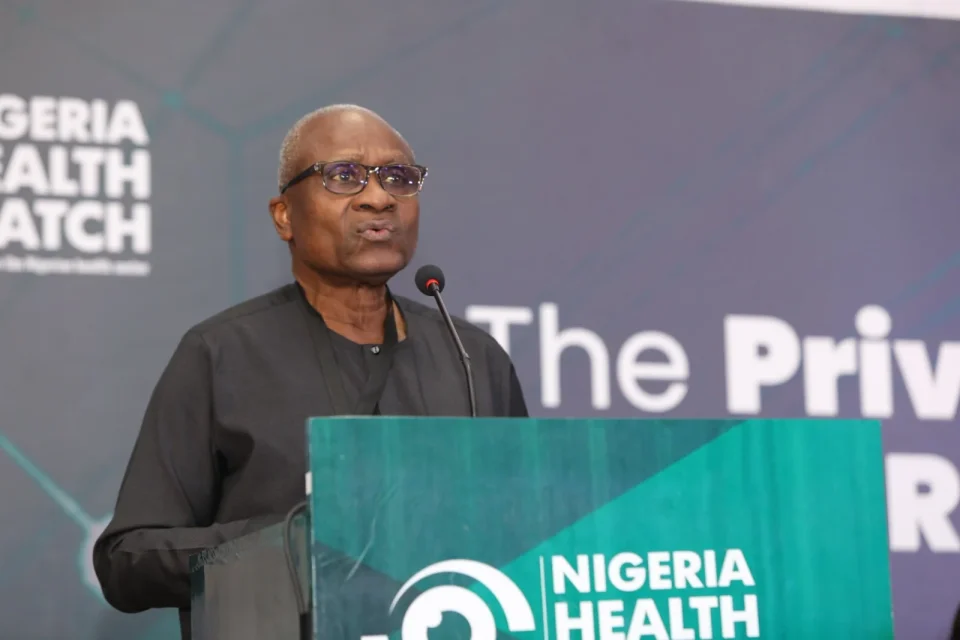
The Nigeria Centre for Disease Control and Prevention (NCDC) says it is still monitoring 28 out of the 62 contacts linked to an imported Ebola case.
In a national health security update released on Tuesday, Jide Idris, NCDC director-general, said the remaining 34 contacts had completed their 21-day follow-up.
Idris said the agency activated measures to contain the disease in a coordinated response with the federal ministry of health and social welfare, the Federal Capital Territory (FCT) administration, state authorities and partners.
He said the response included contact tracing, investigation of reported alerts, laboratory testing, infection prevention, safe clinical care and surveillance at points of entry.
“As of 9 November 2026, Nigeria had confirmed only one imported case of Bundibugyo virus disease, with no additional confirmed cases,” he said.
“We continue to investigate reported alerts and maintain heightened surveillance across the country to ensure that suspected cases are promptly identified and investigated.
“A total of 62 contacts have been identified. Of these, 34 have completed their individual 21-day follow-up, while the remaining 28 are still under monitoring.”
Idris said the agency was investigating reported alerts and maintaining heightened surveillance across the country to ensure suspected cases were promptly identified and investigated.
He explained that being identified as a contact did not mean a person has contracted the virus.
According to him, the 21-day follow-up period enables health teams to identify symptoms early and respond appropriately.
Idris also noted that the 21-day monitoring period for individual contacts should not be confused with the number of days since the first case was confirmed.
Earlier in November, NCDC said it expected to complete monitoring of the 62 contacts traced to an imported Ebola case by November 13.
“Contacts are expected to complete follow-up by November. Expected completion dates range from 31 Oct to 13 Nov 2026,” the agency said.
In October, the federal government announced a confirmed case of Ebola disease in the FCT.
Ali Pate, coordinating minister of health and social welfare, said 44 close contacts were identified for tracing to prevent further transmission.
According to the minister, the patient, a woman who recently arrived in Nigeria on an international flight from Uganda, was admitted to a private hospital in the FCT, where she received care for several days before the diagnosis was confirmed.
Nigeria’s index Ebola case was later evacuated to Switzerland for further treatment.
On October 31, the NCDC announced that two suspected cases of Ebola disease have been identified in the north-east.
Health & Wellness
Doctors Reject Bill Proposing Jail Term Over Emergency Delays, Says Bill Will Increase Brain Drain
The Nigerian Association of Resident Doctors (NARD) has rejected proposed legislation seeking a six-month jail term or ₦300,000 fine for healthcare professionals over delays in emergency medical treatment.
This is contained in a statement issued by the NARD President, Dr Ogar Idoko, in Calabar on Friday.
Idoko described the proposed amendment to the National Health Act as punitive, arguing that doctors should not be criminalised for failures arising from inadequate healthcare infrastructure.
He said the association recognised the importance of prompt emergency care and protecting patients but insisted that systemic challenges must be addressed before imposing criminal sanctions.
According to him, doctors nationwide work under difficult conditions, including obsolete equipment, inadequate staffing, unreliable electricity and insufficient emergency medical supplies.
“The challenges are consequences of longstanding institutional neglect rather than professional negligence, so I urge lawmakers to prioritise healthcare funding and infrastructure.
“We also challenge the National Assembly to demonstrate similar legislative urgency in providing functional emergency departments, modern diagnostic equipment, reliable ambulance services and adequate personnel,” he said.
He asserted that lawmakers should consider legislation compelling public office holders to use Nigerian government hospitals, with sanctions for misuse of public resources on avoidable overseas medical treatment.
He warned that additional criminal penalties against overstretched healthcare professionals could worsen the country’s brain drain, popularly known as the “Jar-pa syndrome.”
He stated that the association acknowledged that the proposed bill reportedly contained safeguards for circumstances beyond practitioners’ control but insisted that such provisions must be explicit and enforceable.
He called for the withdrawal and reconsideration of the proposed punitive provisions, alongside consultations involving healthcare associations, hospital administrators, patient representatives and other stakeholders.
He urged the National Assembly to prioritise legislation guaranteeing adequate health funding, minimum emergency-care standards, appropriate staffing, constant electricity and functional referral systems.
“We will consider all lawful options, including nationwide industrial action, if lawmakers proceeded with legislation unjustly criminalising doctors for institutional failures.
“We however, pledged to make necessary arrangements to protect emergency and critically ill patients during any industrial action, while we reaffirm our commitment to patient safety and quality healthcare.,” he said.
The Senate is considering a bill that seeks to punish hospitals and healthcare workers who refuse or delay emergency medical treatment.
The bill which passed its second reading on Wednesday, was sponsored by Sen. Abdulaziz Yar’Adua, representing Katsina Central Senatorial District.
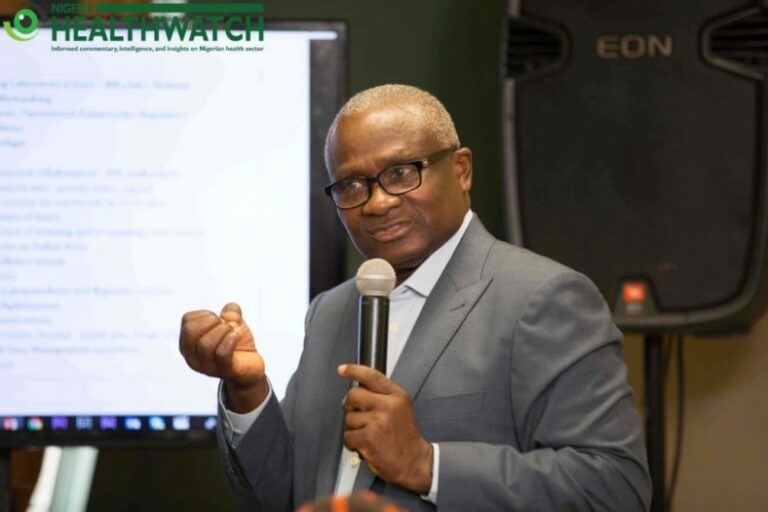
The Nigeria Centre for Disease Control and Prevention (NCDC) has disclosed that its decision to pay ₦100,000 weekly to people quarantined following an imported Ebola case was an emergency intervention that had not been included in its budget.
The agency’s Director-General, Dr Jide Idris, said the financial support was introduced on compassionate grounds to ease the burden on individuals whose daily lives had been disrupted by quarantine measures.
Idris spoke during an interview, explaining that the affected individuals had been separated from their usual routines to protect public health.
“That was not budgeted for. Those people who were in the quarantine area were people who never planned to be there. We took them out of their comfort zones; we put them there for public health reasons, so we are responsible for their feeding, accommodation,” he said.
According to him, some of those under quarantine expressed concerns about being away from their families and the financial losses they could suffer by remaining at the facility.
“Some of them said they had families at home they need to take care of. But one or two said they had businesses. By staying here again, you’re going to lose a lot of money again,” Idris added.
He said the possibility of some individuals leaving the facility prompted further concern, as their health status had yet to be conclusively established.
“If you allow them to leave the place, it’s a public health issue because you don’t know whether they will turn positive or who is ill,” the NCDC chief said.
Idris explained that the agency opted to provide financial assistance to discourage the individuals from leaving quarantine and to address their immediate needs.
“On compassionate grounds, we said, okay, let’s see how best we can support them. It’s a temporary thing because it’s not something we’ve done,” he said.
He also clarified that state governments were ordinarily responsible for providing quarantine facilities and the associated support, adding that the NCDC intervened because the expected arrangements had not materialised.
“In this kind of thing, the quarantine facility, there are the responsibilities of each state government, not any NCDC. But because this is not forthcoming, to avoid this one, just to temper this thing, we decided to step in,” he said.
The NCDC had earlier announced an emergency payment of ₦100,000 per person weekly for individuals placed in isolation or quarantine following the confirmation of an imported Ebola case in the Federal Capital Territory.
The intervention followed complaints from contacts about the cost of food, accommodation and maintaining their families while complying with public health monitoring requirements.
At a press briefing on Sunday, Idris said the agency was covering the basic expenses of those affected.
“We are paying for their accommodation; we are paying for their feeding. Some of them are asking for a stipend to maintain their families,” he said.
-
 Opinion2 years ago
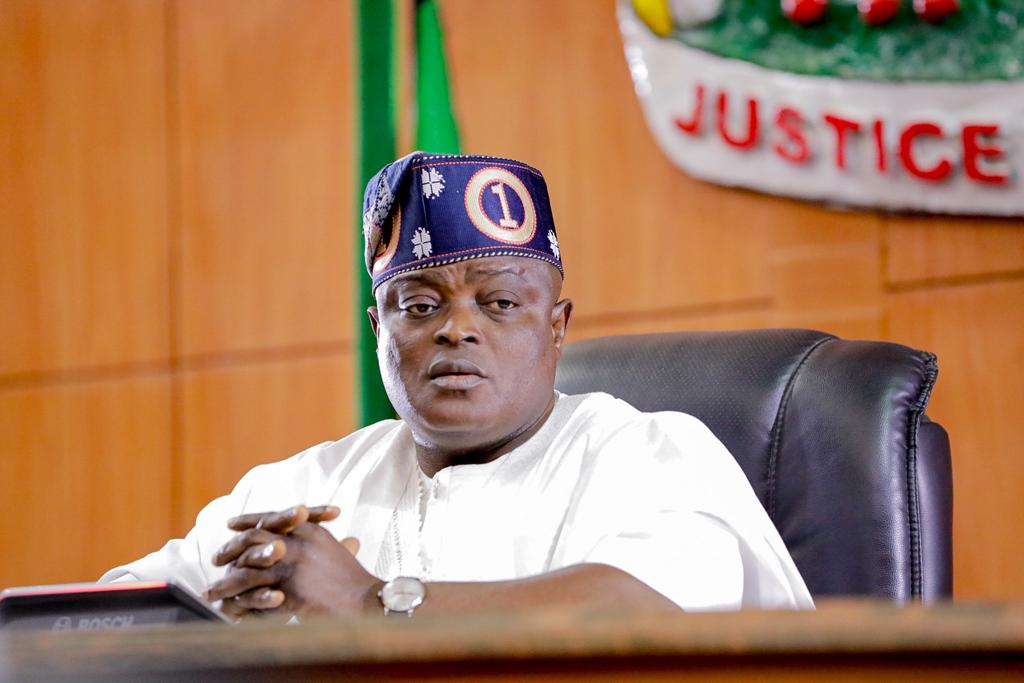
Championing the People’s Voice: Obasa’s Dedication to Grassroots Representation By Dave Agboola⁰
-
News2 years ago
CBN Debunks Fake Circular on New ₦5,000 and ₦10,000 Notes
-
 Health & Wellness1 year ago
President Tinubu Directs Cut in Dialysis Cost from ₦50,000 to ₦12,000
-
 International News7 months ago
Indian Police Arrest Nigerian Over ₦290m Drug Haul
-

 Business8 months ago
Dangote Refinery Reduces Petrol Gantry Price To ₦1,200 Per Litre
-
 Business8 months ago
After Plea Bargain, Court Discharges Stella Oduah of ₦2.5bn Fraud
-
Business2 years ago
Dangote; We Did Not Fix ₦600/Litre Petrol Price
-
 Trending News1 year ago
NELFUND Disburses ₦86bn To 449,000 Beneficiaries