
News
US Slashes Nigerian Crude Imports by Nearly 50%

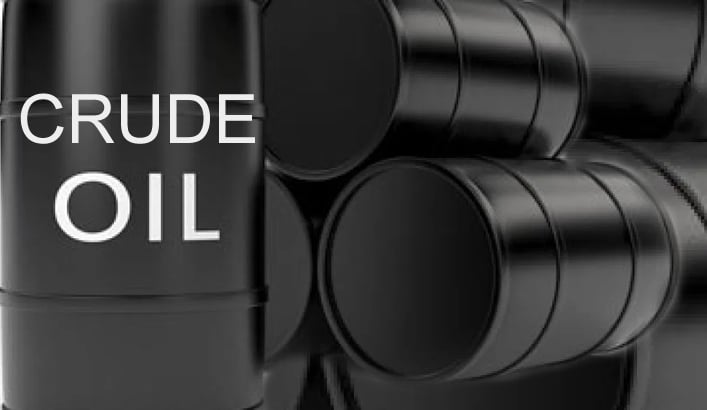
The United States sharply reduced its imports of Nigerian crude oil in January 2026, with purchases falling by approximately 47.16% month-on-month, according to the latest data from the U.S. Census Bureau and the U.S. Bureau of Economic Analysis.
Figures from the U.S. International Trade in Goods and Services report indicate that U.S. crude imports from Nigeria fell to 1.664 million barrels in January 2026, down from 3.149 million barrels recorded in December 2025. This represents a decline of 1.485 million barrels within one month, showing a significant contraction in Nigeria’s share of the U.S. crude market.
In value terms, the drop was equally steep. The customs value of Nigerian crude imports declined from $217.36m in December to $115.99m in January, while the cost, insurance, and freight value fell from $223.10m to $118.95m over the same period. The difference between the two measures reflects additional costs such as shipping and insurance included in CIF values, which are excluded from customs valuation.
This means that in January, the CIF value of Nigerian crude was about $2.96m higher than its customs value, compared to a wider gap of about $5.74m in December. The narrowing gap suggests relatively lower freight or insurance costs, or shorter shipping distances within the period.
The contraction comes amid a broader slowdown in total U.S. crude imports, which declined from 198.29 million barrels in December to 188.21 million barrels in January, representing a drop of about 5.1 per cent. Total import value also fell, with customs value decreasing from $11.41bn to $10.56bn, while CIF value dropped from $12.04bn to $11.15bn.
Within Africa, Nigeria lost ground to some peers. While total African crude exports to the U.S. remained flat at 6.933 million barrels, Angola recorded a sharp increase, rising from 575,000 barrels in December to 2.062 million barrels in January.
Ghana also emerged as a new supplier with 738,000 barrels, having recorded no measurable exports in December. By contrast, Libya saw its exports to the U.S. decline from 2.137 million barrels to 1.086 million barrels over the period.
Nigeria’s share of total U.S. crude imports also weakened. The country accounted for roughly 0.88 per cent of total U.S. crude imports in January, down from about 1.59 per cent in December, reflecting the sharp reduction in volumes.
Further analysis of U.S. trade data shows that crude oil remains the dominant component of Nigeria’s exports to the United States. Total U.S. imports from Nigeria stood at $183m in January 2026, compared to $297m in December 2025.
With crude oil imports valued at $115.99m (customs basis) and $118.95m on a CIF basis, crude accounted for approximately 63.4 per cent to 65.0 per cent of total U.S. imports from Nigeria in January. This compares with about 73.2 per cent in December on a customs basis, indicating a relative moderation in crude dominance as overall imports declined.
Newsmen further observed that the U.S. recorded a goods trade surplus of $419m with Nigeria in January, up from $84m in December. This was driven by a rise in U.S. exports to Nigeria, which increased from $381m to $602m, even as imports from Nigeria declined.
Across Africa, the U.S. posted a trade deficit of $503m in January, reversing a $174m surplus recorded in December. Total U.S. imports from Africa rose from $2.88bn to $3.54bn, while exports to the region edged slightly lower from $3.05bn to $3.04bn.
According to an earlier report that Nigeria accounted for about 52 per cent of Africa’s crude oil exports to the United States in 2025. According to the previous report, total U.S. crude imports from Africa stood at 89.371 million barrels in 2025, down from 103.631 million barrels in 2024, representing a decline of 14.26 million barrels or 13.8 per cent.
Of the 89.371 million barrels of crude imported from Africa in 2025, Nigeria supplied 46.618 million barrels, down from 50.793 million barrels in 2024—a year-on-year decline of 4.175 million barrels, or 8.2%.


Former Governor of Kaduna State, Nasir El-Rufai, has failed to persuade the Federal High Court in Abuja to stop the Independent Corrupt Practices and Other Related Offences Commission (ICPC) and other anti-graft agencies in the country from freezing his bank accounts.
In a ruling by Justice Joyce Abdulmalik, the court dismissed a suit filed by the former governor, who has been in detention, seeking an order restraining federal government agencies from moving against his assets.
The court held that the suit not only lacked merit but was speculative, as no reasonable cause of action was disclosed against the agencies the applicant listed as defendants.
Therefore, the Economic and Financial Crimes Commission (EFCC), the Department of State Services (DSS) and the Attorney General of the Federation (AGF) were struck out from the case.
In the suit he filed on February 24, El-Rufai prayed the court for an interim injunction directing the respondents to maintain the status quo ante regarding his assets.
According to him, the order was necessary to prevent him from being placed in a state of helplessness. He insisted that the severance pay he received upon completing his tenure as governor of Kaduna State between 2015 and 2023 could not reasonably be suspected to be proceeds of any unlawful activity.
He urged the court to declare that properties purchased from his severance pay were lawfully acquired.
The banks the applicant prayed the court to protect from the respondents included Zenith Bank Plc, Naira Account Number: 1007158671; Zenith Bank Plc, Domiciliary Account Number: 507 1511327; Guaranty Trust Bank (GTB) Plc, Account Number: 0023824978; Access Bank, Dollar Account Number: 1396386493; and Access Bank, Naira Account Number: 1396382103.
El-Rufai also sought a declaration that any attempt by the respondents to apply for, obtain or execute any interim or final forfeiture or freezing order, without first establishing a reasonable suspicion supported by credible evidence as required by relevant law, would amount to a breach of his rights.
He relied on Section 17(1) of the Advance Fee Fraud and Other Related Offences Act, 2006, and the Supreme Court decision in Melrose General Services Ltd v. EFCC (2024) SC/1519/2019, to pray the court to declare that, as a citizen of Nigeria, he is entitled to the presumption of innocence and the protection of his fundamental rights.
He argued that any action by the respondents seeking to circumvent his constitutionally guaranteed rights through ex parte applications that conceal material facts would amount to a breach of Section 36(5) of the Constitution and a violation of the principles of fair hearing.

The Federal Government is working to bring down inflation to single digits, Bayo Onanuga, Presidential spokesman, has said.
Onanuga said this while announcing additional measures that the government introduced to support Nigerians amid the global fuel crisis.
Earlier on Thursday, Minister of Finance, Taiwo Oyedele, announced that fuel would be sold at a discounted rate across NNPC filling stations for 30 days.
Although the minister made it clear that the move is not an attempt to reintroduce subsidy, many Nigerians, especially on social media, described it as an attempt to subsidize the product.
In his statement, Onanuga said, “The Nigerian National Petroleum Company (NNPC) agreed today to forgo its petrol retail profit margin and sell to Nigerians at cost to cushion the impact of global crude oil price shocks and volatility on vulnerable households.
“NNPC Retail, which already sells petrol at the lowest price in the market, will offer this new deal within the next 30 days. This means if NNPC’s landing cost is N1300, it will sell fuel to Nigerians, especially commercial vehicles, at the same price.
“The company’s discount gesture, backed by President Bola Ahmed Tinubu, was among the raft of measures the Finance Minister and Coordinating Minister of the Economy, Taiwo Oyedele, announced today.
“Oyedele said he hoped other marketers would take a cue from the NNPC, as the sharp rise in crude and petrol prices is not expected to last long.
“Oyedele was emphatic that NNPC agreeing to sell at a discount must not be misinterpreted as the restoration of petrol subsidy, which ended on May 29, 2023.”
Onanuga added that “The Federal Government is also working on a comprehensive package of fiscal measures to bring inflation down to single digits sustainably in the near term.”

At least three people were killed and two others injured after gunmen attacked a construction site along the Sokoto-Badagry Superhighway in Maiyama Local Government Area , the victims included two security operatives and an expatriate working on the road construction project, while two civilians sustained gunshot injuries.
The incident occurred at a construction site in Gubba Village, Andarai District of Maiyama LGA, according to the Kebbi State Police Public Relations Officer, Superintendent Bashir Usman.
Usman said the attackers, suspected to be Lakurawa terrorists from the Kebbe axis of neighbouring Sokoto State, stormed the construction site and opened fire on the workers.
He said two civilians were also injured during the attack and were evacuated to a hospital for treatment.
The police spokesperson said another attack by the suspected terrorists was recorded the same day along the Birnin Malam axis but was repelled by police teams.
He added that joint security forces had responded to the incidents, with tactical teams deployed to strengthen security and prevent further attacks.
Following the attack, construction activities at the affected site were suspended as security agencies intensified surveillance and deployed additional personnel to the area.
The police assured workers on the project of continued security protection and urged them to remain calm as efforts continued to safeguard lives and property.
-
 Health & Wellness1 year ago
President Tinubu Directs Cut in Dialysis Cost from ₦50,000 to ₦12,000
-
News2 years ago
CBN Debunks Fake Circular on New ₦5,000 and ₦10,000 Notes
-

 International News6 months ago
Indian Police Arrest Nigerian Over ₦290m Drug Haul
-
 Business7 months ago
Dangote Refinery Reduces Petrol Gantry Price To ₦1,200 Per Litre
-
 Business7 months ago
After Plea Bargain, Court Discharges Stella Oduah of ₦2.5bn Fraud
-
Business2 years ago
Dangote; We Did Not Fix ₦600/Litre Petrol Price
-
 Trending News1 year ago
NELFUND Disburses ₦86bn To 449,000 Beneficiaries
-
 Opinion2 years ago
Championing the People’s Voice: Obasa’s Dedication to Grassroots Representation By Dave Agboola⁰