
News
INEC Puts Voter Revalidation Exercise On Holde

The Independent National Electoral Commission (INEC) has directed all Resident Electoral Commissioners (RECs) to step down all publicity and arrangements for the planned voter revalidation exercise.
The directive came amid concerns by stakeholders over the exercise.
A letter addressed to RECs, dated April 4, 2026, signed by its Secretary, Rose Oriaran-Anthony, asked them to await further directives from the commission.
The notice said the meeting of the commission with RECs, scheduled for April 9 at 11am will now hold via zoom.
The INEC had announced a nationwide revalidation exercise aimed at sanitising the voter register by removing ineligible entries and strengthening the credibility of future elections.
Opposition rejects exercise
The African Democratic Congress (ADC) alleged that the voter revalidation exercise would be a “recipe for chaos” as it could disenfranchise millions of Nigerians ahead of the elections.
In a statement signed by National Publicity Secretary, Mallam Bolaji Abdullahi, the party argued that requiring already registered voters to revalidate their details less than 10 months to the polls would suppress turnout, deepen voter apathy and unfairly exclude those unable to travel.
The ADC also questioned why such a major exercise is emerging just days to its proposed commencement, cautioning the INEC against actions that could be perceived as aiding “electoral manipulation.”
It urged the commission to abandon the plan and reassure Nigerians of its commitment to a credible and inclusive electoral process.”
“Coming less than ten months to a general election, such an exercise risks disenfranchising millions of Nigerians. It is already difficult enough to get citizens to register to vote in the first place. To now require them to return and “revalidate” their registration is, in effect, to ask them not to bother at all.
The faction of the Peoples Democratic Party (PDP), led by Kabiru Tanimu Turaki, described the timing of the planned voter revalidation exercise as “suspicious”.
Reports quoted it’s National Publicity Secretary, Ini Ememobong, as saying that the exercise was seen as an attempt to disenfranchise many Nigerians.
“The timing of the exercise is suspicious, especially with the manner the commission has been acting. The question is, why now? Why wasn’t it done a year or two ago? This can be seen as an attempt to disenfranchise Nigerians,” he said.
It’s ploy to reduce North’s voting strength’
A group, known as Concerned Former Legislators, in a statement titled ‘A Call to Northern Stakeholders on the Proposed PVC Revalidation Exercise’ and signed by Hon. Ayuba Mohammed Bello, said any policy that creates the impression of selective disenfranchisement must be approached with extreme caution.
The statement was addressed to the Arewa Consultative Forum (ACF), the Arewa Elders Forum (AEF), the League of Northern Democrats (LND), the Northern Governors Forum, the Northern Caucuses in the National Assembly, traditional institutions across the 19 northern states, Muslim and Christian clerics, youth and students organizations, northern Political pressure groups as well as former Heads of State, Generals Yakubu Gowon (Rtd), Ibrahim Badamasi Babangida (Rtd) and Abdulsalami Abubakar (Rtd) “whose voices still carry immense moral authority in shaping national direction.”
According to the group, “There is a growing and widespread perception across the North that this revalidation exercise is not merely administrative, but strategically timed and structured in a way that could significantly reduce the voting strength of the region ahead of the 2027 general elections.
“We write this as a matter of urgent collective concern that touches the very foundation of our democratic participation and political relevance as a people.”
The group called on all northern leaders and institutions to rise above silence and act in defence of democratic fairness.
“If, for any reason, INEC insists that revalidation is necessary, then fairness demands that the exercise be suspended until after the 2027 general elections, or it can be conducted only when security conditions have significantly improved, allowing full participation. Anything short of this risks undermining the credibility of the electoral process,” it added.
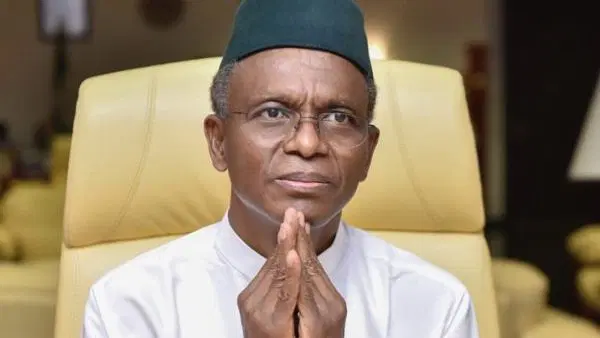
Former Governor of Kaduna State, Nasir El-Rufai, has failed to persuade the Federal High Court in Abuja to stop the Independent Corrupt Practices and Other Related Offences Commission (ICPC) and other anti-graft agencies in the country from freezing his bank accounts.
In a ruling by Justice Joyce Abdulmalik, the court dismissed a suit filed by the former governor, who has been in detention, seeking an order restraining federal government agencies from moving against his assets.
The court held that the suit not only lacked merit but was speculative, as no reasonable cause of action was disclosed against the agencies the applicant listed as defendants.
Therefore, the Economic and Financial Crimes Commission (EFCC), the Department of State Services (DSS) and the Attorney General of the Federation (AGF) were struck out from the case.
In the suit he filed on February 24, El-Rufai prayed the court for an interim injunction directing the respondents to maintain the status quo ante regarding his assets.
According to him, the order was necessary to prevent him from being placed in a state of helplessness. He insisted that the severance pay he received upon completing his tenure as governor of Kaduna State between 2015 and 2023 could not reasonably be suspected to be proceeds of any unlawful activity.
He urged the court to declare that properties purchased from his severance pay were lawfully acquired.
The banks the applicant prayed the court to protect from the respondents included Zenith Bank Plc, Naira Account Number: 1007158671; Zenith Bank Plc, Domiciliary Account Number: 507 1511327; Guaranty Trust Bank (GTB) Plc, Account Number: 0023824978; Access Bank, Dollar Account Number: 1396386493; and Access Bank, Naira Account Number: 1396382103.
El-Rufai also sought a declaration that any attempt by the respondents to apply for, obtain or execute any interim or final forfeiture or freezing order, without first establishing a reasonable suspicion supported by credible evidence as required by relevant law, would amount to a breach of his rights.
He relied on Section 17(1) of the Advance Fee Fraud and Other Related Offences Act, 2006, and the Supreme Court decision in Melrose General Services Ltd v. EFCC (2024) SC/1519/2019, to pray the court to declare that, as a citizen of Nigeria, he is entitled to the presumption of innocence and the protection of his fundamental rights.
He argued that any action by the respondents seeking to circumvent his constitutionally guaranteed rights through ex parte applications that conceal material facts would amount to a breach of Section 36(5) of the Constitution and a violation of the principles of fair hearing.
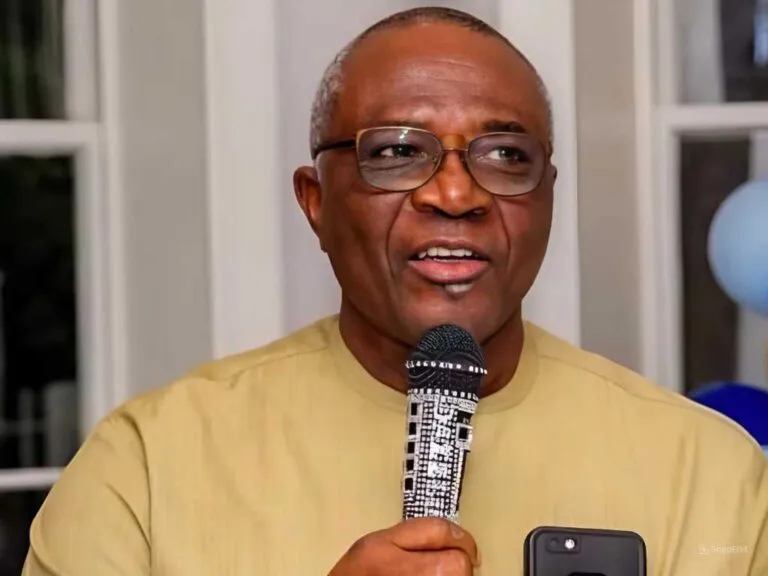
The Federal Government is working to bring down inflation to single digits, Bayo Onanuga, Presidential spokesman, has said.
Onanuga said this while announcing additional measures that the government introduced to support Nigerians amid the global fuel crisis.
Earlier on Thursday, Minister of Finance, Taiwo Oyedele, announced that fuel would be sold at a discounted rate across NNPC filling stations for 30 days.
Although the minister made it clear that the move is not an attempt to reintroduce subsidy, many Nigerians, especially on social media, described it as an attempt to subsidize the product.
In his statement, Onanuga said, “The Nigerian National Petroleum Company (NNPC) agreed today to forgo its petrol retail profit margin and sell to Nigerians at cost to cushion the impact of global crude oil price shocks and volatility on vulnerable households.
“NNPC Retail, which already sells petrol at the lowest price in the market, will offer this new deal within the next 30 days. This means if NNPC’s landing cost is N1300, it will sell fuel to Nigerians, especially commercial vehicles, at the same price.
“The company’s discount gesture, backed by President Bola Ahmed Tinubu, was among the raft of measures the Finance Minister and Coordinating Minister of the Economy, Taiwo Oyedele, announced today.
“Oyedele said he hoped other marketers would take a cue from the NNPC, as the sharp rise in crude and petrol prices is not expected to last long.
“Oyedele was emphatic that NNPC agreeing to sell at a discount must not be misinterpreted as the restoration of petrol subsidy, which ended on May 29, 2023.”
Onanuga added that “The Federal Government is also working on a comprehensive package of fiscal measures to bring inflation down to single digits sustainably in the near term.”
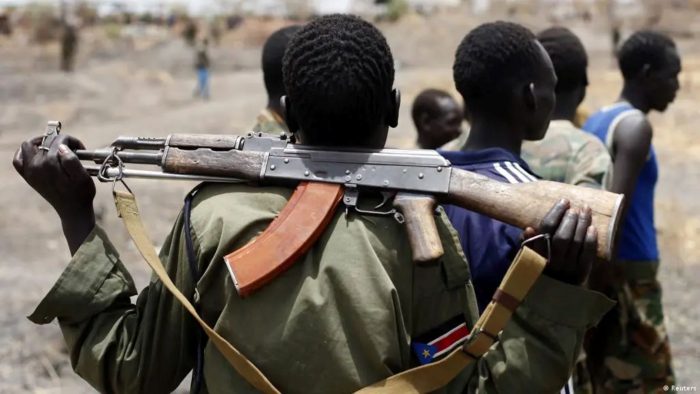
At least three people were killed and two others injured after gunmen attacked a construction site along the Sokoto-Badagry Superhighway in Maiyama Local Government Area , the victims included two security operatives and an expatriate working on the road construction project, while two civilians sustained gunshot injuries.
The incident occurred at a construction site in Gubba Village, Andarai District of Maiyama LGA, according to the Kebbi State Police Public Relations Officer, Superintendent Bashir Usman.
Usman said the attackers, suspected to be Lakurawa terrorists from the Kebbe axis of neighbouring Sokoto State, stormed the construction site and opened fire on the workers.
He said two civilians were also injured during the attack and were evacuated to a hospital for treatment.
The police spokesperson said another attack by the suspected terrorists was recorded the same day along the Birnin Malam axis but was repelled by police teams.
He added that joint security forces had responded to the incidents, with tactical teams deployed to strengthen security and prevent further attacks.
Following the attack, construction activities at the affected site were suspended as security agencies intensified surveillance and deployed additional personnel to the area.
The police assured workers on the project of continued security protection and urged them to remain calm as efforts continued to safeguard lives and property.
-
 Health & Wellness1 year ago
President Tinubu Directs Cut in Dialysis Cost from ₦50,000 to ₦12,000
-
News2 years ago
CBN Debunks Fake Circular on New ₦5,000 and ₦10,000 Notes
-

 International News6 months ago
Indian Police Arrest Nigerian Over ₦290m Drug Haul
-

 Business7 months ago
Dangote Refinery Reduces Petrol Gantry Price To ₦1,200 Per Litre
-

 Business7 months ago
After Plea Bargain, Court Discharges Stella Oduah of ₦2.5bn Fraud
-
Business2 years ago
Dangote; We Did Not Fix ₦600/Litre Petrol Price
-
 Trending News1 year ago
NELFUND Disburses ₦86bn To 449,000 Beneficiaries
-
 Opinion2 years ago
Championing the People’s Voice: Obasa’s Dedication to Grassroots Representation By Dave Agboola⁰