
News
SERAP Appeals N100m DSS Defamation Judgment

The Socio-Economic Rights and Accountability Project (SERAP) has appealed the N100 million defamation judgment delivered against it by the High Court of the Federal Capital Territory, Abuja, in favour of officials of the Department of State Services.
According to a statement issued on Tuesday by SERAP Deputy Director, Kolawole Oluwadare, the organisation also filed an application seeking a stay of execution of the judgment pending the determination of the appeal.
The appeal, filed on Friday by Tayo Oyetibo, SAN, challenged the May 5, 2026 judgment delivered by Justice Yusuf Halilu, which awarded N100 million in damages to DSS officials Sarah John and Gabriel Ogundele over alleged defamation.
The court had also ordered SERAP to publish public apologies, pay N1 million in litigation costs and a 10 per cent annual post-judgment interest on the damages until fully paid.
SERAP described the ruling as “a travesty and miscarriage of justice,” arguing that the judgment was legally and procedurally flawed.
The organisation stated that its notice of appeal would be amended after obtaining the Certified True Copy of the judgment to include additional portions highlighting what it called defects in the ruling.
In the appeal, SERAP argued that the trial court relied on defective evidence, including a witness statement allegedly not sworn before a Commissioner for Oaths.
It partly reads, “The lower court erred in law in holding that the words complained of were published of and concerning the Claimants personally, contrary to the established objective test for identification in the tort of defamation.
“Particulars Of Error: the lower court failed to apply the objective test laid down by the Supreme Court in Ologe v. New Africa Holdings Ltd and Abalaka v. Akinsete, which requires that words be understood as referring to the claimant by right-thinking members of society generally, not by a specialised or institutional group.
“The lower court erroneously relied on the subjective perception of the respondents and their colleagues within the Department of State Services (the ‘DSS’.”
SERAP further argued that the court failed to uphold its defences of justification, qualified privilege and fair comment, insisting that the publications were substantially true and made in the public interest.
The organisation also maintained that the DSS officials failed to prove reputational injury, financial loss or any actual harm resulting from the publications.
“The lower court failed to apply the settled principle of law that an individual member of a large class, body, or institution cannot maintain an action for defamation unless the words complained of, clearly and specifically identify that individual,” it reads.
“The DSS is a large institution, and the words complained of did not specifically, directly, or uniquely identify the Respondents.”
“The Respondents had no locus standi to maintain an action against SERAP. The lower court lacked jurisdiction to entertain the Respondents’ action.”
SERAP is asking the Court of Appeal to set aside the entire judgment and dismiss the suit for lacking merit. In its application for stay of execution, the organisation warned that enforcing the judgment could severely disrupt its operations and affect ongoing human rights, transparency and accountability programmes.
SERAP stated that execution of the judgment could also hinder its ability to finance and pursue the appeal process effectively.
“Thousands of individuals and communities depend on SERAP’s work, including victims of human rights violations and beneficiaries of its advocacy, investigations, and legal interventions. Halting our operations would have far-reaching consequences for public interest work and access to justice in Nigeria.”
“SERAP is committed to pursuing the appeal diligently and in accordance with the rule of law. The case raises broader concerns about the protection of civic space, the ability of civil society organisations to operate without undue interference, and the importance of safeguarding public interest advocacy.”
“The enforcement of the judgment would deprive SERAP of its constitutional right of appeal, as it would be unable to adequately finance the prosecution of its appeal to the Court of Appeal. The balance of convenience is in favour of the granting of this application and/or making of the injunctive order sought.”
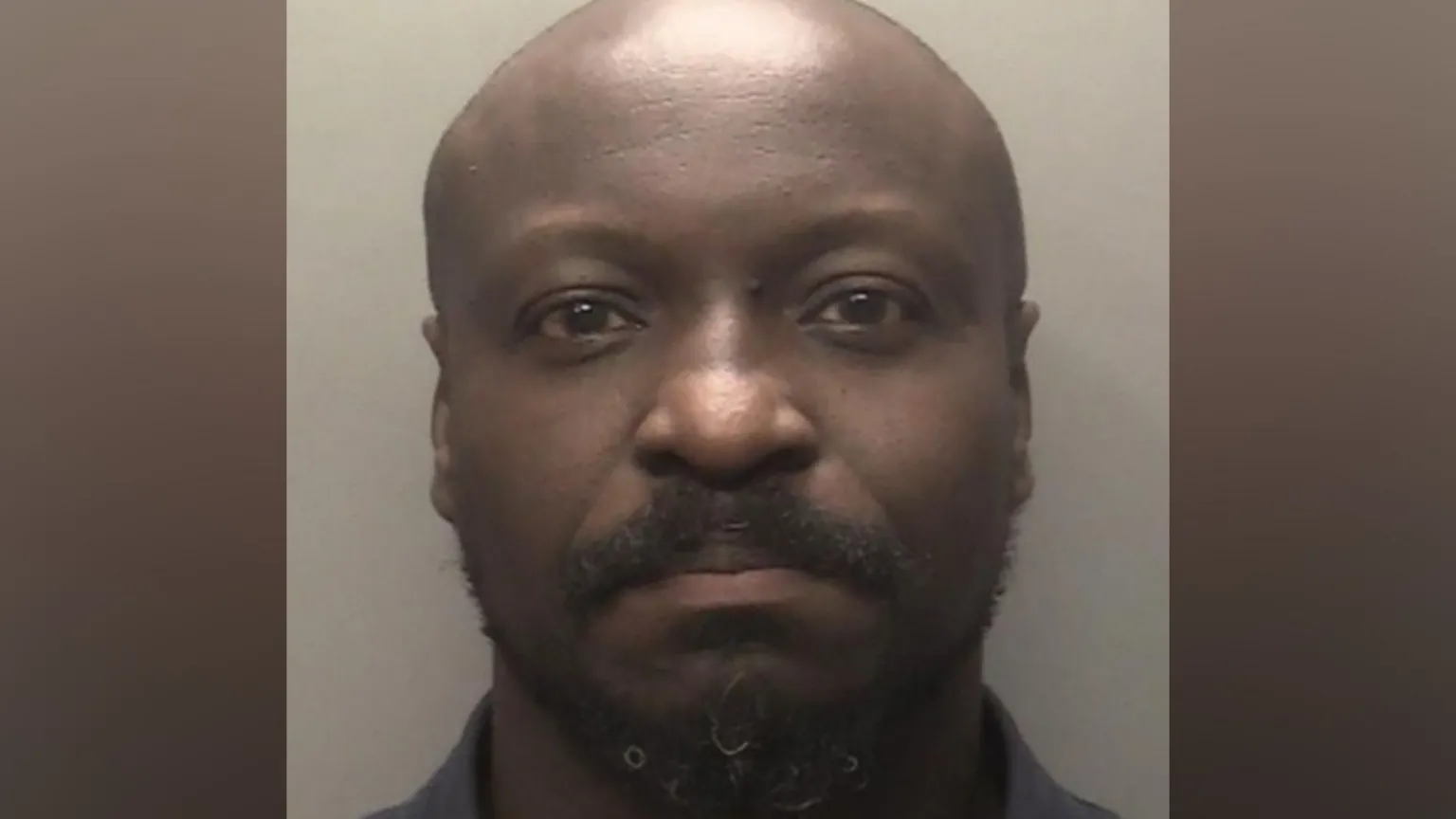
Brein Ayeni, the head of Christworld Nation church in Coventry, United Kingdom, has been sentenced to nearly 12 years in prison for repeatedly raping a woman who trusted him because of his religious position.
The 43-year-old Nigerian based in Hurst Road subjected his victim to repeated rapes and recorded some of the assaults, West Midlands police said.
He warned her he would share the footage if she tried to report the prolonged abuse, which began in June last year.
The woman reported Ayeni to police in March, and an investigation was launched.
In her impact statement, the victim said the title Ayeni held made her trust him, and that trust has been deeply damaged.
She said the abuse has affected her mental and emotional health to the point where she no longer feels like the same person she was before.
“The title he held made me trust him, and that trust has been deeply damaged. The impact on my mental and emotional health is that I do not feel like the same person I was before all of this happened,” she said.
“I struggle to trust people and allow them to get close to me because I am frightened of being taken advantage of me again. It has affected my family, who have had to watch someone they love go through something so painful.
“I understand how frightening it can be to speak up when you know that people may question you, judge you or turn against you. Reporting what happened took courage. It was not easy for me, and I have had to fight through fear, uncertainty and the emotional weight of revisiting these experiences.
“I am grateful for the people who have supported me. I do not want another woman to experience the fear, confusion, humiliation and emotional pain that I have had to live with.”
Ayeni was convicted of three counts of rape and another of coercive or controlling behaviour following a trial.
He was sentenced to 11 years and 9 months imprisonment at Warwick Crown Court on November 10.
Ayeni was also placed indefinitely on the sex offenders register.

The diplomatic row involving Nigeria’s High Commissioner to South Africa, Femi Fani-Kayode, and the South African authorities has deepened, with Pretoria summoning the Nigerian envoy over his allegations that his presentation of letters of credence to President Cyril Ramaphosa was deliberately excluded from a live broadcast.
South Africa also expressed concern over Fani-Kayode’s subsequent remarks on social media, invoking the 1961 Vienna Convention on Diplomatic Relations and insisting that official communication with the host government must be conducted through established diplomatic channels.
Director-General of South Africa’s Department of International Relations and Cooperation (DIRCO), Zane Dangor, conveyed the government’s position during a meeting with Fani-Kayode yesterday, following the controversy that erupted after the Nigerian envoy presented his credentials alongside 14 other foreign diplomats last Friday.
In a statement, DIRCO said Dangor expressed South Africa’s concern over developments following the ceremony and the Nigerian diplomat’s public comments, stressing the need to preserve the longstanding relationship between the two countries.
“The Director-General reaffirmed the importance of preserving the longstanding and historic bilateral relationship between South Africa and Nigeria, which is founded on mutual respect, friendship and cooperation,” the statement said.
The department disclosed that Dangor specifically drew Fani-Kayode’s attention to Article 41 of the Vienna Convention on Diplomatic Relations, which governs the conduct of diplomats in their host countries.
“Mr Dangor further recalled the provisions of Article 41 of the Vienna Convention on Diplomatic Relations (1961), which require diplomatic agents to conduct official business with the receiving State through the Ministry of Foreign Affairs.
“In this regard, it was emphasised that all official communication should be conducted through established diplomatic channels, including DIRCO,” the South African government stated.
The latest development followed a series of exchanges between Fani-Kayode, the South African Presidency and the South African Broadcasting Corporation (SABC) over the handling of the November 13 ceremony at the Sefako Makgatho Presidential Guest House in Pretoria.
Fani-Kayode, who presented his credentials alongside 14 other foreign envoys, alleged that his introduction and speech were deliberately excluded from the Presidency’s livestream, although the presentations of other diplomats were broadcast.
He claimed that the transmission was interrupted before his address and resumed after he had concluded his presentation to Ramaphosa.
The Nigerian envoy said he subsequently raised the matter with the South African President, who, according to him, intervened and directed officials to address the complaint.
However, Ramaphosa’s spokesperson, Vincent Magwenya, disputed aspects of Fani-Kayode’s account, explaining that the President had directed him to Sophie Mokoena, the SABC’s acting political and foreign editor, to resolve the broadcasting complaint.
The controversy took another turn when the Nigerian High Commission rejected Magwenya’s explanation and criticised his handling of the matter, widening what began as a disagreement over television coverage into a public exchange between the diplomatic mission and the South African Presidency.
The SABC subsequently defended its coverage, insisting that it operated as an independent public service broadcaster and that its editorial decisions were separate from the South African Presidency’s livestream arrangements.
In a statement issued on Sunday, the broadcaster said it covered the ceremony through its SABC News LIVE channel on SABC+ and also showed Fani-Kayode’s arrival on its television platform.
It disclosed that footage of the Nigerian envoy interacting with Ramaphosa had been published on its official social media account.
The broadcaster also expressed regret that Fani-Kayode declined an interview invitation following the ceremony, saying it remained willing to engage with him and the Nigerian High Commission.
However, the SABC’s explanation did not directly resolve the envoy’s complaint about the omission of his speech from the Presidency’s livestream.
The South African Presidency later released a recording containing Fani-Kayode’s address, although the development did not immediately end the disagreement.
Reports of the original broadcast indicated that the transmission appeared to develop a technical problem during the presentation by the French ambassador, Antoine Michon, who spoke immediately before Fani-Kayode. The available reports did not establish that the interruption was deliberate.
The diplomatic disagreement comes against the background of longstanding relations between Nigeria and South Africa, two major African economies whose ties have periodically been strained by attacks on foreign nationals, immigration-related tensions and disagreements over the treatment of Nigerian citizens.
Concerns over the safety of Nigerians in South Africa have remained a recurring issue in bilateral relations, with Nigerian authorities and lawmakers previously raising objections to attacks and harassment involving their citizens.
The latest dispute has therefore placed renewed attention on the conduct of diplomatic engagement between Abuja and Pretoria, particularly the procedures governing communication between foreign envoys and their host governments.
Despite the controversy, DIRCO maintained that South Africa remained committed to strengthening its strategic partnership with Nigeria and sustaining constructive diplomatic engagement in the spirit of African solidarity and mutual respect.

The Nigeria Labour Congress (NLC) and Trade Union Congress (TUC) have resolved to settle recent disagreements that stemmed from the N70,000 monthly transport allowance for public sector workers.
The reconciliation was announced on Wednesday during a joint press briefing addressed by leaders of both unions in Abuja.
The joint press statement was signed by Joe Ajaero, NLC president; Festus Osifo, TUC president; and Hassan Sunmonu, on behalf of former presidents of TUC and NLC
-
 Opinion2 years ago
Championing the People’s Voice: Obasa’s Dedication to Grassroots Representation By Dave Agboola⁰
-
News2 years ago
CBN Debunks Fake Circular on New ₦5,000 and ₦10,000 Notes
-
 Health & Wellness1 year ago
President Tinubu Directs Cut in Dialysis Cost from ₦50,000 to ₦12,000
-

 International News8 months ago
Indian Police Arrest Nigerian Over ₦290m Drug Haul
-

 Business8 months ago
Dangote Refinery Reduces Petrol Gantry Price To ₦1,200 Per Litre
-
 Business8 months ago
After Plea Bargain, Court Discharges Stella Oduah of ₦2.5bn Fraud
-
Business2 years ago
Dangote; We Did Not Fix ₦600/Litre Petrol Price
-
 Trending News1 year ago
NELFUND Disburses ₦86bn To 449,000 Beneficiaries