
Business
Wema Bank Sets Record Straight on NDIC’s Misleading Gulf Bank Claims


Wema Bank Plc has noted with concern recent media publications containing false, misleading, and wholly unsubstantiated allegations regarding the sale of certain Banana Island properties purportedly linked to the defunct Gulf Bank Plc. We unequivocally reject these claims, which are inaccurate, malicious, and clearly intended to distort the true position. For the benefit of our stakeholders—shareholders, customers, regulators, and the general public—we set out below the factual background to the transaction.
The Original Exposure and Default
In 2002, Wema Bank Plc (the Bank) made an inter-bank placement with Gulf Bank Plc in the sum of ₦4.6 billion. By August 2004, that exposure had been reduced to approximately ₦1.2 billion, after which the outstanding obligation became delinquent. In seeking to recover depositors’ and shareholders’ funds, Wema Bank pursued lawful recovery steps, which ultimately dovetailed into a criminal investigation of the then Managing Director of Gulf Bank Plc.
Based on the investigation of the Economic and Financial Crimes Commission (EFCC), the funds were found to have been diverted and used to acquire properties in Banana Island, Lagos, through two separate companies Bacad Finance & Investment Company Ltd (now known as Supra Commercial Trust Limited) and Euston Wenberg Eng Ltd. It is important to note that neither Bacad Finance & Investment Company Ltd (nor its successor, Supra Commercial Trust Limited) nor Euston Wenberg Eng Ltd is one and the same as Gulf Bank Plc. They are separate and distinct entities with no identity or equivalence to Gulf Bank. And the two companies are not subject to NDIC supervision.
In the course of its investigation, the EFCC conducted asset-tracing exercises that uncovered significant underlying fraud on a substantial scale. Following the EFCC’s findings, Bacad Finance & Investment Company Ltd and Euston Wenberg Eng Ltd voluntarily relinquished their proprietary interests in the Banana Island properties towards the satisfaction of Gulf Bank Indebtedness to Wema Bank. That process formed part of Wema Bank’s lawful recovery efforts and underscores the legitimacy of its actions against Gulf Bank.
NDIC’s Acknowledgment, Admission of Indebtedness, and Payment of Shortfall.
Critically, following the liquidation of Gulf Bank, Nigeria Deposit Insurance Corporation (NDIC) admitted Gulf Bank’s indebtedness to Wema Bank in two separate letters:
A letter dated September 26, 2007, addressed to the Federal Land Registry;
and
A letter dated June 10, 2009, addressed directly to Wema Bank Plc.
These letters constitute clear and formal recognition by the NDIC of the validity of Wema Bank’s claim against the defunct Gulf Bank and its interest over the property in question. Fortunately, both letters form part of the documents frontloaded by NDIC lawyer Dr. Dada Awosika SAN in court in the ongoing proceedings before Justice Allagoa of the Federal High Court Lagos.
Furthermore, after the sale of the properties, the NDIC in fact paid to Wema Bank, the shortfall of what was due to the Bank. These facts demonstrate that the NDIC was not only aware of the transaction but actively participated in settling the outstanding balance following the sale.
In light of the foregoing:
the voluntary relinquishment by Bacad (now Supra Commercial Trust Limited) and Euston Wenberg (distinct entities not constituting Gulf Bank), of the properties in Banana Island for the settlement of the indebtedness of the defunct Gulf Bank
the NDIC’s formal admission of Gulf Bank’s indebtedness to Wema Bank via its letters of September 26, 2007 (to the Federal Land Registry) and June 10, 2009 (to Wema Bank), both of which have been frontloaded in court by NDIC itself, and the acknowledgement of the relinquishment of the Banana Island properties, and
the NDIC’s own payment of the shortfall to Wema Bank,
NDIC is precluded from and cannot in good faith contest the relinquishment of those interests or the appropriateness of Wema Bank’s recovery efforts.
While we acknowledge that the NDIC has recently commenced two separate actions against Wema Bank at the Federal High Court, Lagos, purportedly in its capacity as liquidator of Gulf Bank Plc pursuant to a winding-up order, those proceedings do not alter the material facts stated above. As these matters are currently before the court and therefore sub judice, Wema Bank will refrain from commenting further on issues that fall for judicial determination. The Bank is taking all necessary steps to contest the suits filed in court and will explore all legal and legitimate means to protect its rights and interests.
Conclusion
Wema Bank Plc remains steadfast in its commitment to the highest standards of corporate governance, regulatory compliance, and transparency. We reaffirm our dedication to ethical and prudent banking practices and assure our shareholders, customers, regulators, and all relevant stakeholders that the Bank will continue to act responsibly, lawfully, and in the best interests of all parties it serves. The Bank will continue to exert its rights and will not succumb to the shenanigans of unscrupulous individuals who want to reap where they did not sow.
FOR FURTHER INFORMATION:
For further information, please contact:
Johnson Lebile
General Counsel/Legal Adviser
[email protected]
About WEMA Bank Plc
Wema Bank Plc (NGX: WEMA BANK) is the pioneer of Africa’s first fully digital bank, ALAT, and one of Nigeria’s most resilient banks. With decades of experience in the business of banking, the Bank has remained innovative in delivering value to its stakeholders. Wema Bank operates a network of over 150 branches and service stations backed by a robust ICT platform. The publicly quoted Nigerian company has successfully built a legacy of trust and resilience that has won it the loyalty of its customers. The Bank is constantly introducing products and services tailored to the needs of its customers at every stage of their lives. It is a proud partner to more than one million individuals, families and businesses across Nigeria, helping them achieve their personal and financial goals.
More information can be found at https://www.wemabank.com/about-us/
The Corporate Affairs Commission, CAC has revealed plans to expose the real owners behind Nigerian companies.
Hussaini Ishaq Magaji, Registrar-General of the CAC, made the disclosure at an engagement with journalists on Tuesday in Abuja.
According to him, there are legal owners of Nigerian companies and real individuals behind the corporate structure.
He said there is an urgent need for the public to know the real human beings behind corporate entities under its beneficial ownership disclosure framework.
He added that the move would help track illicit financial inflows within the country’s corporate ecosystem.
“In simple terms, there may be a legal owner on paper and the real person behind the corporate structure.
“We want to know the human being behind the corporate structure. And that is why beneficial ownership disclosure is not merely a bureaucratic requirement,” Magaji said.
The Central Bank of Nigeria (CBN) has rolled out a stronger supervisory framework that seeks to deter the use of Nigerian banks and financial institutions for terrorism financing and other abuses.
In a statement, the apex bank’s Acting Director, Corporate Communications/Investor Relations Department, Hakama Sidi-Ali, said the CBN has made terrorism financing supervision one of its current priorities.
According to her, the focus is part of the bank’s ongoing commitment to protecting the Nigerian financial system from abuse by illicit actors.
She explained that this new push covers four broad areas including how financial institutions manage terrorism financing risk, how they monitor transactions for signs of terrorism financing, how they carry out targeted financial sanctions, and how they report suspicious transactions linked to terrorism.
She said the apex bank would not be sitting back and waiting for problems to surface on their own, rather it plans to use a risk-based approach, which means banks and institutions seen as more exposed to this kind of risk will attract closer attention.
Sidi-Ali said: “This supervisory focus also supports Nigeria’s ongoing domestic and international cooperation on counter-terrorism financing, counter-proliferation financing, financial integrity, and the protection of the financial system. Further supervisory engagement will be undertaken as appropriate.”
According to her, the bank will continue to apply a risk-based supervisory approach, including on-site and off-site engagement, to support effective Anti-Money Laundering, Combating the Financing of Terrorism, and Countering Proliferation Financing (AML/CFT/CPF) controls across the financial sector in line with existing legal and regulatory obligations.
She added that further supervisory engagement will be undertaken as appropriate, suggesting that more steps could follow depending on what its checks turn up.
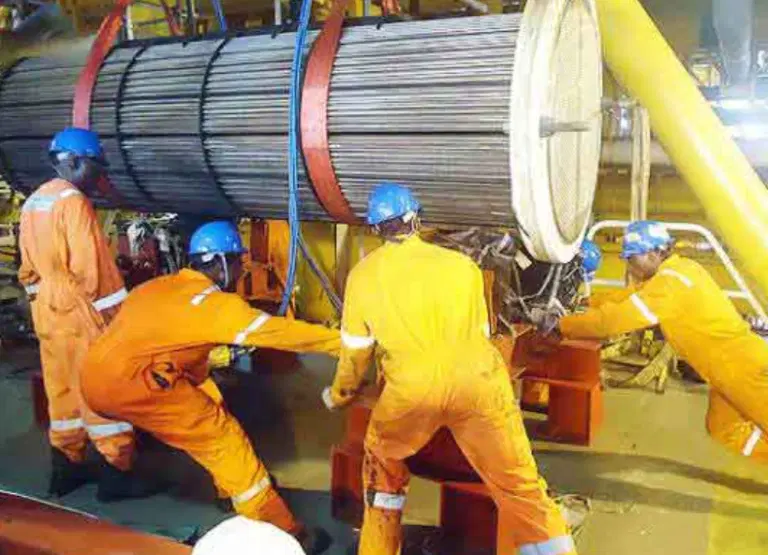
Nigeria’s 4.43 percent economic growth in the second quarter of 2026 (Q2’26) is masking a deepening industrial crisis, with manufacturing and the broader industrial sector losing ground as services increasingly dominate economic activity, the Manufacturers Association of Nigeria, MAN, has warned.
Reacting to the National Bureau of Statistics, NBS, Q2 2026 GDP, report, yesterday, MAN Director-General, Segun Ajayi-Kadir, said the 4.43 per cent year-on-year real GDP growth recorded in the quarter, up from 3.89 per cent in Q1 2026 and 4.23 percent in Q2 2025, masks deep-seated weaknesses in the real economy.
He noted that services accounted for 56.62 per cent of GDP in Q2, while the broader industrial sector contributed only 17.23 per cent and suffered a dramatic slowdown in growth.
“The growth trajectory remains disproportionately service-driven (56.62 per cent of GDP), while the broader industrial sector (17.23 per cent of GDP) is visibly suffocating under severe structural headwinds,” Ajayi-Kadir said.
He described the near-halving of industrial growth as particularly alarming, noting that it fell from 7.46 pe rcent in Q2 2025 to 3.96 per cent in Q2 2026.
According to him, the sharp deterioration was driven largely by the electricity, gas, steam and air-conditioning supply segment, which contracted by 10.63 per cent during the quarter.
MAN also noted that manufacturing’s share of real GDP plunged from 9.57 per cent in Q1 2026 to 7.72 per cent in Q2, while real manufacturing growth eased marginally from 3.29 per cent to 3.24 per cent.
Ajayi-Kadir attributed the weakening performance to the combination of high production costs, exchange-rate pressures, prohibitive interest rates and soaring electricity tariffs confronting manufacturers.
He warned that continued dependence on services and extraction would leave Nigeria vulnerable to external shocks while doing little to expand productive capacity.
“Ultimately, headline GDP growth driven by non-tradable service activities will fail to strengthen foreign exchange reserves, reduce structural inflation, or create sustainable mass industrial jobs. A nation that trades and consumes what it does not produce builds prosperity on quicksand.”
MAN said the trend portends employment fragility, an inflationary spiral, greater FX vulnerability, and erosion of industrial capacity and technological capability.
To reverse the slide, MAN called for urgent intervention in power, industrial finance, FX allocation and local procurement.
It recommended direct power purchase agreements for industrial clusters, matching grants for manufacturers investing in solar and battery systems, credit guarantees to force down lending rates, and a dedicated FX clearance window for raw materials and capital machinery, amongst others.
MAN also demanded stronger enforcement of local procurement, incentives for vehicle assembly, tax relief for domestic supply chains and legally binding implementation of the Nigeria Industrial Policy.
Ajayi-Kadir said Nigeria must urgently move from consumption-led growth to production-led growth, warning that without a stronger manufacturing base, impressive GDP numbers would remain largely disconnected from improvements in living standards and economic prosperity.
-
 Health & Wellness1 year ago
President Tinubu Directs Cut in Dialysis Cost from ₦50,000 to ₦12,000
-
 News1 year ago
PICTURE: In Lagos Couple Sentenced to 22½ Years for Cannabis Trafficking
-
 Business6 months ago
Dangote Refinery Reduces Petrol Gantry Price To ₦1,200 Per Litre
-
 Trending News1 year ago
NELFUND Disburses ₦86bn To 449,000 Beneficiaries
-
 Business2 years ago
Heritage Bank Customers’ Path to Securing ₦5m Insured Funds: A Step-By-Step Guide by NDIC”
-
Business2 years ago
Dangote; We Did Not Fix ₦600/Litre Petrol Price
-

 International News6 months ago
Indian Police Arrest Nigerian Over ₦290m Drug Haul
-

 Business6 months ago
After Plea Bargain, Court Discharges Stella Oduah of ₦2.5bn Fraud