
Business
CBN Revokes Operating Licences Of 46 Microfinance Banks

The Central Bank of Nigeria (CBN) has announced the revocation of the operating licences of forty-six microfinance banks.
According to a statement signed by the apex bank’s Acting Director of Corporate Communications, Hakama Sidi-Ali, the move takes immediate effect.
“The Central Bank of Nigeria (CBN) has revoked the operating licences of forty-six (46) Microfinance Banks with effect from July 1, 2026, in accordance with its powers under Sections 12 and 13 of the Banks and Other Financial Institutions Act (BOFIA), 2020,” the statement published on the CBN’s website read in part.
CBN Governor Olayemi Cardoso approved the revocation following the banks’ failure to meet regulatory requirements for continued operation as licensed financial institutions.
“According to the revocation order, the action became necessary because of one or more of the circumstances listed below: i. Insufficient assets to meet liabilities; ii. Closure of operations without the CBN’s approval; iii. Inactivity and cessation of financial intermediation; iv. Failure to commence operations within 12 months of licence approval; and v. Failure to maintain minimum capital funds unimpaired by losses,” the bank said.
The revocation of the licences is part of the CBN’s ongoing efforts to safeguard the stability of the financial sector, protect depositors, and ensure that licensed institutions comply with current laws and regulatory requirements.
“The Central Bank of Nigeria remains committed to promoting a safe, sound, and resilient financial system and will continue to take appropriate supervisory and regulatory actions, where necessary, to maintain public confidence in the Nigerian financial system,” the bank added.
CBN Licence Revocation: See Full List Of Affected Microfinance Banks
Below is a full list of the microfinance banks with their operating licences revoked:
| S/NO | MFB NAME | CATEGORY | STATE |
|---|---|---|---|
| 1 | Minji-Se Churchill MFB | Tier 1 | Rivers |
| 2 | Merchant MFB | Tier 2 | Abia |
| 3 | Janmaa MFB | Tier 1 | Kwara |
| 4 | Busu MFB | Tier 2 | Niger |
| 5 | Gold MFB | Tier 1 | Lagos |
| 6 | Zain MFB (formerly Dawakin Tofa MFB) | Tier 2 | Kano |
| 7 | Bompai MFB | Tier 1 | Kano |
| 8 | Ajwa MFB (Formerly Gezawa) | Tier 2 | Kano |
| 9 | NOW NOW DIGITAL MFB | Tier 2 | Kano |
| 10 | Crystabel Microfinance Bank | Tier 1 | Bayelsa |
| 11 | Chanelle MFB | State | Lagos |
| 12 | Abia SME MFB | Tier 1 | Abia |
| 13 | Kamba MFB | Tier 2 | Kebbi |
| 14 | Iwade MFB | Tier 2 | Ogun |
| 15 | Winview MFB | Tier 1 | Abuja |
| 16 | Zuru MFB | Tier 2 | Kebbi |
| 17 | Minjibir MFB | Tier 1 | Kano |
| 18 | Shanono MFB | Tier 2 | Kano |
| 19 | Sumaila MFB | Tier 2 | Kano |
| 20 | Rimin Gado MFB | Tier 2 | Kano |
| 21 | Mwaghavul MFB | State | Plateau |
| 22 | Sycamore MFB | Tier 2 | Kano |
| 23 | TOFA MFB | Tier 2 | Kano |
| 24 | Safegate MFB | Tier 1 | Lagos |
| 25 | Creekline MFB | Tier 2 | Delta |
| 26 | Bestar MFB | Tier 1 | Oyo |
| 27 | Livingspring MFB | Tier 1 | Cross River |
| 28 | Apple MFB | Tier 2 | Ogun |
| 29 | Stanford MFB | State | Uyo (Akwa Ibom) |
| 30 | Frontline MFB | Tier 2 | Anambra |
| 31 | Zafec MFB | Tier 2 | Kaduna |
| 32 | Supreme MFB | Tier 1 | Lagos |
| 33 | Bejin-Doko MFB | Tier 2 | Niger |
| 34 | Kanopoly MFB | Tier 1 | Kano |
| 35 | Bellbank MFB (formerly Tsanyawa) | Tier 2 | Kano |
| 36 | Yeneng MFB | Tier 2 | Plateau |
| 37 | Creditville MFB | Tier 1 | Lagos |
| 38 | MBAG MFB | Tier 1 | Lagos |
| 39 | STRAIGHT SAHARA MFB | Tier 1 | Benue |
| 40 | OURPASS MFB | Tier 2 | Ondo |
| 41 | VERDANT MFB | Tier 1 | Lagos |
| 42 | BASAWA MFB | Tier 2 | Kaduna |
| 43 | CASHA MFB | Tier 2 | Abuja |
| 44 | ESTEEM MFB | Tier 2 | Kano |
| 45 | ENTERPRENEUR MFB | Tier 1 | Lagos |
| 46 | AVANTUS MFB | Tier 2 | Osun |
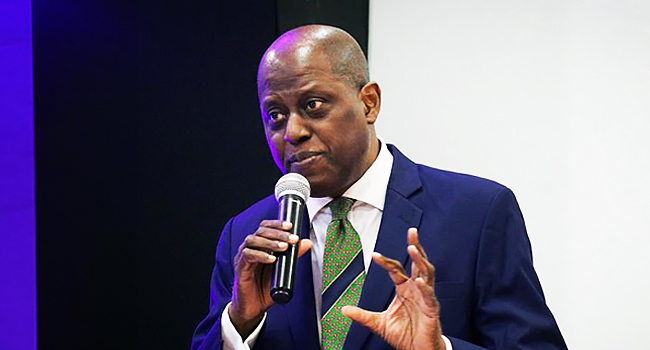
Governor of the Central Bank of Nigeria (CBN), Olayemi Cardoso, has attributed the apparent scarcity of N100 and N200 notes to the increasing adoption of digital payment channels and the declining purchasing power of the lower-denomination currency.
Speaking in Abuja on Tuesday, Cardoso dismissed concerns that the affected notes had been withdrawn from circulation, stressing that they remain legal tender and should continue to be accepted for transactions across the country.
He said the CBN had not announced the withdrawal of any naira denomination and urged Nigerians not to reject the lower-value notes.
“Yes, they remain legal tender. Unless the Central Bank states otherwise, Nigerians should assume that all existing denominations remain legal tender,” Cardoso said.
Explaining the reduced circulation of the N100 and N200 notes, the CBN governor said the situation reflects changing demand patterns within the financial system rather than any deliberate policy to phase them out.
According to him, the expansion of financial inclusion and the widespread use of electronic payment platforms have significantly reduced reliance on physical cash, particularly lower denominations.
Cardoso also noted that the depreciation of the naira has eroded the purchasing power of the smaller notes, making them less useful in day-to-day transactions.
“As to why there appear to be fewer of these notes in circulation, it is largely a matter of demand and supply. The financial ecosystem is evolving in the direction we want it to, with greater financial inclusion and increased digitisation,” he said.
“Of course, we must also acknowledge that currency devaluation has affected the purchasing power of lower-value notes. That is a reality.
“More importantly, however, as financial inclusion expands and digital payments become part of everyday life, fewer people will rely on these denominations.”
On inflation, Cardoso reaffirmed the apex bank’s commitment to restoring price stability and achieving single-digit inflation, despite recent global economic shocks that have slowed progress.
He recalled that Nigeria had recorded 11 consecutive months of declining inflation before external factors disrupted the disinflation trend.
“It is important to remember where we are coming from. We recorded 11 consecutive months of disinflation and, from every indication, we expected that by early 2027 we would be where we wanted to be in terms of inflation, with a path towards single-digit inflation,” he said.
“Unfortunately, we have experienced external shocks that were not anticipated and have lasted much longer than anyone expected.
“As for our single-digit inflation target, we remain committed to it.”
Reacting to the International Monetary Fund’s (IMF) recent assessment that the naira is undervalued, with an estimated fair value of about N1,150 to the US dollar, Cardoso maintained that the exchange rate should be determined by market forces rather than administrative targets.
He said the CBN would continue to support a transparent and market-driven foreign exchange regime anchored on a willing-buyer, willing-seller framework.
The Central Bank of Nigeria (CBN) has mentioned to the House of Representatives ad hoc committee investigating the legal basis, operations and budgetary inclusion of the alleged fake Presidential Foreign Investment Promotion Council (PFIPC) that it received authorisation from the Office of the Accountant-General of the Federation (OAGF) to open two domiciliary accounts for the council.
The revelation from the apex bank is coming as the Independent Corrupt Practices and Other Related Offences Commission (ICPC) on Monday questioned the Chief of Staff to the President, Femi Gbajabiamila, over allegations against him by the purported Director General of the council, Prince Adeniyi Adeyemi.
Adeyemi had alleged that he paid N400 million to Chief of Staff to the President, Femi Gbajabiamila through the late Babatunde Dolapo Tanimola to secure the appointment. He also claimed that the Chief of Staff allegedly demanded 48 per cent from the agency’s N27.3 billion take-off grant. Gbajabiamila had debunked the allegations and filed a N15bn defamation suit against Adeyemi.
Also, over N1.3 billion was allocated to the PFIPC in the approved 2026 budget, raising questions on how the ‘fictitious’ council found its way into the budget without the National Assembly spotting it.
Findings further revealed that Adeyemi got approvals for the employment of 300 staff members and an office space at the Federal Secretariat, Abuja, and opened accounts with the Central Bank of Nigeria (CBN).
But the Office of the Accountant General of the Federation (OAGF) insisted that the disputed council had no account with the apex bank, contradicting the Presidency’s statement that Adeyemi used fake documents and misled the OAGF to fraudulently open a CBN account.
While appearing before the probe panel shortly after the inauguration of the ad hoc committee at the National Assembly on Monday, a director at the CBN, Hamisu Abdullahi, who represented the CBN Governor at the investigative hearing, disclosed that the apex bank received a mandate from the OAGF to open two domiciliary accounts for the Presidential Economic Advisory Council/Presidential Foreign Investment Promotion Council.
According to him, the accounts, one United States dollar domiciliary account and one Pound Sterling domiciliary account, were opened on July 30, 2025.
He, however, informed lawmakers that the accounts remained inactive because the council failed to provide authorised signatories required for their operation.
“The process for opening the account requires a mandate from the office of the Account General of the Federation. So once we receive that mandate, we perform all the necessary verification to confirm that this mandate is actually coming from the Office of the Accountant General. So once we confirm that, we have some internal procedures too, which we follow to open those accounts.
“On the 30th of July 2025, we received a mandate dated 29 July 2025 from the office of the Accountant-General of the Federation to the Central Bank of Nigeria to open two domiciliary accounts for the Presidential Economic Advisory Council/ Presidential Foreign Investment Promotion Council.
“Based on that mandate, we did the normal verification to confirm the genuineness of the mandate and also process the account opening. And two accounts were actually opened: a domiciliary account, one dollar account and one pound sterling account for the Presidential Economic Advisory Council/ Presidential Foreign Investment Promotion. Those two accounts remain inactive with zero balance and have never been operated,” Abdullahi stated.
He further disclosed that there had been no financial activities linked to the accounts, including foreign exchange allocations, remittances, inflows or outflows.
“There have been no foreign exchange allocations, no remittances, no inflows and no outflows. The accounts have maintained zero balance from inception to date,” he said.
The CBN official explained that the bank does not have direct dealings with Ministries, Departments and Agencies (MDAs) on account opening, closure or change of account details except through the OAGF.
“As a banker to the federal government, the Central Bank has responsibility for opening all accounts for Ministries, Departments and Agencies, with the exception of those exempted from the Treasury Single Account,” he said.
Abdullahi added that the apex bank had no direct correspondence with the council regarding the operation of the accounts.
On her part, the Head of the Civil Service of the Federation, Mrs Didi Esther Walson-Jack, told the committee that her office had no constitutional responsibility for establishing government agencies.
She explained that while the office approves administrative structures of federal agencies, the establishment of such agencies falls outside its mandate.
“The approval and establishment of agencies is not within the purview of the Office of the Head of the Civil Service of the Federation (OHCSF). However, the OHCSF is responsible for approving the administrative structure of federal government agencies,” she said.
The OHCSF representative disclosed that the council had submitted a request for approval of its organisational structure on August 6, 2025, but the request was not granted because the required documents were not provided.
She, however, stated that during the 2025 annual manpower budget defence exercise, officials of the Presidential Economic Advisory Council/Presidential Foreign Investment Promotion Council requested an authorised establishment and recruitment waiver.
According to her, the council informed the office that 14 officers, including the Director-General/Chief Executive Officer, were already working with the body and sought approval to commence full operations.
She added that the request was processed alongside those of 87 other MDAs and later approved as part of the fourth batch of manpower approvals.
The approval provided for 314 positions, comprising 14 existing officers and 300 additional positions.
However, the OHCSF disclosed that it later discovered irregularities in documents submitted by the council as its enabling legal instrument.
“It was observed that the document presented by the council as its enabling law or legal instrument did not really carry the requisite features,” she told lawmakers.
The Head of Service also denied deploying civil servants to the council or allocating office accommodation to it.
“We wish to state that there was no deployment of staff by the Office of the Head of the Civil Service of the Federation to the council,” she said.
She added that reports linking the office to the allocation of accommodation at the Federal Secretariat Phase III were incorrect.
Meanwhile, the panel has directed the CBN to provide comprehensive records of all financial transactions linked to the council.

Wema Bank, Nigeria’s oldest indigenous bank and pioneer of Africa’s first fully digital bank, ALAT, has been named Nigeria’s Best Digital Bank for Consumers 2026 by Euromoney, one of the world’s most respected authorities on financial services and banking excellence.
The prestigious recognition affirms the Bank’s sustained leadership in digital innovation, customer experience and financial inclusion, reinforcing its position as one of Nigeria’s leading technology-driven financial institutions.
Presented annually, the Euromoney Awards for Excellence celebrate banks that are redefining financial services through innovation, measurable impact and outstanding customer value. In selecting Wema Bank for the award, Euromoney recognised the Bank’s successful digital transformation journey, its continuous innovation through ALAT, Africa’s first fully digital bank, and its unwavering commitment to delivering simpler, smarter and more accessible banking experiences for customers.
Commenting on the recognition, the Managing Director/Chief Executive Officer of Wema Bank, Moruf Oseni, said: “This award is a strong validation of the deliberate investments we have made over the years to build a truly digital bank that puts customers at the centre of everything we do. Innovation for us has never been about technology for its own sake. It has always been about creating solutions that make banking easier, faster, safer and more rewarding for every customer.
“From pioneering Africa’s first fully digital bank with ALAT to continuously evolving our digital capabilities, we have remained focused on anticipating customer needs and building experiences that create real value. We are honoured by this recognition from Euromoney and inspired to continue pushing the boundaries of innovation as we shape the future of banking in Nigeria.” He concluded.
A key milestone in Wema Bank’s digital transformation has been the evolution and upgraded version of ALAT, which introduced next-generation capabilities including voice banking, tap-to-pay functionality, personalised financial services and integrated investment opportunities through strategic partnerships. Together with faster digital onboarding, AI-powered fraud monitoring, intelligent customer personalisation and an expanding agency banking network, these innovations continue to enhance customer experience while extending financial services to more Nigerians.
Euromoney also recognised Wema Bank’s ability to leverage technology to build deeper customer relationships through data-driven personalisation, enabling customers to receive tailored recommendations across savings, investments and credit products based on their financial needs and behaviour.
For over eight decades, Wema Bank has remained at the forefront of innovation in Nigeria’s financial services industry. As the pioneer of Africa’s first fully digital bank, the Bank continues to redefine banking by combining technology, customer insight and innovation to deliver seamless, secure and inclusive financial solutions for individuals, businesses and communities.
The Euromoney recognition further reinforces Wema Bank’s commitment to building the future of banking through continuous innovation, operational excellence and customer-centric solutions that create lasting value.
-
 Health & Wellness1 year ago
President Tinubu Directs Cut in Dialysis Cost from ₦50,000 to ₦12,000
-
 News1 year ago
PICTURE: In Lagos Couple Sentenced to 22½ Years for Cannabis Trafficking
-

 Business5 months ago
Dangote Refinery Reduces Petrol Gantry Price To ₦1,200 Per Litre
-
 Trending News1 year ago
NELFUND Disburses ₦86bn To 449,000 Beneficiaries
-
 Business2 years ago
Heritage Bank Customers’ Path to Securing ₦5m Insured Funds: A Step-By-Step Guide by NDIC”
-
Business2 years ago
Dangote; We Did Not Fix ₦600/Litre Petrol Price
-

 International News5 months ago
Indian Police Arrest Nigerian Over ₦290m Drug Haul
-

 Business5 months ago
After Plea Bargain, Court Discharges Stella Oduah of ₦2.5bn Fraud