
News
Borno Commissioner Withdraws ‘Finger-Breaking’ Threat As Police Swing Into Action

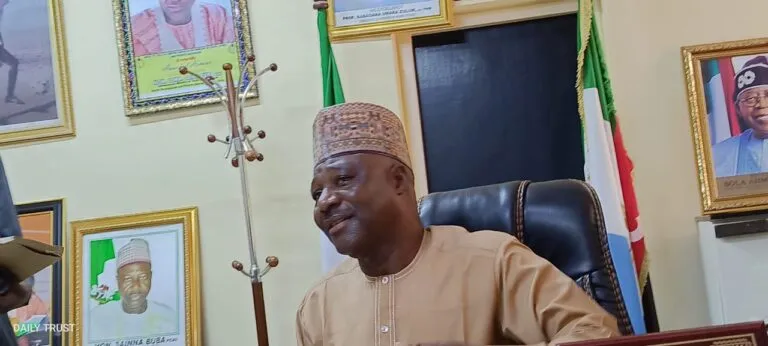
Borno State Commissioner of Youths, Sports and Poverty Alleviation, Hon. Saina Buba, has retracted his controversial remark threatening to cut off the finger of anyone who pointed at government officials.
While speaking at the City Boy Movement Empowerment Programme in Maiduguri, earlier in the week, Buba had threatened opponents of the All Progressives Congress (APC).
Buba had reportedly declared that citizens who voted for the ruling party would be fed with honey, while those who refused to support them would face physical punishment by caning.
The aggressive rhetoric sparked sharp criticism from various quarters, with civil society groups and political observers warning that the comments threatened public safety, violated democratic norms, and endangered dissenting voices in the state.
Critics argued that such language from a serving public official was unbecoming and posed a direct threat to multi-party democracy.
But Buba held a press briefing where he said he had no apology for his comment on the ground that there was no opposition in Borno and no one could fairly accuse him of threatening opponets.
After the briefing, the widespread anger continued, with critics blaming authorities and saying the man showed no remorse.
On Tuesday, the police high command said it had launched a critical probe into the inciting comments made by Buba and two other APC chieftains.
Fielding questions from Defence Correspondents at a joint security briefing in Abuja, on Tuesday, the force spokesman, Anietie Iniedu, described the inciting comments particularly in relation to the electoral process, as “a criminal offence”.
He said, “On the issue of the Senator in Osun State, the Council Chairman in FCT and the Borno Commissioner’s inciting comments, I was part of the team that questioned the distinguished Senator in Osun State.
“The law is very clear when it comes to inciting. It is criminal to incite members of the public, especially as you comment on the electoral process,” he had said.
Hours after the comment of the police spokesman, Buba issued a statement to address the controversy.
He expressed regret over the uproar his comments caused and offered an unreserved apology to the people of Borno State.
“In recent days, a comment I made during the empowerment programme organised by the City Boy Movement in Maiduguri has generated considerable concern within the public space.”
“I wish to state, unequivocally, that my remark was never intended to harm or violate the fundamental rights of the people of our dear state to freedom of choice and association, as enshrined in the Constitution of the Federal Republic of Nigeria (as amended)” he said
While noting that he had previously attempted to clarify that the remark was not meant to be taken literally, the commissioner acknowledged the gravity of ongoing public concern, prompting him to issue a formal retraction
“I had earlier provided clarification that the comment was not intended to be taken in its literal sense.
“However, in view of the concern it has continued to generate, I am using this medium to retract my earlier statement formally and to apologise to the entire people of Borno State and beyond for any offence it may have caused.
“Let me state in categorical terms that my comment does not in any way represent the ideals of the All Progressives Congress (APC) and the administration of His Excellency, Governor Professor Babagana Umara Zulum.
“This administration does not in any way undermine the rights of our citizenry. Rather, the party and the administration continue to uphold and respect every segment of our society, particularly our youth, who have remained steadfast supporters of both the party and the Zulum administration.
“Governor Zulum and the APC have consistently demonstrated a true democratic spirit over the past seven years, and this commitment will remain unwavering to the very end of his tenure.”
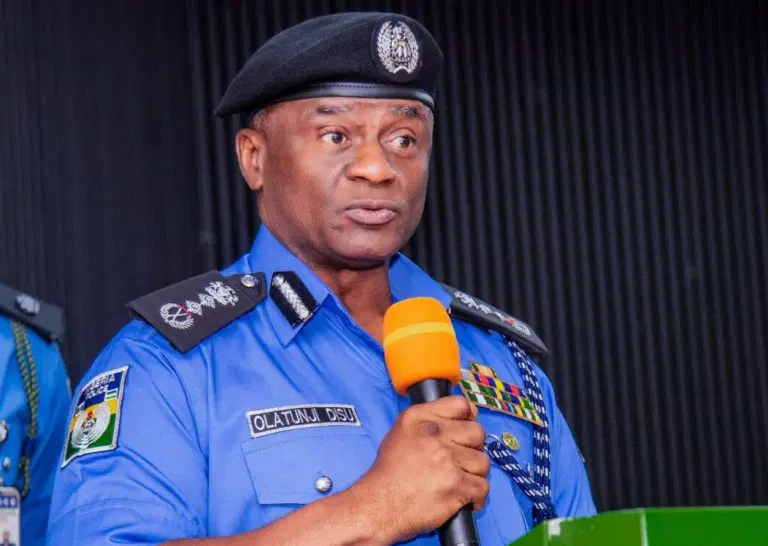
The Inspector-General of Police, IGP, Mr Olatunji Disu, says the Nigeria Police Force is ready for the successful conduct of the 2027 general elections.
Disu gave this assurance on Tuesday in Abuja, when a delegation from the Special Representative of the Secretary-General for West Africa and the Sahel paid him a courtesy visit.
The IGP told the delegation led by Dr Leonardo Simao that the Nigeria Police Force was adequately prepared for the elections.
Disu said the force had held a series of trainings with personnel of the Nigerian Army, Nigeria Security and Civil Defence Corps, Customs, Immigration Service and the Department of State Services, DSS, in preparation for the election.
He said the training also involved how to include everybody in the election process, especially those living with disabilities.
According to him, the officers have been trained to identify them, and know what to do when they see persons with disabilities.
“So far so good, we are not afraid. We are confident that even if the elections start tomorrow, the Nigerian Police Force is ready to do what is expected of the force.
“We are ever ready to go, and we want to assure you that Nigerians will not be disappointed with the activities of the Nigerian Police Force in the election,” he said.
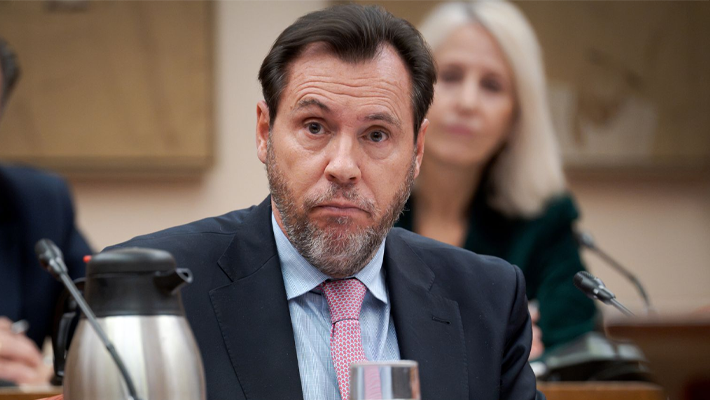
Spain’s Transport Minister Óscar Puente has resigned – six days after the high-speed train collision in which at least 69 people were killed and dozens injured.
He announced his decision in Congress, after giving evidence on last Wednesday’s disaster near the town of Urda, south of the capital Madrid, in which a train smashed into the back of another which had stopped on the same line.
“A transport minister in a country like Spain cannot remain in office after two accidents of this seriousness in less than a year,” he said – a reference to January’s crash on the same line in which 46 people were killed.
Last week’s crash was one of the worst rail disasters in Europe’s modern history, and Spain’s worst crash since 2013.
Rescuers had to use heavy lifting equipment to get access to derailed carriages where a number of passengers were trapped
Puente announced his decision at the end of a congressional session on Tuesday evening in which he had outlined new rail safety measures and been grilled by the opposition.
He said he had taken the decision to resign immediately after the 28 October disaster, but had not made it public.
Puente had been under mounting pressure in the wake of the disaster as opposition parties and some allies of the government called on him to step down.
His resignation comes as a blow to the Socialist-led government ahead of a general election set for 29 November.
During his lengthy hearing before lawmakers, Puente said: “I wish to inform you that I am not only stepping down from my position as minister of transport, but that I am also withdrawing my name from the lists for the early legislative elections.”
Last Wednesday’s accident involved a train run by state-owned operator Renfe with 397 passengers on board and a stationary train run by private operator Iryo, which was carrying 147 passengers.
A reported issue with the automatic signalling system – a computer failure – had forced all trains to halt on the affected stretch.
Leaked audio recordings published in Spanish media soon after the crash revealed conversations between train drivers and a control centre just minutes before the disaster.
The three recordings of conversations between Madrid’s control centre and two train drivers appear to show that the Renfe train was given clearance to move even though the other train had stopped on the track, about 25km (15 miles) ahead.
In one, a control centre operator is speaking to the driver of the Renfe train, which was having some technical difficulties.
After some exchanges, the control operator tells the driver: “Continue your journey and then proceed under [Lateral Signalling Block], at normal speed with normal operation.”
The driver replies: “At normal speed?” To which the controller answers: “Yes.”
The Lateral Signalling Block is a back-up system used when the automatic signalling or data transmission system fails.
The driver of the stationary Iryo train says in another audio recording that communication with the train-control system has been lost, and it is not moving.
The train “is stationary in front of the entry signal at Urda”, the driver tells the control centre operator. After a series of exchanges, the driver is then told to “resume the journey” normally.
The Iryo driver then contacts the control centre again, according to a later recording, saying they cannot start the train. “The train won’t allow me to control the [security] system. That’s why I am still stopped in front of the entry signal,” they say.
The latter recording suggests that the controller had been notified that the Iryo train remained stationary as the Renfe train approached.
Iryo said its carriages were “struck from behind” by the other train.
Puente said last week that the decision to instruct the trains to move again, without any speed restrictions, was “inexplicable”.
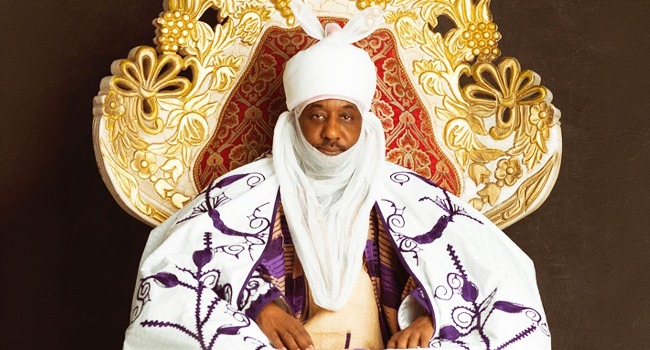
Emir of Kano, Alhaji Muhammadu Sanusi II, has implied that the Federal government may not be able to achieve it’s economic reform dream if it maintains it’s present expenditure rate, declaring that Nigeria could not pursue fiscal consolidation while continuing to spend without restraint.
Speaking virtually to the audience at the Oxford Global Think Tank Leadership Conference, organised by the Oxford Global Think Tank, on Tuesday, the monarch said reform must go beyond removing fuel subsidies and liberalising the exchange rate, describing it as a comprehensive package that needed to address many other areas.
He said government needed to make clear spending priorities, choosing between roads, electricity, agriculture, and technology based on available resources.
The Emir also raised concerns about the size of government expenditure, saying Nigeria could not pursue fiscal consolidation while continuing to spend without restraint.
He said the World Bank had pointed out that in the first half of this year Nigeria’s debt service consumed 124 per cent of federal government revenue.
Sanusi warned that the country needed to urgently address the sustainability of its debt and pursue structural reforms that had not yet been made.
The former CBN boss said every $10 billion spent on roads was $10 billion taken away from electricity and agriculture, stressing the need for deliberate choices.
Sanusi acknowledged that Tinubu’s economic reforms had produced measurable progress, citing improvements in GDP growth, inflation, and foreign reserves.
He said GDP growth has risen from an average of 0.9 per cent under the previous administration to 4.5 per cent, describing the change as progress that deserved recognition.
“I think moving from an average growth rate of 0.9 per cent to 4.5 per cent is progress. Moving from inflation of over 30 per cent to 14.5 per cent is progress.”
“Moving from the point where in 2023 the central bank’s reserves were maybe negative to where we are now having reserves of $55 billion is progress.”
He, however, stressed that issues such as poverty, hunger, maternal mortality, malnutrition, education and healthcare remained serious concerns that the reforms has not yet addressed.
Sanusi said the government should have designed social safety net policies to soften the impact of reforms on vulnerable Nigerians from the beginning.
The former CBN boss also advised the government to tolerate constructive criticism,warning the Federal Government against treating every comment about it’s workings as an attack on President Bola Tinubu.
“It’s not every time people talk about poverty or talk about difficulty that they’re just enemies of the government or making an attack on the president. That is not how to respond to economic distress,” he said.
-
News2 years ago
CBN Debunks Fake Circular on New ₦5,000 and ₦10,000 Notes
-
 Health & Wellness1 year ago
President Tinubu Directs Cut in Dialysis Cost from ₦50,000 to ₦12,000
-
 Opinion2 years ago
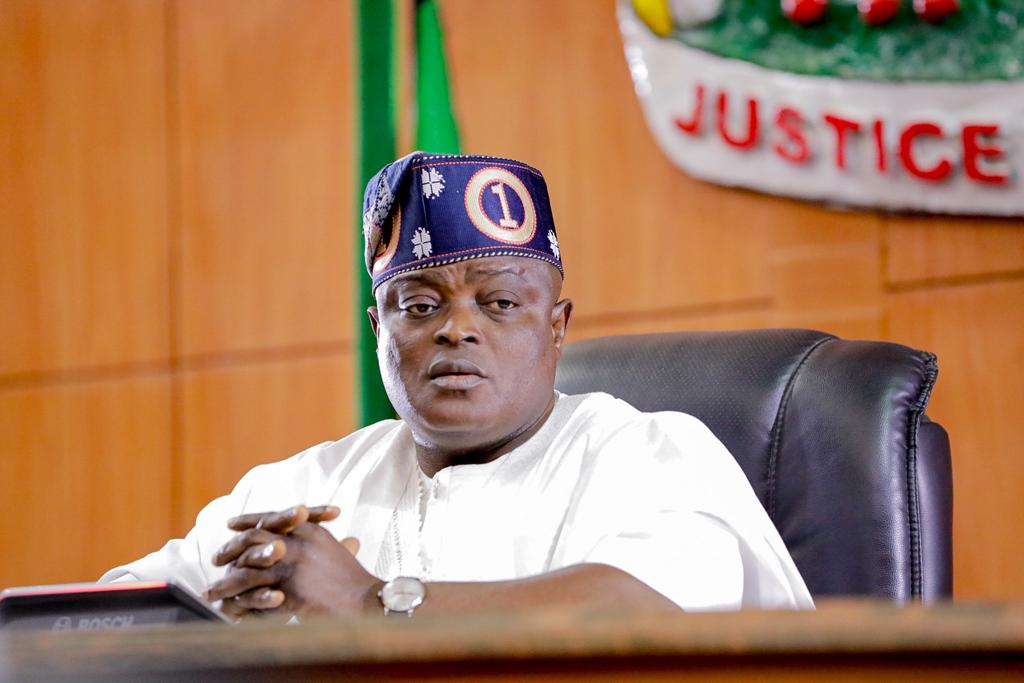
Championing the People’s Voice: Obasa’s Dedication to Grassroots Representation By Dave Agboola⁰
-
 International News7 months ago
Indian Police Arrest Nigerian Over ₦290m Drug Haul
-
 Business7 months ago
Dangote Refinery Reduces Petrol Gantry Price To ₦1,200 Per Litre
-
 Business7 months ago
After Plea Bargain, Court Discharges Stella Oduah of ₦2.5bn Fraud
-
Business2 years ago
Dangote; We Did Not Fix ₦600/Litre Petrol Price
-
 Trending News1 year ago
NELFUND Disburses ₦86bn To 449,000 Beneficiaries