
International News
US Army Soldier Suspected Of Spying For Russia Arrested In UK

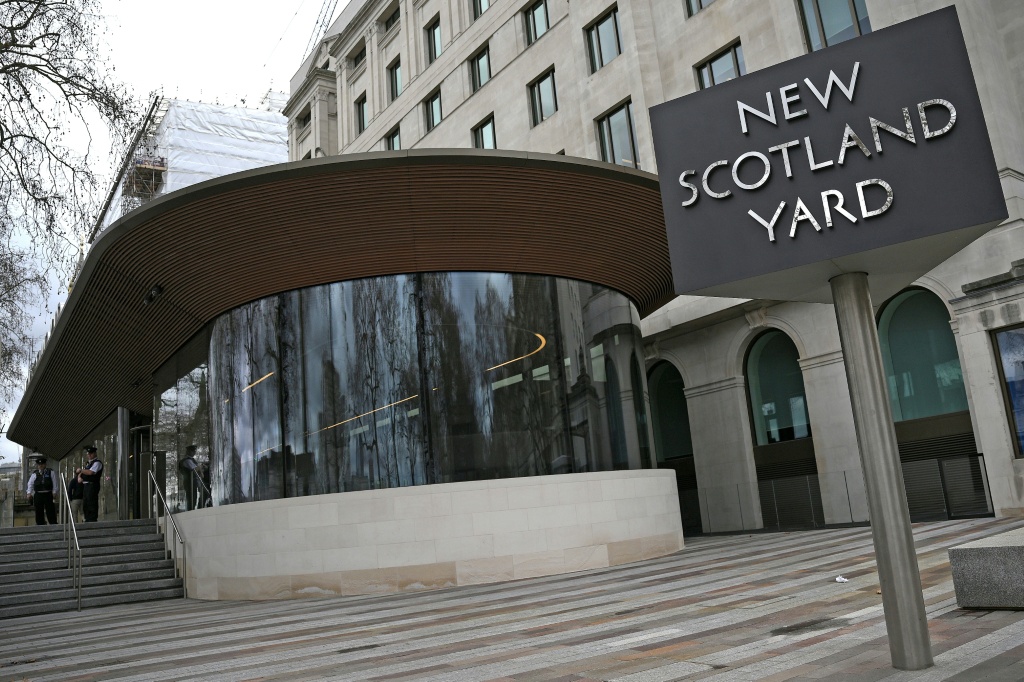
A soldier in the US Army has been arrested on suspicion of spying for Russia, British counter-terror police have said.
The 41-year-old senior serviceman was arrested near Gloucester on Tuesday.
Counter Terrorism Policing London said the man had been arrested under section one and section three of the National Security Act 2023.
Section one of the Act relates to obtaining or disclosing protected information, while section three relates to assisting a foreign intelligence service.
As part of the investigation, officers are carrying out searches at two locations in Gloucestershire.
Report says the soldier was based at Imjin Barracks in Innsworth, Gloucestershire. The barracks serve as the headquarters of Nato’s Allied Rapid Reaction Corps (ARRC), a strategic operational base for the alliance.
Counter Terrorism Policing said it was not linked to any other ongoing investigations.
FBI director Kash Patel said in a statement: “This important arrest involves allegations of espionage, which is of the utmost concern to the United States and our allies.”
He added: “While this investigation is continuing, I want to send a clear message – this FBI has no tolerance for anyone who breaks their oath to the United States and whose actions endanger our national security and that of our partners.”
Deputy Assistant Commissioner Vicki Evans, from Counter Terrorism Policing London, described the arrest as “significant”.
“The allegations are serious and our investigation is very much ongoing,” she said.
The unnamed soldier is currently in custody at a London police station.
He has been detained under the National Security Act 2023, allowing police to hold him without charge for up to 14 days.
Brig Gen Sean Stinchon, commanding general of US Army Counterintelligence Command, said: “The alleged conduct of a senior soldier, entrusted with sensitive information, is a sobering reminder that insider threats are real and persistent.
“I encourage anyone who thinks they’ve witnessed something suspicious to report it to their local counterintelligence office.”

A woman who murdered a vulnerable teenager with her partner and lived off her benefits payments for almost 18 years has died in prison.
Avril Jones, 66, was a prisoner at HMP Stirling and died in custody on Sunday, November 8. Jones and her partner, 82-year-old Edward Cairney, were convicted in 2019 of murdering Margaret Fleming.
Ms Fleming was last seen alive when she was 19 years old at a family party in December 1999. She had learning difficulties and lived with Cairney and Jones at a squalid cottage in Inverkip, Inverclyde, after the pair acted as her “carers” when Ms Fleming’s father died.
The couple murdered Ms Fleming between December 1999 and January 2000. Jones then went on to claim benefits worth £182,000 while the pair staged an elaborate cover-up, which police described as “greedy” and “fantastical”
The 19-year-old was reported missing in 2016 and her body was never found. On what would have been her 39th birthday, detectives issued an appeal to Cairney and Jones to reveal where Ms Fleming’s remains were as they were convicted at the High Court in Glasgow in 2019.
A Scottish Prison Service spokesperson said: “Every death, whether in prison custody or in our communities, is a tragedy for all those who knew and supported the individual..
“Following the death of someone in our care, Police Scotland are advised and the matter reported to the procurator fiscal. Fatal accident inquiries are held in due course.”
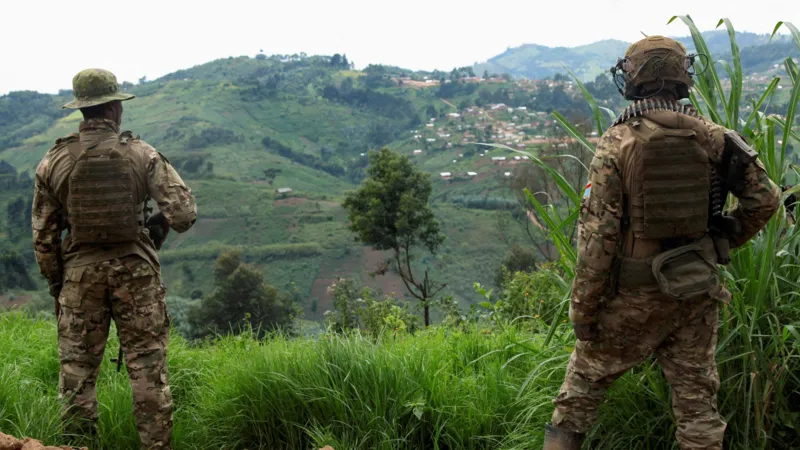
At least 66 soldiers have been sentenced to death in the Democratic Republic of Congo for cowardice, mutiny and refusing to obey orders, local media report.
The sentences followed a trial of 71 soldiers before a military court in Walikale, in North Kivu province, in eastern DR Congo. Four soldiers were acquitted, while another was sentenced to 10 years in prison.
The army said the trial was intended to improve discipline among troops as they battle armed groups in eastern DR Congo.
The region has endured decades of conflict, with fighting continuing between government forces and the Front for the Refoundation of the Nation (FRN), a rebel coalition that includes the M23 group.
The soldiers were reportedly arrested on 20 October in Walikale, where they were accused of abandoning their positions and fleeing during clashes with FRN fighters.
The Congolese army’s campaign against armed groups, including the M23, has long been undermined by poor discipline and disorganisation within its ranks.
The government has repeatedly accused neighbouring Rwanda of supporting the M23, an allegation denied by both Kigali and the rebels despite overwhelming evidence.
The army has faced persistent criticism over its lack of professionalism and disciplined, while soldiers have complained of poor pay and inadequate equipment.
Last month, another 27 soldiers were sentenced to death on similar charges of cowardice after reportedly withdrawing from the frontline during clashes with rebels.
In March 2024, DR Congo lifted a 20-year moratorium on the death penalty, citing the need to remove “traitors” within the army.
The government said capital punishment would also apply to people involved in armed groups, insurrection, as well as committing treason and war crimes.
The decision to reinstate the death penalty was widely criticised by rights groups. However, no formal executions have been carried out since the moratorium was lifted.
Since the beginning of 2025, at least 507 soldiers have been convicted, including 381 death sentences, according to figures compiled by French broadcaster RFI.
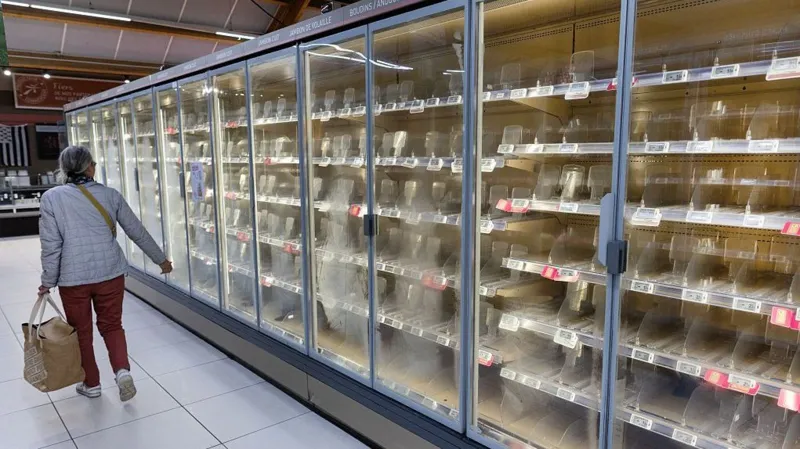
France has accused Iran’s Islamic Revolutionary Guard Corps (IRGC) of being behind cyber-attacks that raised the temperatures of supermarket fridges and freezers across the country last month.
Foreign Minister Jean-Noël Barrot said the attack was “unprecedented in both its scale and its level of aggression”, adding those who were responsible would be hit with sanctions.
Iran has yet to respond officially, but some Iranian media outlets have dismissed the allegations as baseless.
The French hacking, which led to the destruction of tons of frozen and chilled food in France was followed by a similar attack against supermarkets across several other European countries. It is not known if the instances are linked.
Barrot said the attack on France’s supermarkets “marks the first large-scale cyber-attack aimed at sabotage on our national territory, and it constitutes a major attack on the nation’s interests and the security of the French people”.
He said the government had summoned the Iranian ambassador to Paris to “lodge a very strong protest against this extremely grave act”.
France will take “any other necessary and proportionate measures” to respond to the incident and “deter anyone who might seek to repeat it”, Barrot added.
The Paris prosecutor said an investigation had been opened into the head of an offensive cyber unit associated with the IRGC as well as his two deputies.
Laure Beccuau named the unit as Shahid Kaveh, which she said had an affiliation with the electronic and cyber centre of the IRGC.
Shahid Kaveh is the name given to a cluster of hackers thought to be directly employed by the Iranian regime.
In recent weeks, a number of commentators and politicians in Iran have argued that the country should extend any retaliation beyond the Middle East if the US and Israel resume the war they started earlier this year.
If the IRGC carried out the cyber-attacks, it remains unclear whether they were part of Iran’s deterrence strategy.
On 11 October, hackers gained control of the software that regulates the temperatures of the refrigeration units used in many of France’s supermarkets.
More than 100 of Coopérative U’s supermarkets were hit, as well as 180 stores from Intermarché and its Netto brand. In some stores, temperatures of the fridges reportedly rose to 50C (120F) overnight.
Other major food retailers including Carrefour, Monoprix and E.Leclerc were also hit by the attack, which targeted software provided by Danish engineering firm Danfoss.
The software allows retailers to manage their cold units remotely.
Earlier this month a second wave of hacks took place, hitting more than 100 stores across Europe.
Supermarkets in Belgium and Luxembourg were affected, while a smaller number of shops were hit in countries including Sweden, Ireland, the Netherlands, Estonia and Finland.
Separately in August a small number of US military bases had fridges mysteriously malfunction, spoiling food. This incident is also being investigated as deliberate cyber-attacks, Reuters news agency has reported, citing sources familiar with the matter.
Since the waves of attacks on freezers, experts have been speculating which hacking groups could be responsible, with Iran being on a list of potential suspects.
In spite of a pair of Russian-aligned hacktivist groups claiming they were responsible on Wednesday, few believed them.
The French government has not said how it reached the conclusion that Iran was responsible, and attribution of cyber-attacks is extremely hard as hackers are able to hide their locations.
-
 Opinion2 years ago
Championing the People’s Voice: Obasa’s Dedication to Grassroots Representation By Dave Agboola⁰
-
News2 years ago
CBN Debunks Fake Circular on New ₦5,000 and ₦10,000 Notes
-
 Health & Wellness1 year ago
President Tinubu Directs Cut in Dialysis Cost from ₦50,000 to ₦12,000
-

 International News7 months ago
Indian Police Arrest Nigerian Over ₦290m Drug Haul
-

 Business8 months ago
Dangote Refinery Reduces Petrol Gantry Price To ₦1,200 Per Litre
-

 Business8 months ago
After Plea Bargain, Court Discharges Stella Oduah of ₦2.5bn Fraud
-
Business2 years ago
Dangote; We Did Not Fix ₦600/Litre Petrol Price
-
News2 years ago
PETROAN: Port Harcourt Refinery’s Petrol Price Exceeds Dangote’s by ₦75/ltr”