
News
ASUU Schedules Fresh Strike For End Of August

The implementation of the 40 per cent salary increase approved for university lecturers by President Bola Tinubu is facing fresh uncertainty as the Federal Government has allegedly failed to release funds to federal universities to sustain the payment, the Academic Staff Union of Universities (ASUU) has said.
Prof. Florence Onyebuchi Orabueze, Chairperson of the University of Nigeria, Nsukka (UNN) chapter of ASUU, said the university had been paying the approved increment despite the Federal Government’s failure to provide the necessary funds
Orabueze said the university’s internally generated revenue (IGR) could not continue to shoulder the financial burden of the salary increase, warning that ASUU could embark on another nationwide strike if the government fails to address the funding problem.
She said the Federal Government had reimbursed UNN for only part of the money it spent on the salary adjustment.
“The Vice Chancellor is not owing us anything; it is just that the Federal Government is not giving them the money for the payment. The problem is that the government is not releasing the money,” Orabueze said.
According to her, the UNN management initially used its IGR to fund the payment from January to June, but the Federal Government only reimbursed the institution for the period between January and May.
“When he paid from January to June, then they reimbursed him from January to May. But that of June, the Federal Government hasn’t paid. They haven’t also paid for July,” she said.
Orabueze said the funding challenge was not peculiar to UNN, insisting that it was a nationwide problem affecting the implementation of the 40 per cent salary increase agreed under the 2025 Federal Government-ASUU renegotiated agreement.
“The problem of the payment of 40 per cent salary increment for the 2025 FGN/ASUU renegotiated agreement is a nationwide issue, and not that of UNN,” she said.
The UNN ASUU chairperson said the union’s National Executive Council (NEC), which recently met in Abuja, was concerned about what members considered the government’s failure to fully implement the agreement.
She said the union was considering industrial action between the end of August and early September if the funding issue was not resolved.
“Part of the decision was that because the Federal Government is not serious about implementing the whole thing, that by the end of this month… between the end of this month and September, early September, ASUU, at the national level, will go on strike,” she said.
She stressed that UNN had been able to pay the increment only because its management had committed its own resources to the process.
“UNN has paid from January to June. Federal Government owes them. But that of July, like all others, they haven’t been able to pay, and that is because there is no way the IGR can carry it,” she said.
According to Orabueze, discussions at the ASUU NEC meeting involving representatives from almost 100 universities showed that the funding crisis was widespread.
“When we went to Abuja for NEC, more than almost 100 universities, we found out that no federal university has paid that of July,” she said.
She also said several state universities were already involved in industrial disputes over salary and other issues.
Orabueze expressed frustration over what she described as the government’s treatment of university lecturers, comparing their approved salary increase with the reported 300 per cent increase for judicial officers.
“The Federal Government is not serious with us. They gave judges 300 per cent, but the lecturers who are even training everybody, including judges, even to pay us 40 per cent is becoming very hard for them,” she said.
She said lecturers had accepted the 40 per cent increase despite reservations because they wanted to avoid prolonged disruption of academic activities.
“We took 40 per cent, and even to pay that 40 per cent is hard, they are withholding our money,” she said.
Orabueze said lecturers had previously called off industrial action partly because of the impact prolonged strikes would have on students from poor families.
“We called off the strike in October last year because they said that it’s only poor Nigerians that are studying here. So we called off the strike because of poor Nigerians like us,” she said.
She added: “Why is it impossible that they don’t want to even pay those of us who agreed to stay in Nigeria to teach our children? Why is it that they are finding it difficult to pay us 40 per cent?”
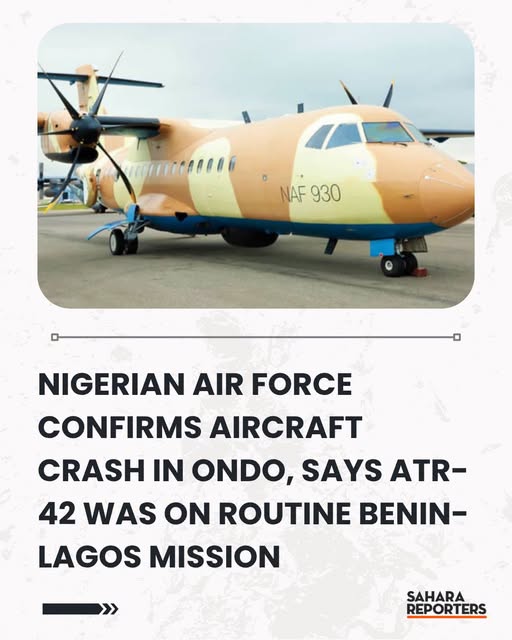
The Nigerian Air Force (NAF) has confirmed ownership of the aircraft which crashed on Monday in Igbokoda area of Ondo State.
Ehimen Ejodame, NAF Director of public relations and information, said the aircraft was on a “routine mission” when it crashed in the early hours of Monday.
In a statement, the air force spokesperson said a rescue operation is underway.
“The Nigerian Air Force (NAF) has activated an immediate Search and Rescue operation following an ATR-42 aircraft accident in the Igbokoda area of Ondo State on 5 October 2026,” the statement reads.
“The aircraft was on a routine mission from Benin to Lagos when the accident occurred.
“Search and Rescue operations, in coordination with relevant authorities and emergency response agencies, are currently ongoing.
“The NAF is committed to ensuring the success of the ongoing Search and Rescue efforts. Further details will be communicated in due course.”
The Ondo state police command had earlier confirmed the incident, but said details surrounding the crash were still emerging.
Residents had, however, informed that the crash occurred in a swampy terrain opposite a naval base.
International News
Portuguese Economy Minister: Ronaldo’s Value Is Greater Than Football, Many People Know Our Country Because Of Him
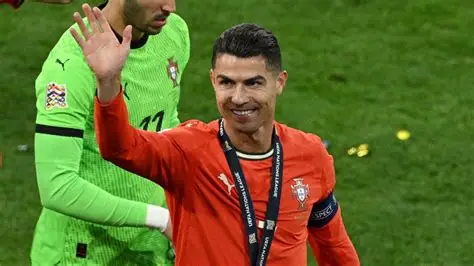
Portugal’s Economy Minister, Manuel Castro Almeida, says Cristiano Ronaldo matters to Portugal in ways that reach far beyond football. “Many people know Portugal only because of Cristiano Ronaldo,” he stressed.
His comments land as the fallout from Ronaldo’s sudden exit from the national team camp continues to dominate the headlines.
Speaking in remarks carried by the Portuguese website The Resident from the Now channel, the minister painted Ronaldo as a huge asset for Portugal’s image on the world stage. “Cristiano Ronaldo has an enormous impact in promoting and highlighting Portugal’s image,” he said. He went further still, likening the Portugal star to “the most famous company in Portugal”
On the row between Ronaldo and coach Jorge Jesus, Castro Almeida pleaded ignorance. He insisted he was “not an expert” and refused to judge who was in the right.
His focus stayed on Ronaldo’s wider worth to Portugal and its standing abroad.
That global recognition, the Economy Minister argues, makes Ronaldo “a value and an asset” to the country. “It would be good if Portugal could continue to rely on this asset,” he said.
He added: “From the angle of enhancing Portugal’s image and reputation, Cristiano holds extremely important value, and it would be very good for Portugal to continue to benefit from this potential.”
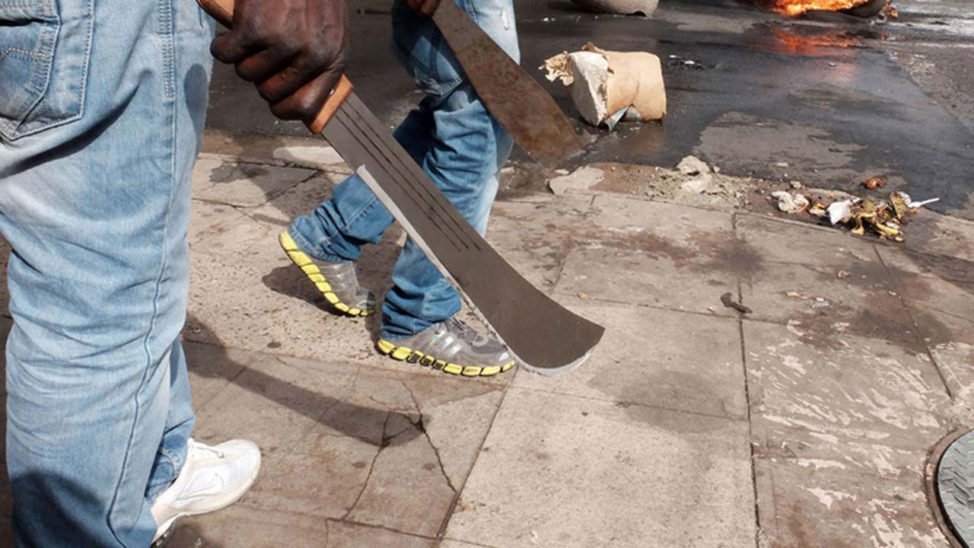
There is palpable apprehension in Osogbo, the Osun State capital, following the killing of three persons in suspected cult clashes between Friday and Sunday, forcing residents to flee and traders to shut their businesses.
The latest violence has heightened fears across the city, with residents and other stakeholders calling on the state government and security agencies to restore peace and prevent further bloodshed.
The first incident occurred on Friday evening at a lounge around Owo-Eba, in the Owode-Ilesa Garage area.
Report quoted sources as divulging that a rival gang stormed the lounge where Adebayo Taoreed, popularly known as Small Rugged, and others were relaxing and opened fire.
Taoreed, who was alleged to be linked to the Eiye confraternity, although the claim could not be independently verified, was killed alongside another man identified only as Osha.
Four other persons sustained gunshot injuries when the assailants allegedly fired sporadically while fleeing the scene. The shooting triggered panic along the Ilesa Garage-Ayepe axis, as residents ran for safety and shop owners hurriedly closed their businesses.
Confirming the incident, the Osun State Police Command spokesperson, Abiodun Ojelabi, described it as a suspected cult clash.
Ojelabi said: “The command is aware of a shooting incident suspected to be cult clash around Owo-Eba area, Osogbo. Two persons died at the spot, one identified as Small Rugged, while the other’s name is yet unknown. Four other people sustained gunshot injuries and have been rushed by the police to a nearby hospital for treatment.”
He added that the Commissioner of Police, Ibrahim Gotan Zungura, had directed tactical teams to apprehend those responsible. No arrest had been announced as of press time.
About 48 hours later, violence erupted again in the Ita-Olokan area of Osogbo on Sunday morning, leaving a man identified as Taoheed Ojoiku dead.
Residents said the incident occurred at about 9:30 a.m., throwing the area into chaos.
Ojoiku was rushed to a nearby hospital for treatment but was later confirmed dead by medical personnel.
The circumstances surrounding the attack were not immediately clear. However, sources said it might have been connected to Friday’s killings, raising fears that the incident could be a reprisal attack.
Residents have urged the state government and security agencies to intensify surveillance and security operations across the city to prevent further clashes and restore normalcy.
-
 Health & Wellness1 year ago
President Tinubu Directs Cut in Dialysis Cost from ₦50,000 to ₦12,000
-

 International News6 months ago
Indian Police Arrest Nigerian Over ₦290m Drug Haul
-
News2 years ago
CBN Debunks Fake Circular on New ₦5,000 and ₦10,000 Notes
-
 Business6 months ago
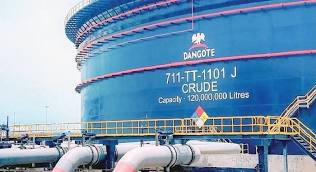
Dangote Refinery Reduces Petrol Gantry Price To ₦1,200 Per Litre
-

 Business6 months ago
After Plea Bargain, Court Discharges Stella Oduah of ₦2.5bn Fraud
-
Business2 years ago
Dangote; We Did Not Fix ₦600/Litre Petrol Price
-
 Trending News1 year ago
NELFUND Disburses ₦86bn To 449,000 Beneficiaries
-
 News1 year ago
PICTURE: In Lagos Couple Sentenced to 22½ Years for Cannabis Trafficking