
News
Bandits Bar Sokoto Residents From Farm, Impose Fresh Levies


Residents of at least 26 communities in Sabon Birni Local Government Area of Sokoto State have begun contributing money to pay fresh levies imposed by bandits who have also barred them from accessing their farms ahead of the wet season farming activities.
Report says the armed groups issued a three-day ultimatum, warning farmers not to visit their farmlands until the levies demanded from the affected communities were paid.
The affected communities include; Garin Faji, Cina Barka, Zululu, Dan Gari, Garin Maigayya, Gardi, Katsira, Garin Baushe, Sulmawa, Zakin Ganga, Dan Kware, Garje, Dogon Faru, Son Allah, Garin Galadima, Kafchi, Matabaya, Garin Labo, Zango, Kaifin Aska, Tsauna Dogo, Tudun Wada, Rambadawa, Ga Itace, Nasarawa and Garin Idi
A resident who maintains close contact with people in the affected villages said the bandits threatened to kill or abduct anyone found farming during the period.
“The communities were given three days. They said nobody should go to the farms until the money is paid. Anyone caught farming would either be killed or kidnapped and would not regain freedom until a ransom of N500,000 is paid,” he said.
He said residents had already started contributing money to meet the demands.
A resident of Zululu village, who spoke on condition of anonymity, said he was preparing to go to his farm on Friday when he learnt of the directive.
“We were told that the bandits had banned farming activities for three days until the villages paid the levies they impose every year.
“They said they could have allowed people to go to their farms and then kill some and abduct others, but they wanted the money instead. According to them, security operatives have been seizing their livestock, so no farming would take place until the levies were paid,” he said.
He said traditional rulers and Islamic clerics from the affected communities were expected to meet with the bandits to determine how much each village would pay before residents could resume farming.
The resident said the communities had been subjected to such payments for years.
“We pay before planting and sometimes every two or three months. Even after paying now, they may return in about three months and say nobody should harvest millet until another levy is paid.
“They usually demand between N4 million and N6 million from a community. Villagers contribute according to their means. Some households pay N1,500 or N2,000, while in some villages farmers contribute as much as N5,000 each depending on the population,” he said.
Another source, who is an indigene of Garin Idi village and currently residing in Sabon Birni town, who visited the community on Friday to sympathise with residents following the abduction of about 20 people in the early hours of the day, confirmed that the affected communities had already started raising money to pay the levies.
He alleged that when the bandits felt the payments were being delayed, they stormed Garin Idi and abducted about 20 people on Friday.
“They later told community leaders that N600,000 must be paid before the victims could be released. The money was raised and paid, leading to the release of the abductees on Friday,” he said.
The source added that five other persons were still being held captive.
“As of now, there are still five people in their custody. They said they will not release them until the levy is paid. Even after farming, they may still prevent people from harvesting until fresh payments are made,” he said.
He further alleged that farmers are often compelled to surrender part of their harvest to the bandits before they are allowed to store food in their barns.
“Every year, after harvesting, they demand part of the produce from farmers before allowing them to store their crops. This has become a recurring burden on our communities,” he said.
When contacted, the Police Public Relations Officer in Sokoto State, DSP Ahmad Rufai, said the command was not aware of the development.
“We are not aware of such a situation. Most times, communities do not report these kinds of incidents to security agencies,” he said.
Efforts to get the reaction of the Sokoto State Government were unsuccessful. Text and WhatsApp messages sent to the governor’s spokesman, Abubakar Bawa, and the Special Adviser to the Governor on Security Matters, Col. Ahmad Usman (rtd), seeking their comments on the allegations had not been responded to as of the time of filing this report, the report also mentioned.


Entertainment
NIBAD 2026: Abike Dabiri To Take Centre Stage As Bunmi Ebony, DJ X-One Host Baltimore Event

The Chairman and Chief Executive Officer of the Nigerians in Diaspora Commission (NiDCOM), Hon. Dr Abike Dabiri-Erewa ( OON) has been scheduled for honour, among other awardees, at the 2026 and the 6th edition of the annual Nigerian Independence Ball, Awards, and Dinner (NIBAD),billed to hold in Baltimore, Maryland, on the 18th of October .
At the instance of Naija Times USA and Raindrop Group led by Olaniyi Thompson Tabi, activities marking the 6th edition of NIBAD commenced on the 3rd of October with Independence carnival in Maryland.
As part of the expanded 6th edition, the Annual Independence stage play titled ‘Your Excellency Sir!’ …The saga of a nation, written and directed by Olaniyi Thompson Tabi, was showcased at a very colorful event on the 9th of October.
Designed to be an unforgettable celebration of Nigeria’s 66th Independence celebration, the grand finale of the celebration is billed for Sunday, the 18th of October, 4.00pm, at Gabriel Community Centre, 6948, Dogwood Road, Windsor Mill, MD 21244.
The evening will not only commemorate Nigeria’s rich history and vibrant culture but will also spotlight the exceptional contributions of Nigerians at home and abroad in various fields such as business, healthcare, education, community service, and more.
The evening will feature a grand awards ceremony to honor those who have demonstrated leadership, innovation, and dedication in their respective industries. Among them, Dr Dabiri- Erewa
Hon. Dr. Abike Kafayat Oluwatoyin Dabiri-Erewa (OON) is a prominent Nigerian politician, public administrator, and former broadcast journalist who has been able to show leadership since her appointment as the Chairman and Chief Executive Officer of the Nigerians in Diaspora Commission (NiDCOM).
To add colour to the event also, is
Dj X-One, reputed as the best Disc Jockey in the DMV area. Bunmi Ebony, a fast rising Juju Artiste in Atlanta will also be on the bandstand to thrill guests at the event to celebrate Nigeria.
****About NIBAD: The Nigerian Independence Ball, Awards, and Dinner (NIBAD) is an annual event that celebrates Nigeria’s Independence while recognizing the achievements of Nigerians in the diaspora. NIBAD aims to highlight the cultural pride, resilience, and accomplishments of Nigerians globally, bringing together community leaders, professionals, and influencers for an evening of celebration, inspiration, and unity.
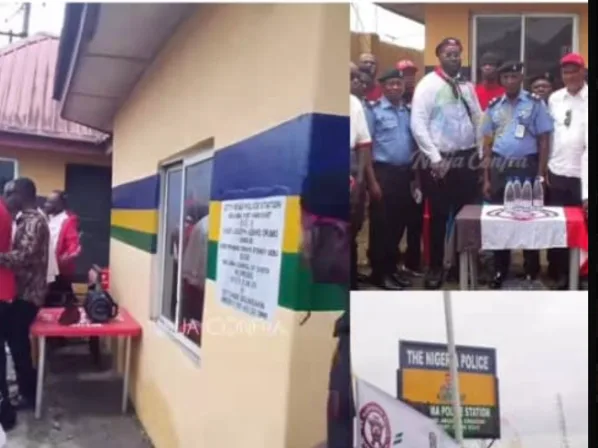
The Rivers State Police Command under CP Olugbenga A. Adepoju has condemned the purported renovation of the Abuloma Police Outpost by suspected cultists and ordered a full investigation into the incident.
Police Public Relations Officer (PPRO) of the command, ASP Blessing Agabe disclosed this in a Friday statement.
She said the command’s action follows a trending social media report and circulating video alleging that suspected cultists renovated the outpost and visited the facility on Thursday, October 15, to celebrate completion of the renovation.
The command said it “strongly condemns any action or association capable of compromising the integrity, discipline and professional standards of the Nigeria Police Force or conferring legitimacy, recognition or acceptance on suspected cult groups or other unlawful organisations.”
It added, “Police facilities are public institutions established for the protection of citizens and the enforcement of law and must not become platforms through which criminal groups seek public validation or influence.”
The command said CP Adepoju maintains zero tolerance for criminality and any conduct that undermines public confidence in the police.
Consequently, he has queried and relieved the Divisional Police Officer in charge of Abuloma Division and the Divisional Officer overseeing the affected outpost of their duties pending investigation.
The CP has also ordered a full investigation to establish the circumstances surrounding the incident and the veracity of the allegations, including the identities and backgrounds of the individuals or groups who financed or facilitated the renovation; the police officers who authorised or approved the project; whether due procedures were followed; whether any officer breached professional standards or compromised the integrity of the force; and the extent of any involvement by police personnel.
The command said while it welcomes legitimate community support for improving police facilities, consistent with Section 26(1)(d) of the Nigeria Police Act 2020, which provides for gifts and contributions to the Police General Fund, such support must not compromise police independence, professional standards or security.
“No donation or assistance confers immunity from investigation or prosecution,” the command stated, adding that the investigation will establish whether necessary approvals were obtained and appropriate checks conducted on those who financed the renovation.
It reiterated that it would not condone unprofessional conduct or any form of improper association with criminal elements and that appropriate disciplinary and legal action would be taken against anyone found culpable.
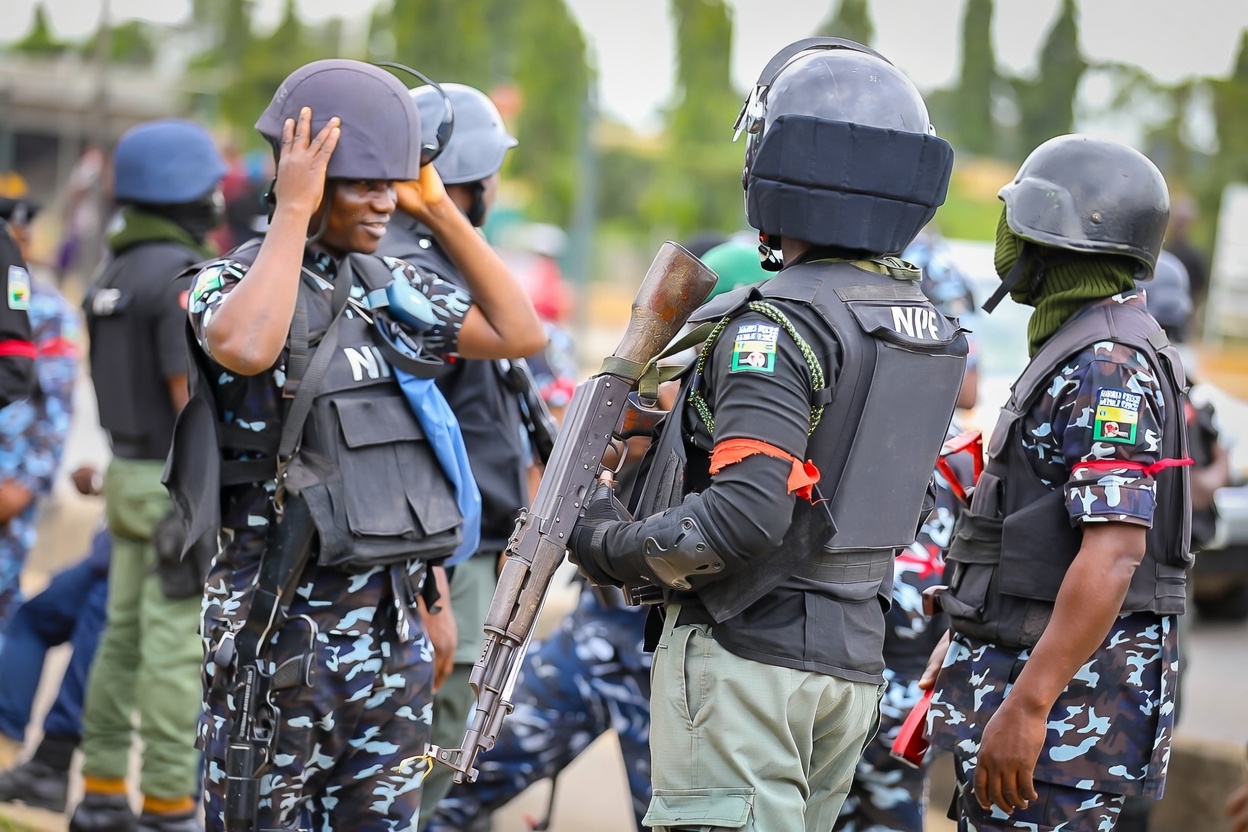
The Police Command in Benue State has confirmed the abduction of Rev. Fr. John Otache, Parish Priest of St. Margaret’s Parish, Ajegbe-Awume, in Ohimini Local Government Area of the state.
The Police Public Relations Officer, DSP Aondogu Orchia confirmed the incident on Friday in Makurdi.
Orchia said the command had commenced full investigation into the incident and efforts were ongoing to rescue the priest.
Meanwhile, the Catholic Diocese of Otukpo, in a statement signed by the Diocesan Chancellor, Rev. Fr. Joseph Itodo, said the priest was abducted on October 13.
According to Itodo, Otache was returning home from Otukpo when he encountered the abductors along the Otobi Amejo-Ajegbe Road in Ohimini Local Government Area.
He expressed sadness over the incident, saying the Bishop of Otukpo, Most Rev. Michael Apochi, was deeply pained by the development.
He called on priests, religious members, the laity and other well-meaning individuals to pray for the priest’s safe and speedy release.
He also urged prayers for other persons held by kidnappers across the country, expressing hope for their safe return.
-
 Health & Wellness1 year ago
President Tinubu Directs Cut in Dialysis Cost from ₦50,000 to ₦12,000
-
News2 years ago
CBN Debunks Fake Circular on New ₦5,000 and ₦10,000 Notes
-

 Business7 months ago
Dangote Refinery Reduces Petrol Gantry Price To ₦1,200 Per Litre
-
 International News7 months ago
Indian Police Arrest Nigerian Over ₦290m Drug Haul
-
 Business7 months ago
After Plea Bargain, Court Discharges Stella Oduah of ₦2.5bn Fraud
-
Business2 years ago
Dangote; We Did Not Fix ₦600/Litre Petrol Price
-
 Trending News1 year ago
NELFUND Disburses ₦86bn To 449,000 Beneficiaries
-
 Opinion2 years ago
Championing the People’s Voice: Obasa’s Dedication to Grassroots Representation By Dave Agboola⁰