
International News
European Powers Plan Fresh Nuclear Talks With Iran

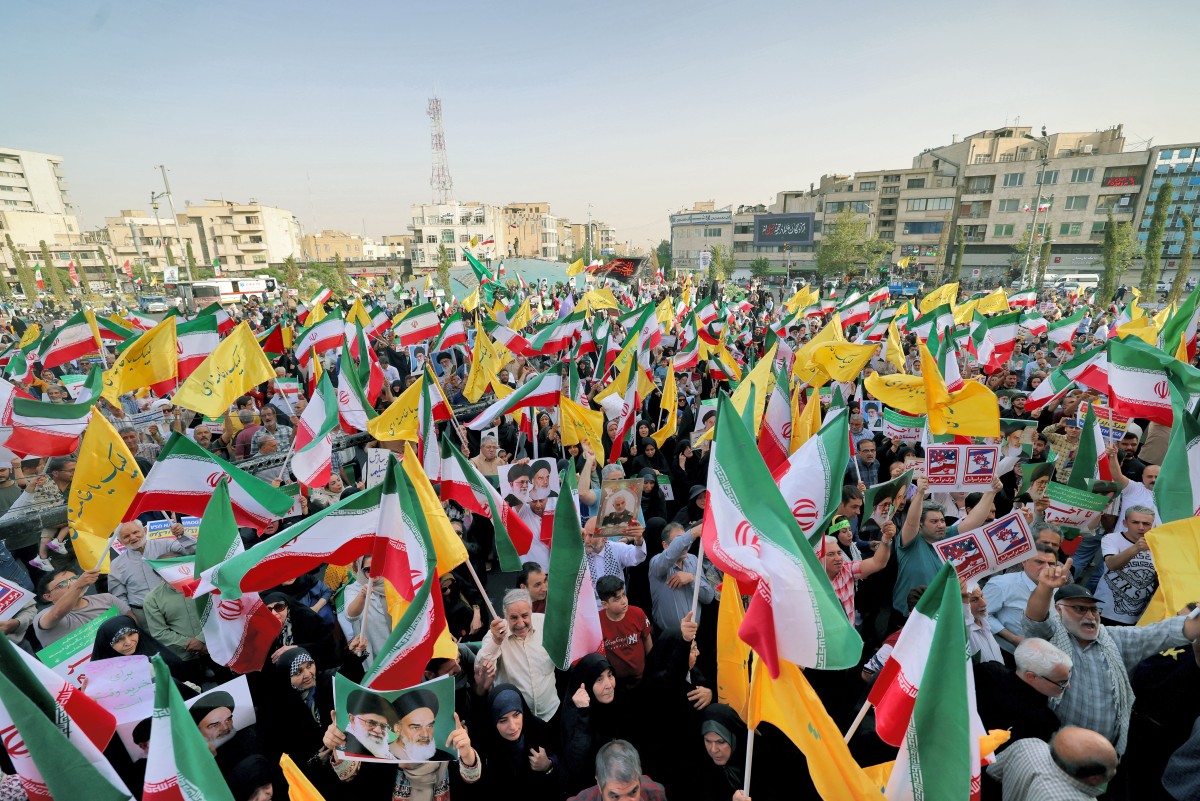
European powers plan fresh talks with Iran on its nuclear programme in the coming days, the first since the US attacked Iranian nuclear facilities a month ago, a German diplomatic source told AFP on Sunday.
Britain, France and Germany, known as the E3, “are in contact with Iran to schedule further talks for the coming week”, the source said.
The trio had recently warned that international sanctions against Iran could be reactivated if Tehran does not return to the negotiating table.
Iran’s Tasnim news agency also reported that Tehran had agreed to hold talks with the three European countries, citing an unnamed source.
Consultations are ongoing regarding a date and location for the talks, the report said.
“Iran must never be allowed to acquire a nuclear weapon,” the German source said.
“That is why Germany, France and the United Kingdom are continuing to work intensively in the E3 format to find a sustainable and verifiable diplomatic solution to the Iranian nuclear programme,” the source added.
Israel and Western nations have long accused Iran of seeking to develop nuclear weapons, a charge Tehran has consistently denied.
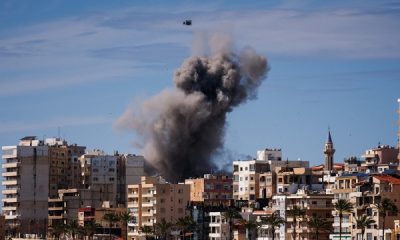
On June 13, Israel launched a wave of surprise strikes on its regional nemesis, targeting key military and nuclear facilities.
The United States launched its own set of strikes against Iran’s nuclear programme on June 22, hitting the uranium enrichment facility at Fordo, in Qom province south of Tehran, as well as nuclear sites in Isfahan and Natanz.
Kremlin meeting
Iran and the United States had held several rounds of nuclear negotiations through Omani mediators before Israel launched its 12-day war against Iran.
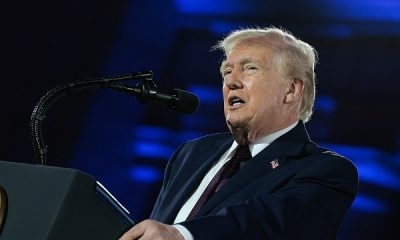
However, US President Donald Trump’s decision to join Israel in striking Iranian nuclear facilities effectively ended the talks.
The E3 countries last met with Iranian representatives in Geneva on June 21 — just one day before the US strikes.
Also Sunday, Russian President Vladimir Putin held a surprise meeting in the Kremlin with Ali Larijani, top adviser to Iran’s supreme leader on nuclear issues.
Larijani “conveyed assessments of the escalating situation in the Middle East and around the Iranian nuclear programme”, Kremlin spokesman Dmitry Peskov said of the unannounced meeting.
Putin had expressed Russia’s “well-known positions on how to stabilise the situation in the region and on the political settlement of the Iranian nuclear programme”, he added.
Moscow has a cordial relationship with Iran’s clerical leadership and provides crucial backing for Tehran but did not swing forcefully behind its partner even after the United States joined Israel’s bombing campaign.
Snapback mechanism
Iran and world powers struck a deal in 2015 called the Joint Comprehensive Plan of Action (JCPOA), which placed significant restrictions on Tehran’s nuclear programme in exchange for sanctions relief.
But the hard-won deal began to unravel in 2018, during Trump’s first presidency, when the United States walked away from it and reimposed sanctions on Iran.
European countries have in recent days threatened to trigger the deal’s “snapback” mechanism, which allows the reimposition of sanctions in the event of non-compliance by Iran.
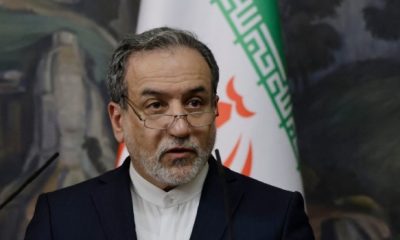
After a call with his European counterparts on Friday, Iranian Foreign Minister Abbas Araghchi said the Western allies had “absolutely no moral (or) legal grounds” for reactivating the snapback sanctions.
He elaborated in a post to social media Sunday.
“Through their actions and statements, including providing political and material support to the recent unprovoked and illegal military aggression of the Israeli regime and the US… the E3 have relinquished their role as ‘Participants’ in the JCPOA,” said Araghchi.
That made any attempt to reinstate the terminated UN Security Council resolutions “null and void”, he added.
“Iran has shown that it is capable of defeating any delusional ‘dirty work’ but has always been prepared to reciprocate meaningful diplomacy in good faith,” Araghchi wrote.
However, the German source said Sunday that “if no solution is reached over the summer, snapback remains an option for the E3”.
Ali Velayati, an adviser to supreme leader Ayatollah Ali Khamenei, said last week there would be no new nuclear talks with the United States if they were conditioned on Tehran abandoning its uranium enrichment activities.
AFP




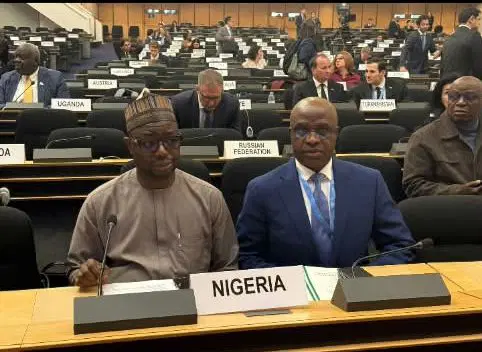
The Federal Government has called for stronger international responsibility sharing and innovative arrangement to address the growing humanitarian needs of over 142,000 refugees and asylum seekers from 42 countries.
The Minister of Humanitarian Affairs and Poverty Reduction, Dr. Bernard Doro, made the call while delivering Nigeria’s national statement at the 77th Session of the Executive Committee of the United Nations High Commissioner for Refugees (UNHCR), currently holding at the Palais des Nations in Geneva.
In a statement by his Senior Technical Adviser on Information Systems and Data Analysis, Dr. Abimbola Fasanu, the Minister disclosed that as of September 2026, Nigeria had received over 24,000 returnees and was managing a population of more than 6.7 million internally displaced persons (IDPs).
Doro reaffirmed Nigeria’s commitment to international refugee protection obligations, noting that the country continues to maintain an asylum system under the National Commission for Refugees, Migrants and Internally Displaced Persons (NCFRMI) Act of 2022.
He stated that no case of refoulement had been recorded in Nigeria in 2026, reaffirming the country’s commitment to protecting people fleeing persecution from being returned to situations where their lives or freedom could be threatened.
Highlighting progress on durable solutions, the Minister disclosed that over 7,000 Nigerian refugees had voluntarily returned from neighbouring countries this year under Tripartite Agreements, while another 14,000 in Cameroon had registered their intention to return. An agreement covering the return of 2,000 Nigerians from Niger is also being finalised.
He acknowledged the continued hospitality of Cameroon, Chad and Niger in providing refuge to displaced Nigerians.
According to the Minister, improved security conditions in parts of the country are creating opportunities for voluntary return, while Resettlement Cities established in seven locations are supporting the phased closure of displacement camps in conditions of safety and dignity.
Beyond return and resettlement, Dr. Doro outlined measures aimed at promoting self-reliance and reducing prolonged dependence on humanitarian assistance.
He explained that refugees in five states are benefiting from access to land, agricultural inputs and skills training, while the newly established Public-Private Partnership Department of the NCFRMI is supporting efforts to expand livelihood opportunities.
The Minister also cited the successful local integration of former Liberian and Sierra Leonean refugees, some of whom have established businesses and become economically active members of their host communities.
On access to essential services, he disclosed that displaced persons and host communities are being enrolled in Nigeria’s national identity system to facilitate access to banking, education and social services.
He added that refugees are being incorporated into state action plans and social registers, while ten mobile documentation buses are expected to extend identity services to underserved and remote communities.
Doro further highlighted the development of a Digital Gateway in collaboration with UNHCR to provide refugees with secure online access to information.
Addressing the growing pressure on humanitarian financing, the Minister urged the international community to strengthen support for refugee-hosting countries through expanded resettlement opportunities, complementary pathways and greater responsibility-sharing.
He specifically called on UNHCR to explore partnerships with regional and subregional financial institutions, including the African Development Bank and the ECOWAS Bank for Investment and Development, as a means of mobilising additional resources for refugee protection and durable solutions.
The Minister emphasised that the responsibility for addressing displacement could not rest on host countries alone, particularly at a time of increasing humanitarian needs and declining international resources.
The United States has listed Nigeria among 14 countries identified for recruiting or using child soldiers, warning that the designation could trigger restrictions on certain forms of military assistance.
The listing is contained in the 2026 Trafficking in Persons (TIP) Report, which covers the period from April 1, 2025, to March 31, 2026.
According to the report, restrictions under the Child Soldiers Prevention Act (CSPA) could affect international military education and training, foreign military financing, excess defence articles, peacekeeping operations and licences for direct commercial sales of military equipment, unless a presidential waiver is granted.
Nigeria was listed alongside Afghanistan, Burma, the Central African Republic, the Democratic Republic of the Congo, Ethiopia, Iran, Russia, Rwanda, Somalia, South Sudan, Sudan, Venezuela and Yemen.
The report also retained Nigeria on Tier 2 for human trafficking, a category for countries whose governments do not fully meet the minimum standards for eliminating trafficking but are making significant efforts to comply.
However, the US raised concerns about corruption and alleged official complicity in human trafficking crimes.
“The government did not report any investigations, prosecutions, or convictions of government employees allegedly complicit in trafficking crimes or provide details or other actions taken against complicit officials from previous years,” the report stated.
The report also faulted Nigeria’s efforts to protect trafficking victims, stating that 675 victims received assistance in 2025, compared with 2,058 in the previous year.
It said support services, particularly for male victims, remained limited, with only one dedicated non-governmental organisation shelter for adult male victims operating during the reporting period.
The report further stated that shelters operated by the National Agency for the Prohibition of Trafficking in Persons (NAPTIP) restricted residents’ freedom of movement, while access to certain protection services depended on victims cooperating with law enforcement proceedings.
Despite these concerns, the report acknowledged increased government efforts in investigating, prosecuting and securing convictions in human trafficking cases compared with the previous reporting period.
The United States has listed Nigeria among 14 countries identified for recruiting or using child soldiers, warning that the designation could trigger restrictions on certain forms of military assistance.
The listing is contained in the 2026 Trafficking in Persons (TIP) Report, which covers the period from April 1, 2025, to March 31, 2026.
According to the report, restrictions under the Child Soldiers Prevention Act (CSPA) could affect international military education and training, foreign military financing, excess defence articles, peacekeeping operations and licences for direct commercial sales of military equipment, unless a presidential waiver is granted.
Nigeria was listed alongside Afghanistan, Burma, the Central African Republic, the Democratic Republic of the Congo, Ethiopia, Iran, Russia, Rwanda, Somalia, South Sudan, Sudan, Venezuela and Yemen.
The report also retained Nigeria on Tier 2 for human trafficking, a category for countries whose governments do not fully meet the minimum standards for eliminating trafficking but are making significant efforts to comply.
However, the US raised concerns about corruption and alleged official complicity in human trafficking crimes.
“The government did not report any investigations, prosecutions, or convictions of government employees allegedly complicit in trafficking crimes or provide details or other actions taken against complicit officials from previous years,” the report stated.
The report also faulted Nigeria’s efforts to protect trafficking victims, stating that 675 victims received assistance in 2025, compared with 2,058 in the previous year.
It said support services, particularly for male victims, remained limited, with only one dedicated non-governmental organisation shelter for adult male victims operating during the reporting period.
The report further stated that shelters operated by the National Agency for the Prohibition of Trafficking in Persons (NAPTIP) restricted residents’ freedom of movement, while access to certain protection services depended on victims cooperating with law enforcement proceedings.
Despite these concerns, the report acknowledged increased government efforts in investigating, prosecuting and securing convictions in human trafficking cases compared with the previous reporting period.
-
 Health & Wellness1 year ago
President Tinubu Directs Cut in Dialysis Cost from ₦50,000 to ₦12,000
-
News2 years ago
CBN Debunks Fake Circular on New ₦5,000 and ₦10,000 Notes
-
 International News7 months ago
Indian Police Arrest Nigerian Over ₦290m Drug Haul
-
 Business7 months ago
Dangote Refinery Reduces Petrol Gantry Price To ₦1,200 Per Litre
-
 Business7 months ago
After Plea Bargain, Court Discharges Stella Oduah of ₦2.5bn Fraud
-
Business2 years ago
Dangote; We Did Not Fix ₦600/Litre Petrol Price
-
 Trending News1 year ago
NELFUND Disburses ₦86bn To 449,000 Beneficiaries
-
 Opinion2 years ago
Championing the People’s Voice: Obasa’s Dedication to Grassroots Representation By Dave Agboola⁰