
International News
Iran ‘Afraid’ To Admit It Wants A Deal, Says Trump

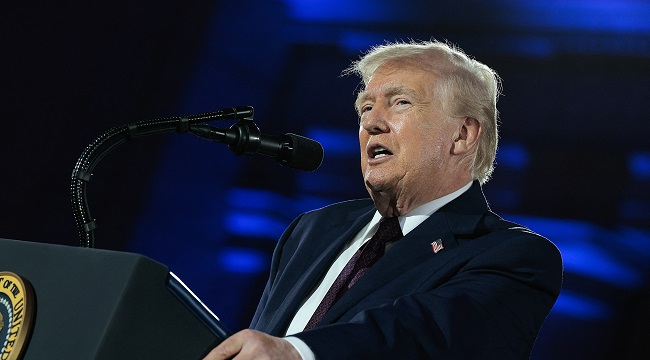
US President Donald Trump insisted Wednesday that Iran was taking part in peace talks, suggesting Tehran’s denials were because Iranian negotiators fear being killed by their own side.
“They are negotiating, by the way, and they want to make a deal so badly. But they’re afraid to say it, because they figure they’ll be killed by their own people,” Trump told a dinner for Republican members of Congress.
“They’re also afraid they’ll be killed by us.”
The US leader’s comments came after Iranian Foreign Minister Abbas Araghchi said that “we do not intend to negotiate”.
Trump repeated his assertion that Iran was being “decimated” in the conflict now in its fourth week, even though Tehran still maintains an effective stranglehold over the crucial Strait of Hormuz oil route.
Lashing out at his domestic opponents, Trump also claimed Democrats were trying to “deflect from all of the tremendous success that we’re having in this military operation.”
In a mocking reference to calls from Democrats for him to seek the approval of Congress for the conflict, Trump added: “They don’t like the word ‘war,’ because you’re supposed to get approval, so I’ll use the word military operation.”
The White House said earlier that Trump was ready to “unleash hell” if Iran did not admit defeat, while also insisting that Tehran is still taking part in talks.
Iranian state media had earlier cited an unidentified official as saying that the Islamic republic had responded “negatively” to a reported 15-point plan from Washington.
‘Talks continue’
“If Iran fails to accept the reality of the current moment, if they fail to understand that they have been defeated militarily and will continue to be, President Trump will ensure they are hit harder than they have ever been hit before,” Press Secretary Karoline Leavitt told reporters.
“President Trump does not bluff and he is prepared to unleash hell. Iran should not miscalculate again.”
Asked if negotiations with Iran had stalled, Leavitt replied: “Talks continue. They are productive.”
Leavitt declined to say whom the US was dealing with in Tehran following the assassination of supreme leader Ali Khamenei, whose son and successor Mojtaba Khamenei has not been seen in public.
Reports have suggested the Trump administration’s interlocutor is Mohammad Bagher Ghalibaf, Iran’s speaker of parliament and one of its most prominent non-clerical figures.
The spokeswoman also declined to confirm reports that top US officials including Vice President JD Vance were set to hold talks with the Iranians in Pakistan, which has emerged as a key mediator.
Trump is moving thousands of airborne troops and extra marines to the Gulf amid speculation that he might order a ground invasion to either seize Iranian oil assets in the Gulf or secure the Strait of Hormuz.
The White House meanwhile appeared to stick to the four to six-week timeline it has previously given for the war.
Trump announced Wednesday that his visit to China to meet Xi Jinping had now been rescheduled for mid-May, having postponed it by six weeks to deal with the conflict.
“We’ve always estimated approximately four to six weeks (for the length of military operations against Iran), so you could do the math on that,” Leavitt added.
AFP



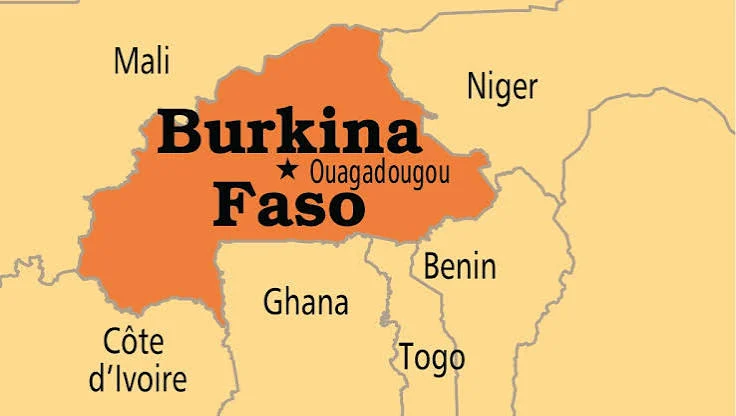
Burkina Faso’s parliament has voted unanimously to reinstate the death penalty for crimes including terrorism, espionage and treason, ending the country’s abolition of capital punishment for ordinary crimes in 2018.
All 71 members of the West African country’s transitional legislature supported the revised penal code on Tuesday, October 20, following its presentation by Justice Minister Edasso Rodrigue Bayala, according to the Associated Press.
The decision restores capital punishment nearly four decades after the country’s last known execution, which took place in 1988, according to Human Rights Watch.
The military-led government’s Council of Ministers approved a bill to restore the death penalty in December 2025, prompting criticism from international human rights organisations.
Amnesty International and Human Rights Watch warned that the move could threaten fundamental rights and be used to suppress critics of the authorities.
Burkina Faso’s military government has previously faced allegations of detaining journalists, human rights defenders and other perceived opponents. The authorities also dissolved political parties earlier in 2026 and repealed the laws governing their activities.
The reinstatement comes as the country continues to battle an armed insurgency involving militant groups linked to al-Qaida and the Islamic State group. The violence has killed thousands of people and displaced millions across Burkina Faso and the wider Sahel region.
The government has presented the tougher penal code as part of its response to the security crisis. Bayala had indicated in 2024 that the death penalty would be included in a revised criminal code.
According to Reuters, the revised code also provides for capital punishment in cases involving the importation of expired or prohibited products that result in death, although the precise scope and implementation of the new provisions will depend on the final legal text.
Human rights organisations have questioned whether restoring the death penalty will improve security, warning that it could deepen repression and create additional risks for people accused of offences.
Human Rights Watch previously said the proposed change could intensify a climate of fear and send a chilling message to critics of the military authorities.
The country’s security forces have also faced allegations of serious abuses during counterinsurgency operations. Human Rights Watch reported this year that government forces killed more than twice as many civilians as jihadist fighters between 2023 and 2025.
Armed groups, including Jama’at Nusrat al-Islam wal-Muslimin, an al-Qaida-linked organisation, have also been accused of war crimes and crimes against humanity by rights groups.
Burkina Faso, a landlocked country with a population of about 23 million, has been governed by military authorities since a coup in 2022. The junta has repeatedly delayed a return to civilian rule as it seeks to contain the insurgency.
The parliamentary vote marks a significant change in the country’s criminal justice policy. Burkina Faso abolished the death penalty for ordinary crimes in 2018 under former President Roch Marc Christian Kaboré, although the last known execution had taken place decades earlier.
The decision is likely to renew scrutiny of the country’s human rights record as authorities pursue their security campaign against armed groups.
(APNews)

Uganda has clarified that as of Tuesday, October 21, 2026, when Nigerian health authorities confirmed an active case of Ebola in its capital city, Abuja, it had no active case of the virus.
Health Minister, Muhammad Ali, had announced that a female patient who had travelled from Uganda in East Africa, tested positive for the virus.
“The Federal Government of Nigeria confirms one case of Ebola disease in the Federal Capital Territory (FCT), following laboratory confirmation today, 20 October 2026. The patient, a woman who recently arrived in Nigeria on an international flight from Uganda, was admitted to a private hospital in the FCT, where she received care for several days before the diagnosis was confirmed. She is currently in isolation and receiving medical care.
“The FG calls on all public and private healthcare facilities nationwide to be on high alert. Healthcare workers must maintain a high index of suspicion, promptly identify and isolate suspected cases, observe strict infection prevention and control measures, and immediately report suspected cases to public health authorities.
“Investigations are ongoing, and we will continue to provide accurate and timely information,” Pate had said.
The development had made many Nigerians look towards the direction of Uganda, just like Patrick Sawyerr, a Liberian, imported the disease to Nigeria in 2014.
But in a statement issued after Pate’s comment, Charles Olaro, Director-General of Health Services in the East African country, clarified that the patient is a Nigerian.
Olaro said the woman had travelled to Eastern Democratic Republic of the Congo (DRC), which has over nearly 10,000 active cases with 4,500 deaths from Ebola, for business and transited through Uganda in early October.
According to Olaro, she showed no symptoms while in Uganda but developed symptoms after arriving in Nigeria.
“Travel through Uganda does not establish that infection occurred here. The location of exposure remains under investigation,” the ministry said.
“The Government of Nigeria is yet to provide detailed information on her travel itinerary and clinical history which will guide further investigations and any necessary contact tracing.
“We wish to clarify that, as at the time of this statement, Uganda has NO confirmed active Ebola cases.”
The Ugandan government said it had maintained limited provisions for humanitarian and diplomatic movement, adding that it would strengthen screening and public health controls at points of entry.
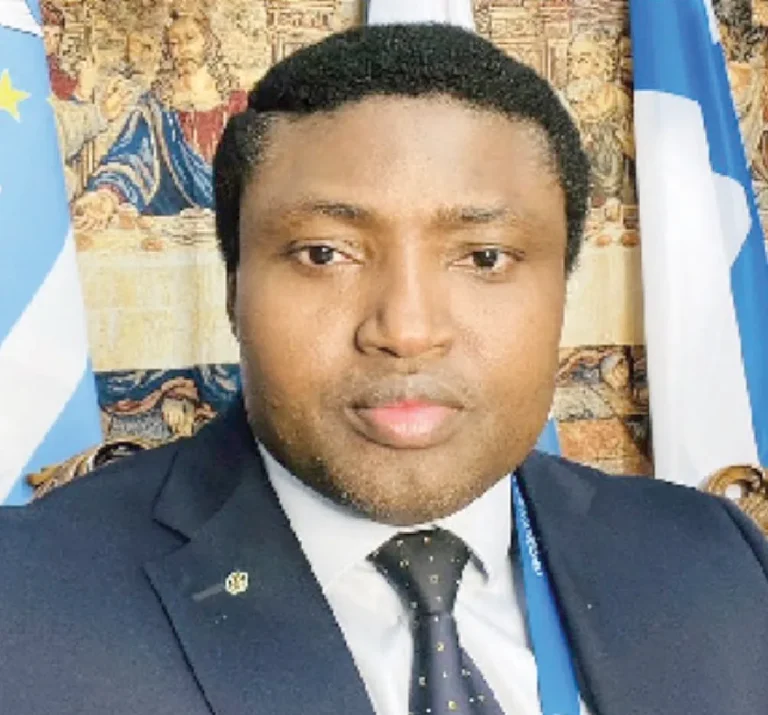
A Finnish appeal court has reduced the prison sentence of Biafran separatist leader, Simon Ekpa, from six to four years.
Finnish newspaper Yle disclosed this in a report on Thursday.
However, the Court of Appeal upheld the decision of the Päijät-Häme District Court, which found Ekpa guilty of terrorism-related charges last year.
The charges were related to Ekpa’s alleged activities aimed at re-establishing an independent state of Biafra in southeastern Nigeria.
Ekpa subsequently appealed the ruling, seeking to have his conviction and sentence overturned.
In a ruling that offered some relief to Ekpa, the Court of Appeal found him guilty of the same offences but reduced his prison term after considering the circumstances surrounding his actions. The court noted that the situation in the Biafran region closely resembled, but did not meet the definition of, a civil war.
Ekpa had told the court that his involvement was not motivated by terrorist intent, citing the political turmoil in the Biafran region.
The prosecutor in the case had also appealed the district court’s decision, arguing that the prison sentence did not reflect the seriousness of Ekpa’s offences.
-
 Health & Wellness1 year ago
President Tinubu Directs Cut in Dialysis Cost from ₦50,000 to ₦12,000
-
News2 years ago
CBN Debunks Fake Circular on New ₦5,000 and ₦10,000 Notes
-

 Business7 months ago
Dangote Refinery Reduces Petrol Gantry Price To ₦1,200 Per Litre
-
 International News7 months ago
Indian Police Arrest Nigerian Over ₦290m Drug Haul
-
 Business7 months ago
After Plea Bargain, Court Discharges Stella Oduah of ₦2.5bn Fraud
-
Business2 years ago
Dangote; We Did Not Fix ₦600/Litre Petrol Price
-
 Trending News1 year ago
NELFUND Disburses ₦86bn To 449,000 Beneficiaries
-
 Opinion2 years ago
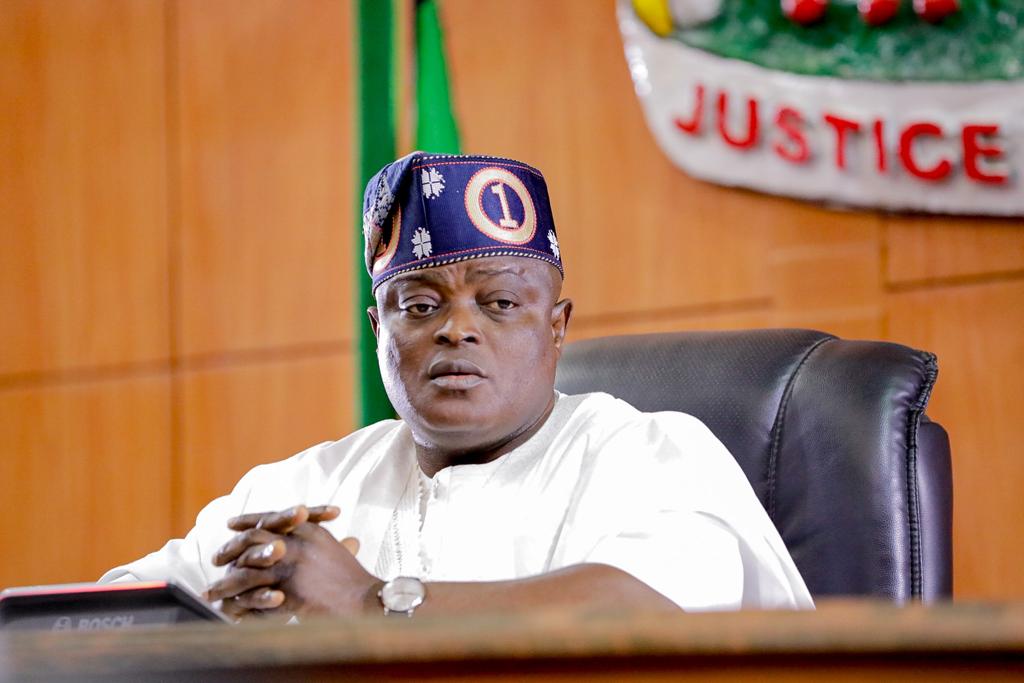
Championing the People’s Voice: Obasa’s Dedication to Grassroots Representation By Dave Agboola⁰