
Health & Wellness
JAPA; FG Approves National Policy To Address Health Workforce Migration

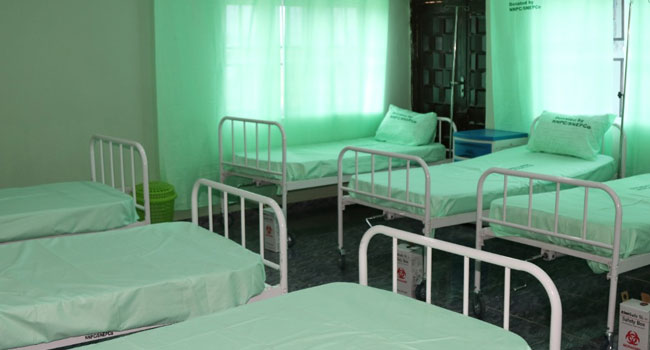
The Federal Government has approved a new National Policy on Health Workforce Migration.
Disclosing this on Monday through a post on X, the Minister of Health, Ali Pate, reaffirmed the government’s commitment to tackling the challenges surrounding healthcare human resources in the country.
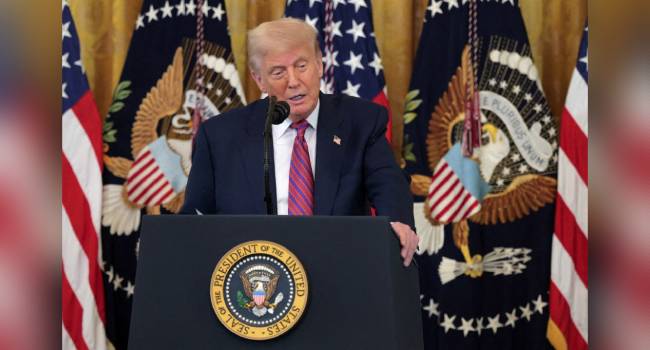
He said President Bola Tinubu presided over the Federal Executive Council meeting at the Presidential Villa in Abuja, where the policy was approved.
“This policy is more than just a response to the ongoing exodus of healthcare professionals; it’s a comprehensive strategy to manage, harness, and reverse health worker migration,” the minister said.
“It envisions a thriving workforce that is well-supported, adequately rewarded, and optimally utilized to meet the healthcare needs of all Nigerians.”
According to Pate, the goal of the new policy is to encourage the return and reintegration of Nigerian health professionals from the diaspora.
He said that the policy aims to streamline registration processes and provide incentives to attract skilled professionals back to Nigeria, thereby strengthening the healthcare system.
“Also, the policy champions reciprocal agreements with other nations to ensure that the exchange of health workers benefits Nigeria. These bilateral and multilateral agreements are designed to protect national interests while respecting the rights and aspirations of our healthcare professionals. We call on recipient countries to implement a 1:1 match—training one worker to replace every publicly trained Nigerian worker they receive.
“Recognizing the importance of work-life balance, the policy includes provisions for routine health checks, mental well-being support, and reasonable working hours, especially for younger doctors. These measures aim to create a supportive work environment, reducing burnout and enhancing job satisfaction,” the minister stated.






Nigerian Association of Resident Doctors have issued a 10-day ultimatum to all relevant government agencies on Monday, warning that its members would embark on a nationwide strike if the demands were not met.
NARD disclosed this in a communiqué signed by its President, Dr. Tope Osundara; the General Secretary, Dr. Oluwasola Odunbaku; and Publicity and the Social Secretary, Omoha Amobi, issued after its Extraordinary National Executive Council meeting, which was held virtually on Sunday.
In July, NARD had issued a three-week ultimatum, but in the interest of industrial harmony, the NEC granted the National Officers’ Committee an additional three weeks to engage with all relevant stakeholders, after which it would reconvene to reassess the extent of implementation of its demands.
In Sunday’s meeting, the E-NEC condemned the failure of the Federal Government to fulfil its promises, noting with dismay that a substantial number of resident doctors remain unpaid for their 2025 Medical Residency Training Fund, and the refusal to pay the outstanding five months’ arrears arising from the 25 per cent/35 per cent Consolidated Medical Salary Structure review, as well as other longstanding salary arrears.
It also condemned the government’s failure to pay the arrears of the 2024 Accoutrement Allowance.
“The E-NEC expressed displeasure over the unjust downgrading of the membership certificates of the West African Colleges of Physicians and Surgeons by the Medical and Dental Council of Nigeria, as well as the persistent non-issuance of membership certificates by the National Postgraduate Medical College of Nigeria.
“The E-NEC condemned in strong terms the failure of the Kaduna State Government to honour its commitments to members under ARD Kaduna and Barau Dikko Teaching Hospital, despite earlier agreements and signed Memoranda of Understanding. The E-NEC condemned the failure of the Oyo State Government to address the challenges faced by members of ARD LAUTECH Teaching Hospital, Ogbomosho, despite an ongoing indefinite strike action in the hospital,” it noted.
It, however, commended state governors who have demonstrated commitment to the welfare of doctors by paying the 2025 MRTF.
Meanwhile, the doctors said that if their demands are not met by September 10, 2025, they would embark on a nationwide strike.
E-NEC, however, demands the immediate payment of the outstanding 2025 MRTF to all eligible resident doctors by the Federal Government, as well as the settlement of the outstanding five months’ arrears of CONMESS, alongside other longstanding salary arrears.
The Council also demands, “The immediate payment of the arrears of the 2024 Accoutrement Allowance. The E-NEC demands the commencement of payment of specialist allowances to all doctors without further delay, given their indispensable role in delivering specialist medical care across the nation. The E-NEC demands that the MDCN immediately restore the recognition of the West African postgraduate membership certificates to their rightful status and calls on the NPMCN to commence without delay the issuance of membership certificates to all deserving candidates, in line with international best practices.
“The E-NEC demands the immediate implementation of the 2024 CONMESS and resolution of all outstanding welfare concerns in Kaduna State, noting that the indefinite strike by our members has already resumed and will continue until these demands are met. The E-NEC demands that the Governor of Oyo State, His Excellency Governor Seyi Makinde, immediately resolve the welfare concerns of resident doctors under the employment of the state government, particularly those at LAUTECH Teaching Hospital, Ogbomosho.
“The E-NEC urges all State Governors to prioritise the welfare of doctors in their state-owned hospitals and training institutions, ensure the timely payment of MRTF to their resident doctors, and take proactive steps to curb emigration while maintaining industrial harmony.
“The E-NEC extends the ultimatum by a final 10 days to all relevant government agencies to meet these demands. Failure to do so within this period (expiring on Wednesday, 10th September 2025) will leave the NEC with no other option than to embark on a nationwide strike action.”

President Bola Tinubu has authorized a reduction in the cost of kidney dialysis at federal hospitals nationwide, lowering the fee from ₦50,000 to ₦12,000.
The Special Adviser to the President on Policy Information, Daniel Bwala, disclosed this on his X handle on Monday.
He noted that “with this intervention, the price of each dialysis session has been reduced from N50,000 to just N12,000, bringing relief to thousands of citizens battling kidney-related diseases.”
According to Bwala, the subsidy is already being implemented in major federal hospitals across the six geopolitical zones.
The hospitals include the Federal Medical Centre (FMC), Ebute-Metta, Lagos; Federal Medical Centre (FMC), Jabi, Abuja; University College Hospital (UCH), Ibadan; and the Federal Medical Centre (FMC), Owerri.
Others are the University of Maiduguri Teaching Hospital (UMTH), Maiduguri; the Federal Medical Centre (FMC), Abeokuta; Lagos University Teaching Hospital (LUTH), Lagos; Federal Medical Centre (FMC), Azare; University of Benin Teaching Hospital (UBTH), Benin; and the University of Calabar Teaching Hospital (UCTH), Calabar.
He disclosed that more federal medical centres and teaching hospitals will be added before the end of the year to widen access nationwide.
Bwala recalled how Tinubu also approved free caesarean sections (C-sections) for pregnant women in federal hospitals, a bold step aimed at boosting maternal healthcare and reducing preventable maternal deaths.
“Together, these measures demonstrate the President’s Renewed Hope Agenda in action—ensuring that no Nigerian is denied healthcare because of cost,” he said.

The National Agency for Food and Drug Administration and Control (NAFDAC) has weighed in on the ongoing discourse surrounding genetically modified organisms (GMOs), assuring Nigerians that GMO foods are safe for consumption, provided they are properly labelled to ensure consumer awareness and choice.
“GMOs are genetically modified foods when it comes to food, and they are not bad for us. They are not bad for us, depending on what type of foods they are and whether the safety considerations have been taken,” NAFDAC’s Director-General, Mojisola Adeyeye, affirmed.
Adeyeye, a pharmacist and professor, believes proper labelling of GMO foods by marketers is essential for the consuming public.
“The National Biosafety Management Agency—NBMA—is the agency charged with ensuring the safety of foods that have GMOs. We work in collaboration with them,” the NAFDAC chief said.
Asked what Nigerians can do to ensure that the food they consume is healthy for them, Adeyeye explained, “I’m a food freak. I want to know what I’m eating is going to give me a good health outcome.
“I look at the label. I want to be sure that NAFDAC’s label is on it, or if I’m outside the country—well, I don’t do a lot of shopping now, but before my time in NAFDAC, when I had all the time — I would look at the label. And it’s supposed to have ‘genetically modified food’ written on it.
“We work in collaboration with the Biosafety Management Agency. We have an MoU with them. They are mandated to ensure that the foods that have GMOs are of quality, they are safe, and they are efficacious.
“So, when you look at the food on the table in the market—especially grocery stores— you will see foods labeled organic. You put labels [on foods] that are not organic, and people have the choice to buy which one they want.”
Her comment followed concerns among Nigerians about GMO foods in the country, with debates over the quality of items sold in markets across Nigeria making headlines.
While NAFDAC has a role to play in the monitoring and certification of food items consumed in the country, Adeyeye said other agencies at the state level had a part to play in such issue.
“But for NAFDAC, we are mandated to ensure that the food that we approve for the market is safe, is of quality, of course, and it is efficacious.
“So that is the reason why the collaboration between us and the NBMA is very solid.
“Without them certifying that they have done their due diligence in their laboratory for desk review or whatever, we cannot approve,” the professor said.
Last month, the National Biotechnology Research and Development Agency (NBRDA) allayed fears over the safety of GMO foods.
The agency’s Director General, Abdullahi Mustapha, told members of the House of Representatives Press Corps that GMO crops are key to tackling the country’s food challenges and boosting agricultural productivity among others in Nigeria.
“In today’s digital age, the distortion of facts has become a major barrier to the acceptance of science,” the NBRDA told the participants who attended a sensitisation workshop in Abuja.
“False claims about GMOs have contributed to public skepticism and slowed down the adoption of technologies that can transform lives.”
-
 News3 years ago
Just In: President Tinubu returns to Nigeria
-
 Entertainment3 years ago
Social media cloth Vendor Found Dead In Ibadan Hotel.
-
 News3 years ago
2023 Elections: Outgoing Rwandan High Commissioner say s Nigeria, ‘ handle their destiny’ in a peaceful way.
-
 News3 years ago
Ogun HoS Solicit Affordable Housing For Civil Servants
-
 Trending News3 years ago
FG begins 40% pay rise for workers.
-
Sports3 years ago
CAF SALUTES RIVERS UNITED AFTER SEALING QUARTER-FINAL TICKET.
-
 Business3 years ago
JUST IN: DSS Arrests Godwin Emefiele
-
 Entertainment3 years ago
9mobile Ambassadors Begin “Meet And Greet” Session With Staffs, Customers.