
News
Fire Guts Customs Western Marine Command Office In Lagos

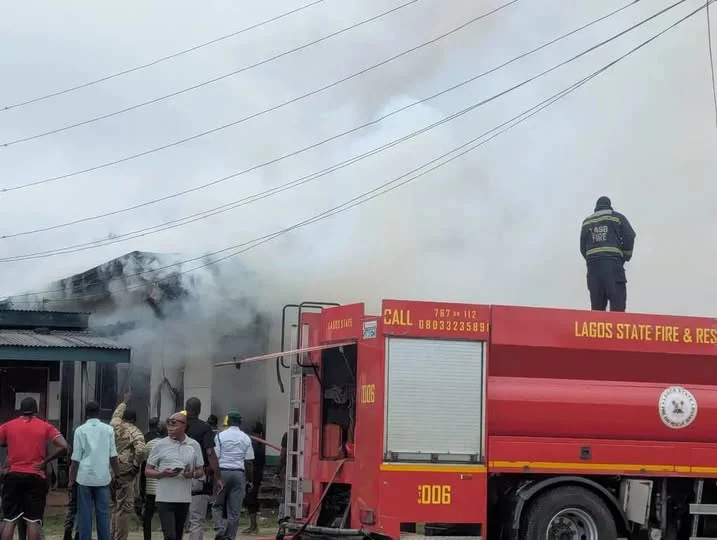
A fire outbreak on Monday gutted the Nigeria Customs Service (NCS) Western Marine Command office in Apapa, Lagos, destroying property reportedly worth millions of naira.
The fire, which started at about 10:23am, was reportedly triggered by an electrical surge in the conference room before spreading to other sections of the building.
Officers on duty made frantic efforts to contain the blaze before personnel of the Lagos State Fire and Rescue Service arrived to join the firefighting operation.
The Deputy Comptroller of Customs, Timothy Jonah, who had just assumed duty at the command, described the incident as unfortunate.
Jonah, who was taking over from his predecessor when the incident occurred, said the fire outbreak would be investigated to determine its cause.
He said, “I just resumed duty to take over, only to witness this fire outbreak.
“Every challenge, though negative, is an opportunity to strengthen our operations.
“In the meantime, we will set up a committee to investigate the cause of the fire.”
Jonah commended the officers on duty for their swift response and their collaboration with the Lagos State Fire and Rescue Service in containing the fire.
He added that measures would be taken to strengthen safety protocols at the command and prevent a recurrence.
⁶

Ogun State Governor, Prince Dapo Abiodun, has sworn in Mr Olayemi Sanusi and Mrs Adenike Ademokun as commissioners, charging them to place the interest of the state above personal considerations, political differences and sectional loyalties.
Abiodun gave the charge on Monday during the swearing-in ceremony held at the Governor’s Office, Oke-Mosan, Abeokuta, where he urged the new commissioners to demonstrate integrity, humility, fairness and commitment to public service.
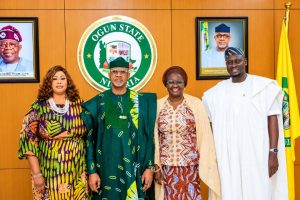
L-R: The newly appointed Commissioner, Mrs Adenike Ademokun; Ogun State Governor, Prince Dapo Abiodun; his Deputy, Engr. Noimot Salako-Oyedele; and another newly appointed Commissioner, Mr Olayemi Sanusi, during their swearing-in at the Governor’s Office, Oke-Mosan, Abeokuta, on Monday.
The governor charged them to remain accessible to the people, listen attentively to their concerns and exercise prudence in the management of public resources, stressing that their appointments must translate into tangible benefits for the people.
He also emphasised the importance of continuity in governance, urging the commissioners to preserve institutional knowledge, maintain proper records and ensure that ongoing projects and programmes were completed.
Abiodun advised them to familiarise themselves with the priorities of his administration, understand the status of existing projects and bring fresh energy, sound judgment and a strong sense of responsibility to their assignments.
“Public confidence grows when citizens can see that those they entrusted with leadership understand their needs and act to address them,” he said.
The governor further urged the new commissioners to embrace teamwork, respect the professionalism of the public service and collaborate effectively with the ministries, departments and agencies under their supervision.
“Your ability to listen, inspire confidence, make informed decisions and translate policies into outcomes will determine the contribution you make to our collective mission.
“Bring your experience to bear, remain willing to learn and support your colleagues in the pursuit of common objectives,” he said.
Abiodun noted that the value of public office should be measured by the problems it helps to solve and the opportunities it creates, adding that the responsibility before members of the State Executive Council was to consolidate existing achievements, address unfinished priorities and leave behind a stronger and more prosperous Ogun State.
Describing the period as the final lap of his administration, the governor said the remaining months required urgency, discipline, political maturity and an unwavering commitment to excellence.
“We are now in the final lap of this administration. This period demands urgency, discipline, political maturity and a steadfast pursuit of excellence.
“Your appointments, therefore, come at a very significant moment. You are joining a government with substantial achievements and important responsibilities still to fulfil.
“History will assess our stewardship through the consequences of our decisions and the difference our service has made in the lives of the people.
“Let us, therefore, approach the months ahead with a clear sense of purpose and a determination to make every opportunity count,” he said.
Speaking on behalf of the newly sworn-in commissioners, Mrs Adenike Ademokun expressed appreciation for the confidence reposed in them, assuring the governor that they would not take the appointments for granted.
She pledged their commitment to giving their best in support of the administration’s efforts to sustain development and improve the welfare of residents across the state.

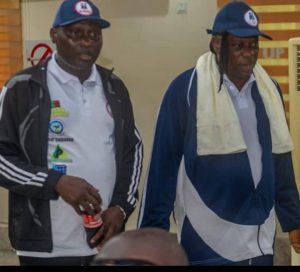
The 48th annual Presidential Night of Association of Friends kicked off on Saturday with a health walk.
The event was led by the President of the Club, Dr Afolabi Abiodun Tajudeen: Below are pictures from the event;





Workers at the former University of Medical Sciences Teaching Hospital (UNIMEDTH) facility in Akure, Ondo State, have staged a peaceful protest to the Ondo State House of Assembly and the Governor’s Office over three months of unpaid salaries, alleged forced integration into the Federal University of Technology Akure Teaching Hospital (FUTATH), and the exclusion of some workers’ names from a published staff list.
The protesting workers said they embarked on the demonstration to draw the attention of the Ondo State Government to what they described as pressing issues affecting their members and demanding urgent intervention to protect their welfare, employment status and rights.
The workers marched from the UNIMEDTH/FUTATH facility to the Ondo State House of Assembly and the Governor’s Office, on Monday morning, calling on the government to address their grievances and ensure that the concerns of all affected employees were treated fairly and transparently.
One of the major issues raised by the workers was the attempt to force their members to integrate into FUTATH against their wishes.
They said they were opposed to any arrangement that would compel workers to join the new institution without their consent, insisting that the government must intervene to ensure that decisions affecting their employment were made through a fair and transparent process
“We do not want the management to force our members to join FUTATH against their wishes,” the workers said.
“We want the government to intervene and ensure that every decision concerning our members is handled fairly and transparently.”
The workers also expressed concern over the non-payment of three months’ salaries, describing the situation as a serious hardship for employees who depend on their earnings to provide for their families and meet their financial obligations.
They demanded immediate action by the state government to ensure that all outstanding salaries were paid, stressing that workers should not be expected to continue discharging their duties without receiving their entitlements.
“We are demanding urgent action regarding our three months of unpaid salaries,” the workers said.
“Our members have families and responsibilities, and we can no longer continue to suffer without being paid for our work.”
The protesting employees further raised concerns over the omission of some workers’ names from a list published by FUTATH, saying those affected were bona fide staff members whose employment status needed to be clarified.
According to the workers, the absence of their names from the published list has created uncertainty about their employment and future, leaving affected employees seeking answers from the relevant authorities.
They called on the government and the hospital management to explain why the names of some workers were missing from the list and clarify what would happen to those whose employment status remained uncertain.
“Some workers are bona fide staff members, yet their names are missing from the list published by FUTATH,” the workers said.
“We want the government to clarify their employment status and explain what will happen to these workers. They deserve justice, recognition, and a clear decision regarding their future.”
The workers insisted that the government must take their complaints seriously and ensure that no affected employee was left without a clear explanation of their status or the benefits and entitlements due to them.
They appealed to the Ondo State Government to urgently intervene in the dispute, address the outstanding salary payments, resolve the controversy surrounding the staff list and ensure that any decision concerning integration into FUTATH was handled transparently.
The workers concluded their demands with a call for justice for all affected employees, declaring that they would not accept a situation in which their members continued to work without being paid.
“No salary, no work! Justice for all affected workers!” they declared.
-
 Health & Wellness1 year ago
President Tinubu Directs Cut in Dialysis Cost from ₦50,000 to ₦12,000
-
News2 years ago
CBN Debunks Fake Circular on New ₦5,000 and ₦10,000 Notes
-

 Business7 months ago
Dangote Refinery Reduces Petrol Gantry Price To ₦1,200 Per Litre
-

 International News7 months ago
Indian Police Arrest Nigerian Over ₦290m Drug Haul
-

 Business7 months ago
After Plea Bargain, Court Discharges Stella Oduah of ₦2.5bn Fraud
-
Business2 years ago
Dangote; We Did Not Fix ₦600/Litre Petrol Price
-
 Trending News1 year ago
NELFUND Disburses ₦86bn To 449,000 Beneficiaries
-
 Opinion2 years ago
Championing the People’s Voice: Obasa’s Dedication to Grassroots Representation By Dave Agboola⁰