
Politics
Gbenga Daniel: Nigerians’ Experience, Not GDP, Measures Economy

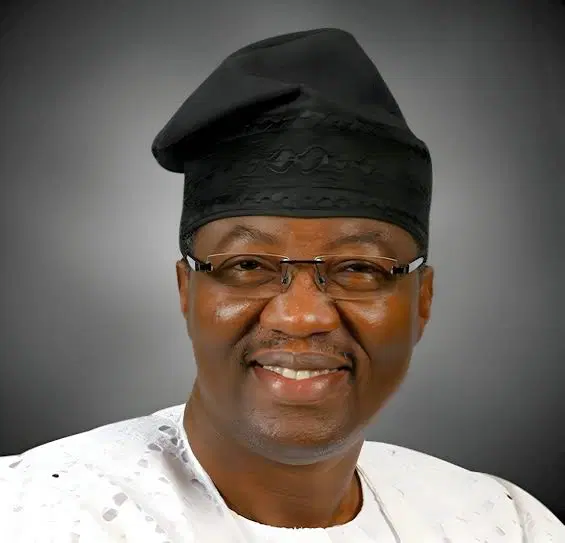
Former Governor and senator representing Ogun East, Otunba Gbenga Daniel, said the true measure of Nigeria’s economic progress should be the lived experiences of citizens rather than growth in Gross Domestic Product, GDP, alone, saying that Nigeria cannot have a strong economy without security.
Daniel mentioned this yesterday at the 7th Annual Lecture of Freedom Online in Lagos, as he argued that economic growth and security are inseparable.
His comments came days after the NBS reported that Nigeria’s GDP grew by 4.43 per cent year-on-year in the second quarter of 2026, up from 4.23 per cent recorded in the corresponding period of 2025.
According to the senator, although the latest GDP figures and improvements in agriculture and services are encouraging, they did not fully reflect the economic realities confronting Nigerians.
“Nigeria cannot have a strong economy without security, and it cannot have lasting security without a strong economy, which effectively means that both of them are inseparable,” he said.
Daniel said the real test of economic progress is whether Nigerians could secure decent jobs, access their farms safely, operate businesses profitably and attract investment.
He asked: “In our country today, can a young person find decent work? Can a farmer safely reach the farm? Can a manufacturer produce competitively?
“Can a small business survive the cost of power and transport? Can investors commit their resources with confidence?”
The former Ogun State governor described security as an essential component of economic infrastructure, rather than an issue exclusively for the military, police and other security agencies.
He said insecurity has direct economic consequences, noting that farmers who could not safely access their land will be unable to produce enough food, while insecurity along major roads will increase the cost of transporting goods.
Daniel further argued that excessive expenditure on security measures could undermine business competitiveness, while insecurity in communities could discourage both domestic and foreign investment.
He called for an approach that treats security and economic development as mutually reinforcing priorities.

President Bola Tinubu will attend All Progressives Congress (APC) campaign rallies in 12 states ahead of the 2027 elections.
According to the party’s campaign timetable released on Thursday, Tinubu is expected to flag-off the campaign in Kaduna on October 24, before attending rallies in 11 other states.
After the Kaduna rally, the president is scheduled to attend rallies in Rivers on November 7, Plateau on November 14 and Oyo on November 21.
He is also expected at rallies in Borno, Enugu and Bauchi on November 25, 28 and 29, respectively.
Tinubu is not scheduled to attend rallies in 13 other states in November. The states are Cross River (November 2), Gombe (November 3), Nasarawa (November 4), Ekiti (November 5), Ebonyi (November 9), Jigawa (November 10), Ondo (November 11), Edo (November 12), Yobe (November 16), Kebbi (November 17), Akwa Ibom (November 18), Anambra (November 19) and Benue (November 30).
Tinubu is expected to continue his campaign tour in December, with rallies scheduled for Sokoto on December 5, Delta on December 12 and Kano on December 17.
His final two appearances are scheduled for Adamawa on January 4 and Lagos on January 9, while party leaders will represent him at rallies in the remaining 12 states scheduled for December.
Overall, the president is scheduled to attend rallies in 12 of Nigeria’s 36 states and the Federal Capital Territory (FCT).
Three of the states Tinubu is scheduled to visit — Oyo, Bauchi and Adamawa — have prominent opposition figures linked to the 2027 presidential race.
Seyi Makinde, governor of Oyo, is the presidential candidate of the Allied Peoples Movement (APM), which is also the ruling party in Bauchi.
Adamawa is the home state of former Vice-President Atiku Abubakar, the African Democratic Congress (ADC) presidential candidate.
At the inauguration of the APC presidential campaign council at the Presidential Villa in Abuja on Wednesday, Tinubu said he would not attend every campaign rally, saying governance remained a priority.
He, however, said he would make time to address Nigerians directly as party leaders criss-cross the states and local governments to campaign for his re-election.
On Tuesday, the APC announced an expanded list of its presidential campaign council, with Nyesom Wike, the FCT minister; Ademola Adeleke, governor of Osun; and Chukwuma Soludo, governor of Anambra, among the notable additions.
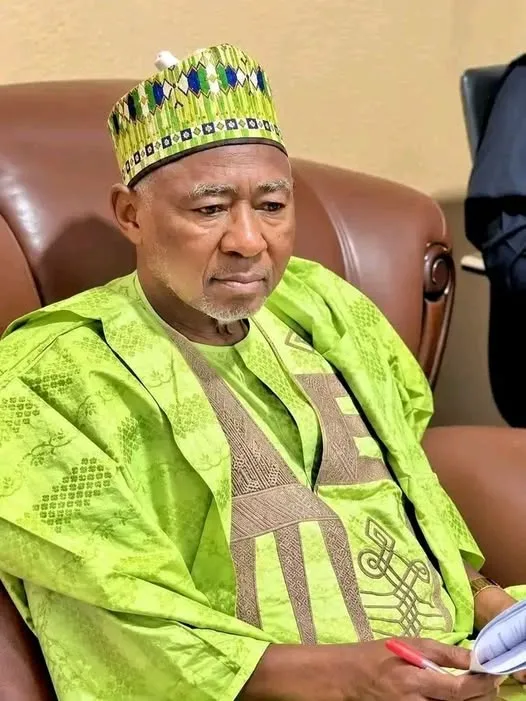
A former Managing Director of the Nigerian Ports Authority (NPA), Arc Aminu Dabo, has resigned his membership of the All Progressives Congress (APC) with immediate effect.
Dabo, who served as the APC caucus chairman in Dambatta Local Government Area of Kano State, announced his resignation in a letter dated October 7, 2026, addressed to the party chairman of Dambatta Gabas Ward.
In the letter, Dabo said his decision followed careful consideration of personal reasons and his future endeavours.
He confirmed that he had formally submitted his resignation to the appropriate party officials in Dambatta for necessary action.
The former NPA managing director expressed appreciation to the APC leadership for the opportunity to serve, as well as the support and confidence reposed in him.
“I remain grateful for the cordial relationship I enjoyed and appreciative of the experience gained during my time of service,” he said.
He also thanked the party leadership for allowing him to contribute to its development and progress.
Dabo was a governorship aspirant in Kano State and previously served as the state’s Commissioner for Land.
He is also the proprietor and chief executive officer of Aminu Dabo College of Health Sciences and Technology and Aminu Dabo College of Nursing Sciences, both located in Kano.

Unknown thugs have reportedly attacked the secretariat of the Nigeria Democratic Congress, NDC, in Ikpoba-Okha Local Government Area of Edo State.
The attack, which was reported on Wednesday, comes barely one week after NDC supporters were attacked in Enugu, resulting in the death of one person.
No casualties was reported in the Edo attack, but footage of the incident showed that properties at the secretariat were damaged.
Report says the incident marks the latest in a series of violent disruptions targeting opposition political infrastructure across the state.
There are growing concerns over political intolerance and targeted intimidation ahead of the 2027 general elections.
Civil society groups and political analysts have expressed alarm over the recurring attacks on party secretariats, warning that unchecked political violence threatens the credibility of the democratic process.
-
 Health & Wellness1 year ago
President Tinubu Directs Cut in Dialysis Cost from ₦50,000 to ₦12,000
-
News2 years ago
CBN Debunks Fake Circular on New ₦5,000 and ₦10,000 Notes
-

 Business7 months ago
Dangote Refinery Reduces Petrol Gantry Price To ₦1,200 Per Litre
-

 International News7 months ago
Indian Police Arrest Nigerian Over ₦290m Drug Haul
-

 Business7 months ago
After Plea Bargain, Court Discharges Stella Oduah of ₦2.5bn Fraud
-
Business2 years ago
Dangote; We Did Not Fix ₦600/Litre Petrol Price
-
 Trending News1 year ago
NELFUND Disburses ₦86bn To 449,000 Beneficiaries
-
 Opinion2 years ago
Championing the People’s Voice: Obasa’s Dedication to Grassroots Representation By Dave Agboola⁰