
International News
India Becomes First Nation To Land Spacecraft Near Moon’s South Pole


India on Wednesday became the first nation to land a craft near the Moon’s south pole, a historic triumph for the world’s most populous nation and its ambitious, cut-price space programme.
ADVERTISEMENT
The unmanned Chandrayaan-3, which means “Mooncraft” in Sanskrit, touched down at 6:04 pm India time (1234 GMT) as mission control technicians cheered wildly and embraced their colleagues.
Its landing comes days after a Russian probe crashed in the same region and four years since the previous Indian attempt failed at the last moment.
Prime Minister Narendra Modi smiled broadly and waved an Indian flag on a live broadcast to announce the mission’s success as a triumph that extended beyond his country’s borders.
“On this joyous occasion I would like to address the people of the world,” said Modi from the sidelines of the BRICS diplomatic summit in South Africa.
“India’s successful moon mission is not just India’s alone,” he added. “This success belongs to all of humanity.”
The Chandrayaan-3 mission has captivated public attention since launching nearly six weeks ago in front of thousands of cheering spectators.
Politicians staged Hindu prayer rituals to wish for the mission’s success and schoolchildren followed the final moments of the landing from live broadcasts in classrooms.
Chandrayaan-3 took much longer to reach the Moon than the Apollo missions in the 1960s and 1970s, which arrived in a matter of days.
India used rockets much less powerful than the ones the United States used back then, meaning the probe had to orbit the Earth several times to gain speed before embarking on its month-long journey.
The lander, Vikram, which means “valour” in Sanskrit, detached from its propulsion module last week and has been sending images of the Moon’s surface since entering lunar orbit on August 5.
Now that Vikram has landed, a solar-powered rover will explore the surface and transmit data to Earth over its two-week lifespan.
– Ambitious programme –
India is closing in on milestones set by global space powers such as the United States and Russia, conducting many of its missions at much lower price tags.
The South Asian nation has a comparatively low-budget space programme, but one that has grown considerably in size and momentum since it first sent a probe to orbit the Moon in 2008.
The latest mission has a cost of $74.6 million — far lower than those of other countries, and a testament to India’s frugal space engineering.
Experts say India can keep costs low by copying and adapting existing technology, and thanks to an abundance of highly skilled engineers who earn a fraction of their foreign counterparts’ wages.
In 2014, India became the first Asian nation to put a craft into orbit around Mars and is slated to launch a three-day crewed mission into Earth’s orbit by next year.
Wednesday’s landing had been eagerly awaited by the Indian Space Research Organisation (ISRO) after the frustrating failure of its previous mission at the last hurdle in 2019.
Back then, mission control lost contact with the Chandrayaan-2 lunar module moments before its slated landing.
– ‘Very, very important’ –
Former ISRO chief K. Sivan told AFP that India’s efforts to explore the relatively unmapped lunar south pole would make a “very, very important” contribution to scientific knowledge.
Only Russia, the United States and China have previously achieved controlled landings on the Moon.
Russia launched a lunar probe in August — its first in nearly half a century.
If successful, it would have beaten Chandrayaan-3 by a matter of days to become the first mission from any nation to make a controlled landing around the South Pole.
But Luna-25 crashed on Saturday after an unspecified incident as it prepared to descend.
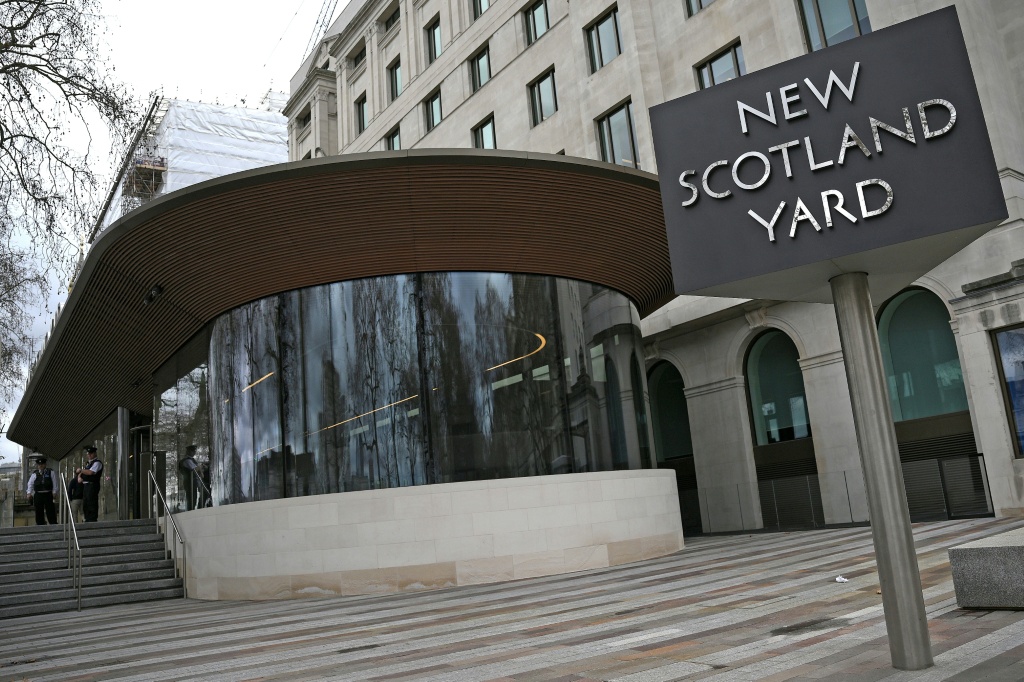
A soldier in the US Army has been arrested on suspicion of spying for Russia, British counter-terror police have said.
The 41-year-old senior serviceman was arrested near Gloucester on Tuesday.
Counter Terrorism Policing London said the man had been arrested under section one and section three of the National Security Act 2023.
Section one of the Act relates to obtaining or disclosing protected information, while section three relates to assisting a foreign intelligence service.
As part of the investigation, officers are carrying out searches at two locations in Gloucestershire.
Report says the soldier was based at Imjin Barracks in Innsworth, Gloucestershire. The barracks serve as the headquarters of Nato’s Allied Rapid Reaction Corps (ARRC), a strategic operational base for the alliance.
Counter Terrorism Policing said it was not linked to any other ongoing investigations.
FBI director Kash Patel said in a statement: “This important arrest involves allegations of espionage, which is of the utmost concern to the United States and our allies.”
He added: “While this investigation is continuing, I want to send a clear message – this FBI has no tolerance for anyone who breaks their oath to the United States and whose actions endanger our national security and that of our partners.”
Deputy Assistant Commissioner Vicki Evans, from Counter Terrorism Policing London, described the arrest as “significant”.
“The allegations are serious and our investigation is very much ongoing,” she said.
The unnamed soldier is currently in custody at a London police station.
He has been detained under the National Security Act 2023, allowing police to hold him without charge for up to 14 days.
Brig Gen Sean Stinchon, commanding general of US Army Counterintelligence Command, said: “The alleged conduct of a senior soldier, entrusted with sensitive information, is a sobering reminder that insider threats are real and persistent.
“I encourage anyone who thinks they’ve witnessed something suspicious to report it to their local counterintelligence office.”

A woman who murdered a vulnerable teenager with her partner and lived off her benefits payments for almost 18 years has died in prison.
Avril Jones, 66, was a prisoner at HMP Stirling and died in custody on Sunday, November 8. Jones and her partner, 82-year-old Edward Cairney, were convicted in 2019 of murdering Margaret Fleming.
Ms Fleming was last seen alive when she was 19 years old at a family party in December 1999. She had learning difficulties and lived with Cairney and Jones at a squalid cottage in Inverkip, Inverclyde, after the pair acted as her “carers” when Ms Fleming’s father died.
The couple murdered Ms Fleming between December 1999 and January 2000. Jones then went on to claim benefits worth £182,000 while the pair staged an elaborate cover-up, which police described as “greedy” and “fantastical”
The 19-year-old was reported missing in 2016 and her body was never found. On what would have been her 39th birthday, detectives issued an appeal to Cairney and Jones to reveal where Ms Fleming’s remains were as they were convicted at the High Court in Glasgow in 2019.
A Scottish Prison Service spokesperson said: “Every death, whether in prison custody or in our communities, is a tragedy for all those who knew and supported the individual..
“Following the death of someone in our care, Police Scotland are advised and the matter reported to the procurator fiscal. Fatal accident inquiries are held in due course.”
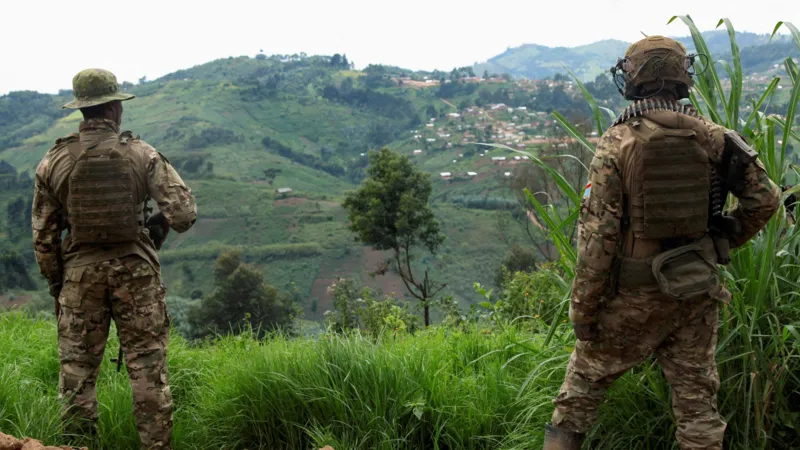
At least 66 soldiers have been sentenced to death in the Democratic Republic of Congo for cowardice, mutiny and refusing to obey orders, local media report.
The sentences followed a trial of 71 soldiers before a military court in Walikale, in North Kivu province, in eastern DR Congo. Four soldiers were acquitted, while another was sentenced to 10 years in prison.
The army said the trial was intended to improve discipline among troops as they battle armed groups in eastern DR Congo.
The region has endured decades of conflict, with fighting continuing between government forces and the Front for the Refoundation of the Nation (FRN), a rebel coalition that includes the M23 group.
The soldiers were reportedly arrested on 20 October in Walikale, where they were accused of abandoning their positions and fleeing during clashes with FRN fighters.
The Congolese army’s campaign against armed groups, including the M23, has long been undermined by poor discipline and disorganisation within its ranks.
The government has repeatedly accused neighbouring Rwanda of supporting the M23, an allegation denied by both Kigali and the rebels despite overwhelming evidence.
The army has faced persistent criticism over its lack of professionalism and disciplined, while soldiers have complained of poor pay and inadequate equipment.
Last month, another 27 soldiers were sentenced to death on similar charges of cowardice after reportedly withdrawing from the frontline during clashes with rebels.
In March 2024, DR Congo lifted a 20-year moratorium on the death penalty, citing the need to remove “traitors” within the army.
The government said capital punishment would also apply to people involved in armed groups, insurrection, as well as committing treason and war crimes.
The decision to reinstate the death penalty was widely criticised by rights groups. However, no formal executions have been carried out since the moratorium was lifted.
Since the beginning of 2025, at least 507 soldiers have been convicted, including 381 death sentences, according to figures compiled by French broadcaster RFI.
-
 Opinion2 years ago
Championing the People’s Voice: Obasa’s Dedication to Grassroots Representation By Dave Agboola⁰
-
News2 years ago
CBN Debunks Fake Circular on New ₦5,000 and ₦10,000 Notes
-
 Health & Wellness1 year ago
President Tinubu Directs Cut in Dialysis Cost from ₦50,000 to ₦12,000
-

 International News7 months ago
Indian Police Arrest Nigerian Over ₦290m Drug Haul
-

 Business8 months ago
Dangote Refinery Reduces Petrol Gantry Price To ₦1,200 Per Litre
-

 Business8 months ago
After Plea Bargain, Court Discharges Stella Oduah of ₦2.5bn Fraud
-
Business2 years ago
Dangote; We Did Not Fix ₦600/Litre Petrol Price
-
 Trending News1 year ago
NELFUND Disburses ₦86bn To 449,000 Beneficiaries