
News
MINIMUM WAGE: FG, Labour, Private Sector Set to Resume Negotiation on Friday


The Tripartite Committee meeting on the new minimum wage will reconvene on Friday, May 31, 2024, as the Federal Government has extended an invitation to Organised Labour for the continuation of negotiations.
The letter which was signed by the Secretary of the Committee, Ekpo Nta, was sent to the Presidents of the two labour centres namely the Trade Union Congress (TUC) and the Nigeria Labour Congress (NLC).
The scheduled meeting will be the seventh in the series of meetings by the committee, as members try to agree on what should be the new minimum wage.
The last meeting on Tuesday was deadlocked as the Organised Labour rejected the ₦60,000 offer by the Federal Government.
The labour representatives in the committee however adjusted their demands downward from the initial ₦497,000 naira minimum wage request to ₦494,000 naira.
For months, labour unions and the Federal Government have been locked in negotiations over a new minimum wage with the former giving an ultimatum of May 31st.
Labour had initially demanded a ₦615,000 minimum wage but reduced it twice – now at ₦494,000. The government and the Organised Private Sector had initially proposed ₦48,000 and ₦54,000 which were also rejected by the labour.
During a meeting of the committee on minimum wage on Tuesday, labour rejected the Federal Government’s new minimum wage proposal of N60,000.
According to TUC leader, Festus Osifo, the new proposal does not tally with the nation’s economic realities. He said with Nigeria’s inflation rate of 33.69% as of April 2024 based on data from the National Bureau of Statistics (NBS), labour had to “completely reject” the Federal Government’s latest offer of ₦60,000.
“So, for us, we completely reject it. We want the government to be serious. Let them come and give us a breakdown of how a family is going to live with the minimum wage of ₦60,000,” he said.
“Remember, our ultimatum still subsists that we have issued on May 1st and today is the 28th day of May. So, what that clearly means is that we still have three days to resolve this matter.”
Since its inception, President Bola Tinubu has introduced a slew of reforms including the removal of fuel subsidies and the floating of the naira.
But Osifo has accused the Tinubu government of policy somersaults and not having “deep thinking”.
“So, for us, we would rate them 2.5 out of 10 which is 25%,” the TUC chief argued.
The labour unions said the current minimum wage of ₦30,000 can no longer cater to the wellbeing of an average Nigerian worker, lamenting that not all governors are paying the current wage award which expired in April 2024, five years after the Minimum Wage Act of 2019 was signed by former President Muhammadu Buhari. The Act should be reviewed every five years to meet up with contemporary economic demands of workers.
NLC President Joe Ajaero had described as “unsubstantial”, the fresh proposals by the government. “It is still not substantial compared to what we need to make a family moving,” the labour leader had said of the current ₦30,000 wage paid to workers in the country.
“The economy of the workers is destroyed. The workers don’t have any economy. I think there are two economies in the country; the economy of the bourgeoisie and the economy of the workers. I think we have to harmonise this so that we can have a meeting point,” Ajaero had said.





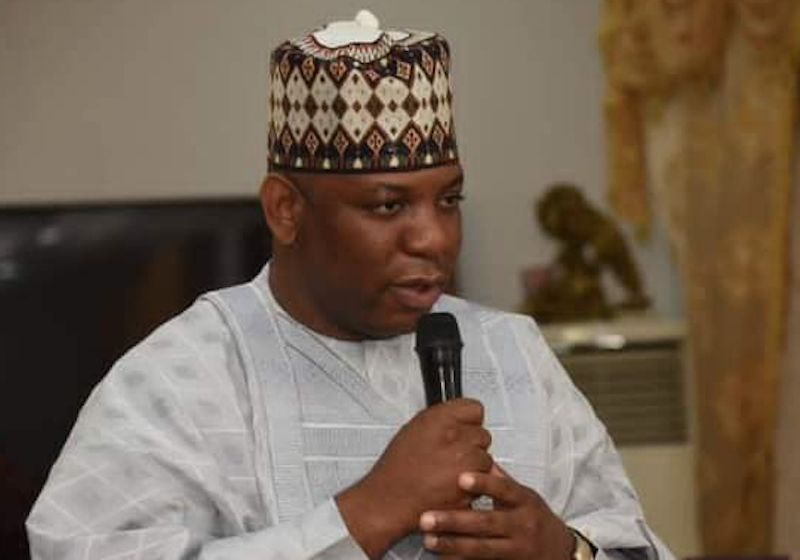
The Federal Government has moved to end the theft and vandalism of public infrastructure through tighter regulation of Nigeria’s scrap metal industry.
The Minister of Steel Development, Prince Shuaibu Abubakar Audu, said the proposed 2026 Scrap Metal Regulations would sanitise the sector, protect critical national assets and boost local steel production.
Audu, represented by the Director, Metallurgical Raw Material Development and Investment Promotion Department, Ime Eprikpo, spoke at a two-day stakeholders’ engagement on the validation of the draft regulations, held in Lagos.
He said the proposed Scrap Metal (Collection, Trading, Recycling and Regulation) Regulations would establish a transparent and sustainable value chain capable of supporting Nigeria’s industrialisation drive.
The minister identified scrap metal as a critical raw material for steel production, foundry operations and other manufacturing activities, noting that effective recycling would reduce waste, create jobs and stimulate economic growth.
He, however, warned that poor regulation had encouraged the theft of electrical cables, railway components, manhole covers and other metallic infrastructure, resulting in disruption of public services, safety risks and huge economic losses.
According to him, the proposed regulations would introduce licensing and supervision of operators, regulate collection and aggregation centres, ensure transaction traceability and enforce environmental and occupational safety standards.
“Our objective is not to suppress legitimate commercial activity. Rather, it is to establish a system in which lawful businesses can operate with greater clarity and confidence, while activities involving stolen materials, unsafe practices or environmental harm are addressed through appropriate regulatory and legal measures,” he said.
Audu stressed that small-scale operators would not be excluded from the regulatory framework, explaining that requirements would be tailored to the size and risks of their businesses.
He called for stronger supplier identification, verification of material sources, reliable transaction records and collaboration with security agencies to check the illegal acquisition and trading of stolen metals.
The minister urged stakeholders to make practical contributions towards ensuring that the proposed regulations were workable and addressed the challenges confronting operators.
Also speaking, the Permanent Secretary of the ministry, Amb. Nura Abba Rimi, represented by the Director, Metallurgical Inspectorate and Environmental Protection Department, Christopher T. Wanje, said effective regulation of the scrap metal industry was critical to building a competitive and self-sustaining steel sector.
He said the regulations would curb illegal metal trading, protect public infrastructure and guarantee reliable raw materials for domestic steel production.
In his goodwill message, the National President of the National Association of Scrap and Waste Dealers Employers of Nigeria, Comrade Pastor Engr. Ogbu Luke Uchechukwu, described the engagement as a landmark development that would lay the foundation for an organised and economically viable industry.
Similarly, the Director-General of the National Environmental Standards and Regulations Enforcement Agency (NESREA), Dr Innocent Bariate Bariko, represented by the Deputy Director, Base Metal Sector, Engr. Walter Okoye, warned that inadequate regulation could expose the environment and public health to serious risks.
He commended the ministry for initiating the proposed regulatory framework.
Also, the Business Manager of Kam Steel Integrated Company Ltd, Busari Olanrewaju, described scrap metal as the backbone of Nigeria’s steel industry.
He pledged the company’s support through the training of scrap collectors, standardised grading procedures, modern sorting and shredding technologies, and increased use of locally generated scrap materials in domestic steel production.
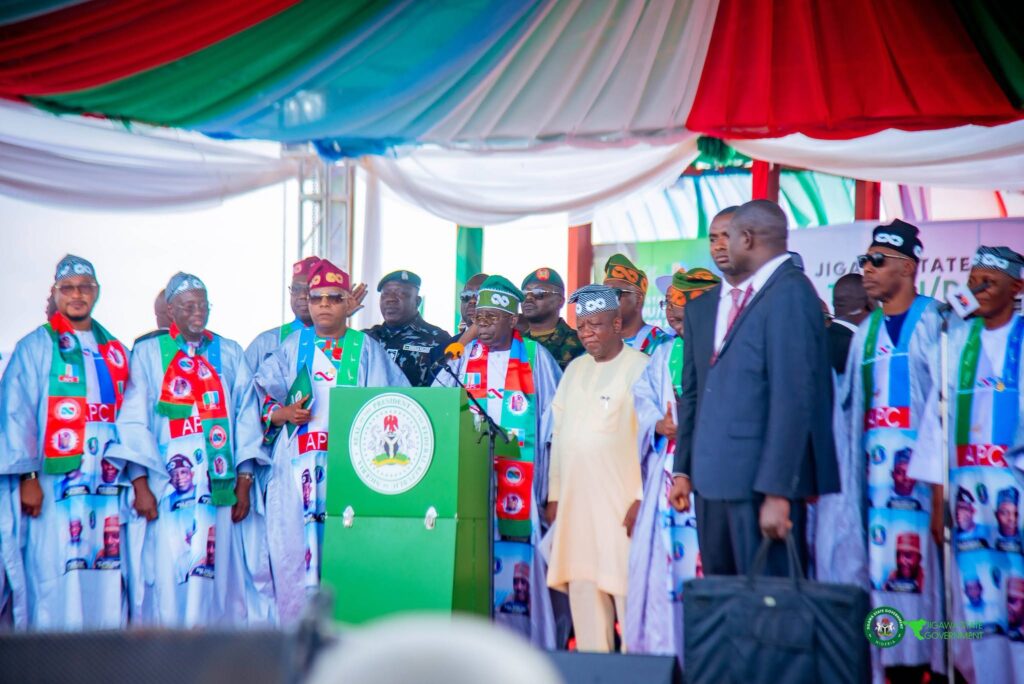
President Bola Tinubu says the Nigerian Education Loan Fund (NELFUND) is a weapon his administration is deploying to tackle poverty, insisting that the scheme will not be stopped.
The president spoke on Tuesday at the All Progressives Congress (APC) presidential campaign rally held at the Dutse Township Stadium in Jigawa state.
Tinubu said his administration would continue to support the student loan scheme, reiterating that all funds recovered by the Economic and Financial Crimes Commission (EFCC) would be channelled into NELFUND.
“NELFUND is our weapon against poverty. And we will continue in that direction. We will continue,” he said.
“Every money recovered from irregularities by the EFCC is now directed to NELFUND to educate our children. Every asset coveted through irregularities will be invested in NELFUND.”
The president also defended his administration’s decision to remove the petrol subsidy, dismissing calls for its restoration.
“Those who think they should bring subsidy back, they are liars. How will you pay for those commitments? How will you repair the roads? How will you maintain them? How will you function?” he asked.
Tinubu said the removal of the subsidy had created economic opportunities for workers and suppliers, while NELFUND was helping to ease the financial burden of educating their children.
“The labourers, the granite suppliers, they are eating, and they are surviving. We have taken away the problem of the education of their children by establishing NELFUND,” he said.
On August 19, the president directed the EFCC to channel all recovered funds into NELFUND.
Tunji Alausa, minister of education, announced the directive while answering questions from State House correspondents shortly after the weekly federal executive council (FEC) meeting.
Alausa also said the FEC had approved the allocation of all unclaimed dividends in the Capital Market Trust Fund and funds in the Dormant Account Trust Fund to NELFUND to expand its reach and improve its efficiency.
Speaking recently at the launch of Arise Palm Resort in Uyo, the Akwa Ibom state capital, Tinubu said the decision was informed by the need to ease the burden of tuition fees on parents and ensure equal access to education for all Nigerians.
At a press briefing in Abuja on August 31 to highlight the commission’s achievements under his leadership, Ola Olukoyede, EFCC chairman, said the federal government had allocated N100 billion from funds recovered by the anti-graft agency to NELFUND since 2024.
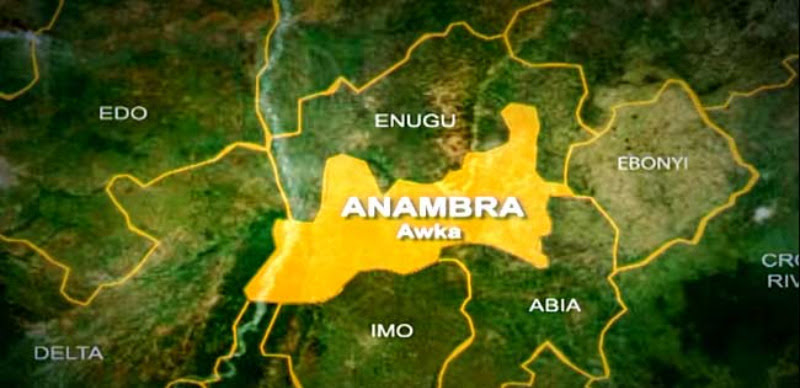
The management of the Anambra State Traffic Management Agency, ATMA, has suspended some of its officers for two months without pay after they went viral recently for singing a campaign song in support of the presidential candidate of the Nigeria Democratic Congress, NDC, Mr Peter Obi, and his running mate, Senator Rabiu Kwankwaso.
According to report, the management announced the suspension of the officers on Tuesday.
The sanction followed the controversy generated by a viral video showing the officers singing an NDC campaign song associated with the political aspirations of Obi and Kwankwaso to a motorist.
The incident reportedly occurred at Nwagu Agulu Junction, where the officers were deployed for traffic control duties.
The officers had earlier been summoned to the agency’s headquarters in Awka to explain their conduct and the circumstances surrounding the incident.
Their two-month suspension without pay is believed to be the outcome of the disciplinary process initiated by the agency following the circulation of the video.
Although the circumstances surrounding the officers’ action remain unclear, there had been suggestions that their singing might have been prompted by the NDC logo they reportedly sighted in the motorist’s car.
The development has reportedly thrown the affected officers into distress, with some expressing fears about their future following the disciplinary action.
It was gathered that some of the affected officers had been weeping and approaching influential personalities who could intervene on their behalf and appeal to the relevant authorities for leniency.
Meanwhile, relatives of the affected officers have appealed to public-spirited individuals to come to their aid by helping them secure alternative employment opportunities in view of their present circumstances.
The relatives reportedly fear that the suspension, particularly without pay, could worsen the economic situation of the affected officers and their families.
The incident has also raised questions about the extent to which public officers can freely express their political preferences, particularly when such expressions occur while they are performing official duties.
While public servants retain their constitutional rights as citizens, the regulations governing their respective agencies may restrict partisan political activities, especially when carried out in official uniforms or during working hours.
However, it remains unclear whether the two-month suspension was specifically imposed for breaching ATMA’s operational regulations or for other reasons connected with the incident, report said.
-
 Opinion2 years ago
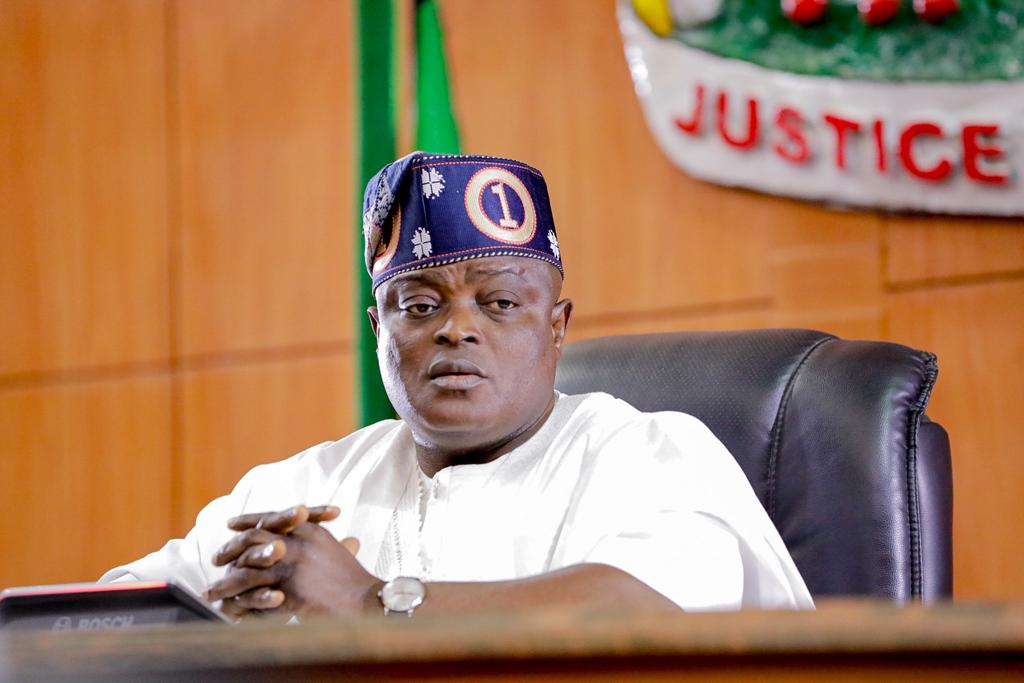
Championing the People’s Voice: Obasa’s Dedication to Grassroots Representation By Dave Agboola⁰
-
News2 years ago
CBN Debunks Fake Circular on New ₦5,000 and ₦10,000 Notes
-
 Health & Wellness1 year ago
President Tinubu Directs Cut in Dialysis Cost from ₦50,000 to ₦12,000
-
 International News8 months ago
Indian Police Arrest Nigerian Over ₦290m Drug Haul
-
 Business8 months ago
Dangote Refinery Reduces Petrol Gantry Price To ₦1,200 Per Litre
-
 Business8 months ago
After Plea Bargain, Court Discharges Stella Oduah of ₦2.5bn Fraud
-
Business2 years ago
Dangote; We Did Not Fix ₦600/Litre Petrol Price
-
 Trending News1 year ago
NELFUND Disburses ₦86bn To 449,000 Beneficiaries