
News
NDLEA Vows to Continue Dismantling Drug Networks Despite Senator Ashiru’s Vendetta

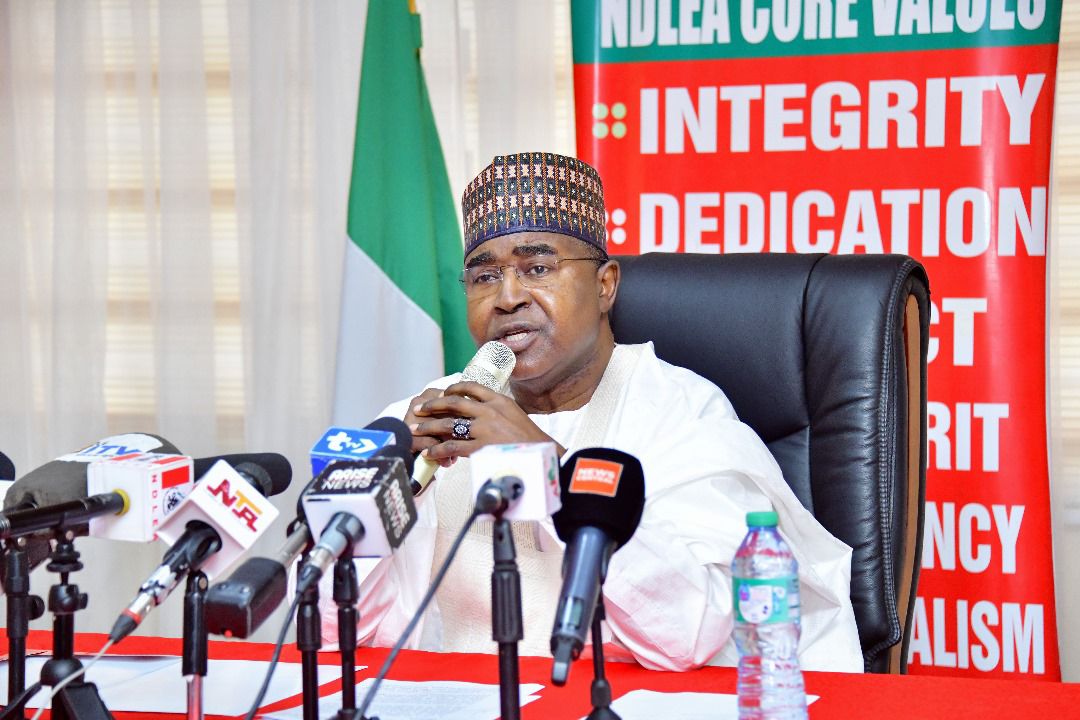
The National Drug Law Enforcement Agency, NDLEA, says the recent attack on its image by Senator Oyelola Yisa Ashiru (Kwara South) was borne out of vendetta rather than based on any altruistic motive or national interest. In a statement made available to the column.ng by the agency’s spokesman Femi Babafemi stated this at its National Headquarters in Abuja on Monday 21st October during a press briefing addressed to respond to a disparaging statement made by Senator Ashiru that “the National Drug Law Enforcement Agency is corrupt and compromised.
“The NDLEA is compelled to call this press briefing today because of an unfortunate development earlier last week during plenary in the Nigerian Senate when some uncomplimentary, unfounded, defamatory remarks were made against the Agency”
While acknowledging the great work of the Senate towards the upliftment of Nigeria and Nigerians especially their support for the ongoing concerted efforts towards the amendment of the NDLEA Act, the Agency however said it is duty-bound to respond to the unprovoked attack against it by Senator Ashiru during his contribution to the debate on a new bill for an Act to establish the National Institute for Drug Awareness and Rehabilitation on Tuesday, October 15, 2024. The Agency said it waited for a whole week hoping the lawmaker will clarify his position on such a weighty allegation against it but failing to do that, it is left with “no option than to come out and set the record straight for the benefit of other distinguished members of the Senate, our local and international partners as well as the general public.”
According to the text of the press briefing read by the Agency’s Director, Media and Advocacy, Femi Babafemi, “There is no doubt that setting up another agency is within the power of the Senate and if we are invited to contribute to the debate we will be willing to offer our opinion. While we cannot fault the power of the senate on that, yet for a member of the upper chamber to have made such an unfounded and unwarranted categorical statement against the Agency led us to look inward to see what could have been responsible for such a carpeting general statement. What we found was shocking, and we concluded that his statement came from a place of vendetta and certainly not out of public interest or any altruistic motive .
“The personal house of the senator in GRA Ilorin, the capital of Kwara State, had been raided in recent past, where drugs and illicit substances were recovered while two of his aides: Ibrahim Mohammed and Muhammed Yahaya were arrested. Based on credible intelligence and surveillance which confirmed that the senator’s house was being used as a drug joint for drug dealers and users, the house was raided by our operatives at 1:30pm on February 4, 2024 during which the two aides were arrested, while a third suspect escaped arrest.
“In another encounter with the senator, the Agency also received intelligence that some of his boys popularly known as “Omo Senator” operating from his home town, Offa, were equally dealing in illicit drugs. A raid was subsequently carried out on their joint in Offa where one of them, Oluwatosin Odepidan was arrested and illicit drugs such as methamphetamine and cannabis recovered from him on June 11, 2023. The bid to get the Agency drop the case against Odepidan including a visit to the Kwara State Command headquarters of the Agency in Ilorin by the Personal Assistant to the senator, one Omoluabi, was rebuffed as Odepidan was promptly charged to court and prosecuted. Though the culprit jumped court bail in 2023, he was rearrested in 2024 after the court issued a bench warrant for his arrest. He was eventually convicted and sentenced in June 2024.
“So, going by this backstory, it is deductible that these encounters that the Agency has had with the senator, must have been responsible for his outburst, and unfortunately, false allegation, the type that nobody within and outside of government has ever levelled against NDLEA before.”
The Agency said despite the impression Senator Ashiru was trying to create about its image, the NDLEA has continued to receive accolades from local and international bodies for its successes in the fight against substance abuse and illicit drug trafficking.
“Incidentally, the next day after made the statement, NDLEA in Lagos commissioned a new Marine Command Headquarters building donated by the Government of the UK. A similar facility at the Murtala Muhammed International Airport was donated last year by the same British government. We have had other facilities donated by United States INL and executed by UNODC in the past 12 months. We have been receiving various support from the governments of France, Germany and the US, among others.
“Suffice it to say that in the past three years, NDLEA has emerged as a regional leader among national drug law enforcement agencies. So, come to think about it, an agency so badmouthed by Senator Ashiru couldn’t have been attracting such international goodwill and commendation for being the “most corrupt government agency” in Nigeria.
“Against the background of our encounter with people linked to him, we are wont to believe that Senator Ashiru’s invectives against NDLEA were borne out of vendetta and not any opinion made in the public interest.
“As an agency, we have been professional in our activities and interactions with citizens as we carry out arrests daily. In the past three years, we have made over 52, 000 arrests and got more than 9, 000 convictions, including three life sentences this year. And, as part of our mandate, we have engaged in over 7,000 awareness and sensitisation activities in schools, workplaces, worship centres and communities; treatment and rehabilitation of more than 33,000 drug users including the last two persons arrested in the senator’s house; supported by governments, organisations and other stakeholders in the country and around the world.
“Outside this country, NDLEA has become a reference for drug law enforcement. Therefore, the statement by Senator Ashiru, made in the country’s hallowed chamber in the course of a legislative debate, and made to justify the creation of another agency is motivated by malice; it is a gross misrepresentation of fact; and it is defamatory to the image of NDLEA. We believe the well-meaning public; our stakeholders and our partners can see through such calculated mendacity.”
The NDLEA vowed it will remain undeterred by Senator Ashiru’s attack but will be relentless in ongoing effort to dismantle all illicit drug networks across the country including the one operating in the lawmaker’s house.
“So, if Senator Ashiru has a personal grudge against NDLEA, it shouldn’t be cloaked as a matter of public concern. His statement of October 15, 2024, uttered in the hallowed chamber of the Nigerian Senate, is a gross abuse of his position as a legislator of the Federal Republic to undermine an agency of government by wrong accusation calculated to erode public confidence in NDLEA and detract from its integrity. And we dare say that such will not deter us from our ongoing effort to dismantle all illicit drug networks including the one operating from the senator’s residence.
“NDLEA since January 2021 has been on a journey of reforms, and so far, we are glad with the progress we are making. We are grateful to the federal and state governments for the support we have been enjoying. We are equally grateful to the National Assembly for the huge support they give that has made possible the turnaround of NDLEA from a dormant agency to a vibrant government organ. We equally acknowledge the unprecedented collaboration with our partners, which has made our work easier. We have concrete results to show for our efforts, and those results cannot be wished away by anyone’s careless remarks.”


Entertainment
NIBAD 2026: Abike Dabiri To Take Centre Stage As Bunmi Ebony, DJ X-One Host Baltimore Event
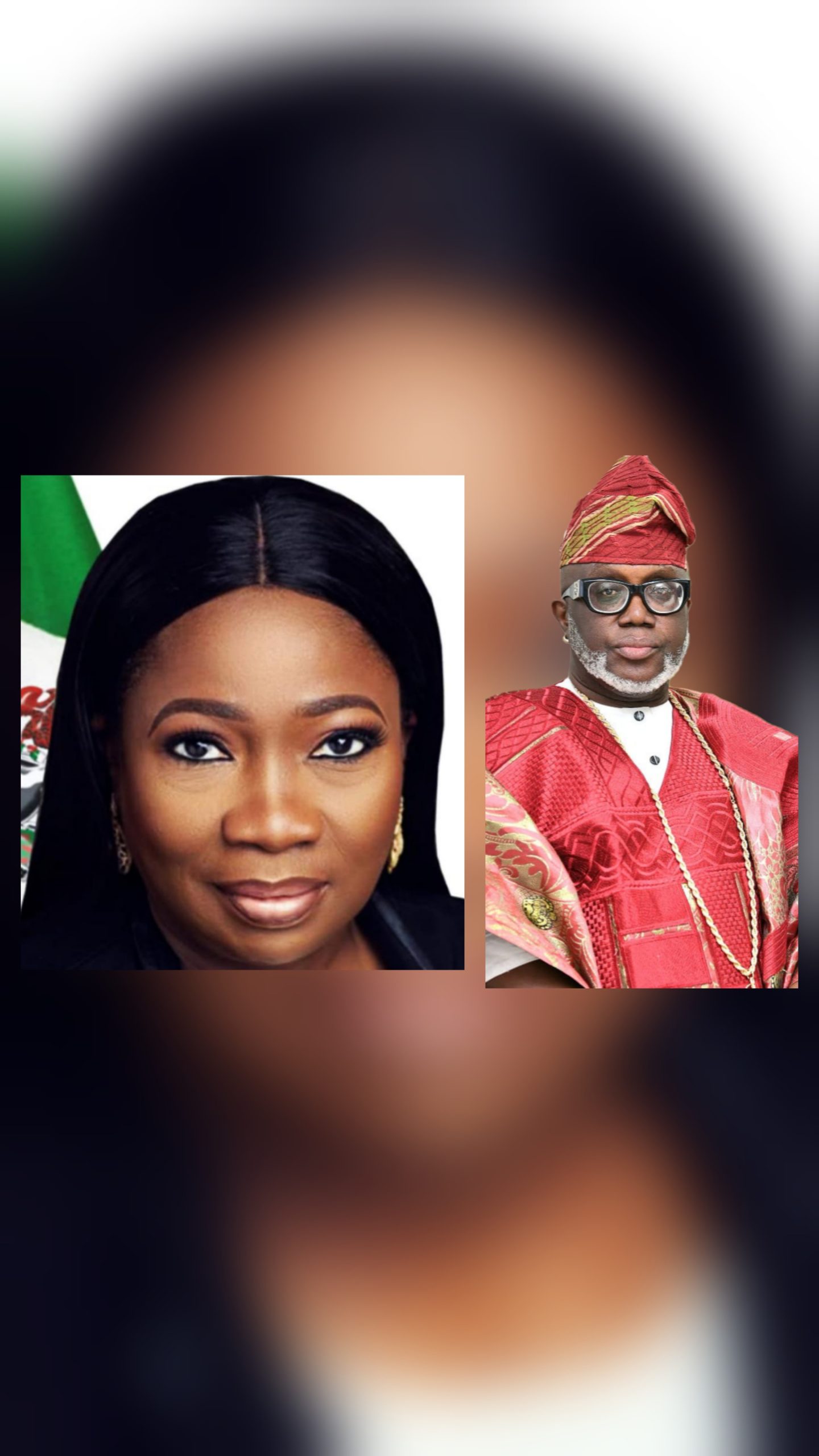
The Chairman and Chief Executive Officer of the Nigerians in Diaspora Commission (NiDCOM), Hon. Dr Abike Dabiri-Erewa ( OON) has been scheduled for honour, among other awardees, at the 2026 and the 6th edition of the annual Nigerian Independence Ball, Awards, and Dinner (NIBAD),billed to hold in Baltimore, Maryland, on the 18th of October .
At the instance of Naija Times USA and Raindrop Group led by Olaniyi Thompson Tabi, activities marking the 6th edition of NIBAD commenced on the 3rd of October with Independence carnival in Maryland.
As part of the expanded 6th edition, the Annual Independence stage play titled ‘Your Excellency Sir!’ …The saga of a nation, written and directed by Olaniyi Thompson Tabi, was showcased at a very colorful event on the 9th of October.
Designed to be an unforgettable celebration of Nigeria’s 66th Independence celebration, the grand finale of the celebration is billed for Sunday, the 18th of October, 4.00pm, at Gabriel Community Centre, 6948, Dogwood Road, Windsor Mill, MD 21244.
The evening will not only commemorate Nigeria’s rich history and vibrant culture but will also spotlight the exceptional contributions of Nigerians at home and abroad in various fields such as business, healthcare, education, community service, and more.
The evening will feature a grand awards ceremony to honor those who have demonstrated leadership, innovation, and dedication in their respective industries. Among them, Dr Dabiri- Erewa
Hon. Dr. Abike Kafayat Oluwatoyin Dabiri-Erewa (OON) is a prominent Nigerian politician, public administrator, and former broadcast journalist who has been able to show leadership since her appointment as the Chairman and Chief Executive Officer of the Nigerians in Diaspora Commission (NiDCOM).
To add colour to the event also, is
Dj X-One, reputed as the best Disc Jockey in the DMV area. Bunmi Ebony, a fast rising Juju Artiste in Atlanta will also be on the bandstand to thrill guests at the event to celebrate Nigeria.
****About NIBAD: The Nigerian Independence Ball, Awards, and Dinner (NIBAD) is an annual event that celebrates Nigeria’s Independence while recognizing the achievements of Nigerians in the diaspora. NIBAD aims to highlight the cultural pride, resilience, and accomplishments of Nigerians globally, bringing together community leaders, professionals, and influencers for an evening of celebration, inspiration, and unity.
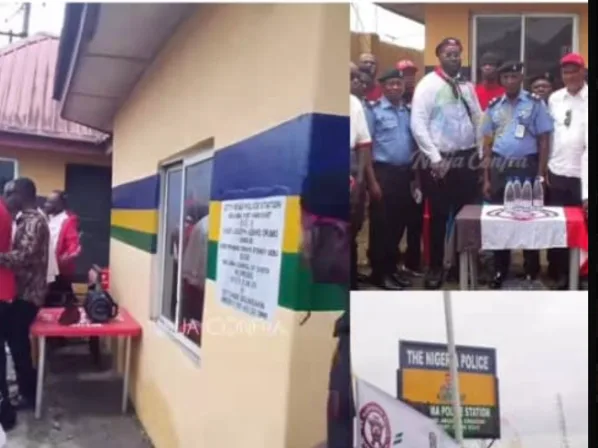
The Rivers State Police Command under CP Olugbenga A. Adepoju has condemned the purported renovation of the Abuloma Police Outpost by suspected cultists and ordered a full investigation into the incident.
Police Public Relations Officer (PPRO) of the command, ASP Blessing Agabe disclosed this in a Friday statement.
She said the command’s action follows a trending social media report and circulating video alleging that suspected cultists renovated the outpost and visited the facility on Thursday, October 15, to celebrate completion of the renovation.
The command said it “strongly condemns any action or association capable of compromising the integrity, discipline and professional standards of the Nigeria Police Force or conferring legitimacy, recognition or acceptance on suspected cult groups or other unlawful organisations.”
It added, “Police facilities are public institutions established for the protection of citizens and the enforcement of law and must not become platforms through which criminal groups seek public validation or influence.”
The command said CP Adepoju maintains zero tolerance for criminality and any conduct that undermines public confidence in the police.
Consequently, he has queried and relieved the Divisional Police Officer in charge of Abuloma Division and the Divisional Officer overseeing the affected outpost of their duties pending investigation.
The CP has also ordered a full investigation to establish the circumstances surrounding the incident and the veracity of the allegations, including the identities and backgrounds of the individuals or groups who financed or facilitated the renovation; the police officers who authorised or approved the project; whether due procedures were followed; whether any officer breached professional standards or compromised the integrity of the force; and the extent of any involvement by police personnel.
The command said while it welcomes legitimate community support for improving police facilities, consistent with Section 26(1)(d) of the Nigeria Police Act 2020, which provides for gifts and contributions to the Police General Fund, such support must not compromise police independence, professional standards or security.
“No donation or assistance confers immunity from investigation or prosecution,” the command stated, adding that the investigation will establish whether necessary approvals were obtained and appropriate checks conducted on those who financed the renovation.
It reiterated that it would not condone unprofessional conduct or any form of improper association with criminal elements and that appropriate disciplinary and legal action would be taken against anyone found culpable.
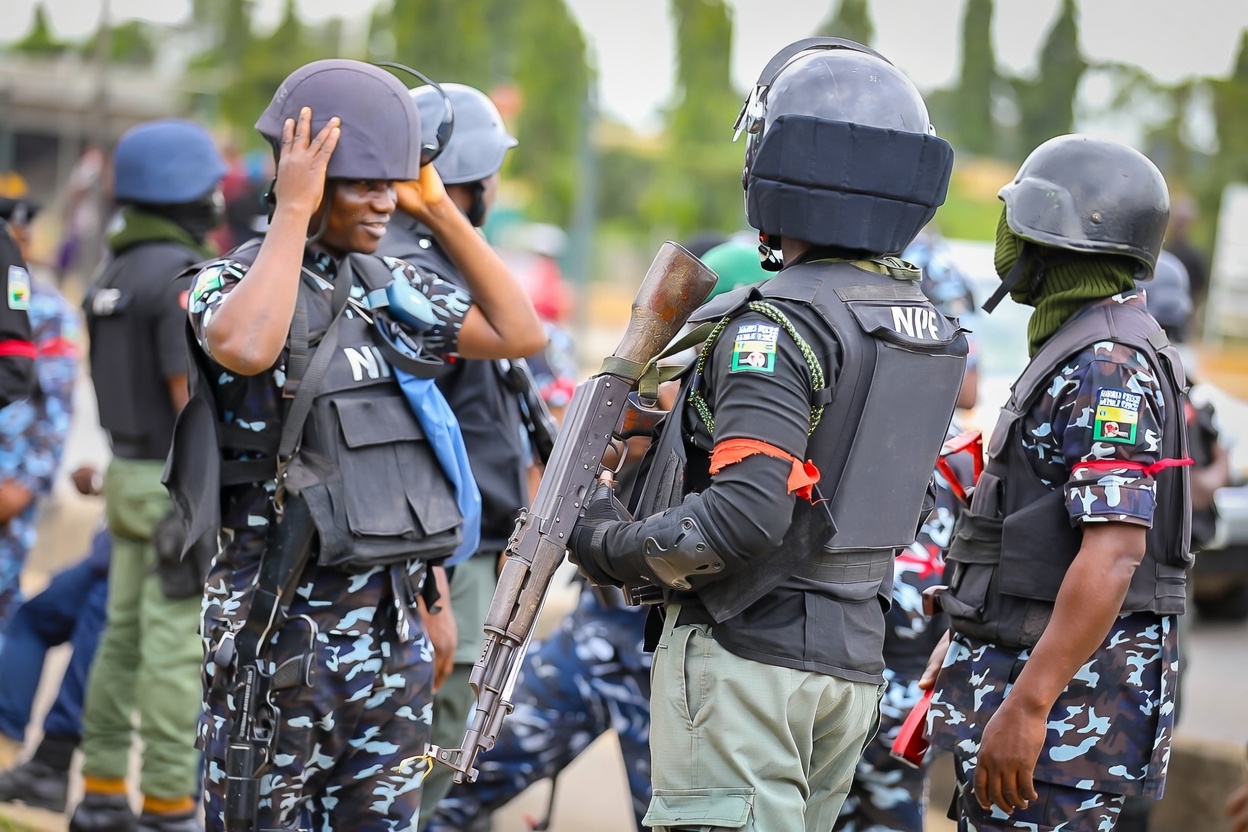
The Police Command in Benue State has confirmed the abduction of Rev. Fr. John Otache, Parish Priest of St. Margaret’s Parish, Ajegbe-Awume, in Ohimini Local Government Area of the state.
The Police Public Relations Officer, DSP Aondogu Orchia confirmed the incident on Friday in Makurdi.
Orchia said the command had commenced full investigation into the incident and efforts were ongoing to rescue the priest.
Meanwhile, the Catholic Diocese of Otukpo, in a statement signed by the Diocesan Chancellor, Rev. Fr. Joseph Itodo, said the priest was abducted on October 13.
According to Itodo, Otache was returning home from Otukpo when he encountered the abductors along the Otobi Amejo-Ajegbe Road in Ohimini Local Government Area.
He expressed sadness over the incident, saying the Bishop of Otukpo, Most Rev. Michael Apochi, was deeply pained by the development.
He called on priests, religious members, the laity and other well-meaning individuals to pray for the priest’s safe and speedy release.
He also urged prayers for other persons held by kidnappers across the country, expressing hope for their safe return.
-
 Health & Wellness1 year ago
President Tinubu Directs Cut in Dialysis Cost from ₦50,000 to ₦12,000
-
News2 years ago
CBN Debunks Fake Circular on New ₦5,000 and ₦10,000 Notes
-

 Business7 months ago
Dangote Refinery Reduces Petrol Gantry Price To ₦1,200 Per Litre
-
 International News7 months ago
Indian Police Arrest Nigerian Over ₦290m Drug Haul
-
 Business7 months ago
After Plea Bargain, Court Discharges Stella Oduah of ₦2.5bn Fraud
-
Business2 years ago
Dangote; We Did Not Fix ₦600/Litre Petrol Price
-
 Trending News1 year ago
NELFUND Disburses ₦86bn To 449,000 Beneficiaries
-
 Opinion2 years ago
Championing the People’s Voice: Obasa’s Dedication to Grassroots Representation By Dave Agboola⁰