Connect with us

International News

Senegal Suspends Mobile Internet, Bans Protest March Over Vote Delay

Published

on

Spread the love

Senegalese authorities on Tuesday (today) suspended mobile internet and banned a march against the delay of this month’s presidential poll, as the UN voiced concern about tensions in the country.


Protesters shout slogans and collect barrels and tables to burn during clashes with police on the sidelines of a protest against a last-minute delay of presidential elections in Dakar on February 9, 2024. On February 8, 2024, the parliament backed the president’s sudden decision to postpone the February 25 election by 10 months, sparking a fierce opposition backlash and international concern. (Photo by GUY PETERSON / AFP)


Three people have been killed during violent protests after President Macky Sall’s decision to push back the February 25 vote plunged traditionally stable Senegal into one of its worst crises in decades.


“We are deeply concerned about the tense situation in Senegal,” Liz Throssell, spokeswoman for the United Nations rights office, told reporters in Geneva.


“Following reports of unnecessary and disproportionate use of force against protesters and restrictions on civic space, we call on the authorities to ensure that they uphold Senegal’s long-held tradition of democracy and respect for human rights,” she added.


Demonstrations are subject to authorisation in Senegal, with authorities refusing to give the green light for many opposition rallies in recent years.


Unauthorised protests often descend into violent clashes. Security forces repressed demonstrations which took place on Friday.


Throssell said at least three young men were killed and 266 people, including journalists, were reportedly arrested across the country.


The Aar Sunu Election (Let’s protect our election) collective, which includes some 40 civil, religious and professional groups, had called for a peaceful rally in the capital Dakar on Tuesday at 1500 GMT.


But one of the organisers, Elymane Haby Kane, told AFP he had received an official letter from local authorities in Dakar saying the march was banned as it could seriously disrupt traffic.


“We will postpone the march because we want to remain within the law,” said Malick Diop, coordinator of the Aar Sunu Election collective.


– ‘Subversive hate messages’ –


Authorities on Tuesday also suspended mobile internet access for the second time this month, with the communications ministry citing “the dissemination on social networks of several subversive hate messages that have already provoked violent demonstrations”.


Access to mobile data had already been restricted eight days earlier when parliament backed Sall’s decision to postpone the election. It was later restored on Wednesday.


The decision to cut access was a repeat of a move last June when Senegal’s government restricted mobile internet amid high tensions.


The measure has become a common response to curb mobilisation and communication via social networks and is strongly condemned by rights activists.


Sall said he postponed the election because of disputes over the disqualification of potential candidates and over fears of a return to unrest seen in 2021 and 2023.


Parliament backed Sall’s suspension of the election until December 15, but only after security forces stormed parliament and removed some opposition lawmakers who opposed the bill.


The vote paved the way for Sall — whose second term was due to expire in April — to remain in office until his successor is installed, probably in 2025.


Senegal’s opposition has decried the move as a “constitutional coup” and suspects it is part of a plan by the presidential camp who feared defeat at the ballot box.


It has denounced the delay as a move to extend Sall’s term in office, despite him reiterating that he would not stand again.


The United States and the European Union have called on the government to restore the original election timetable.


– Possible amnesty –


Sall, who has been in power since 2012, is now seeking a way out of the turmoil.


Media reports have raised the possibility of dialogue with the opposition, including anti-establishment firebrand Ousmane Sonko, who fought the state for more than two years before being imprisoned last year.


Some have suggested the possibility of an amnesty for Sonko, his imprisoned second-in-command Bassirou Diomaye Faye and for people detained during unrest in 2021 and 2023.


The government has not commented on the reports.


Sall has said he wants to begin a process of “appeasement and reconciliation”.


But the rhetorical olive branch raises a host of questions, including whether it will be accepted by the likes of Sonko and Faye and what it means for their fate.


International News

Israel Says Struck Two Naval Missile Production Sites In Tehran

Published

on

Spread the love

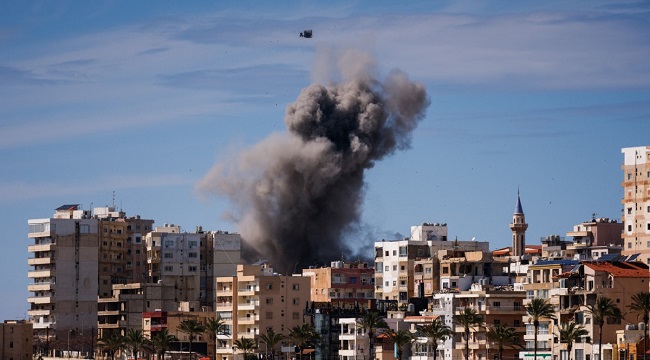
The Israeli military announced on Wednesday it had struck two naval cruise missile production facilities operating under Iran’s ministry of defence in Tehran.


“In recent days, the Israeli air force acting on IDF intelligence struck two key naval cruise missile production sites in Tehran,” the military said.

It said the facilities were used to “develop and manufacture long-range naval cruise missiles, which are capable of rapidly destroying targets at sea and on land”.

The strikes “represent another step in deepening the damage done to the regime’s military production infrastructure”, the military added.

Last week, the military announced its fighter jets had struck several Iranian naval ships in the Caspian Sea, including vessels equipped with anti-submarine missiles.


AFP

Continue Reading

International News

2025 ‘Deadliest Year’ Yet For Red Sea Migrants, UN Reports 922 Deaths

Published

on

Spread the love

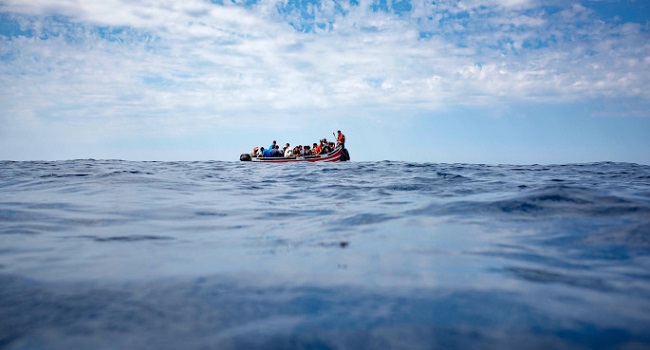
The number of migrants who died on the “Eastern Route” from the Horn of Africa to the Arabian Peninsula doubled to a record high of 922 last year, the UN migration agency said Wednesday.

Tens of thousands of migrants from Ethiopia, Somalia and neighbouring countries take the route across the Red Sea each year, mostly from Djibouti to Yemen, in search of work as labourers or domestic workers in wealthy Gulf countries.

“2025 was the deadliest year ever recorded on the Eastern migration route… with 922 people dead or missing — double the number from the previous year,” Tanja Pacifico, head of mission for the International Organisation for Migration (IOM) in Djibouti, told AFP.

The majority of victims were from Ethiopia, the second most-populous country in Africa with more than 130 million people. It is plagued by multiple internal conflicts and deep poverty.

“IOM remains fully committed to working alongside the government of Djibouti to promote safe and dignified migration pathways, in order to prevent further tragedies,” said Pacifico.

Many migrants who cross the Red Sea find themselves stuck in Yemen, the poorest country on the Arabian Peninsula, which has been embroiled in a civil war for nearly a decade, and some even choose to return.

Rapid economic growth in Ethiopia — estimated to reach around 10 percent in 2026 — could encourage less migration, IOM says, but that is mitigated by high inflation, also around 10 percent in February.


AFP

Continue Reading

International News

Denmark Faces Lengthy Negotiations To Form A Government

Published

on

Spread the love
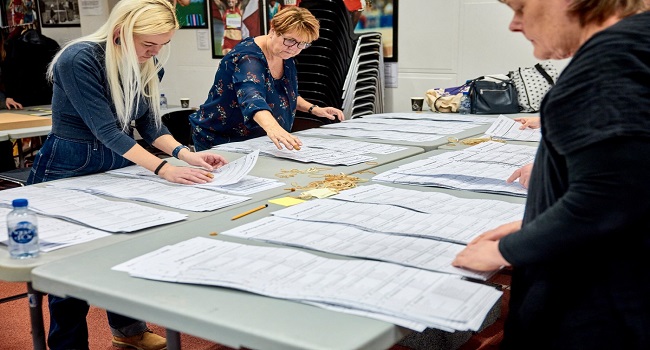
Election workers recount ballots in the Marselisborg Hallen in Aarhus, Denmark on March 25, 2026. (Photo by Mikkel Berg Pedersen / Ritzau Scanpix / AFP) /

Denmark’s political parties began the thorny process of forming a government Wednesday, with the centrist Moderates as kingmaker after the prime minister’s Social Democrats scraped through a general election without a majority.
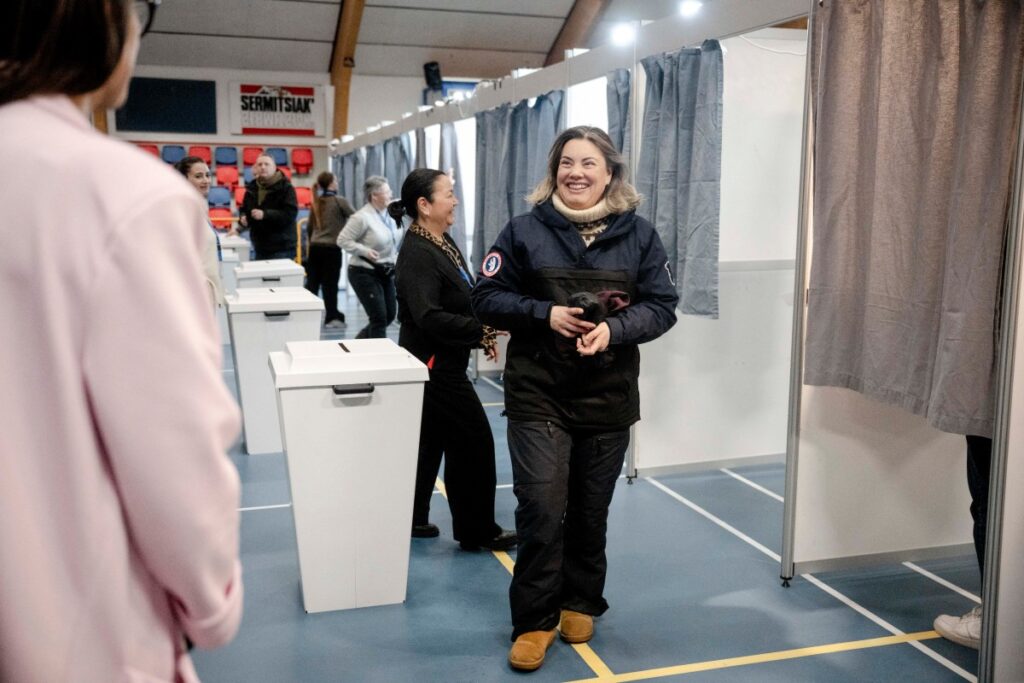
Greenland’s Inuit Ataqatigiit party member Naaja Nathanielsen (C) looks on in a polling station in Nuuk, on March 24, 2026, during the parliamentary election in Denmark (Photo by Oscar Scott Carl / Ritzau Scanpix / AFP) / Denmark OUT

Danes were braced for a weeks-long process as Prime Minister Mette Frederiksen seeks to consolidate power in the deeply splintered parliament after Tuesday’s snap vote.

Denmark’s Prime Minister Mette Frederiksen arrives at Amalienborg Palace in Copenhagen to inform the king about the election result one day after the parliamentary election on March 25, 2026. (Photo by Martin Sylvest / Ritzau Scanpix / AFP) 

A left-wing bloc made up of five parties, including Frederiksen’s Social Democrats, won 84 seats; the right-wing and far-right claimed 77; and the Moderates won 14 in the election.

The Social Democrats posted their worst election score since 1903—though they remained Denmark’s largest single party, with 38 seats in the 179-seat parliament.
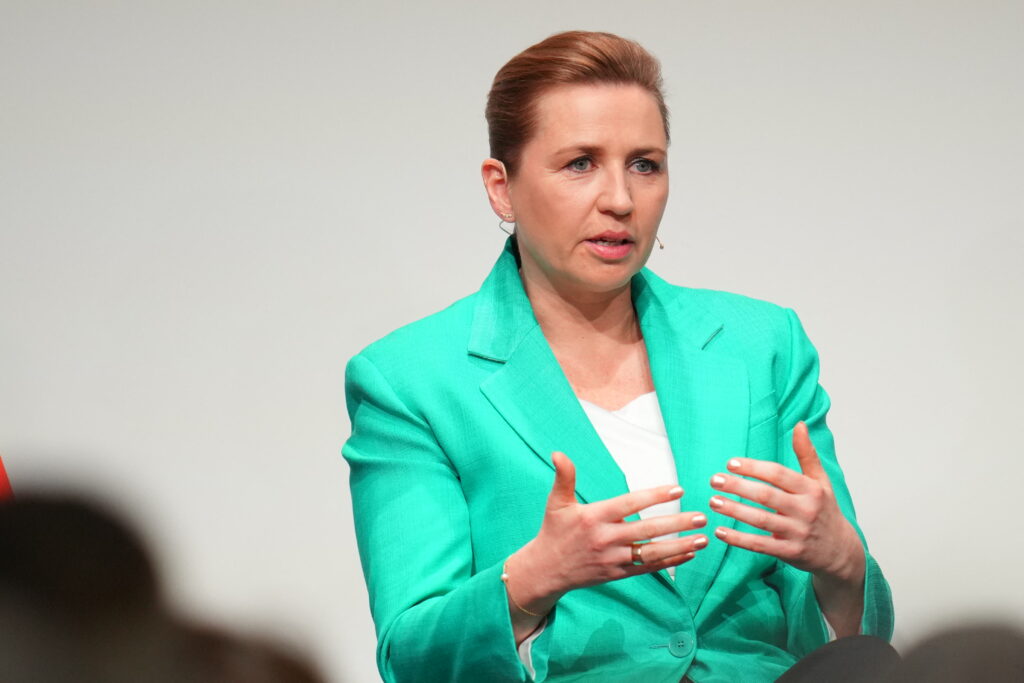
Chairwoman of the Social Democrats Mette Frederiksen attends a party leader debate hosted by Publicists’ Club one the day after the parliamentary election at the Confederation of Danish Industry’s building in Copenhagen on March 25, 2026. (Photo by Liselotte Sabroe / Ritzau Scanpix / AFP)


Frederiksen formally tendered her coalition government’s resignation to King Frederik on Wednesday, telling a televised party leader debate she wanted to try to form a centre-left government.

“The most realistic scenario” would be a coalition with the five parties on the left and the centre-right Moderates, she said.

But it is not certain the Moderates, led by Foreign Minister Lars Lokke Rasmussen, would agree to that.

“I don’t believe that Denmark needs policies aligned with” the leftist Red-Green Alliance, Lokke said.
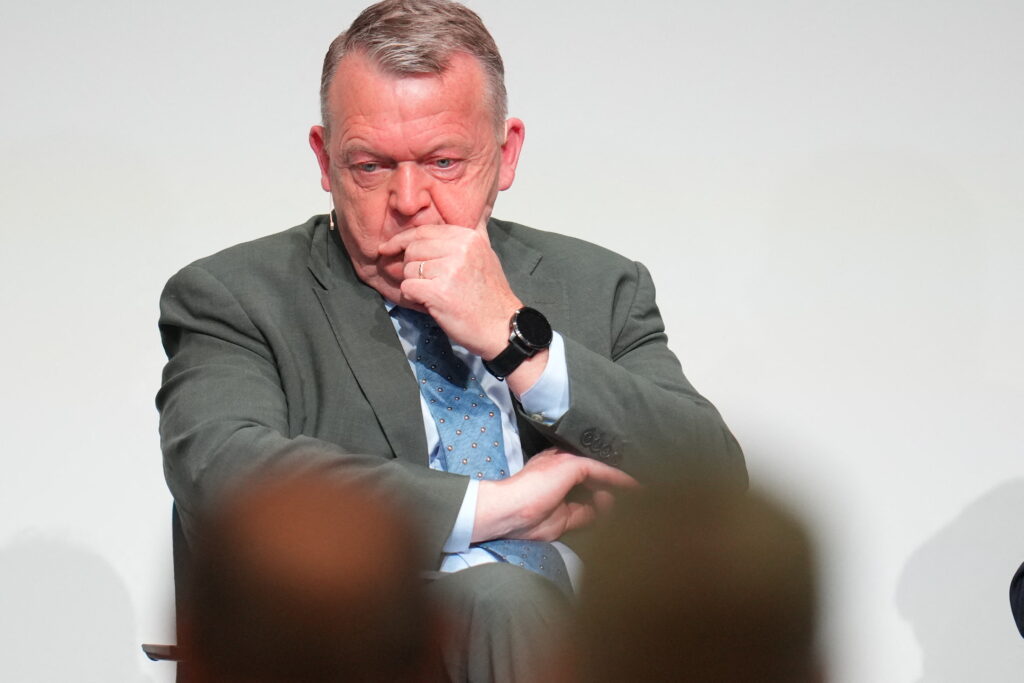
Chairman of the Moderates Lars Loekke Rasmussen attends a party leader debate at the Confederation of Danish Industry’s building in Copenhagen on March 25, 2026, the day after the parliamentary election. (Photo by Liselotte Sabroe / Ritzau Scanpix / AFP) / Denmark OUT

King Frederik was to meet party leaders individually later Wednesday to determine who should be asked to try to form the next government.

“My expectation is that Mette Frederiksen will become prime minister,” University of Copenhagen political science professor Rune Stubager told reporters.

“But I don’t know with the backing of which parties, like the left wing or the right wing,” he said.

He noted that Lokke, a two-time former prime minister, would likely vie for the position of prime minister, even though he has adamantly denied any interest in the job.

“Danes want me and not another prime minister. I still have the backing to be able to continue on behalf of the Danish people,” Frederiksen insisted during the debate.

Frederiksen has for the past four years headed an unprecedented left-right coalition made up of her Social Democrats, the Moderates and the Liberals.

The Liberals have refused to continue in a Social Democrat-led government.

‘Too Hard To Say’

Danes are now prepared for long negotiations. After the 2022 election, the talks lasted six weeks.

“It’s a long process, which means the government won’t be formed and it will be quite difficult to pass laws during this period,” lamented Jesper Dyrfjeld Christensen, a 54-year-old engineer.

“It’s really too hard to say who will be part of the coalition,” admitted Stubager.

With 12 parties in parliament, the political landscape is jagged — though Denmark is accustomed to minority governments.

“To some extent, this is the way Danish politics works. You have a minority government in the centre which forms a majority with the left on some issues and with the right on others,” he explained.

The negotiations are expected to focus on economic and pension issues, pollution and immigration, he said.

The traditional far-right party, the Danish People’s Party, which has heavily influenced policy since the late 1990s but slumped in the 2022 election, more than tripled its result to 9.1 per cent of votes.

The three anti-immigration groups together garnered 17 per cent, a stable figure for Denmark’s populist right over the past two decades.

“If negotiations take place in the left-wing bloc with the moderates, then there will be more focus on green issues than on immigration,” Stubager said.

“But if, instead, the Moderates negotiate with the parties on the right, then the central issue will be immigration.”

Four seats in Denmark’s parliament are held by its two autonomous territories — two for Greenland and two for the Faroe Islands.

While the Faroese renewed the mandates of the two outgoing lawmakers, with one for each bloc, Greenland overwhelmingly backed the left-wing party and Naleraq, which advocates rapid independence from Denmark.



AFP

Continue Reading

Trending

Copyright © 2026 TheColumn NG